Le middleware RFID détermine le succès ou l'échec de la transformation numérique de l'entreprise
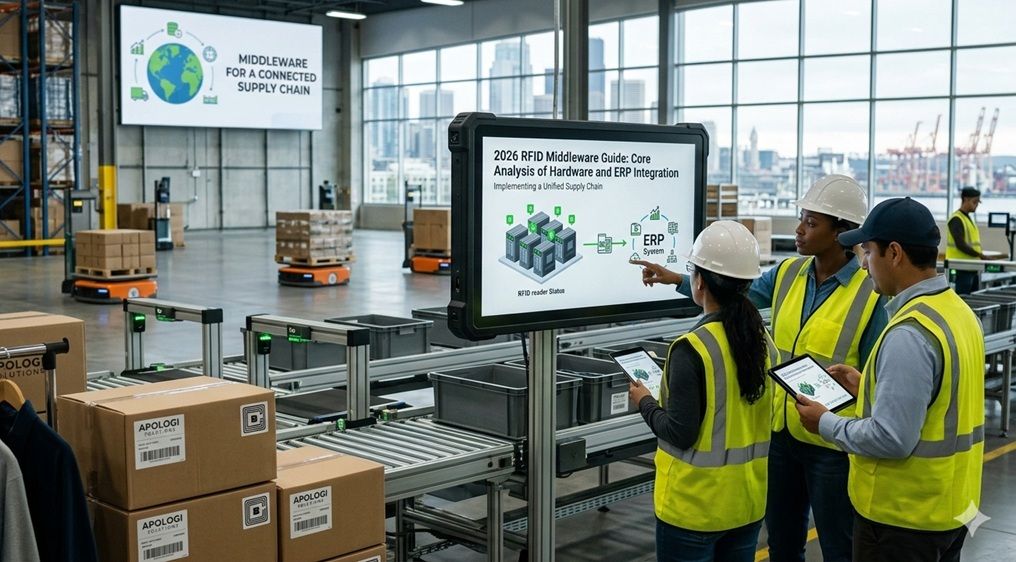
Selon Gartner 2025 “Magic Quadrant pour les middlewares IoT d'entreprise” rapport, le succès de plus 80% des projets RFID dépend directement de la sélection et de la configuration du middleware. En tant que hub principal reliant le matériel de lecture sous-jacent et l'intégration ERP de niveau supérieur, Le middleware RFID assume les responsabilités critiques du filtrage des données, gestion des appareils, et génération d'événements. Sans middleware efficace, un Système RFID n'est qu'un ensemble d'îlots matériels non coopératifs.
Fonctions principales du middleware RFID
1.1 Filtrage et déduplication des données
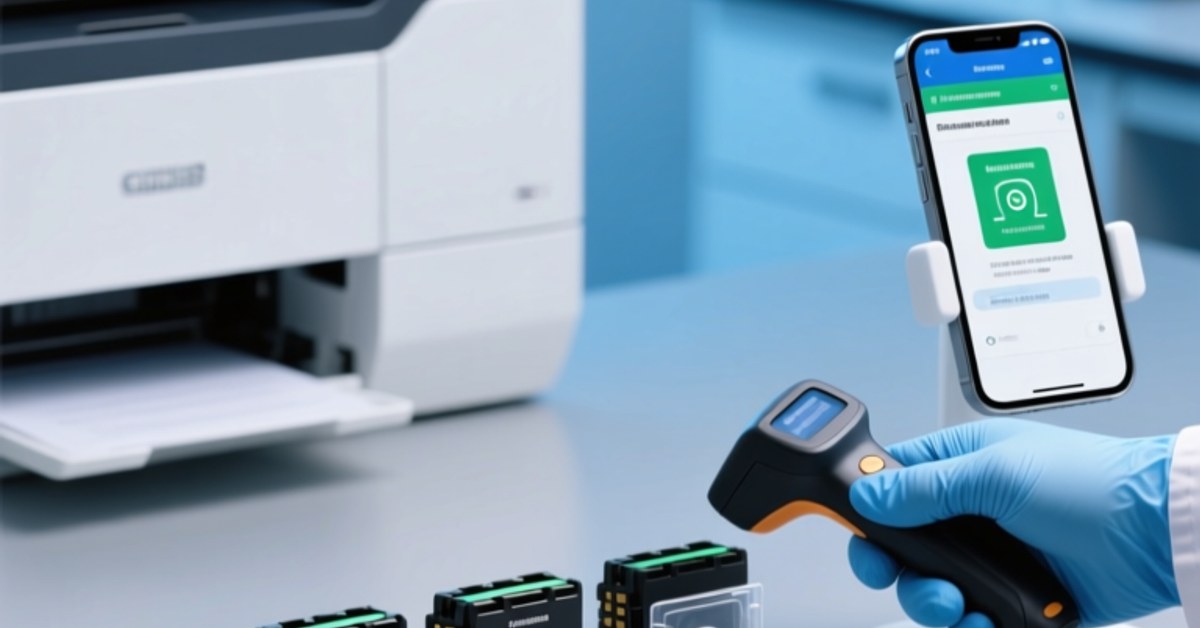
Les lecteurs RFID UHF peuvent lire des centaines d'étiquettes par seconde, générer une grande quantité de données brutes. Le middleware RFID utilise l'ALE (Événements au niveau de l'application) interface standard pour filtrer les lectures en double et lisser les données de gigue en temps réel, soumettre uniquement des événements commerciaux significatifs (tel que “Le produit A quitte l'entrepôt”) au système de niveau supérieur.
1.2 Gestion et surveillance des appareils
Le middleware fournit une interface de gestion unifiée des appareils, capable de surveiller simultanément des dizaines, voire des milliers de lecteurs, antennes, et capteurs. Par exemple, Le middleware Impinj peut configurer à distance la puissance de l'antenne, fréquence, et lire le cycle, et fournir des alertes en temps réel en cas de dysfonctionnement de l'appareil.
1.3 Génération et normalisation d'événements
Le middleware convertit les données RFID brutes en événements commerciaux conformes à l'EPCIS 2.0 standard, contenant les quatre éléments clés de “quel objet, quand, où, et pourquoi.” Cela rend la sémantique des données claire lors de l'intégration ERP et facilite le partage entre les systèmes..
Normes clés et produits grand public
2.1 Protocoles et normes de base
- MAIS 1.1.1: Définit les spécifications d'acquisition de données entre le middleware RFID et les lecteurs.
- Je suis désolé 2.0: Une norme d'échange de données RFID au niveau de l'entreprise prenant en charge l'optimisation des stocks et la traçabilité tout au long de la chaîne d'approvisionnement..
- PRDL (Protocole de lecteur de bas niveau): Protocole de gestion des lecteurs.
2.2 Produits middleware RFID grand public
- RFIDHY Pont: Un middleware léger développé par RFIDHY, soutenir les lecteurs et écrivains grand public, avec un accent particulier sur l'intégration rapide avec SAP EWM et Oracle WMS.
Intégration ERP: Atteindre l’automatisation des processus métier
La valeur de l’intégration du middleware RFID à l’ERP se reflète dans des processus métier spécifiques:
3.1 Réception automatisée
Lorsque les marchandises étiquetées passent par le tunnel RFID, le middleware capture tous les identifiants de balises, génère un ASN (Avis de réception) en le comparant avec le bon de commande, et l'écrit dans SAP ERP via l'API RESTful ou l'interface SOAP, réaliser une comptabilisation automatique avec un délai de synchronisation des stocks inférieur à 1 deuxième.
3.2 Inventaire dynamique
Lorsque les terminaux portables (Tel que RFIDHY HY-R6100) effectuer des inventaires par lots, le middleware compare l'inventaire physique avec les données ERP en temps réel. Les différences sont immédiatement générées pour générer des tâches d'inventaire, assurer une optimisation continue des stocks.
3.3 Vérification de l'expédition
L'antenne de contrôle d'accès au niveau du canal sortant lit les marchandises à expédier. Le middleware appelle le bon de commande ERP pour vérification. Les expéditions incorrectes déclenchent automatiquement des alarmes sonores et visuelles pour éviter les erreurs d'expédition et les omissions.
Capacités de personnalisation: Aborder des scénarios commerciaux complexes
Alors que le middleware standard couvre la plupart des besoins, les processus métiers de chaque entreprise, Version ERP, et la configuration matérielle varie. C'est précisément là que se trouvent les capacités de personnalisation.
RFIDHY, en tant que professionnel Solution RFID fournisseur, offre non seulement le middleware RFIDHY Bridge mature, mais possède également de profondes capacités de développement secondaire:
- Optimisation des algorithmes de filtrage des données pour des secteurs spécifiques (comme la chaîne du froid et les produits chimiques)
- Développer des moteurs de règles métier personnalisés pour répondre à une logique complexe (tel que “même produit, différentes couleurs doivent être fusionnées” invite)
- Établir une connexion directe aux tables de données sous-jacentes avec les systèmes ERP existants (comme SAP R/3) pour compenser les interfaces insuffisantes
- Grâce au développement de middlewares personnalisés, les entreprises peuvent maximiser le retour sur investissement de la RFID et réaliser une intégration ERP véritablement transparente.
Conclusion
Le middleware RFID est le cerveau du Système RFID. Il transforme les signaux radiofréquences bruts en informations commerciales exploitables et sert de pont reliant le matériel et l'intégration ERP.. Choisir un partenaire middleware (comme RFIDHY) qui est conforme aux normes internationales comme EPCIS 2.0 et ALE et possède de fortes capacités de personnalisation, constitue une étape cruciale pour les entreprises afin d'optimiser les stocks et d'améliorer l'efficacité de la chaîne d'approvisionnement..
FAQ
1.Quelle est la différence entre le middleware RFID et le logiciel d'acquisition de données ordinaire?
Le middleware RFID est spécialement conçu pour le traitement haute fréquence, en temps réel, et données RFID multi-sources. Il possède quatre capacités principales: gestion des appareils, filtrage des données, génération d'événements, et interfaces standards, surpassant de loin un simple logiciel d'acquisition de données. Il adhère aux normes ALE et EPCIS, assurer une compatibilité plug-and-play avec divers systèmes ERP.
2.Les PME ont-elles besoin d’un middleware RFID indépendant ??
Absolument. Même avec seulement quelques lecteurs, le middleware peut améliorer considérablement la stabilité du système. Par exemple, RFIDHY Bridge propose une version légère qui fonctionne sur des PC ordinaires, garder les coûts sous contrôle tout en augmentant l'efficacité des stocks par lots de plus de 80%.
3.Comment le middleware RFID assure-t-il la sécurité des données?
Le middleware grand public prend en charge les communications cryptées TLS, contrôle d'accès basé sur les rôles, et journaux d'audit. Pendant l'intégration ERP, des mécanismes tels que les clés API et les listes blanches IP peuvent garantir que les données circulent uniquement entre des systèmes de confiance. Le middleware RFIDHY fournit également des options d'anonymisation des données pour répondre aux exigences de conformité du RGPD..
4.Quelles sont les futures tendances de développement du middleware RFID?
Selon la prédiction de Forrester, Le middleware cloud natif et l'informatique de pointe deviendront courants à partir de 2026. Les middlewares fonctionneront de plus en plus en périphérie du lecteur ou dans le cloud, combiner des algorithmes d'IA pour réaliser une maintenance prédictive et une prise de décision en temps réel, approfondir davantage le niveau d’intelligence dans l’intégration ERP.
Pour plus d'informations,s'il te plaît Contactez-nous.