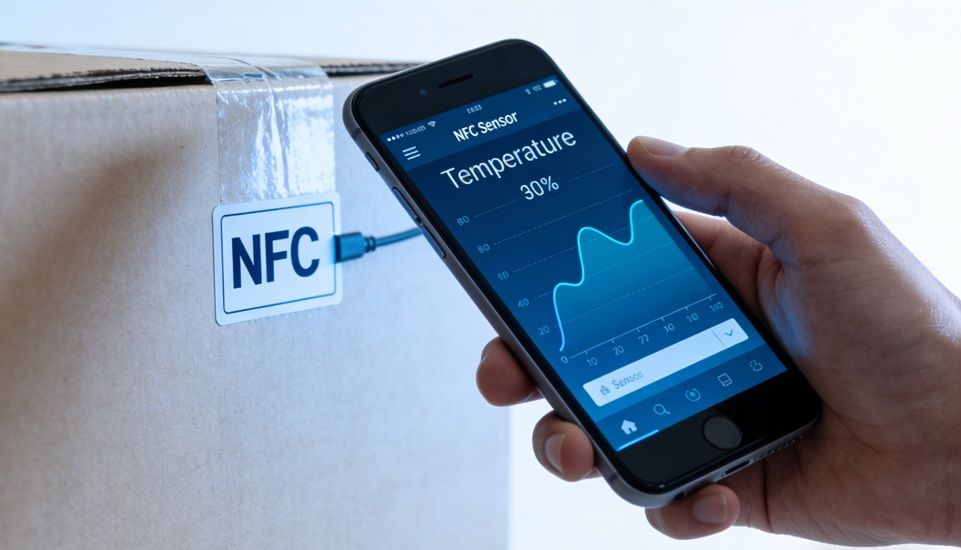
If you think NFC is only for payments or unlocking doors, then an NFC sensor tag will change your mind. It not only has the identification functions of a regular tag, but also incorporates sophisticated sensors capable of detecting temperature, humidity, pressure, or vibration.
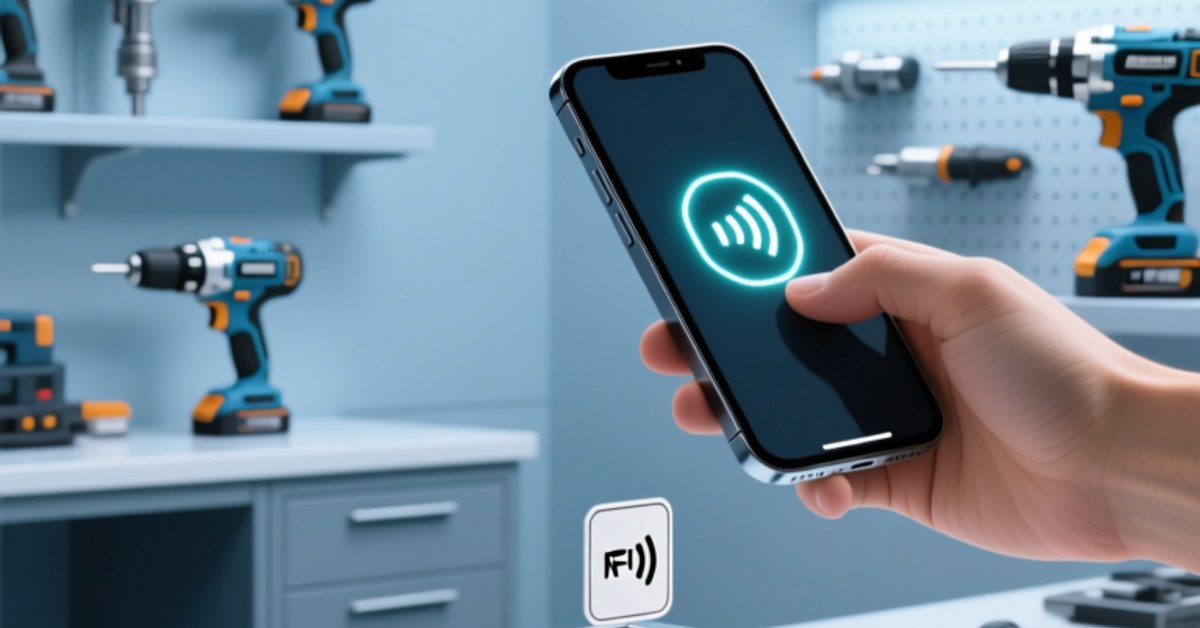
Most excitingly, you don’t need expensive industrial card readers. Simply take out your smartphone, tap it against the tag, and environmental data will instantly appear on the screen.
1.What is an NFC Sensor Tag?
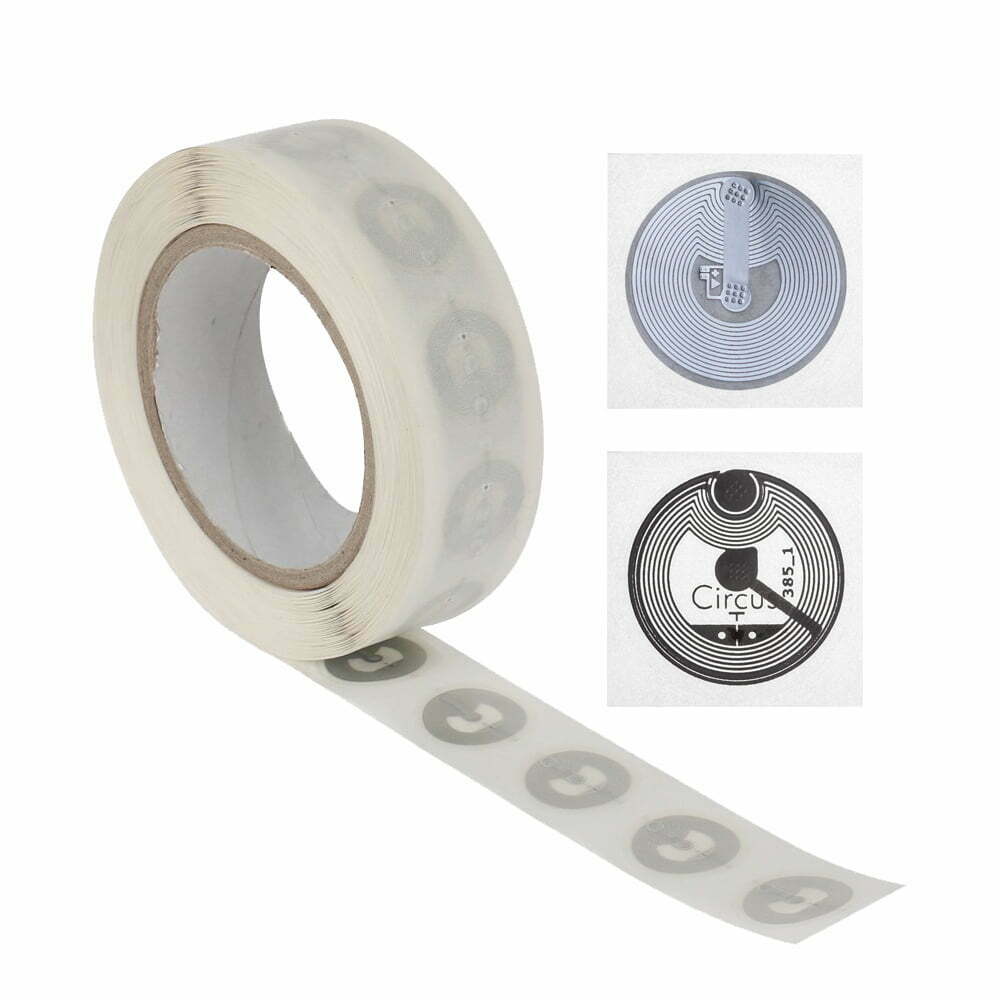
An NFC sensor tag is a highly integrated smart chip that encapsulates the NFC communication protocol, a low-power microcontroller, and an environmental sensor.
- Dual Identity: It is both a data storage device (NDEF format) and a real-time measurement station.
- Power Acquisition: Most NFC sensor tags are passive. When a phone is near, the tag acquires energy through electromagnetic induction, completes sampling, conversion, and data transmission to the phone within milliseconds.
2. Core Function Types of NFC Sensor Tags
- Temperature Sensing: Monitors the condition of fresh produce, wine, or pharmaceuticals at retail terminals.
- Moisture Detection: Attached to the packaging of precision instruments or building materials to detect moisture intrusion.
- Pressure/Touch Sensing: Used for opening detection in smart packaging to determine if the packaging has been illegally opened.
- Bio-sensing: Monitors body temperature or glucose levels in skin patch-type medical devices.
3.Core Application Scenarios: From Laboratory to Consumer
- Last Mile Verification in Cold Chain: When consumers receive high-end fresh produce or cosmetics, they can simply scan the NFC tag on the packaging with their mobile phone to confirm that the product has maintained the specified temperature throughout the delivery process.
- Smart Healthcare and Nursing: NFC sensors attached to IV bags or wound dressings allow nurses to quickly check fluid levels or wound conditions via their mobile phones without disassembling the equipment.
- Smart Industrial Maintenance: During inspections, engineers can simply touch a tag on enclosed equipment to read real-time internal pressure or operating vibration frequency.
- Anti-counterfeiting and Anti-tampering: If the packaging is torn open, the sensor circuitry will physically break, and a phone scanning the device will immediately display “Warning: Package Opened”.
4.Why choose NFC sensors instead of ordinary RFID sensors?
- Zero Hardware Barrier: Any NFC-enabled Android or iPhone is a ready-made reader, greatly reducing the participation cost for end users.
- Instant Visualization: With a dedicated app or mini-program, data can be transformed into intuitive charts and alerts.
- User Interaction: Brands can push product usage guides or repeat purchase coupons while displaying environmental data.
5.Selection Recommendations: How to customize according to project needs?
Is data logging required?
- Real-time type: Measures the current instantaneous value only when the phone is nearby (lower cost).
- Recording type: Contains a small built-in battery or large capacitor, enabling periodic sampling and data storage when unattended, with historical curves exported all at once upon scanning by a mobile phone.
Accuracy requirements: Medical-grade typically requires ±0.3℃, while general logistics-grade requires ±0.5℃.
Packaging: Is it an ultra-thin flexible sticker or a crush-resistant rigid plastic shell?
Two operating modes of NFC sensor tags: Battery-powered vs. Battery-less
NFC sensor tags democratize “sensing.” They give ordinary objects the ability to express themselves, allowing consumers and businesses to obtain the most critical environmental data in the simplest way.
For more information,please contact us.