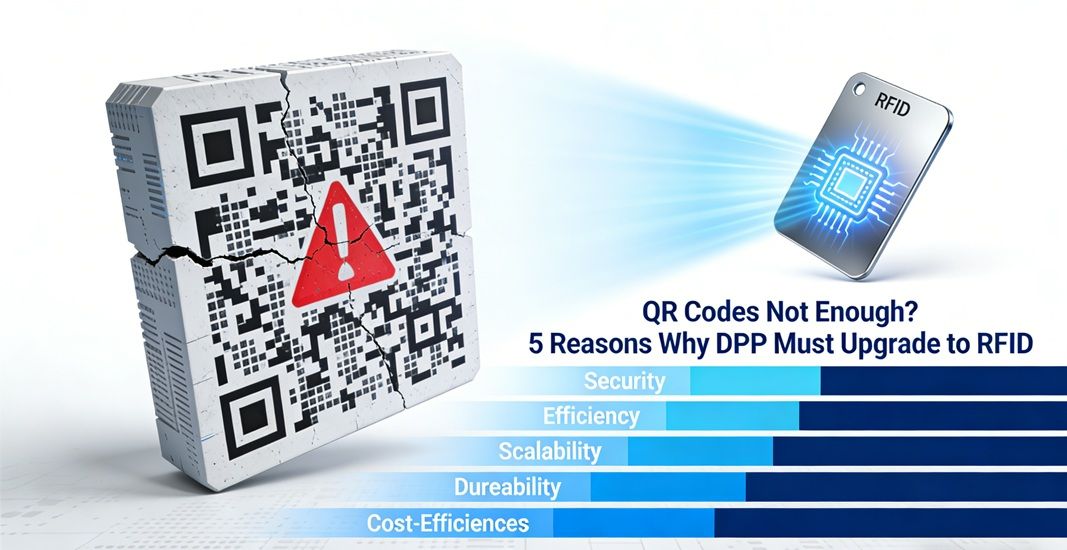
AB ESPR'nin gelişmesiyle birlikte, Dijital Ürün Pasaportları (DPP) imalat endüstrisi için küresel bir giriş kapısı haline geldi. QR kod çözümleri oldukça düşük maliyetli olmakla birlikte, Karmaşık tedarik zinciri takibi ve döngüsel ekonomi gereksinimleriyle karşı karşıya kalındığında etkinlikleri sınırlıdır.
Tarafından bekleniyor 2030, AB'de satılan tüm ürünlerde bir DPP. IDTechEx tahminlerine göre, küresel RFID pazar büyüklüğü büyüyecek $15.6 milyar 2025 ile $23 milyar 2036. Bu dijital dönüşümde, RFID, DPP'ler için tercih edilen taşıyıcı olarak hızla QR kodlarının yerini alıyor.
Verimlilik Devrimi: İtibaren “Tek Tek Taranıyor” ile “Toplu Tanımlama”
QR kodlarının en ölümcül zayıflığı, bunların “görsel olarak erişilebilir” ve tek tek tarandı. Lojistik sıralama veya perakende envanterinde, Bu verimsiz operasyon çok büyük finansal maliyetlere neden oluyor. RFID teknolojisi temassız okumayı destekler; Etiketler paketlenmiş veya gizlenmiş olsa bile, RFID okuyucular yüzlerce öğeyi saniyeler içinde tarayabilir. Örneğin, RFIDHYyüksek performanslı etiketleri birden fazla okumayı destekler 200 saniye başına etiketler, DPP'lerin on milyonlarca öğenin bulunduğu tedarik zincirlerinde bile gerçek zamanlı dinamik güncellemeleri sürdürmesine olanak tanır.
Ultra Uzun Ömür: Tüm Ürün Yaşam Döngüsü Boyunca Dayanıklılık
DPP, ürünün yaşam döngüsünün tamamını kapsayacak bilgiye ihtiyaç duyar, üretim ve dağıtımdan geri dönüşüme kadar. Ambalajın üzerine basılan QR kodları nemden kolayca zarar görebilir, giymek, veya ayrılma, ve bir kez hasar gördü, veriler kayboldu. Tersine, endüstriyel sınıf RFID etiketleri (örneğin RFIDHYçamaşır etiketi serisi) fazlasıyla dayanabilir 200 endüstriyel yıkamalar ve 60 Basınç çubuğu. Bu olağanüstü dayanıklılık, ürünün malzeme bileşiminin ve sökme talimatlarının, ikinci el pazarına veya geri dönüşüm merkezine girdiğinde tanımlanabilir kalmasını sağlar..
Veri Güvenliği: Sahteciliğe ve Tahrifata Karşı Doğal Bir Bariyer
QR kodları aslında herkese açık statik görüntülerdir, kolayca kopyalanır ve klonlanır, sahte ürünlere karşı korunmalarını zorlaştırıyor. RFID çipleri dünya çapında benzersiz bir EPC koduna sahiptir ve karmaşık donanım düzeyinde şifrelemeyi destekler. DPP çerçevesinde, RFID yalnızca verileri kaydetmekle kalmaz, aynı zamanda ürünlerin menşeini doğrulamak için dijital parmak izi görevi de görür., Gri piyasa işlemlerini kaynağında etkili bir şekilde ortadan kaldırmak.
Veri Yazma: Dinamik Olarak Güncellenen “Mobil Sabit Disk”
Bir QR kodu oluşturulduktan sonra, içeriği sabittir ve yalnızca bağlantılı bir arka uç veritabanı aracılığıyla güncellenebilir. Fakat, belirli sınır ötesi ticarette veya zorlu ortamlarda, çevrimdışı veri etkileşimi çok önemlidir. RFID depolama ve okuma/yazma özelliklerine sahiptir, Farklı aşamalarda çip içinde bilgilerin doğrudan değiştirilmesine ve eklenmesine olanak tanır (onarım kayıtları veya mülkiyet değişiklikleri gibi), DPP'yi ürünle birlikte seyahat eden gerçek anlamda dinamik bir arşiv haline getiriyor.
Döngüsel Ekonomiyi Güçlendirmek: Otomatik Sıralamanın Temel Taşı
DPP'nin temel amacı kaynak geri dönüşümüdür. Ne zaman giyim, piller, veya elektronik ürünler geri dönüşüm merkezine ulaşıyor, Otomatik sıralama için QR kodlarının optik olarak tanınması neredeyse imkansızdır.
. RFID Sistemi sıralama robotlarını otomatik olarak tetikleyebilir, öğeleri etikette depolanan malzeme bileşimine göre doğru şekilde sınıflandırmak (örneğin “100% organik pamuk” veya “kobalt-lityum içeriği”). Bu dijital otomasyon, AB'nin döngüsel ekonomi hedeflerine ulaşması için gereklidir.
Özet
Uzun vadeli uyumluluk ve operasyonel mükemmellik için çabalayan şirketler için, RFID artık bir seçenek değil, ancak DPP uygulamasının temel taşı. Sektör lideri olarak 21 yılların deneyimi, RFIDHY, gömülü etiketlerden tam bağlantılı izlemeye kadar profesyonel çözümler sunar, markaların dijital eşiği kolayca aşmasına yardımcı olmak.
DPP için donanım seçiminde zorlanıyor musunuz?? Size sektörünüze göre uyarlanmış bir RFID teknolojisi uygulama kılavuzu sağlayabiliriz (tekstil veya elektronik gibi). Farklı senaryolara yönelik etiket seçimi çözümlerinin ayrıntılı bir dökümünü sunmamı ister misiniz??
Daha fazla bilgi için,Lütfen bize Ulaşın.