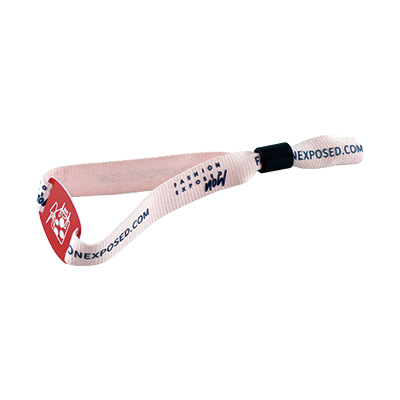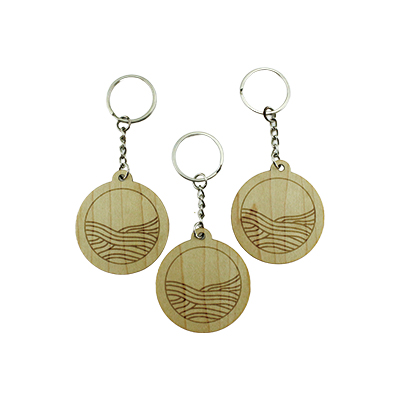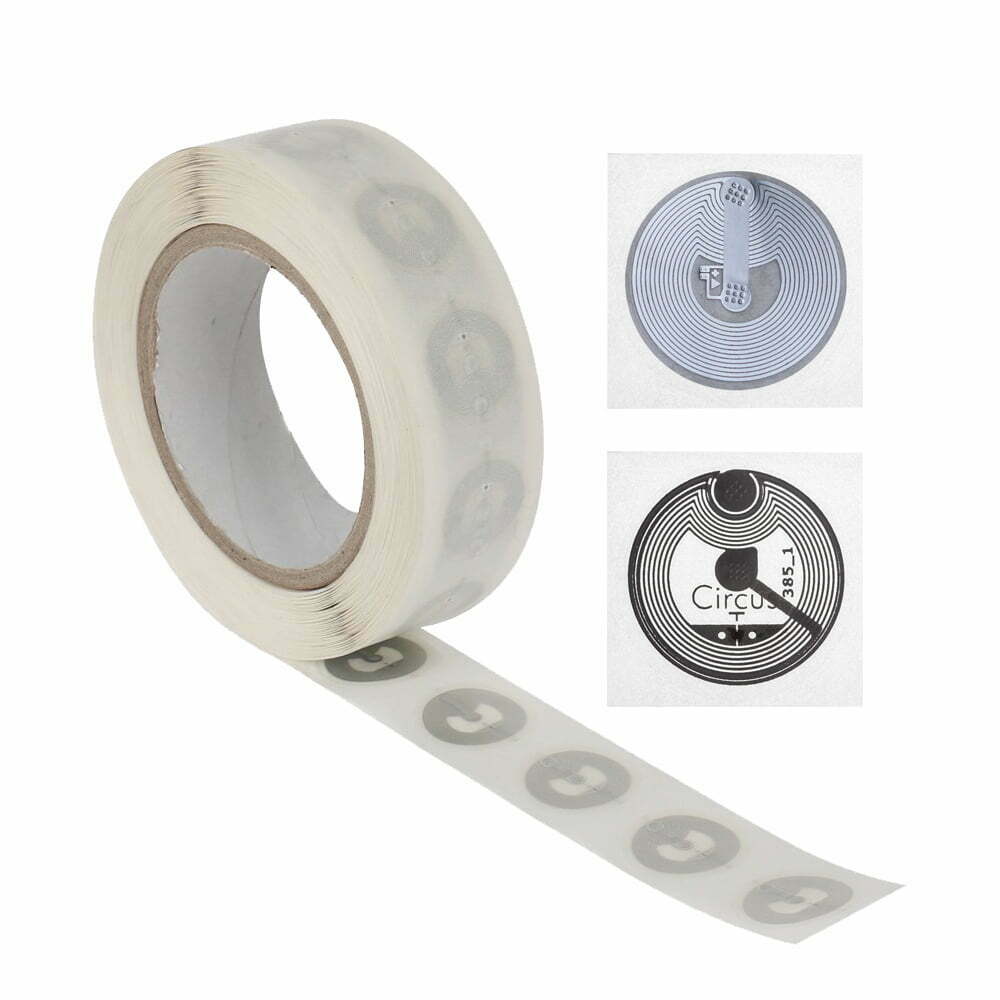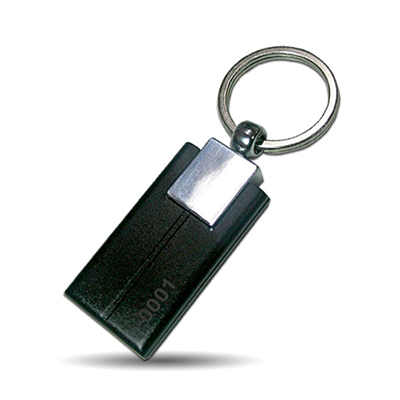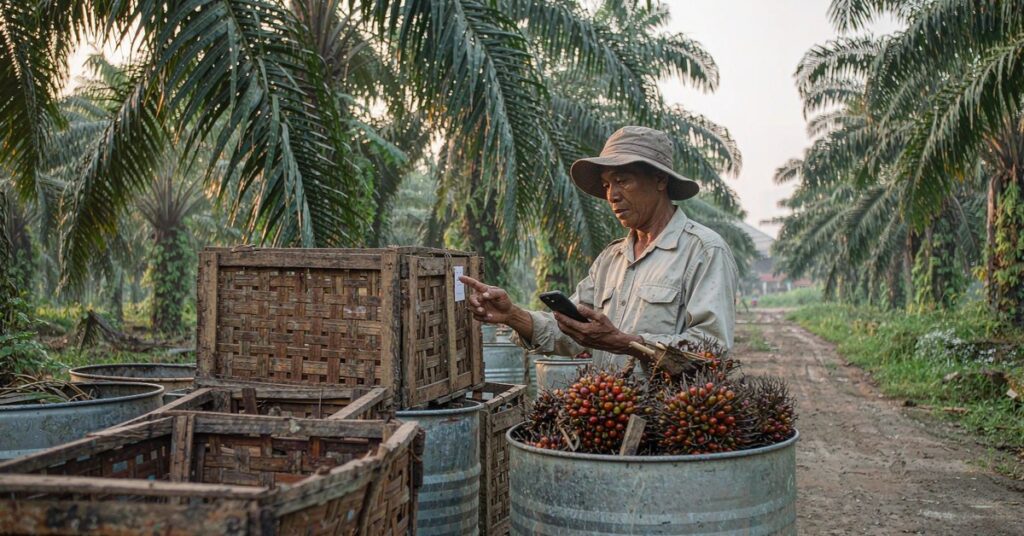
Indonesian palm oil exporters can use NFCタグ to meet EU deforestation-free traceability requirements by linking each physical shipment lot to a verifiable digital record: plantation geolocation, mill of origin, harvest date, and due-diligence documentation. A worker taps an NFC-enabled drum, pallet label, or crate tag with a standard smartphone at the plantation and again at the mill; each tap writes a signed event to a shared record that the EU importer can read at the point of entry. QRコードと違って, NFCタグ work without line-of-sight, survive humid and dirty plantation conditions when properly encapsulated, and are harder to copy when secure chips with cryptographic authentication are used.
This approach does not replace the formal due-diligence statement or the geolocation dataset required by the regulation. It makes those records physically anchored to the goods, so the numbers on the paperwork and the drums in the container can be reconciled in seconds rather than days.
Indonesia is the world’s largest palm oil producer, and a large share of its exports move into food, oleochemical, and biodiesel supply chains that now require deforestation-free evidence. For mills and traders, the practical problem is not a lack of data but the disconnect between plantation records, mill intake systems, and the documents handed to buyers.
Why Indonesian Palm Oil Exporters Need Item-Level Traceability
Palm oil supply chains are long and fragmented. Fresh fruit bunches move from smallholder plots to collection points, then to mills, 製油所, bulking stations, and finally export terminals. At each handover the lot is re-weighed, re-labelled, and often merged with other lots. A compliance document that was accurate at the plantation gate can become detached from the physical shipment by the time it reaches a European port.
The Smallholder Documentation Gap
A significant portion of Indonesian palm fruit comes from smallholders who may not have formal land titles, digital records, or consistent connectivity. Buyers still need geolocation and deforestation-free declarations for that fruit. Paper logbooks and spreadsheets are slow to audit and easy to mis-transcribe, and they cannot be verified from the shipment itself.
EUDR and the Geolocation Requirement
Under the EU Deforestation Regulation, operators placing relevant commodities on the EU market must demonstrate that the goods are deforestation-free and produced in compliance with national law, supported by geolocation data for the production plots. For palm oil, this means the exporter must be able to associate a shipment with the plots that produced the fruit. NFC tags give each pallet, drum, or crate a stable identifier that can carry that association through the chain. Exporters should confirm current applicability dates and commodity-scope details with their EU importer or legal adviser, since the implementation timetable has been adjusted more than once.
Where QR Codes and Barcodes Fall Short
- Printed codes require clean line-of-sight; plantation dust, oil residue, and rain damage them.
- A copied QR code reproduces perfectly, so a counterfeit label is indistinguishable from a genuine one.
- Manual scanning at mill intake is slow when hundreds of crates arrive in a single shift.
- There is no cryptographic proof that the scanned code was issued by the named mill.
NFC labels address these limits: reading is a tap rather than a scan, the chip can hold a unique identifier, and secure NFC chips can generate a one-time authentication code that cannot be replayed. For a comparison of carrier options used in other commodity chains, に関する記事を参照してください farm-to-fork food traceability.
How NFC Tags Work Across the Palm Oil Chain
A workable deployment has four touchpoints. Each one writes a small, immutable event rather than duplicating the whole compliance file.
| ステージ | What happens | Data captured |
|---|---|---|
| 1. Plantation / collection point | Tagged crate or pallet label is tapped by the field clerk on a smartphone | Plot ID, GPS coordinates, smallholder group, harvest date, bunch weight |
| 2. Mill intake | Tag is tapped again at the weighbridge; fruit is accepted into a processing batch | Mill ID, intake timestamp, バッチ番号, receiving weighbridge |
| 3. Refinery / bulking station | Bulk lot inherits the list of source tags through a parent–child record | Lot genealogy, mass balance, storage tank, CPO or CPKO grade |
| 4. Export terminal | Shipment-level record is compiled and shared with the EU importer | Container ID, due-diligence reference, consolidated geolocation dataset |
Linking Physical Goods to the Due-Diligence File
The tag does not need to store the geolocation polygon itself. It stores a compact identifier that resolves to the record in a database or デジタル製品パスポート. That separation matters: the compliance dataset may be large and may change as verification progresses, while the tag content remains a stable key. This is the same pattern used in agritech DPP deployments where sensor and field data are resolved from a small on-tag identifier.
Working With Intermittent Connectivity
Many estates have unreliable mobile coverage. A practical design lets the field app write the tap event locally and synchronise when the device returns to coverage. The chip itself can be written once at the collection point and thereafter read-only, so no network is needed at the moment of scanning. Read-only operation also prevents a downstream party from silently rewriting the origin record.
Tag Durability in Humid, Oily Environments
- Use encapsulated HF NFC inlays or hard tags rated for outdoor exposure, not plain paper stickers.
- Mount tags on a non-metallic spacer when attaching to steel drums or metal crates; metal detunes the antenna.
- Specify resistance to water, palm oil residue, 摩耗, and high-temperature washdown at the mill.
- Validate read range on the actual container or drum before a full rollout.
For durable tag formats and mounting approaches used in comparable industrial settings, の概要を参照してください NFC adoption in emerging markets.
Choosing the Right NFC Chip and Data Model
Chip selection is a security decision, not just a cost decision. If the commercial risk is a copied label that lets non-compliant fruit enter a certified shipment, a plain memory chip is insufficient.
| Option | Typical fit | Main limitation |
|---|---|---|
| NTAG 213 / 215 / 216 (plain memory) | Low-cost internal lot tracking where all parties are trusted | UID can be cloned; no cryptographic proof of origin |
| NTAG 424 DNA with SUN authentication | Export lots requiring verifiable, offline-capable authenticity | 単価が高い; needs key management and a verification service |
| HF帯RFID / NFC inlay in hard tag housing | Reusable pallet and crate assets in wet, abrasive conditions | Bulkier; requires mechanical mounting design |
| UHF RFID at pallet level + NFC at lot level | High-throughput mill gate plus buyer-facing tap verification | Two reader infrastructures to maintain |
Why Cryptographic Authentication Matters for Exporters
Secure NFC chips can produce a unique, single-use authentication code on every tap. An importer can verify that code offline or against a cloud service and confirm that the label was issued by the named mill, not printed from a screenshot. This turns the tag from a convenience into evidence. Our comparison of NTAG 424 DNA versus standard NTAG chips explains the trade-off in more detail.
Buyer’s Checklist Before a Rollout
- Confirm with the EU importer which due-diligence reference and geolocation format their system expects.
- Decide the tagging unit: crate, pallet, drum, or shipment container — data granularity follows this choice.
- Choose chip security level based on whether external parties must verify authenticity without a backend.
- Test tags on real drums and crates through rain, oil exposure, and mill washdown before ordering volume.
- Define who owns the record, who may write events, and how long records are retained.
- Plan an offline-first field app; do not assume plantation connectivity.
- Agree a fallback process for damaged or unreadable tags at mill intake.
よくある質問
Can Indonesian palm oil exporters use NFC tags for EUDR compliance?
はい, as a data-carrier layer. NFC tags link a physical lot to the geolocation and due-diligence records that the regulation requires. They do not by themselves constitute a due-diligence statement, and exporters should validate the current legal requirements with their importer and adviser.
Is NFC better than QR codes for palm oil traceability?
For plantation and mill environments, generally yes. NFC reading is a tap rather than an optical scan, works on dirty or wet labels, and — with secure chips — resists cloning. QR codes remain useful as a low-cost consumer-facing fallback when printed alongside the NFC tag.
Which NFC tag survives humid plantation and mill conditions?
Encapsulated HF NFC inlays or hard-tag housings rated for outdoor use, with a non-metallic spacer for metal drums. Always validate on the actual packaging through rain, oil contact, 摩耗, and washdown before volume procurement.
Does every crate need its own tag, or is one tag per pallet enough?
That depends on the granularity the buyer requires. Tagging at pallet level reduces cost and read operations; tagging at crate level preserves smallholder-level separation when lots are mixed. Most deployments use a parent–child data model so a pallet tag resolves to the list of source crates.
Can the tags be read offline at the plantation?
はい. The tag can be written once at the collection point and read without network access. The field app stores the event locally and synchronises the consolidated record when connectivity returns.
Build Verifiable Traceability for Your Palm Oil Exports
RFIDHY supplies NFC tags, NFCステッカー, NFCインレイ, HF and UHF RFID labels, and handheld readers for agricultural and commodity traceability. We can help you define the tagging unit, select the right chip and housing, and validate read performance on your actual drums and crates.
お問い合わせ to discuss your palm oil traceability requirements, または私たちの NFC製品 そして ソリューション.