Introduction: Inventory Losses are the Hidden Killer in Apparel Retailing
According to McKinsey’s 2025 Global Apparel Industry Report, inventory losses (including expired, lost, misplaced, and inventory counting errors) consume an average of 3-5% of an apparel retailer’s annual sales. For a mid-sized brand with annual revenue of €500 million, this translates to a direct loss of €15-25 million annually. This article uses the Swedish-based Nordic fashion brand “NT” as a case study to detail how it achieved a breakthrough of 25% inventory optimization by 2026 through warehousing digital upgrades.
Before the Transformation: Pain Points of Traditional Warehousing
Before project implementation (2024), NT faced typical “growing pains”:
- Inventory accuracy: Only 87%, meaning that out of every 100 items in inventory, 13 were “inconsistent between records and actual stock.”
- Inventory time: Manual inventory counting of the entire 80,000 square meter central warehouse took 48 hours per month.
- Inventory loss rate: As high as 4.2%, with misplacement (38%), loss (27%), and expiration/out-of-season items (22%) being the main causes.
- Order fulfillment error rate: 3.5%, leading to a surge in customer complaints and return/exchange costs.
These problems directly caused inventory optimization to fall into a vicious cycle: inaccurate data → over-replenishment → increased backlog → aggravated losses.
Solution: Phased RFID Digital Upgrade
Phase 1: Single-Item Labeling and Warehousing Transformation (Q1 2025)
NT partnered with RFIDHY, a professional RFID solutions provider, to launch a pilot program for “Single-Item Traceability”:
- Label Selection: UHF RFID hang tags compliant with ISO 18000-6C standards, based on the NXP UCODE 9 chip (sensitivity -24dBm), were used. The supplier completed the labeling and coding at the production site.
- Warehouse Access: Two RFID tunnel machines were deployed, integrating four sets of circularly polarized antennas and readers, enabling batch inspection without unpacking, increasing warehousing efficiency from 300 pieces/hour to 8,000 pieces/hour.
- Data Integration: Real-time synchronization to Oracle WMS was achieved via RESTful API. Cloud-based, enabling immediate shelving upon receipt
Phase 2: Deployment of Dynamic Inventory Management Across the Entire Warehouse Area (Q3 2025)
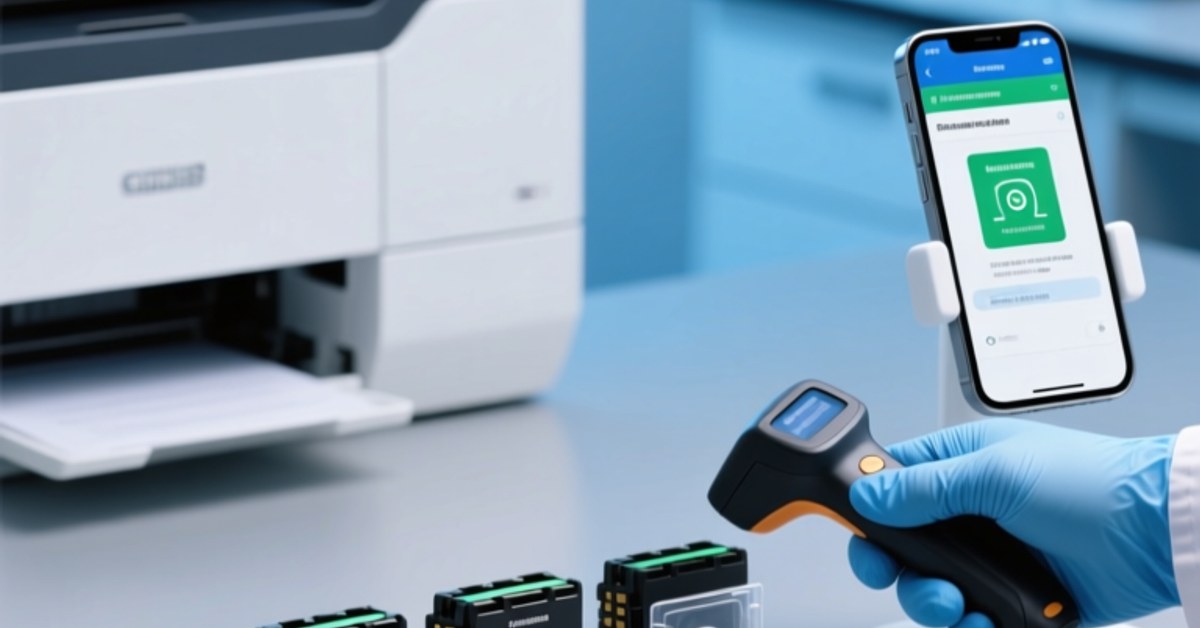
- Handheld Terminals: Procurement of 40 handheld RFID readers, supporting reading 800+ tags per second, replacing traditional barcode scanning.
- Fixed Reading Points: Deployment of 8 fixed readers/writers at key passageways and entrances/exits, enabling real-time location tracking and abnormal movement alerts.
- Software Platform: Deployment of middleware, integrating the EPCIS 2.0 event engine, and integration with existing SAP systems. Deep ERP Integration
Phase 3: Intelligent Replenishment and Loss Prevention (Q1 2026)
- Data Analysis: Based on 6 months of dynamic inventory data, a loss prediction model was established to identify high-loss SKUs and high-risk areas.
- Automated Inventory Counting: Weekly full-warehouse automated inventory counts take only 2 hours (previously 48 hours), with accuracy improved to 99.3%.
- Anti-theft Linkage: The exit access control antenna is linked to the alarm system, providing immediate alerts for unauthorized outbound shipments.
Results and Data: Quantifiable Inventory Optimization
After 18 months of phased implementation, NT delivered impressive results in Q1 2026:
| Indicators | Before Transformation (2024) | After Transformation (Q1 2026) | Improvement Amount |
| Inventory Loss Rate | 4.2% | 3.15% | ↓25% |
| Inventory Count Accuracy | 87% | 99.3% | ↑12.3% |
| Full-Warehouse Inventory Count Time | 48h/month | 2h/week | ↓83% |
| Order Fulfillment Errors | 3.5% | 0.8% | ↓77% |
| Annual Loss Amount | €2.1 million | €1.575 million | Savings: €525,000 |
The company’s logistics director stated in an interview: “RFID brings not only efficiency improvements, but also a qualitative leap in inventory optimization capabilities. We can now accurately know the location and dwell time of each garment, and even predict which SKUs might become slow-moving inventory.”
Key to Success: Customization and Phased Implementation
The success of this case can be attributed to three key elements:
- Phased Implementation Strategy: From receiving goods to full inventory counting, and then to predictive analytics, each step was validated for value before scaling up, reducing investment risk.
- Strict Hardware Selection: All equipment complies with the EPC Gen2v2 standard, ensuring compatibility with the Future Digital Product Passport (DPP). System Compatibility
- Deep Customization: This lies not only in product supply but also in its customization capabilities—specifically, antenna layout and tag placement have been optimized for bulky items such as down jackets and sweaters, resolving signal collision issues during high-density reading.
Conclusion
NT’s case demonstrates that through scientific warehousing digitalization upgrades, apparel brands can achieve significant inventory optimization of over 25% within 18 months. The key is selecting RFID hardware compliant with global standards (ISO 18000-6C, EPCIS 2.0) and collaborating with partners possessing deep industry experience and customization capabilities. For apparel companies looking to reduce inventory losses, now is the optimal time to initiate digital transformation.
FAQ
1.How long does it take from start to see results?
Based on NT’s experience, benefits at the receiving stage can be seen within 3 months, while significant inventory optimization across the entire warehouse (reducing losses by 15%+) typically takes 12-18 months.
2.How does the cost of RFID tags affect ROI?
The current procurement cost of UHF RFID tags has dropped to €0.05-0.08 per tag. Based on NT’s annual tag usage of 6 million tags, the annual tag cost is approximately €350,000, while inventory optimization alone can save €525,000 annually, with a payback period of less than one year.
3.How to ensure employees can quickly master the new system?
Choosing user-friendly handheld terminals (such as RFIDHY HY-R6100) and mobile apps is crucial. RFIDHY provides training, video tutorials, and 24-hour support, ensuring warehouse staff can master batch inventory operations within two weeks.
4.Can the system seamlessly integrate with existing ERP systems?
Modern RFID middleware provides standard API interfaces. Through the RESTful API, bidirectional data synchronization with SAP ERP is achieved, enabling automatic posting of inbound and outbound transactions without manual intervention.
For more information,please contact us.