Indledning: At undgå misforståelser er vigtigere end at forfølge teknologiske fremskridt
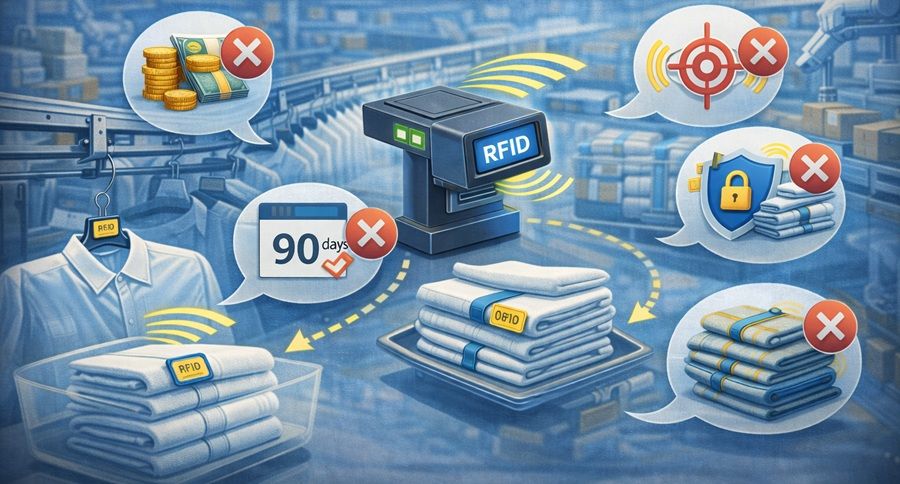
Ifølge GS1's 2025 “RFID-projektfejlsanalyserapport,” over 60% af RFID-projekter oplevede forsinkelser eller omkostningsoverskridelser. Grundårsagen var ikke teknologisk umulighed, men falder i stedet ind i almindelige misforståelser i de tidlige stadier af RFID-implementering. Denne artikel, baseret på retrospektive data fra 50 tekstil RFID-projekter i Europa, opsummerer 5 hyppigt forekommende misforståelser og undgåelsesstrategier for at hjælpe dig med at undgå faldgruber.
Misforståelse 1: Tagvalg “Pris over scenarie”
Forkert manifestation: For at reducere omkostningerne, bruger det samme billige tag (såsom et almindeligt hængemærke) på alle produktkategorier, resulterer i massefejl på vaskbart arbejdstøj og lejebeklædning.
Korrekt tilgang: Vælg tags i henhold til applikationsscenariet. Til tekstiler, der kræver flere vask, vaskebestandige tags, der har bestået AARH-niveauet 10 prøve (såsom RFID HY WashTag, baseret på NXP UCODE 9 chip) skal vælges. Til hurtige modeartikler, RFID hængemærker (såsom dem, der er baseret på Impinj M730) er tilstrækkelige.
Datasupport: Test udført af Auburn University RFID Lab viser, at læsehastigheden for almindelige tags falder til 62% efter 20 Industrielle vasker, mens vaskebestandige tags forbliver over 98% efter 200 vasker.
Misforståelse 2: “One-size-passer-alle” Læserkonfiguration
Forkert manifestation: Bruger de samme strøm- og antenneindstillinger i hele lageret, ignorerer forskellene i fysiske miljøer på forskellige områder, resulterer i lave læsehastigheder i nogle områder og signalinterferens i andre.
Korrekt praksis: Udfør undersøgelser på stedet før implementering og optimer antennevalg og strømindstillinger for forskellige områder (metalhylde områder, områder med høj luftfugtighed, transportbånd). For eksempel, anti-metal tags eller antenne polarisation justeringer bør foretages for metal hylde områder.
Misforståelse 3: Ignorerer udfordringen ved “Læsning og skrivning i fugtige omgivelser”
Forkert manifestation: Undlader at overveje muligheden for, at tekstiler bliver fugtige under transport og opbevaring, fører til batchaflæsningsfejl i regnfulde eller høj luftfugtighed miljøer.
Korrekt tilgang: Vælg chips, der kan fungere stabilt i fugtige omgivelser (såsom Impinj M780, integration af QT-teknologi), og inkludere “spray test” eller “miljøaflæsning med høj luftfugtighed” verifikation i testsager.
Datasupport: Test udført af det tyske forbundsinstitut for logistik viser, at når bomuldsstof har et fugtindhold på 30%, læseafstanden for almindelige tags falder med 70%, mens tags med optimeret antennedesign kun falder med 18%.
Misforståelse 4: Forlader systemintegration “Til sidste minut”
Forkert manifestation: Indkøb af hardware først og kun overvejer integration med ERP-systemer (såsom SAP eller Oracle) før start, resulterer i lange grænsefladeudviklingscyklusser og vanskeligheder med dataintegration.
Korrekt tilgang: Definition af integrationsskemaet mellem RFID-middleware og eksisterende systemer i projektplanlægningsfasen, valg af middleware, der understøtter standard RESTful API'er og forudbyggede stik (såsom RFIDHY Bro), og prioritering af integrationsudvikling.
Misforståelse 5: Ignorerer “Projekt accept” Fase
Forkert manifestation: Hardware testes simpelthen ved ankomst og implementeres derefter uden at gennemgå FAT (Fabriksgodkendelsestest) og SAT (Site Acceptance Test). Dette fører til problemer, der kommer til overfladen under drift og medfører høje udbedringsomkostninger.
Korrekt tilgang: Implementer strengt trinvis accepttest. FAT-fasen verificerer hardwarens ydeevne (læserens følsomhed ≤ -82dBm, antenne VSWR ≤ 1.5:1). SAT-fasen verificerer overensstemmelse med den virkelige verden (læsehastighed ≥ 99.5%, lageroptællingstid ≤ 2 timer). Detaljerede testcases kan findes i GS1 EPCglobal testspecifikation.
Konklusion
Ved 2026, tekstil RFID-implementeringsteknologi vil være meget moden, men projektets succes afhænger stadig af at undgå almindelige faldgruber. Fra tagvalg, læser konfiguration, miljøtilpasningstest til systemintegration og -accept, strengheden i hvert trin påvirker direkte det endelige investeringsafkast. At vælge en partner med brancheerfaring og tilpasningsmuligheder (såsom RFIDHY) kan hjælpe dig med systematisk at undgå disse faldgruber og sikre projektets succes fra starten.
FAQ
Q1: Sådan afgør du hurtigt, om en etiket virkelig er “vask resistent”?
Anmod om en tredjeparts testrapport fra leverandøren, med fokus på, om den består AARH-niveau 10 (over 100 Industrielle vasker) eller ISO 6330 (husholdningsvask) tests. Du kan også anmode om små batchprøver for at verificere i din egen vaskeproces.
Q2: I komplekse lagermiljøer, hvordan man bestemmer den optimale antenneplacering?
Det anbefales at udføre 3D elektromagnetisk feltsimulering (ved hjælp af CST Studio Suite eller ANSYS HFSS) eller on-site RF termisk kortlægningstest (ved hjælp af Voyantic Tagformance Pro). Professionelle leverandører såsom RFIDHY leverer undersøgelsestjenester på stedet, ved hjælp af målte data til at guide implementeringen.
Q3: Hvor lang tid tager integrationsudvikling typisk?
Det afhænger af systemets kompleksitet. Brug af standard middleware og forudbyggede stik, ERP-integration kan gennemføres inden for 2-4 uger. Til dyb tilpasning (såsom særlige forretningsregler), det kan tage 6-8 uger. Det anbefales klart at specificere integrationsudviklingscyklussen og acceptkriterierne i kontrakten.
Q4: Er FAT- og SAT-accepttests obligatoriske? Q4: Kan små projekter forenkles?
Selv til små projekter, en forenklet acceptproces anbefales. Kerne testcases (såsom læsehastighed og lagertid) kan udvikles baseret på industristandarder, og en acceptrapport kan genereres. Dette er ikke kun for kvalitetssikring, men også for at etablere et præstationsbenchmark for fremtidig ekspansion.
Q5: Hvad hvis jeg allerede er faldet i en bestemt fælde?
Først, diagnosticere problemet og finde årsagen (tagproblem/læserindstillinger/softwareintegration). Så, udarbejde en etapevis udbedringsplan, prioritering af løsningen af kernespørgsmål, der påvirker forretningsdriften. Samarbejde med erfarne leverandører (såsom RFIDHY) kan ofte hjælpe med at redde situationen til en lavere pris gennem konfigurationsoptimering eller delvis hardwareudskiftning.
For mere information,behage Kontakt os.