1.Electrostatic Discharge (ESD) Control — The “Invisible Killer” of Chips
NFC chips are extremely sensitive to static electricity. Static charges accumulating on the human body or machinery—potentially reaching thousands of volts—can instantly puncture and destroy the internal capacitors within the chip.
- Storage Environment: Inlays must be stored in anti-static bags (ESD Shielding Bags) and kept sealed.
- Operation Area: Processing workshops should be equipped with anti-static flooring, and workers must wear anti-static wrist straps.
- Equipment Protection: Install ionizing blowers at the feed-in and take-up ends of laminating or die-cutting machines to neutralize induced static electricity generated by material friction.
2.Physical Pressure Control — Avoiding “Chip Fracture”
The chip (die) connects to the antenna via tiny gold bumps or conductive adhesive. Excessive localized pressure can cause the chip to fracture or detach.
- Lamination Pressure: When laminating the inlay onto the surface paper, the pressure applied by the nip rollers must remain steady. It is recommended to use soft rubber rollers to cushion the pressure impact.
- Printing Pressure: If performing direct thermal transfer printing on the surface of a “wet inlay,” minimize the print head’s downward pressure (adjust “Darkness/Pressure” settings) and avoid applying pressure directly over the raised area where the chip is located.
- Rewinding Tension: During automatic rewinding, tension should not be excessive; otherwise, chips in the inner layers of the roll may compress against the antennas in the outer layers, leading to widespread damage.
3.Temperature Environment — Preventing Performance Drift
The substrate material for NFC inlays is typically PET, which has limited heat resistance.
- Storage Temperature: The optimal storage temperature range is 20°C to 30°C. Avoid direct sunlight exposure or proximity to heat sources.
- Processing Temperature: When laminating, the temperature of the hot-melt adhesive should not exceed 120°C. Prolonged exposure to high temperatures can cause the PET substrate to deform, potentially stretching and severing the antenna circuitry.
- Humidity Control: Maintain a relative humidity (RH) level between 40% and 60%. Environments that are too dry are prone to static electricity generation, while excessive humidity can compromise the adhesion of the backing adhesive.
4. Bending Radius — Protecting Antenna Integrity
Although inlays possess a certain degree of flexibility, excessive bending can lead to antenna fatigue and fracture (particularly with etched aluminum antennas).
- Minimum Bending: It is recommended that the bending radius be no less than 20 mm.
- Processing Path: Avoid designing overly steep paper-feed angles within the laminating machine; the material path should be as smooth as possible.
5.Chemical Environments and Corrosion Protection
- Contamination Avoidance: During processing, prevent oil stains, strong acids, or strong bases from coming into contact with exposed sections of the antenna (especially in the case of “Dry Inlays”).
- Adhesive Compatibility: If applying adhesive independently, ensure that the adhesive contains no corrosive components; otherwise, the antenna may oxidize within a few months, resulting in a significant reduction in reading distance.
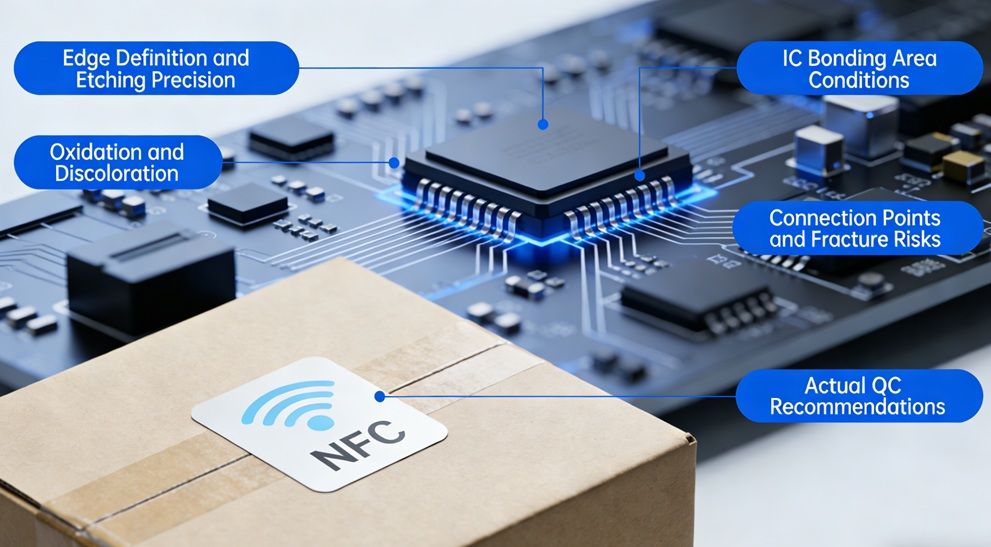
How to Visually Inspect NFC Inlay Antenna Quality
For more information,please contact us.