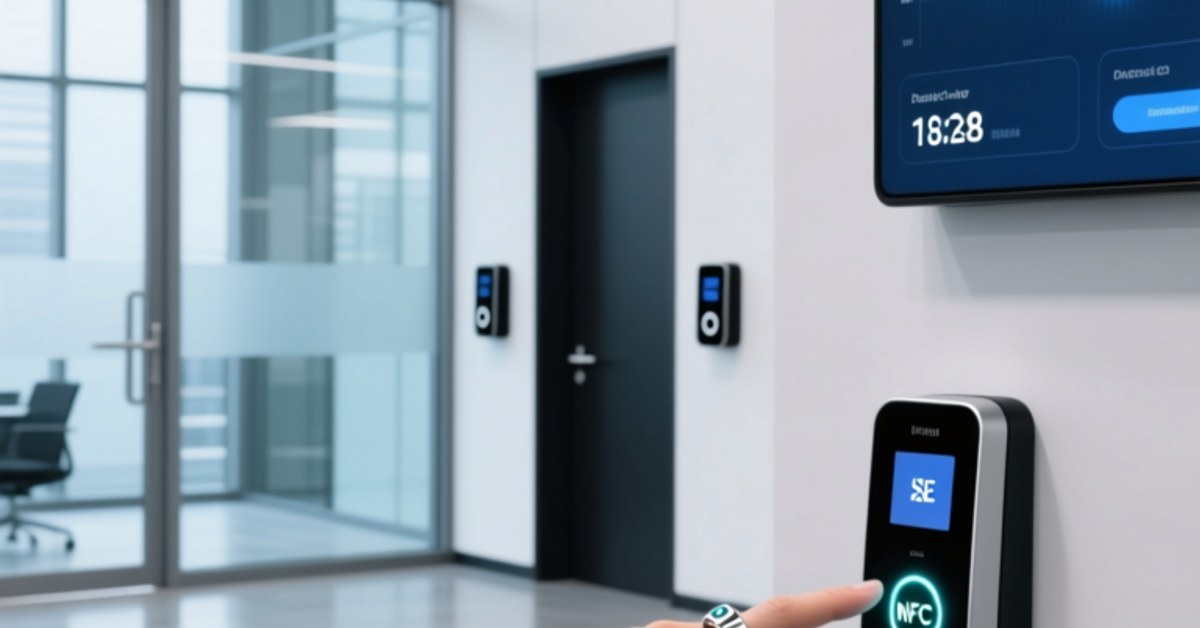
Why NFC Smart Rings Are Reshaping Enterprise Wearables
NFC smart rings represent a paradigm shift in wearable technology—not through flashy displays or battery-dependent features, but through elegant simplicity and robust functionality. Engineered for reliability, discretion, and zero-maintenance operation, they leverage passive NFC chips embedded in premium materials, delivering seamless interaction across physical and digital touchpoints. For enterprises seeking frictionless, scalable, and secure identity and access solutions, NFC smart rings are emerging as the most practical evolution beyond smartwatches and wristbands.
What Makes Smart Rings Unique?
Unlike conventional wearables, NFC smart rings require no power source, no screen, and no pairing. They operate passively via electromagnetic induction—activated only when tapped near an NFC reader. Their compact, ring-shaped form factor ensures constant wearability without visual or ergonomic compromise. Compared to NFC wristbands or smartwatches, they eliminate battery anxiety, reduce user fatigue, and maintain high durability under daily use—making them ideal for frontline staff, hospitality teams, and security-sensitive roles.
Core Enterprise Use Cases
- Contactless Payments: Tap-to-pay at POS terminals and transit gates using EMV-compliant tokenized credentials (e.g., Visa payWave or Mastercard M/Chip Mobile).
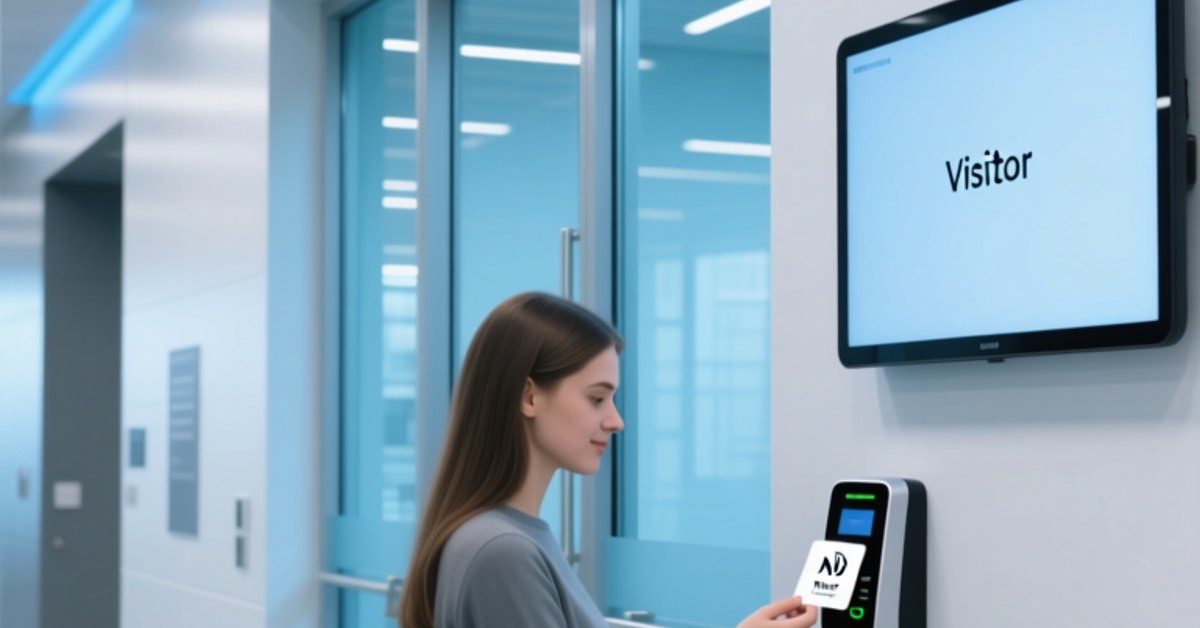
- Access Control: Replace physical keycards with programmable rings for hotel room doors, office entry, and smart lock systems—fully compatible with NFC-enabled smart locks.
- Identity Verification: Store digital business cards, healthcare worker IDs, or employee credentials compliant with ISO/IEC 14443-A/B standards.
- Two-Factor Authentication (2FA): Act as FIDO2/U2F security keys for secure logins to SSO platforms, cloud services, and internal applications.
Technical Architecture: Precision Engineering in Miniature
Enterprise-grade NFC smart rings integrate high-performance chips such as NTAG I²C Plus or MIFARE DESFire EV2—certified for secure data storage and cryptographic operations. A micro-antenna (5–10 mm coil diameter) is precision-tuned and shielded with ferrite layers to prevent detuning caused by finger tissue proximity. This ensures consistent read range (typically 2–4 cm) across diverse readers—including handheld RFID readers, desktop NFC scanners, and embedded access panels.
Material Science: Durability Meets Design
>
| Material | Key Properties | Ideal For |
|---|---|---|
| Zirconia ceramic | Scratch-resistant, biocompatible, premium aesthetic | Luxury branding, long-term employee issuance |
| Titanium | Lightweight, hypoallergenic, corrosion-resistant | Healthcare, industrial, and high-mobility roles |
| Tungsten carbide | Extreme hardness, wear resistance | Manufacturing, logistics, field service |
| Medical-grade silicone | Flexible, sweat-resistant, sports-safe | Fitness centers, event staff, outdoor venues |
Market Landscape & Enterprise Adoption
The global NFC smart ring market is projected to reach $4.5B by 2028 (CAGR 28.4%). Leading adopters include hospitality groups piloting branded rings for guest access and loyalty—such as Marriott and Hilton properties deploying NFCWORK’s customizable NFC rings. In one pilot, lost key costs dropped by 90% and guest satisfaction increased by 35%. Enterprises managing 50,000+ employees now use these rings for unified access provisioning—replacing legacy badges, printer authentication, and secure workstation logins—all managed via BLE-enabled mobile enrollment apps.
Manufacturing & Customization for Business Scale
NFCWORK and RFIDHY support full-scale enterprise deployment with custom sizing (US 4–15), laser engraving, logo embossing, and batch encoding of NTAG 216 chips (888 bytes)—enabling multi-application payloads: access permissions + loyalty points + payment tokens on a single ring. Each unit is pre-tested for read consistency across major reader families including UHF RFID readers and NFC ring-compatible infrastructure.
FAQ
- Do NFC smart rings need charging? No—they are fully passive devices powered by the NFC reader’s electromagnetic field during each tap.
- Can they be used for secure enterprise logins? Yes. When configured as FIDO2/U2F security keys, they provide phishing-resistant two-factor authentication for SSO and cloud platforms.
- Are they compatible with existing access control systems? Absolutely. They emulate standard ISO/IEC 14443-A cards and work with all major NFC-enabled door readers, including those integrated with Smart Wearable Identification systems.
- How are employee rings provisioned at scale? Via Bluetooth-enabled mobile apps that pair with the ring to write encrypted credentials—streamlining enrollment for large workforces without backend IT overhead.
- Where can I source certified NFC smart rings for enterprise use? NFCWORK offers enterprise-ready NFC rings, while RFIDHY provides complementary NFC tag infrastructure for end-to-end solution deployment.
Ready to Deploy NFC Smart Rings Across Your Organization?
Whether you’re modernizing access control, enhancing guest experiences, or securing digital identities, RFIDHY and NFCWORK deliver certified, scalable NFC smart ring solutions backed by enterprise support and global compliance.
Request a Technical Consultation or Explore NFC Ring Product Options