How NFC Is Used in Transportation and Public Transit
As urban populations grow and sustainability goals intensify, public transportation authorities and private mobility operators are accelerating adoption of NFC in transportation. Near Field Communication (NFC) has evolved beyond convenience into a foundational layer for secure, high-throughput, and interoperable contactless fare payment systems. Unlike legacy magnetic stripe or proprietary smart cards, NFC-enabled infrastructure supports dynamic ticketing, real-time validation, multi-operator integration, and seamless passenger journeys across buses, trains, ferries, and shared mobility platforms.
Global Adoption of NFC Transit Cards
Several world-class metro and bus networks have successfully deployed NFC-based fare collection — often building on existing HF RFID (13.56 MHz) infrastructure compatible with ISO/IEC 14443 and MIFARE standards. These implementations demonstrate scalability, security, and user adoption at enterprise scale:
>
| City / Region | System Name | NFC Integration Highlights |
|---|---|---|
| London, UK | Oyster Card & Contactless Bank Cards | Backed by Transport for London (TfL), accepts NFC transit cards and bank-issued contactless cards; processes over 5 million daily taps using ISO/IEC 14443-A compliant readers. |
| Hong Kong | Octopus Card | One of the earliest and most widely adopted contactless fare systems; now fully NFC-compatible via mobile wallets and reloadable NFC transit cards. |
| Tokyo, Japan | Suica & PASMO | Interoperable NFC transit cards accepted across JR East, Tokyo Metro, and private railways; integrated with Apple Wallet and Google Pay. |
| New York City, USA | OMNY (One Metro New York) | Phased rollout replacing MetroCard with open-standard NFC transit card and mobile wallet support; built on ISO/IEC 14443 and EMVCo specifications. |
Core Technical Components Behind NFC Transit Systems
A robust NFC-based public transit solution relies on three interdependent layers:
- Front-end hardware: High-reliability HF RFID readers and NFC tags, certified for outdoor deployment, temperature resilience, and rapid transaction processing (sub-200ms read time).
- Middleware & credential management: Secure element (SE) or host card emulation (HCE) frameworks that manage tokenized credentials, lifecycle policies, and OTA updates — aligned with NFC-CA (NFC Certificate Authority) best practices.
- Backend integration: APIs connecting fare collection points to central clearinghouses, revenue management systems, and analytics dashboards — enabling real-time reporting, fraud detection, and demand forecasting.
Why Enterprises Choose NFC Over Legacy Alternatives
Compared to magnetic stripe, barcode, or proprietary RFID formats, NFC offers distinct advantages for transit operators and mobility-as-a-service (MaaS) providers:
- Interoperability: Built on globally recognized ISO/IEC standards ensures compatibility across vendors, devices, and regional systems.
- Security: AES-128 encryption, mutual authentication, and secure channel protocols protect against cloning and man-in-the-middle attacks — critical for high-value fare transactions.
- User experience: Tap-and-go simplicity reduces dwell time at gates and validators, increasing throughput during peak hours.
- Future readiness: Supports dynamic use cases beyond fare payment — including loyalty integration, personalized journey alerts, and accessibility services (e.g., NFC-triggered audio announcements).
RFIDHY and NFCWORK Solutions for Transit Infrastructure
RFIDHY and NFCWORK provide certified, enterprise-grade components designed for mission-critical transportation environments:
- NFC transit card readers: Industrial-grade HF RFID readers supporting ISO/IEC 14443 A/B, MIFARE Classic/DESFire EV3, and FeliCa — ideal for validator kiosks, gate barriers, and onboard bus terminals.
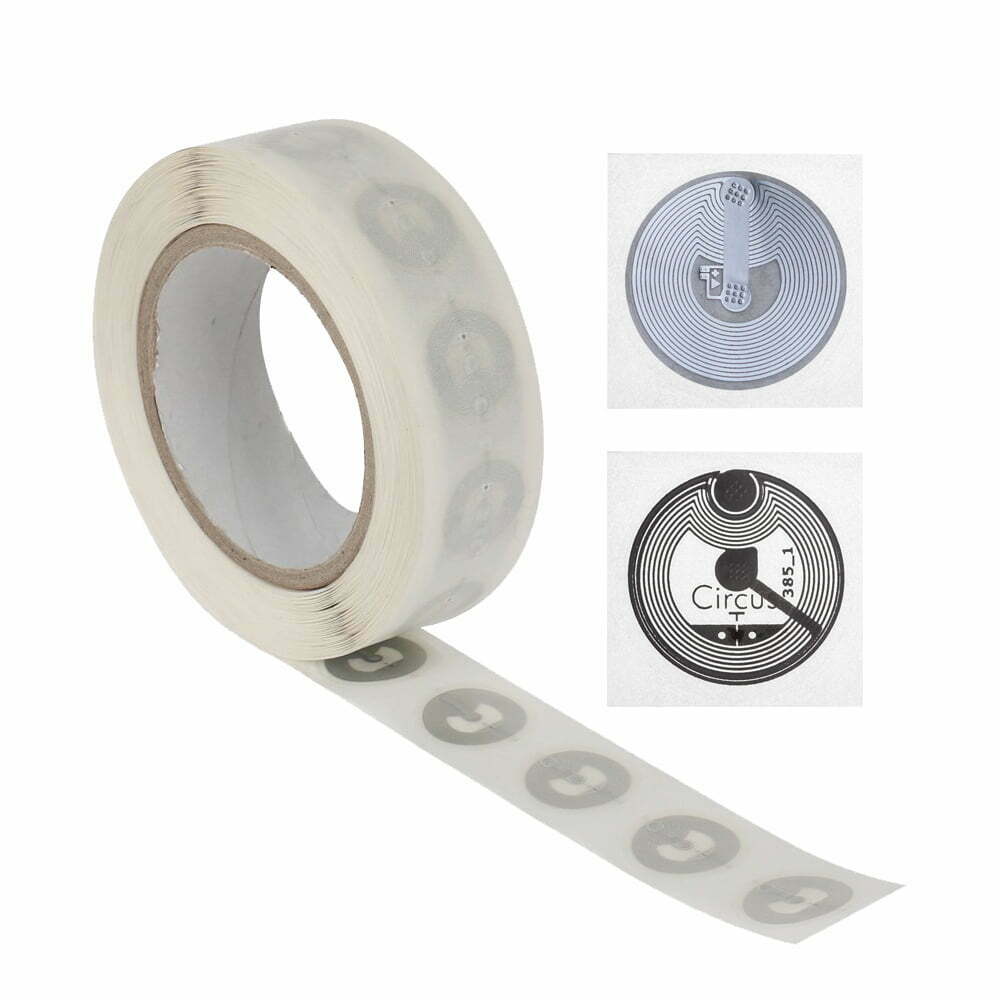
- Secure NFC inlays & tags: NFC inlay options compliant with NFC Forum Type 2–5 specifications, optimized for durability, tamper resistance, and performance on metal or curved surfaces (e.g., transit card substrates).
- End-to-end integration support: From system architecture consulting to firmware customization and API documentation — all aligned with SOLUTIONS deployment frameworks.
Implementation Considerations for Transit Operators
Successful NFC deployment requires careful attention to:
- Certification & compliance: Readers and tags must meet EN 15497 (contactless payment), Common Criteria EAL4+, and local regulatory requirements (e.g., TfL’s ITSO specification).
- Scalability planning: Support for >10,000 concurrent readers, OTA firmware updates, and remote diagnostics — enabled via RFID modules with embedded Linux or RTOS capabilities.
- Redundancy & failover: Dual-interface readers (NFC + QR fallback) and offline transaction caching ensure service continuity during network outages.
Looking Ahead: NFC, Mobility-as-a-Service, and Smart Cities
The convergence of NFC, IoT, and cloud-native platforms is enabling next-generation mobility ecosystems. In smart city initiatives, NFC transit cards serve as unified digital identities — linking fare payment, parking validation, bike-sharing access, and even building entry. With RFIDHY’s RFID asset tracking and NFCWORK’s Smart management frameworks, operators gain end-to-end visibility across physical assets and digital interactions — turning every tap into actionable intelligence.
Frequently Asked Questions
- What is an NFC transit card?
- An NFC transit card is a contactless smart card or mobile credential using NFC technology (ISO/IEC 14443 standard) to enable fast, secure fare payment on public transport systems — compatible with validators, gates, and mobile wallets.
- Can existing transit infrastructure support NFC without full replacement?
- Yes. Many legacy HF RFID systems (e.g., MIFARE-based) are NFC-compatible at the protocol level. Upgrading readers to modern HF RFID readers and issuing new NFC inlay-based cards often enables NFC functionality without overhauling backend systems.
- Are NFC transit cards secure against cloning or fraud?
- When implemented with certified secure elements (e.g., DESFire EV3, JCOP), encrypted session keys, and proper key management — such as those supported by NFC-CA — NFC transit cards offer strong protection against cloning and replay attacks.
- Do RFIDHY and NFCWORK offer certified products for public transit use?
- Yes. Our HF RFID readers and NFC tags comply with ISO/IEC 14443, CE, FCC, and RoHS standards — and are field-proven in global transit deployments requiring reliability, speed, and long-term support.
Ready to Modernize Your Transit Fare System?
Partner with NFCWORK and RFIDHY for end-to-end NFC transit card solutions — from certified HF RFID readers and NFC inlays to system integration and certification support.