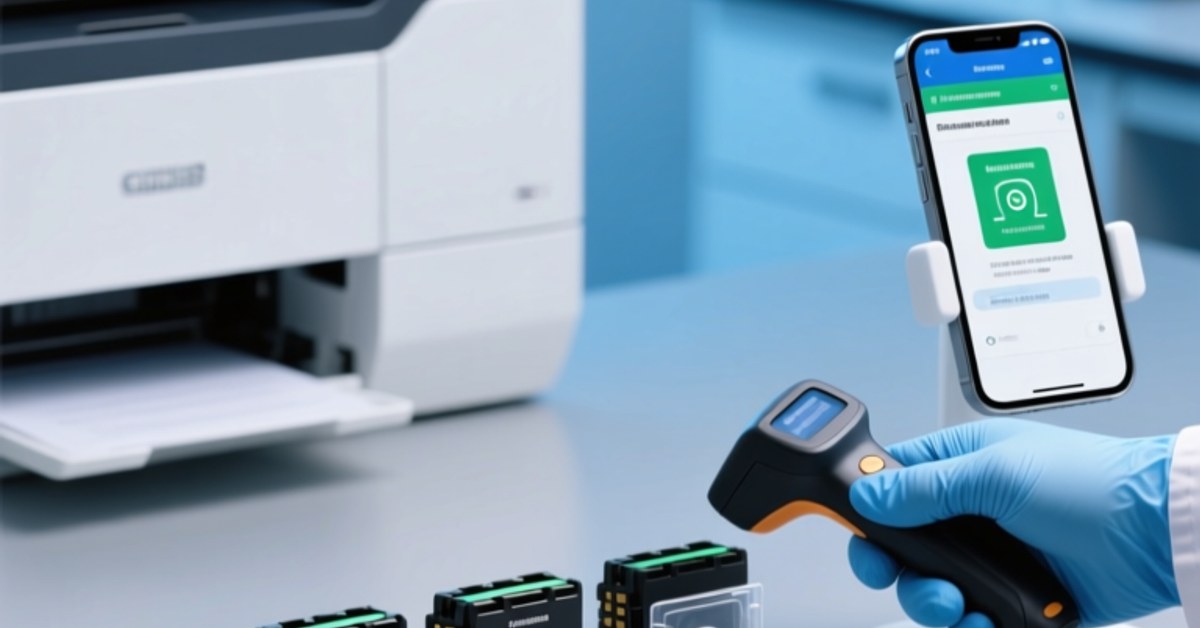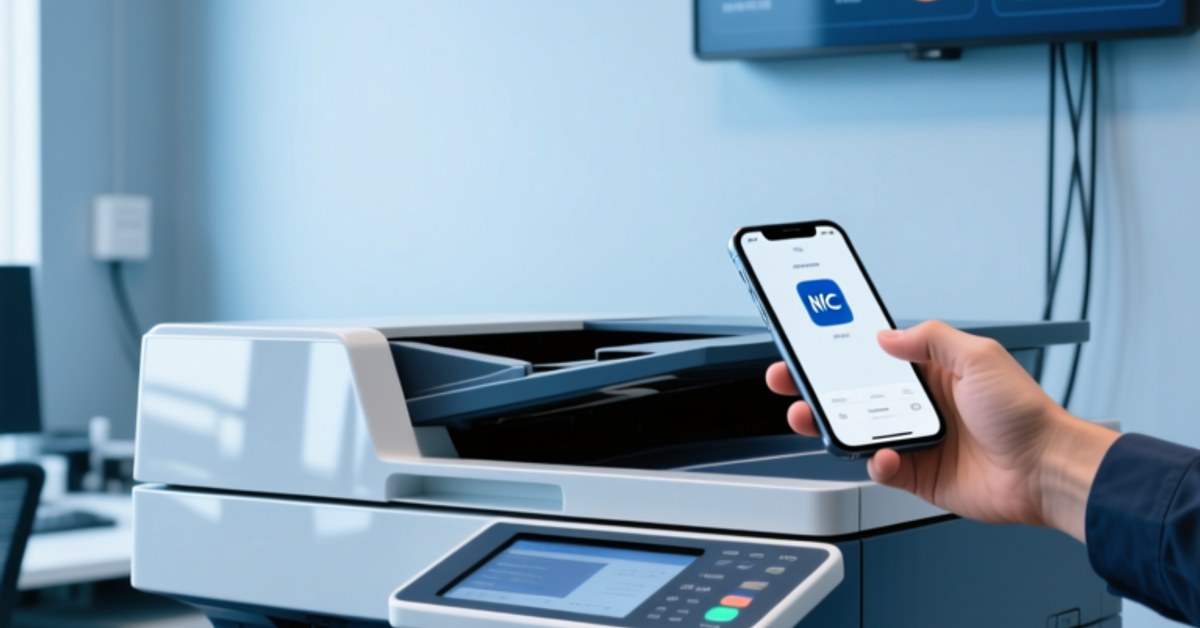
Counterfeit printer cartridges and other consumables are a growing problem worldwide. They not only cheat customers out of money but also damage printers, produce poor quality prints, and tarnish the reputation of trusted brands. For brand owners, warranty and service managers, and retail teams, protecting customers from fakes is a top priority. Near Field Communication (NFC) technology offers a powerful solution. By embedding NFC tags into product packaging or the consumables themselves, brands can enable instant, secure verification. This guide explores how genuine consumables verification with NFC tags works, how it streamlines warranty registration and claims, and how it builds lasting brand trust.
Why Genuine Consumables Verification Matters
Counterfeit consumables, especially printer cartridges, are a multi-billion-dollar problem. They often contain inferior ink or toner that can clog printheads, leak, or even damage the printer. Customers who unknowingly buy fakes may blame the printer manufacturer or the brand, leading to lost trust and costly support calls. For brands, counterfeits mean lost revenue, increased warranty claims, and a diluted brand image. Genuine consumables verification is therefore not just about protecting revenue—it’s about safeguarding the customer experience and maintaining brand integrity.
Traditional authentication methods like holograms or scratch-off codes can be copied or are cumbersome for customers. NFC technology, on the other hand, is simple, fast, and secure. Most modern smartphones have built-in NFC readers, making it easy for customers to verify a product with a single tap.
How NFC Tags Enable Product Authentication
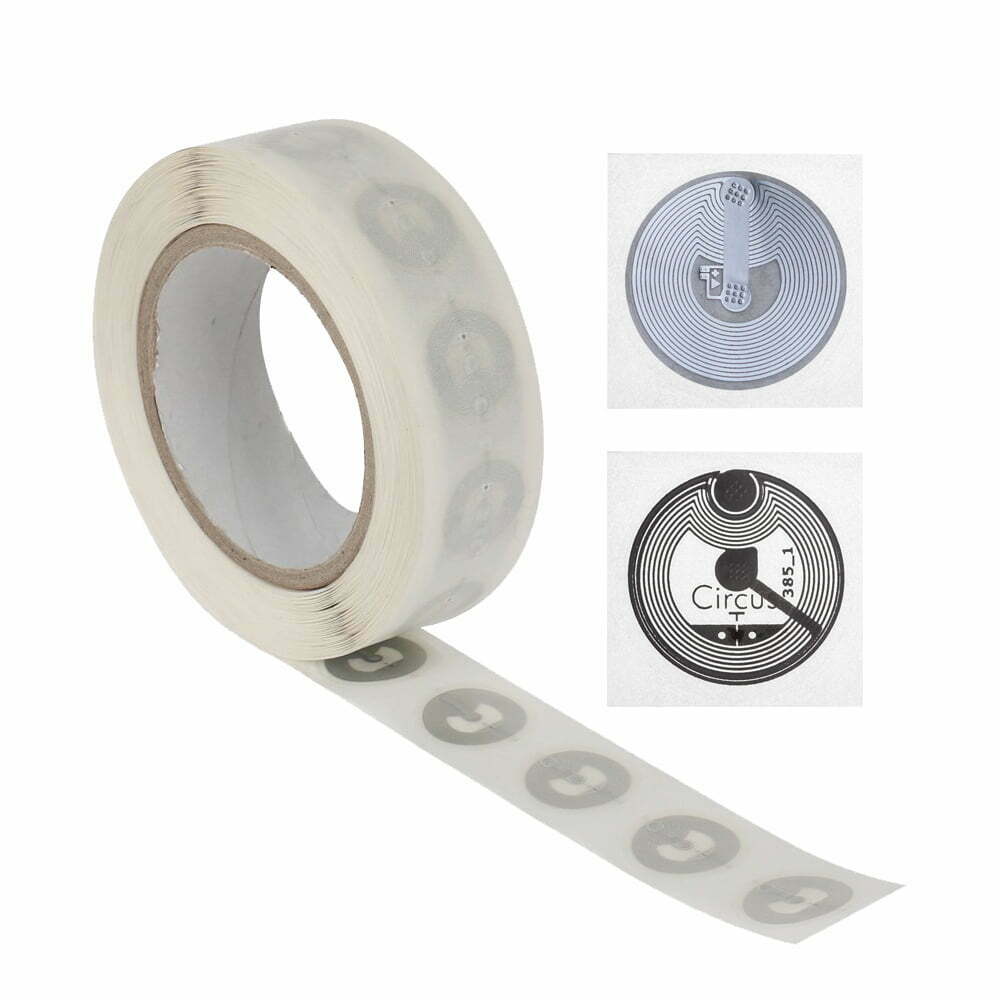
NFC tags are small, passive chips that can be embedded into labels, stickers, or packaging seals. Each tag has a unique identifier and can store data securely. When a customer taps their smartphone on the tag, it triggers a verification process. This can be done via a web-based application or an app, requiring no special equipment. The tag itself can be tamper-evident, making it difficult to remove and reuse. This makes NFC an ideal product authentication tag for consumables like printer cartridges, toner, and ink bottles.
RFIDHY, offers a range of NFC tags, stickers, and inlays suitable for packaging integration. These products are designed for durability and security, ensuring reliable performance throughout the supply chain.
The Consumer Verification Flow: Tap to Verify Cartridge
For customers, the verification process should be as simple as possible. Here is a typical flow:
- Locate the NFC tag: The tag is usually placed on the packaging seal or directly on the cartridge.
- Tap with a smartphone: The customer holds their phone near the tag. No app is needed if the tag directs to a mobile web page.
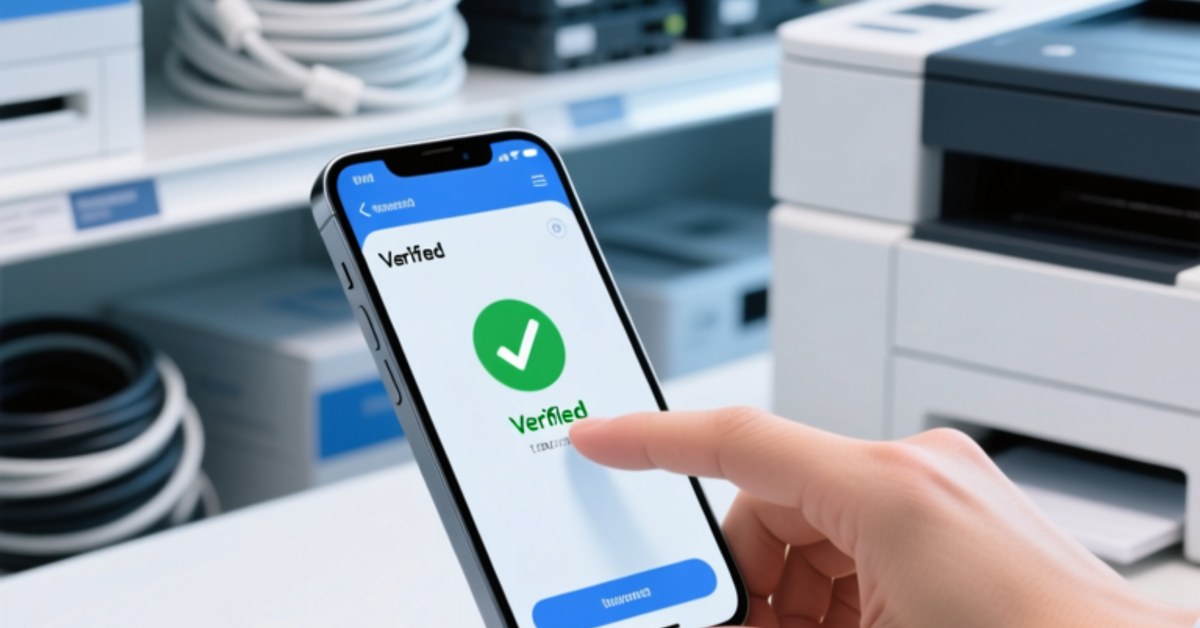
- Instant verification: The system checks the tag’s unique ID against a secure database. Within seconds, the customer sees whether the product is genuine.
- View product details: For genuine products, the page displays product information, warranty status, and support links. For suspicious products, it provides instructions on what to do next.
- Register warranty automatically: The first tap can also register the product for warranty, saving the customer time.
To make this clear, the table below summarizes the steps and outcomes:
>
| Step | Action | Outcome |
|---|---|---|
| 1 | Find the NFC tag on the packaging seal | Customer sees a clear, tamper-evident label |
| 2 | Tap the tag with an NFC-enabled smartphone | Browser opens to a verification page |
| 3 | System checks the tag ID | Verification result shown in seconds |
| 4 | View details | Genuine: product info, warranty status, support. Fake: alert and reporting instructions |
| 5 | Automatic warranty registration | Product registered to the customer’s device or account |
This flow reduces friction and encourages customers to verify every purchase. It also gives brands valuable data on where and when products are verified.
Warranty Registration and Claims Simplified
Traditional warranty registration often requires customers to fill out forms, mail in cards, or keep receipts. This leads to low registration rates and disputes when claims arise. With NFC-enabled cartridge warranty NFC, the process becomes automatic. When a customer taps to verify, the system can register the product and link it to their device or user account. This creates a digital record of purchase and warranty start date.
When a warranty claim is needed, the customer can simply tap the tag again to access their warranty status and initiate a claim. The system can pre-fill product details and purchase history, making the process faster and more accurate. For brands, this reduces administrative overhead and helps prevent fraudulent claims. It also ensures that only genuine products receive warranty support, protecting both the brand and the customer.
Integrating warranty registration with verification also opens the door to personalized support. For example, after verification, the customer could be offered extended warranty options or consumable replenishment reminders.
Counterfeit Handling: A Proactive Approach
When a counterfeit is detected, the system should do more than just flag it. It should guide the customer through the next steps. This includes:
- Clear messaging that the product may be counterfeit.
- Instructions to report the seller or location of purchase.
- Contact information for the brand’s anti-counterfeit team.
- Information on how to safely dispose of the counterfeit product.
Brands can also use the data from counterfeit detections to identify hotspots and take legal action. NFC verification provides real-time intelligence on counterfeit distribution. This proactive approach not only protects customers but also helps brands enforce their intellectual property rights.
For customers, knowing that the brand is actively fighting counterfeits builds brand trust. It shows that the brand cares about their experience and safety.
Support and Installation Help at Their Fingertips
Consumables like printer cartridges often require proper installation to function correctly. Common issues include incorrect installation, incompatible models, or confusion about setup. NFC tags can link directly to installation guides, video tutorials, and troubleshooting tips. After verification, the customer can be presented with a personalized support page based on the specific product model.
This reduces the number of support calls and improves customer satisfaction. It also empowers customers to solve problems on their own. For brands, it means lower support costs and happier customers. The same tap that verifies authenticity can also provide access to live chat or a support hotline, making help easily accessible.
RFIDHY offers NFC tags and stickers that can be programmed with dynamic URLs, allowing brands to update support content without changing the physical tag.
Packaging Seal Design: Integrating NFC for Tamper Evidence
The effectiveness of NFC-based verification depends heavily on how the tag is integrated into packaging. The seal should be tamper-evident: if someone tries to remove the tag, it should break or leave visible damage, preventing reuse. This is crucial for consumables where packaging is often opened and discarded.
Options for integrating NFC tags include:
- NFC stickers: Adhesive labels that can be placed over the opening of a box or on the cartridge itself.
- NFC inlays: Thin, flexible tags that can be embedded into cardboard or plastic packaging.
- NFC tags with tamper-evident features: Specialized tags that break the antenna when removed, making them unusable.
When designing packaging, consider the placement of the tag. It should be easy to tap with a smartphone but not easily damaged during shipping. Also, ensure that the tag is programmed with a secure, unique URL that cannot be guessed or spoofed.
RFIDHY provides a range of NFC tags and inlays suitable for packaging seals, including customizable options to match brand aesthetics. For more details, visit our PRODUCTS page.
Building a Comprehensive Authentication Ecosystem
NFC verification is most powerful when integrated into a broader digital product passport or authentication ecosystem. For example, the same NFC tag can provide access to a Digital Product Passport that contains information about the product’s origin, materials, and end-of-life handling. This is increasingly important for regulatory compliance and sustainability.
Similarly, brands in luxury goods can learn from Luxury items authentication practices, where NFC is used to protect high-value products. The principles of secure tagging, customer engagement, and data analytics apply across industries.
By adopting NFC for genuine consumables verification, brands can create a seamless experience that protects customers, streamlines warranty management, and builds long-term loyalty.
Conclusion: Protect Your Brand and Customers with NFC
Counterfeit consumables are a persistent threat, but NFC technology offers a robust solution. By implementing NFC tags for verification, warranty registration, and support, brands can:
- Enable customers to tap to verify cartridge authenticity instantly.
- Simplify warranty registration and claims with cartridge warranty NFC.
- Gather real-time data on counterfeits to protect intellectual property.
- Provide immediate support and installation help.
- Build brand trust through transparency and customer-centric features.
Whether you are a consumables brand owner, a warranty manager, or part of a retail team, integrating NFC into your packaging is a strategic investment. RFIDHY, powered by NFCWORK Technology, offers a comprehensive range of NFC tags, stickers, and inlays designed for product authentication and packaging integration. Explore our solutions today and take the first step toward a safer, more trustworthy supply chain.
FAQ
1. How does NFC verification actually work?
NFC tags contain a unique identifier. When a smartphone taps the tag, it reads this ID and sends it to a secure server. The server checks the ID against a database of genuine products. The result is displayed on the phone’s screen.
2. Do customers need to download an app?
Not necessarily. Most NFC tags can be programmed to open a web page directly in the phone’s browser. This makes it easy for customers to verify products without installing anything.
3. Can NFC tags be copied or cloned?
While NFC tags can be cloned, advanced security features like cryptographic authentication and tamper-evident designs make it extremely difficult. Using unique, dynamic URLs and server-side validation further enhances security.
4. How does NFC help with warranty claims?
NFC tags can automatically register the product for warranty when first tapped. For claims, the customer can tap the tag to access their warranty status and initiate a claim, with product details pre-filled.
5. What types of NFC tags are best for packaging seals?
Tamper-evident NFC stickers or inlays are ideal. They can be placed over box openings or on the product itself. RFIDHY offers a variety of NFC tags suitable for different packaging materials and designs.
Ready to Protect Your Brand?
Contact RFIDHY today to discuss how NFC tags can secure your consumables, streamline warranty support, and build customer trust. Our team can help you choose the right NFC tags for your packaging and integrate them with your existing systems.
Contact us to request a consultation or sample pack. Visit our FAQ for more answers.