Construction sites, oil and gas facilities, power plants, and other industrial environments face a constant challenge: controlling access to the site, restricting high-risk zones, and tracking people—especially workers performing tasks alone. Manual sign-in sheets, paper permits, and radio call-ins are often slow, inconsistent, and difficult to verify during an emergency.
Industrial NFC wearables close that gap by turning a standard safety credential into a digital check-in point. An NFC wristband or tag can be carried effortlessly, read instantly by a fixed or handheld NFC/RFID reader, and linked to a worker profile containing the exact approvals needed for a specific area. This guide explains how to deploy NFC wearable technology for site gate and muster point control, restricted zone permission tiers, lone worker check-in, and worker emergency response.
New to this topic? Start with the smart wearable identification applications page on NFCWORK.
Why an Industrial NFC Wearable Fits a Site Safety Workflow
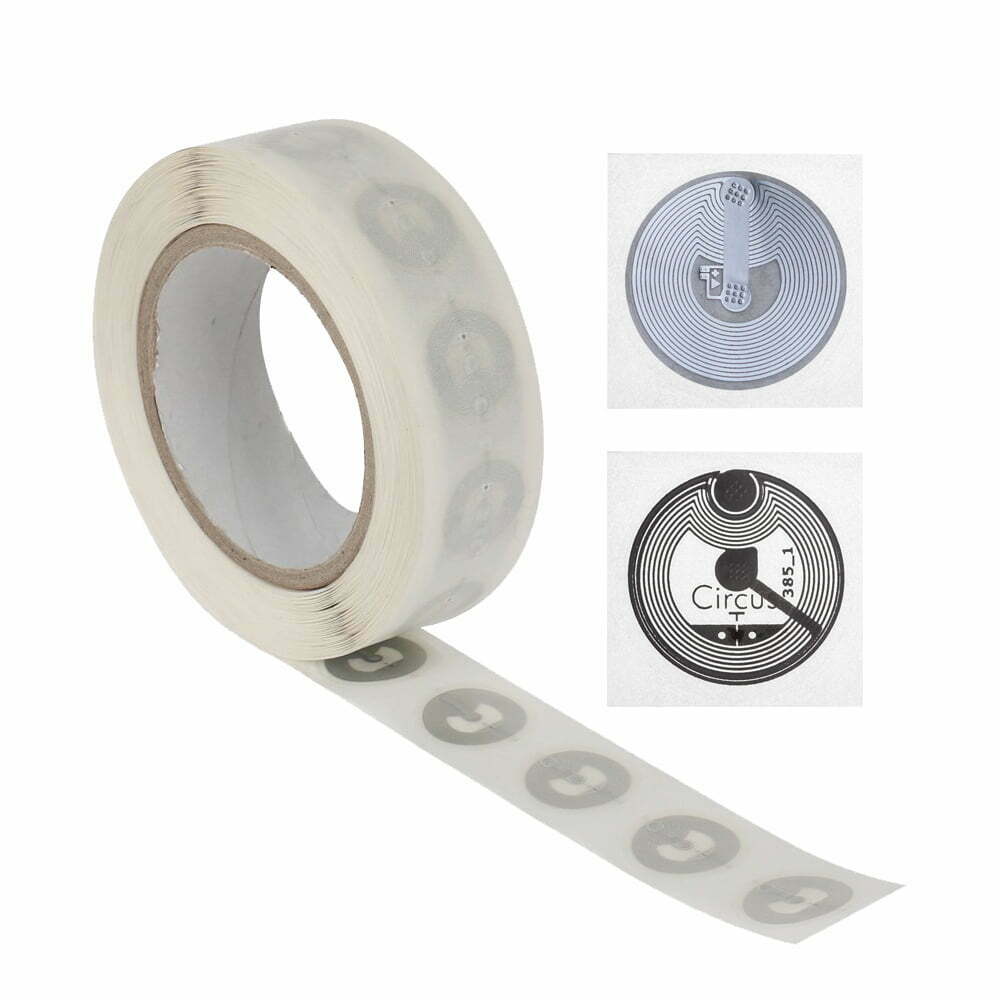
An industrial NFC wearable is not a phone-based app; it is a credential that lives on the body. The most common form factor is an NFC/RFID wristband, but the same NFC chip can also be delivered as an NFC tag mounted on a hard hat, a badge, or a piece of tooling.
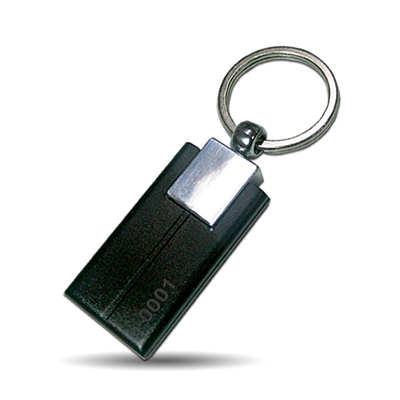
Because the chip is passive, it requires no battery and no charging schedule. A worker receives the credential once and uses it through the shift. From an access control perspective, each tag carries a unique ID that is linked to an employee record, safety training status, and site permissions. If the credential is lost or a worker leaves the project, the tag can be disabled centrally without re-issuing every other worker’s credential.
This simple architecture creates a readable audit trail for site entry, zone access, and emergency mustering—without asking operators to swipe cards or remember passwords. EHS directors also benefit from data that is easier to analyze after an incident.
Construction Site Access Control with NFC Wearables
Construction site access control usually starts at the main gate, but the solution should not end there. A worker who enters the site under one role cannot be expected to carry several badges for different zones. With NFC/RFID wristbands, site managers can create a control point at almost any location where a fixed or handheld NFC/RFID reader is placed.
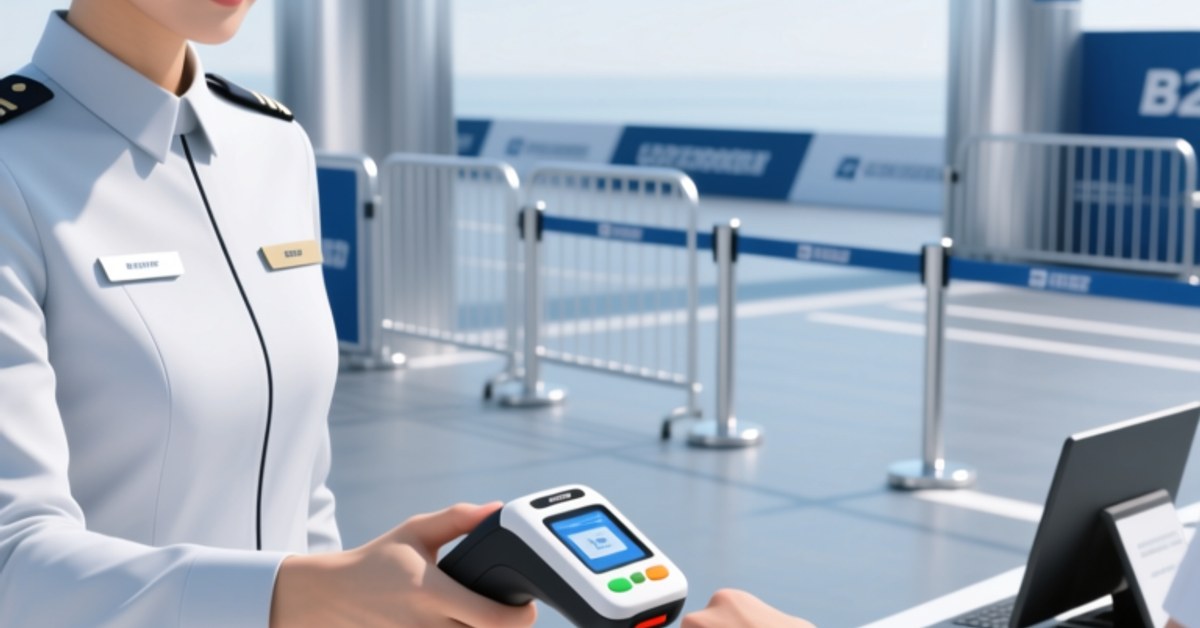
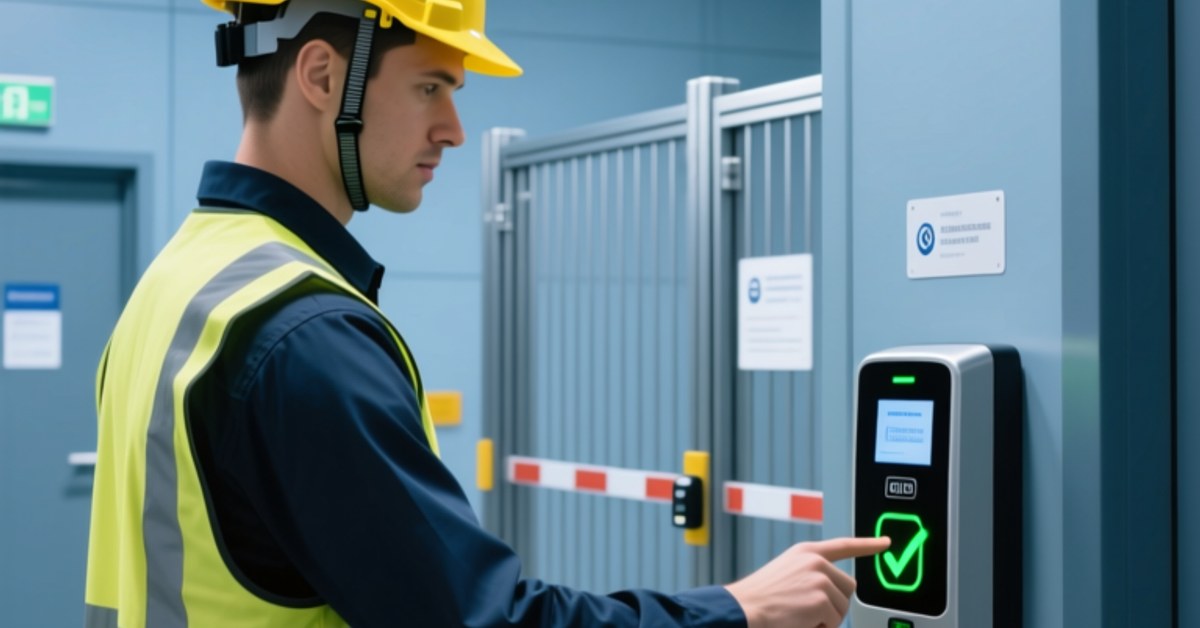
At the site gate, a worker taps the wristband against a reader. The reader looks up the tag ID and immediately shows whether the worker is authorized to be on site, which induction records are valid, and whether the credential is active. Security staff receive an unambiguous decision instead of needing to validate a paper form.
During an emergency, the same wristband can be read at a muster point. A supervisor or automated reader scans each worker as they arrive at the assembly area. The system compares the list against site entry records and raises an alert if an expected worker has not scanned in. This makes site gate and muster point control faster and reduces reliance on paper names and radio calls.
A practical flow uses three reader locations:
- Gate reader: records time in and confirms entitlement to enter.
- Zone reader: permits access only to personnel with the relevant training and authorization.
- Muster reader: logs safe arrival and supports roll call during evacuation.
Restricted Zone Wristband and Hazard Zone Permission Tiers
Not every worker on site should be able to enter every zone. In an oil and gas plant or a large construction project, certain areas contain high-voltage equipment, permit-only tasks, confined spaces, or overhead lifting hazards. A restricted zone wristband is a credential profile assigned to the unique ID in the NFC tag, rather than a separate wristband that a worker changes for each task.
Permission tiers are created by the safety and security team. Basic site induction grants access to general zones. Additional online training, practical certification, or a live permit can unlock higher risk zones. When a worker taps at a restricted entrance, the system checks:
- Is the credential active and not marked as lost?
- Does the worker have the specific zone permission?
- Is any required permit or license still in effect?
A tier structure might look like this:
>
| Permission Tier | Required Conditions | Typical Zone Examples |
|---|---|---|
| Tier 0 – Site access | Workforce induction and site-specific orientation | Main office, entry gate, common pedestrian routes |
| Tier 1 – General work area | PPE qualification and basic safety training | Open construction area and ground-level workspaces |
| Tier 2 – Restricted high-risk area | Role certification and active permit | Confined space, high-voltage room, protected machinery zone |
| Tier 3 – Incident support area | Special approval issued by the incident commander | Staging near a live incident or active rescue area |
Using a digitized permission structure makes it easier to enforce hazard-zone rules. If a worker’s certification expires, the access system can deny entry immediately without collecting physical passes from every individual.
Lone Worker Safety Tags and Check-In Automation
Construction and plant maintenance often send workers into isolated pump rooms, roof areas, pipe racks, or utility tunnels. The remote worker may not have another colleague nearby, and a missed radio call is not always noticed immediately. A lone worker safety tag is a durable NFC credential that supports a clear check-in plan.
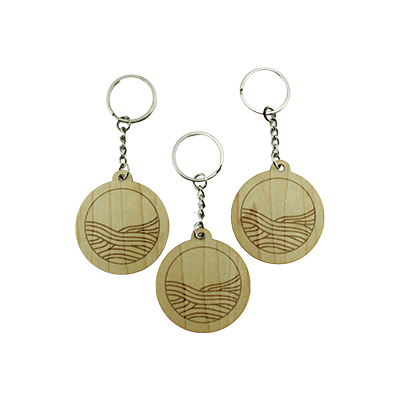
At the start of a task, the worker taps a checkpoint reader. The central system records the person’s identity, the checkpoint location, and the time. If the procedure calls for a 30-minute check-in, the worker taps again at the next checkpoint or a nearby reader. If the expected scan does not appear, a supervisor receives an alert and can start a welfare check. —Learn more about round abs rfid tag.
NFC tags work best when they are placed at fixed checkpoints and on known walking routes. They do not replace fall detection, man-down alarms, or personal two-way communications. Instead, they add a structured layer of accountability for workers who would otherwise rely only on memory and self-discipline.
Worker Emergency Response and Evacuation Tracking
During a fire, gas release, or structural incident, incident commanders need to know who was in the affected area and who has reached safety. NFC wearables can support worker emergency response by creating time-stamped scans at strategic readers.
Incident and evacuation tracking with NFC/RFID wearables is not just about scanning a wristband. It is about using scan data to produce a central status board:
- Workers who scanned in at zone readers are identified as potentially inside the affected area.
- Workers who scan at the main exit reader are marked as having left the building or site.
- Workers at the designated muster point are marked as safe and ready for roll call.
This approach is strongest when readers are configured to store records locally. If the corporate network fails during an incident, the local reader still records the scan and can synchronize when connectivity returns. Site teams should test evacuation workflows regularly and include NFC/RFID wearables in emergency drills.
Hard Hat and Glove Integration for Everyday PPE
A credential only works if workers actually wear it. Hard hat and glove integration are two deployment paths that improve acceptance on active jobsites because they do not add an extra item to hold.
For hard hats, an NFC tag can be mounted on the outer shell in a position that is easy to present at a reader. The tag should have a low profile and be compatible with regular cleaning and site conditions. PPE suppliers and safety officers should review any modification to a hard hat shell to ensure it does not affect impact or dielectric performance. In many cases, a custom NFC inlay or a hardened NFC tag is selected for the specific hat model.
For workers who wear gloves all day, an NFC silicone wristband can be exposed without removing the glove, depending on approved PPE protocols. It provides a stable tap point for access readers and checkpoints. In low-risk environments with thin fabric gloves, workers may prefer to wear a wristband above the glove or at the sleeve opening. The key is to align the form factor with the glove and cuff system used on site so that scanning does not delay work.
A Practical Deployment Plan for Industrial NFC Wearables
Introducing NFC wearables to a construction or industrial site does not require replacing the entire security system. Start with one controlled area and build a process that can be scaled:
- Map entry gates, hazard zones, and muster points where a reader will be needed.
- Define permission tiers and the training or documentation required to access each zone.
- Choose a credential format: NFC wristbands for general workers, NFC tags for hard hats, or a combination based on PPE.
- Install fixed or handheld readers that fit the physical layout and local emergency response flow.
- Connect the readers to the access database and validate that local storage is enabled for offline use.
- Assign unique IDs to workers and link them to employee records rather than writing personal data directly on the tag.
- Train workers, gate staff, and first responders on the scanning procedure for both normal entry and evacuation.
- Run a pilot in one zone, review missed scans and workflow delays, then refine before full rollout.
Building a Safer, More Accountable Workplace
Manual methods cannot provide real-time visibility across a large industrial site. NFC/RFID wearables turn safety checkpoints into simple, recordable actions. Whether a worker taps a wristband at the gate, scans a hard hat tag at a restricted zone, or checks in from a remote utility room, the same digital identity supports access control, lone worker safety, and emergency response.
As with any safety technology, the system should be planned with EHS, security, operations, and engineering teams. Used correctly, industrial NFC wearables give site leaders a reliable answer to one of the most important questions in any emergency: who is where, and who is safe.
FAQ
Can the same NFC wristband be used for gate access and emergency muster?
Yes. A gate reader and a muster point reader can both log the unique ID stored in the wristband. Make sure every reader is connected to the same access database or uses an offline log that can be synchronized after the evacuation. This allows the system to show which workers arrived at the muster point and which workers are still unaccounted for.
How far away can an industrial NFC wearable be read?
NFC is designed for short-distance communication, typically a few centimeters. This makes the deliberate tap motion suitable for jobsite check-in and controlled gates. If the site needs automatic long-range identification for vehicles or wide access lanes, UHF RFID tags or UHF RFID readers should be considered instead, because UHF can be read from longer distances depending on the antenna and tag configuration.
Does an NFC hard hat tag replace a lone worker alarm?
No. A lone worker safety tag supports scheduled check-ins at a reader, but it does not detect motion, falls, or an inability to press a button. For true man-down protection, use a purpose-built lone worker system and treat NFC check-in as an additional layer of accountability.
What information should be stored on an NFC worker tag?
Keep personal and health data off the tag. Store a unique identifier or a reference such as an employee number and let the central system maintain role, certification, and training records. This makes lost tags easier to disable and keeps sensitive information under database controls.
Ready to make site access, restricted zones, and muster point roll calls faster and more accurate? Explore NFC tags, wristbands, and readers designed for worker safety applications, or contact the NFCWORK and RFIDHY teams for a site-specific recommendation.