The Revised EU CPR and the Rise of Construction Product Passports
The European Union is updating its Construction Products Regulation (CPR) to align with the goals of the European Green Deal and the Circular Economy Action Plan. One of the most significant changes is the introduction of digital product passports for construction products. These digital records will act as a single source of truth for a product’s identity, performance, compliance and sustainability data.
For manufacturers of building materials, importers, architects and specifiers, the transition from paper-based declarations of performance (DoP) to digital, interoperable data sets is not a question of if but when. The revised CPR is expected to require that certain construction products carry a digital product passport (DPP) linked to a physical identifier. This is where NFC technology becomes a practical and powerful enabler.
What Is a Construction Product Passport?
A construction product passport is a structured collection of product data that travels with the physical product. It typically includes:
- Manufacturer identification and product batch information
- Declaration of Performance (DoP) data and CE marking information
- Technical specifications and material composition
- Environmental Product Declaration (EPD) data and carbon footprint
- Installation, maintenance and end-of-life instructions
Unlike a static PDF certificate, a digital product passport stored on or linked via an NFC tag can be updated throughout the product’s lifecycle. It enables every actor in the value chain — from the factory to the demolition site — to access verified data simply by tapping a smartphone.
Revised CPR Digital Requirements: What Manufacturers Must Prepare For
The European Commission’s proposal for the revised CPR introduces specific obligations for digitalization. While the final legal text is still evolving, the direction is clear:
- Digital DoP: The Declaration of Performance will become a digital document, accessible via a web link and a machine-readable identifier.
- Product passport requirement: Many construction products under harmonised standards will need to carry a digital product passport linked to a carrier (e.g., QR code, barcode or NFC tag).
- Data interoperability: The passport must be accessible through the EU’s Digital Product Passport infrastructure, with defined data fields and access rights.
- Market surveillance access: National authorities must be able to quickly retrieve compliance data, preferably without destructuring or damaging the product.
For manufacturers, this means that the physical label or tag on a product must do more than display a logo. It must serve as a secure digital gateway to comprehensive compliance and sustainability records.
Construction DPP Data Fields: What Information Should Be Encoded or Linked?
Not all data will be stored directly on an NFC tag. In most cases, the tag contains a unique identifier and a secure URL that resolves to a cloud-hosted DPP. Yet you still need to plan the data architecture. The following table summarizes common data fields for a construction DPP:
>
| Data Category | Examples |
|---|---|
| Product identification | Product name, model, serial number, EU product category, batch/lot |
| Manufacturer data | Legal manufacturer, authorized representative, factory address |
| Compliance data | Harmonised standard, DoP number, CE marking information, notified body certificate |
| Material composition | Bill of materials, hazardous substance declarations, recycled content |
| Sustainability data | EPD reference, Global Warming Potential (GWP), carbon footprint per unit |
| Logistics and traceability | Production date, site of origin, distribution route (optional) |
| Lifecycle information | Installation guide, maintenance schedule, disassembly / recycling instructions |
It is wise to adopt a data model that aligns with the upcoming EU DPP standard and the relevant data templates developed by CEN/TC 442 (Building Information Modelling) and other working groups.
NFC Construction Products: How NFC Tags Enable Smarter Building Material Traceability
NFC (Near Field Communication) is a short-range wireless technology that lets a smartphone read a small chip simply by bringing it within a few centimetres. When embedded or attached to construction products, NFC tags serve as intelligent identifiers that bridge the physical and digital worlds.
Why choose NFC for construction product passports? Here are the key benefits:
- Tap-and-go simplicity: Workers, inspectors and end customers do not need special apps when the NFC tag uses the standard NDEF format and hosts a web link. An Android or iOS device can open the passport via the default NFC reader.
- Durability: For demanding construction environments, manufacturers can choose PVC or epoxy-coated NFC tags, or place tags in protected areas. There are also NFC tags rated for outdoor use.
- Security: NFC chips can include cryptographic features to make counterfeiting more difficult, protecting product authenticity and compliance data.
- Integration with IoT: NFC-enabled products can be read during automated quality checks using fixed reader modules, supporting factory-level digital traceability.
Selecting the Right NFC Tag Types for Building Materials
Different building products require different tag form factors. As a manufacturer, you should evaluate the product surface, environmental exposure and reading distance. The following tag categories are suitable for many construction applications:
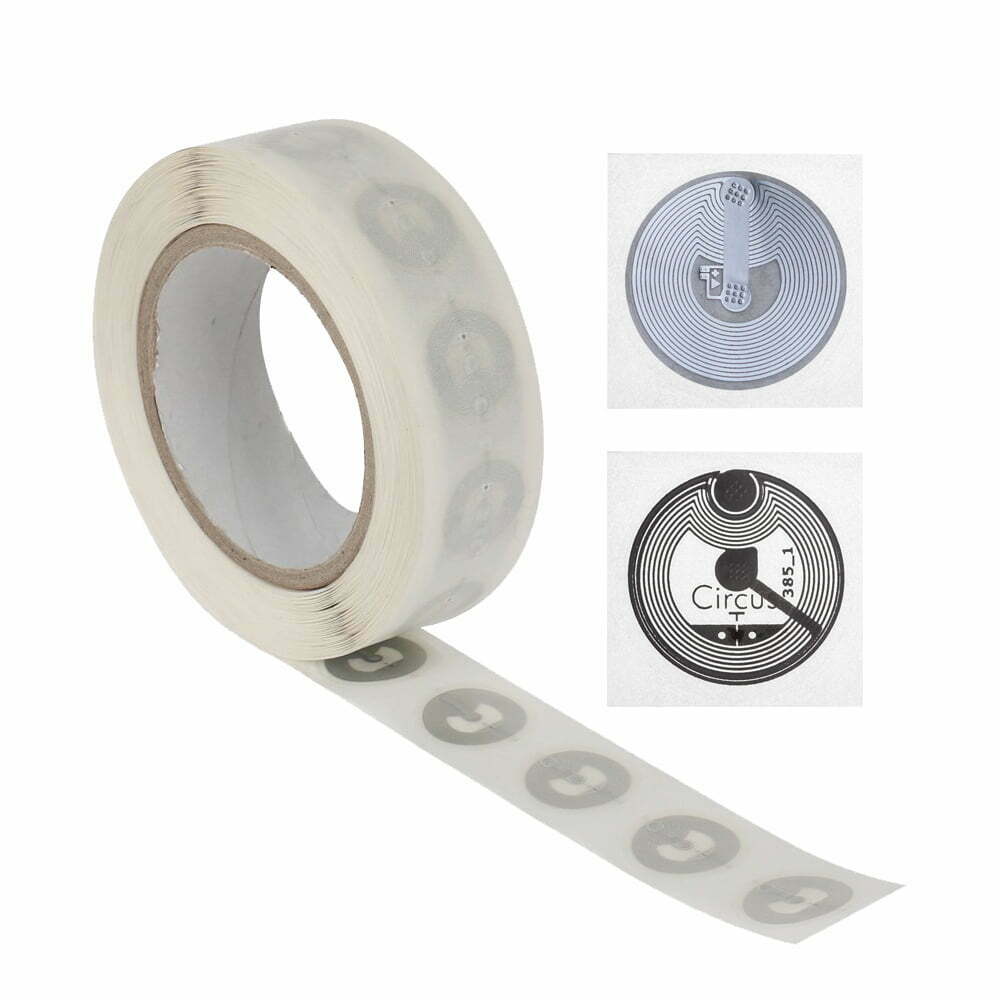
- NFC labels: Ideal for flat, non-metal surfaces such as gypsum boards, insulation panels or packaging. They can be printed with logos and QR codes.
- NFC inlays: Embeddable into paper labels, plastic profiles or directly into composite materials during molding.
- Anti-metal NFC tags: For metallic surfaces like steel beams, aluminum profiles or metal pipes, anti-metal tags use a ferrite layer to maintain readability.
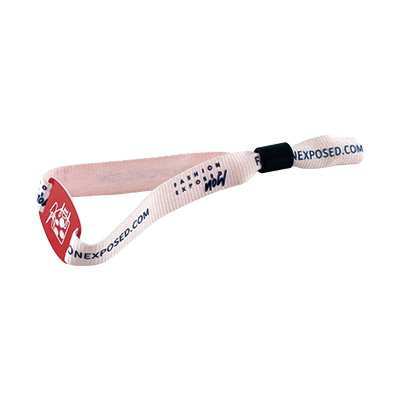
- NFC silicone wristbands: Less relevant for products, but useful for site access and worker tracking combined with the same digital architecture.
It is important to test tag placement thoroughly under real conditions. A tag that is readable on the production line may fail after exposure to moisture, extreme heat or compression.
EPD and Carbon Data Linkage: Making Sustainability Data Accessible at the Point of Use
One of the most compelling drivers for construction DPPS is the need to link Environmental Product Declarations (EPDs) to physical products. An EPD provides transparent, verified data on the environmental impact of a product over its life cycle, including global warming potential, resource use and waste generation.
The revised CPR will likely require that sustainability information, including EPDs where available, be part of a product’s digital documentation. By embedding an NFC tag in the product or its packaging, you ensure that the relevant EPD can be retrieved at any time — by an architect checking material credentials, a contractor on site, or a certification body conducting an audit.
For example, a UHF RFID tag or NFC tag on a pallet of thermal insulation products can link directly to the EPD PDF and to the underlying primary data in an API-friendly format. This creates a seamless flow from the manufacturer’s sustainability database to the building’s digital twin.
Site Verification Workflow: How Inspectors and Contractors Will Use NFC-Based Passports
Digital product passports only create value when they work in the field. A robust site verification workflow should be simple and repeatable. Here is a typical process for an NFC-enabled construction DPP:
Step 1 – Product receives NFC tag at the factory: Each batch or individual unit gets a tamper-evident NFC label containing a unique identifier. The DPP data is uploaded to a cloud platform with controlled access levels.
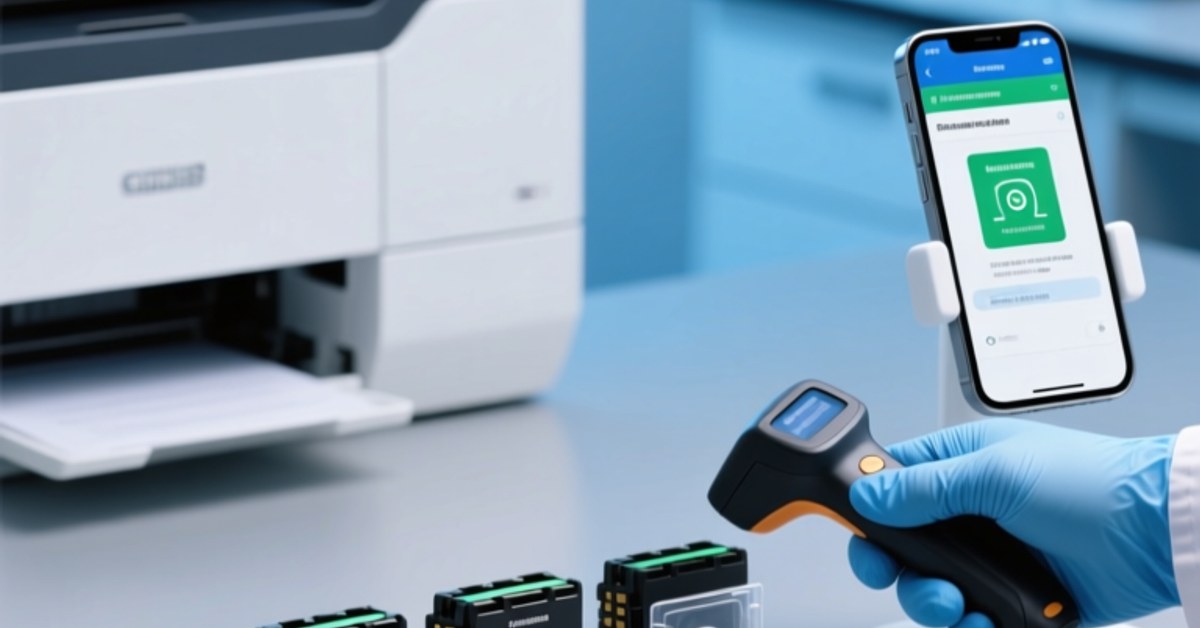
Step 2 – Delivery and intake: A warehouse worker taps the NFC tag with a smartphone or a handheld RFID reader system to confirm the delivery against the purchase order. The app retrieves the DoP and checks whether the product matches the specification.
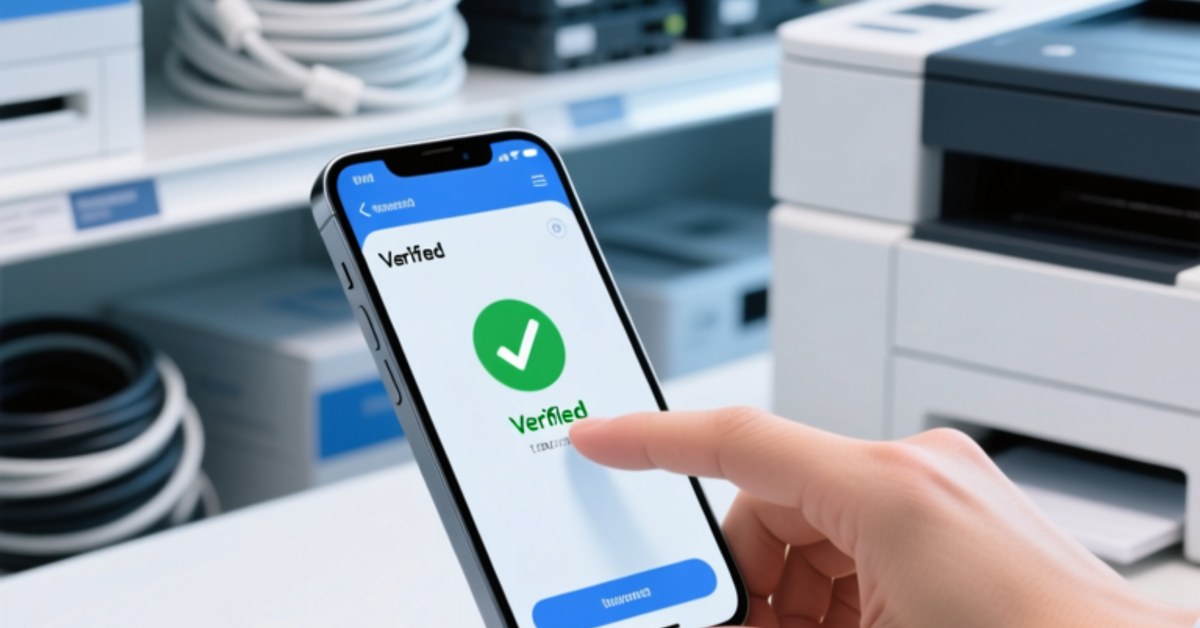
Step 3 – On-site verification by the contractor: Before installation, the site engineer taps the tag to review installation instructions and confirm that the product carries the required CE marking and EPD. Any non-compliance is flagged instantly.
Step 4 – Integration into BIM: The data retrieved from the tag can be transferred into Building Information Modelling software, creating a permanent digital record for facility management and future renovation or demolition.
Step 5 – Ongoing monitoring: During the building’s service life, an NFC tag can still be read for maintenance or replacement identification. This supports circular economy strategies such as deconstruction and material reuse.
For national market surveillance authorities, this workflow means faster checks and fewer physical samples. For specifiers, it means higher confidence in the materials they choose.
NFC Tag Placement on Materials: Practical Considerations
There is no one-size-fits-all answer for where to place an NFC tag on a construction product. However, these guidelines can help you plan a reliable deployment:
- Accessibility: Place tags where they can be reached easily without special tools — for example, near the manufacturer’s printed panel, on the edge of a board, or on a flange of a metal profile.
- Readability: Test the tag after placement. For metal, use anti-metal NFC tags or mount the tag with a spacer. Avoid placing tags directly on highly conductive surfaces without a ferrite layer.
- Durability: Select tag materials that survive the product’s lifetime. For products that will be painted or plastered, embed the tag in a cavity or on a surface that is not coated.
- Consistency: Standardize the location across your product range so that inspectors know exactly where to tap. This is especially critical for long-span materials such as steel beams or precast concrete panels.
- Tamper evidence: Some tags can be designed to break upon removal, giving a visible sign of a potential counterfeiting or decoupling of the passport from the product.
Practical Steps for Building Material Manufacturers
If you want to be ready for the revised CPR, start now. Even if not every product needs a DPP immediately, the trend is irreversible. Building materials traceability and transparency will become prerequisites for market access in the EU and beyond.
- Conduct a data audit: Map all existing product data sources — DoPs, EPDs, technical datasheets and batch records. Evaluate the data quality and completeness.
- Adopt a digital identifier strategy: Choose an identifier standard and a tag platform that supports the EU DPP ecosystem. NFC and QR codes are the converging physical carriers.
- Choose a tag ecosystem: Select reliable suppliers for NFC tags, RFID labels and any associated readers. Ensure the tag memory and chip type meet your data and security needs. For a broad range of NFC solutions, many manufacturers turn to established RFID tag providers.
- Pilot on a high-value product line: Test the entire flow — from production to site verification — with one or two materials. Learn how workers interact with the tags and refine your data architecture.
- Align with EPD programmes: Work with your EPD operator to ensure the digital passport can reference the EPD correctly and that any life-cycle data updates can be synchronized.
- Prepare for market surveillance: Make sure your tags allow authorities to easily access the full compliance dossier. Provide simple instructions on your website and in the product documentation.
Linking Smart Construction and RFID Solutions
NFC doesn’t exist in a silo. Progressive companies are integrating construction DPPs into broader smart management systems that include RFID-enabled inventory tracking, condition monitoring and asset lifecycle management. For example, combining fixed UHF RFID readers at factory exits with NFC passport tags on final products creates an end-to-end digital thread that benefits everyone from operations managers to sustainability auditors.
It is also worth considering how the same infrastructure can be used for other RFID applications within your manufacturing plant, such as RFID asset tracking and warehouse management. By investing in an integrated IoT platform, you can amortise your cost across production processes and improve operational efficiency while simultaneously preparing for CPR compliance.
The Bottom Line
Digital product passports for construction products are no longer a distant concept. The revised EU CPR will accelerate the adoption of digital declarations and make supply chain transparency a legal requirement for many product families. Manufacturers that adopt NFC technology early can transform a compliance obligation into a competitive advantage: they will offer customers instant access to verified performance and sustainability data, simplify site verification and reinforce their leadership in sustainable construction.
NFCWORK Technology and RFIDHY specialize in helping B2B clients plan and deploy NFC/RFID-based traceability systems for demanding environments. From selecting the right NFC tag type to integrating with your existing ERP or EPD databases, we can guide your journey toward a smart, compliant and future-ready construction product line.
FAQ
What is the difference between an NFC tag and an RFID tag for construction products?
NFC is a subset of RFID that works at a short range (up to about 10 cm) and is designed for consumer-friendly interactions with smartphones. RFID, including UHF RFID, operates over longer ranges and is often used for logistics tracking in warehouses or on construction sites. For construction product passports that must be read on site with a mobile phone, NFC is the most intuitive choice. However, for automated asset tracking within a factory or yard, UHF RFID tags and readers may be more efficient.
Will the EU CPR digital product passport require NFC tags?
The revised CPR is likely to mandate a physical carrier on the product or its packaging, but it may not prescribe a specific technology. QR codes and NFC tags are two common options. NFC offers the advantage of being readable offline and being more resistant to surface damage than printed codes. It also enables a secure, unique identifier. But the final technical requirements will be defined in delegated and implementing acts of the CPR regulation.
Can an NFC tag replace a printed Declaration of Performance?
Not entirely. The revised CPR will probably still require manufacturers to provide a digital DoP that is accessible online. An NFC tag can link to that document, and it may also carry a reference to the printed version when required by product specific legislation. However, the physical tag itself is not the DoP; it is a secure pointer to the digital record. You should always keep a copy of your DoP on your website and in your back-end system.
How long can NFC tags withstand outdoor construction site conditions?
The durability depends on the tag structure and encapsulation. Standard paper NFC labels are not suitable for long-term outdoor exposure. For demanding construction applications, you should select tags with durable packaging, such as PVC, polyester laminate or ceramic type tags. Many industrial NFC tags are designed to withstand temperatures from -25°C to +70°C, and some have higher IP ratings. Always test in the specific environment of your product.
How do I link an EPD to an NFC-based construction product passport?
The simplest way is to host the EPD (as a PDF or structured data) on your website or on a data platform, and then put the direct URL into the NFC tag’s NDEF message. When someone taps the tag, the phone opens that URL. For advanced systems, you can create a digital DPP containing structured fields that reference the EPD data, and use an API to retrieve the EPD content dynamically.
Can small and medium-sized manufacturers afford NFC-based digital product passports?
Yes, NFC labels are cost-effective at scale. The cost per tag is often small compared to the value of the construction product. The larger expense is usually building the backend digital infrastructure and maintaining the data. However, you can start with a cloud-based product information management system or use dedicated DPP platforms that offer subscription pricing. The investment is justified if it helps you win contracts that require CE marking and verified sustainability data.
Ready to Turn Compliance into Competitive Advantage?
Future-proof your construction product line with NFC-powered digital product passports. Whether you need durable NFC tags for concrete and steel, anti-metal UHF RFID tags for pallet tracking, or a complete traceability system integrated with your EPD data, NFCWORK and RFIDHY have the technology and expertise to help.
Contact our team today to discuss your project and receive a tailored recommendation.