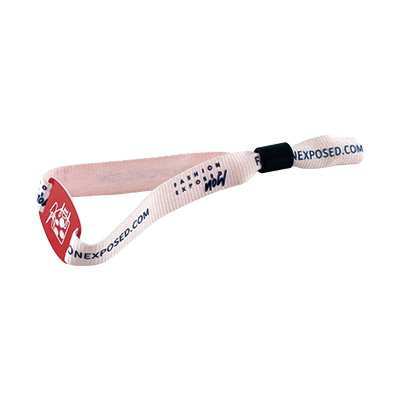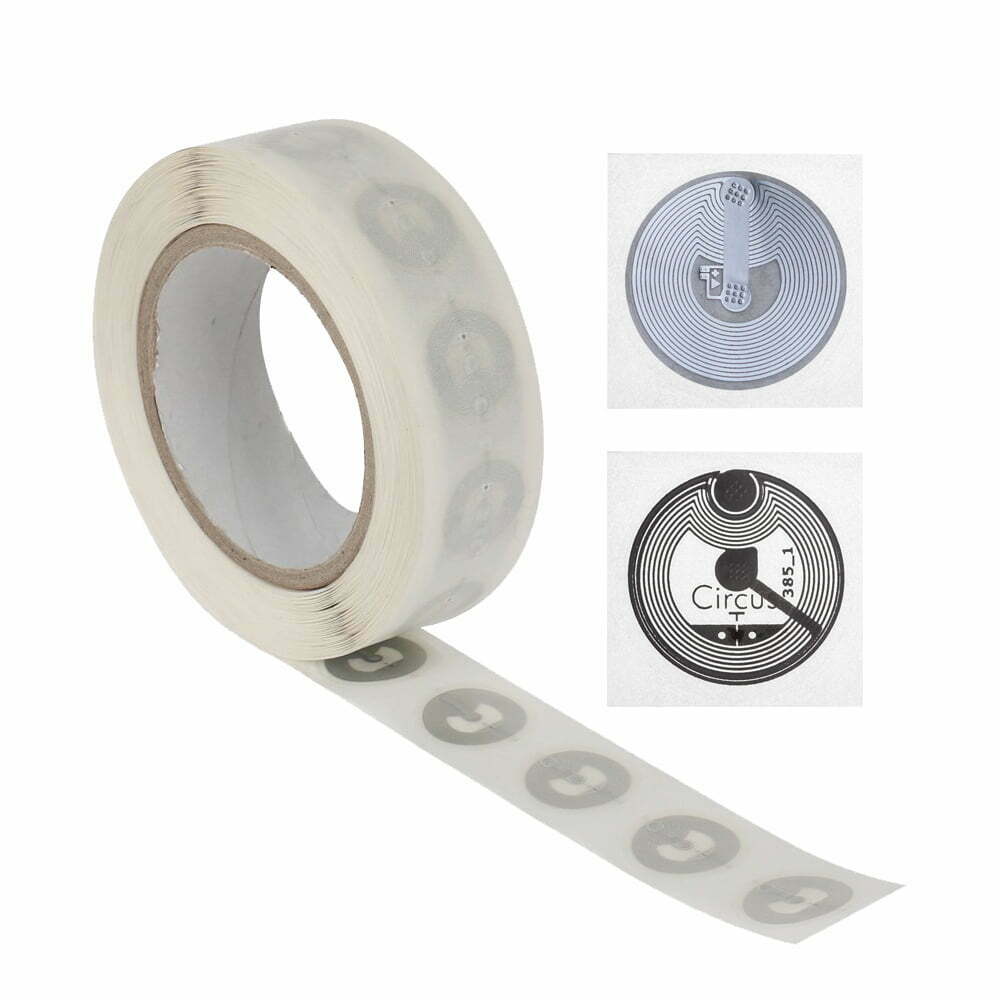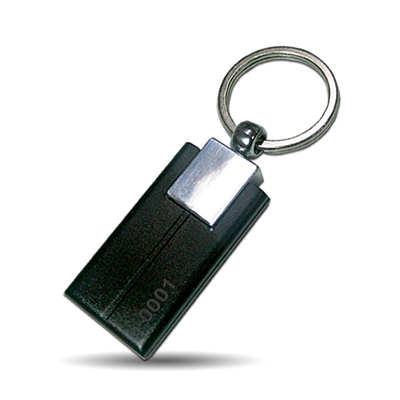
In harsh operating environments, ordinary paper or plastic labels often struggle to survive. This is where Industrial NFC Tags come into play. Specifically designed to withstand extreme temperatures, physical impact, chemical corrosion, and metal interference, they serve as a core component in modern smart factories and asset management systems.
1.What Are Industrial NFC Tags?
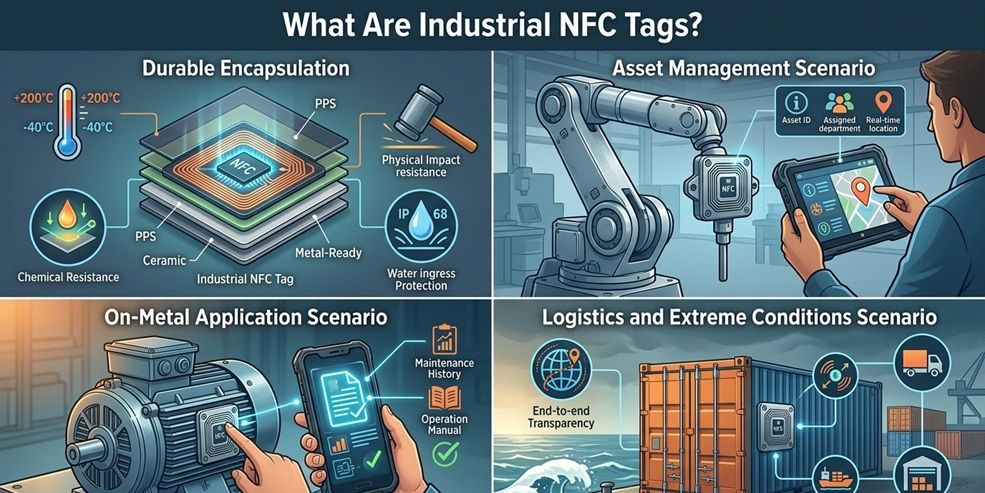
Industrial NFC tags are specially encapsulated NFC components in which the internal chip and antenna are encased within high-performance materials—such as PPS, ABS, silicone, or ceramics.
High Protection Rating: Typically featuring an IP67 or IP68 rating, they offer complete protection against dust ingress and can withstand prolonged immersion in water.
Extreme Durability: They can endure temperatures ranging from -40°C to +200°C (or even higher) and demonstrate exceptional resistance to chemicals such as acids, alkalis, and oils.
2.Key Application Scenarios for Industrial NFC Tags
- Asset Management and Tracking: Within large industrial facilities, expensive tools, molds, or raw materials can be digitally tagged; a simple scan with a mobile device allows for real-time retrieval of asset IDs, assigned departments, and location data.
- Equipment Maintenance and Inspection Records: Tags can be affixed to pump assemblies, elevators, or electrical distribution boxes. Maintenance personnel need only “tap” the tag to instantly access maintenance history and operating manuals on their mobile devices, as well as digitally log the current inspection details.
- On-Metal Applications: When applied to electric motors, steel structures, or industrial containers, a specialized anti-metal design ensures that the NFC signal is not absorbed by the metal surface, thereby guaranteeing exceptionally high reading sensitivity.
- Logistics and Container Tracking: Capable of withstanding the high-salinity environments of shipping terminals and the severe physical shocks inherent in transit, these tags ensure data transparency throughout the entire logistics chain.
3.Technical Core: Which Chips Are Best Suited for Industrial Applications?
Industrial environments impose higher demands regarding data stability and reading distance:
- Standard Identification and Traceability: NTAG213. Thanks to its outstanding compatibility and exceptional cost-effectiveness, it is the optimal choice for tagging tens of thousands of individual industrial parts.
- High Security and Encryption: If access control for critical equipment or anti-counterfeiting measures are required, we recommend selecting MIFARE DESFire chips or chips featuring advanced encryption capabilities.
- Long-Range Reading: In warehouse environments—where the simultaneous reading of multiple tags or long-distance identification is necessary—a combination of NFC and UHF (Ultra-High Frequency) dual-frequency tags is typically employed. This approach ensures compatibility between short-range mobile device interaction and long-range, bulk inventory scanning.
4. Specialized Industrial-Grade Packaging Types
- Anti-Metal Hard Tags: These tags feature a built-in ferrite layer and are specifically designed to be affixed to metal surfaces.
- High-Temperature/Chemical-Resistant Tags: Encased in PPS material, these tags can withstand injection molding processes, autoclaving, or prolonged immersion in chemical solutions.
- Cable Tie and Bolt-Type Tags: Featuring a physical fastening design, these tags can be directly secured to cables using ties or screwed into existing threaded holes on equipment, thereby preventing accidental detachment.
5. How to Select the Right Tag for Your Industrial Project?
- Identify Environmental Constraints: Will the tags be exposed to high temperatures, strong acids, or metal interference?
- Determine Mounting Method: Will the tags be affixed via adhesive, welding, cable ties, or screw mounting?
- Assess Data Storage Needs: Do you simply require a unique UID serial number, or do you need to store detailed offline maintenance manuals (for which the NTAG216 chip is recommended)?
- Test Reading Distance: Conduct tests within the actual installation environment to ensure optimal signal coupling between the device antenna and the tag.
Conclusion
Industrial-grade NFC tags are far more than mere identifiers; they serve as the most robust data touchpoints within the Industrial Internet of Things (IIoT). By transforming complex mechanical equipment into “self-expressive” digital assets, these tags significantly enhance operational efficiency and security levels for enterprises.
Are you looking for an NFC solution capable of withstanding your demanding work environment?
Browse our [Industrial-Grade NFC Tag Product Series] to explore our anti-metal, high-temperature-resistant, and various other rugged packaging solutions. We also offer customized chip encoding and surface laser marking services to help you build a highly efficient digital factory.
For more information,please contact us.