Johdanto: Jätetekstiilien kierrätys on globaalille kiertotaloudelle kiireellinen kysymys
Euroopan ympäristökeskuksen mukaan 2025 “Tekstiilien kiertotalouden edistymisraportti,” EU tuottaa noin 5.8 miljoonaa tonnia tekstiilijätettä vuodessa, joista vain 22% kierrätetään ja käytetään uudelleen, suurin osa poltetaan tai sijoitetaan kaatopaikalle. Ohella 2025, EU:n jätepuitedirektiivi edellyttää, että jäsenvaltiot perustavat riippumattomia tekstiilien lajittelu- ja keräysjärjestelmiä. Rfid, digitaalisena tiekartana, joka yhdistää vaatteiden koko elinkaaren, on tulossa keskeinen tekniikka tämän ongelman ratkaisemiseksi.
Kolme suurta kipukohtaa jätteiden tekstiilien kierrätyksessä
1.1 Manuaalisen lajittelun alhainen tehokkuus
Perinteinen käytettyjen vaatteiden kierrätys perustuu materiaalien manuaaliseen visuaaliseen tunnistamiseen, värit, ja tuotemerkit. Saksan ympäristösäätiön tietojen mukaan, ammattitaitoiset työntekijät voivat lajitella enintään 50-80 vaatteita tunnissa, tarkkuudella vain 75-85%. Kierrätyskeskuksiin, jotka käsittelevät kymmeniä tuhansia tonneja vuodessa, tämä on merkittävä pullonkaula työvoimakustannuksissa ja tehokkuudessa.
1.2 Vaikeus materiaalin tunnistamisessa
Sekoitettujen kankaiden nopea tunnistaminen (kuten puuvilla-polyesteri- ja villasekoitukset) on suuri alan haaste. Vaikka lähi-infrapuna (NIR) Spektroskopia voi tunnistaa joitain materiaaleja, sen tunnistusaste laskee merkittävästi tummien vaatteiden kohdalla, monikerroksisia rakenteita, tai päällystettyjä kankaita. Hollantilaisen kiertotekstiilien tutkimuskeskuksen tekemät testit osoittavat, että NIR:n tarkkuus mustien vaatteiden materiaalin tunnistamisessa on pienempi kuin 60%.
1.3 Tietojen menetys, joka johtaa arvon menetykseen
Tietoja, kuten tuotemerkki, ikä, ja jätetekstiilien sisältämä hoitohistoria menetetään kokonaan kierrätysprosessin jälkeen. Tämä tekee mahdottomaksi hinnoitella tarkasti arvokkaita käytettyjä vaatteita, ja kuidun kierrätyslaitokset eivät voi saada koostumustietoja prosessiensa optimoimiseksi.
RFID-ratkaisu: From “Jätettä” to “Data Asset”
2.1 Tekninen periaate: Vaatteisiin upotetut digitaaliset navigointimerkit
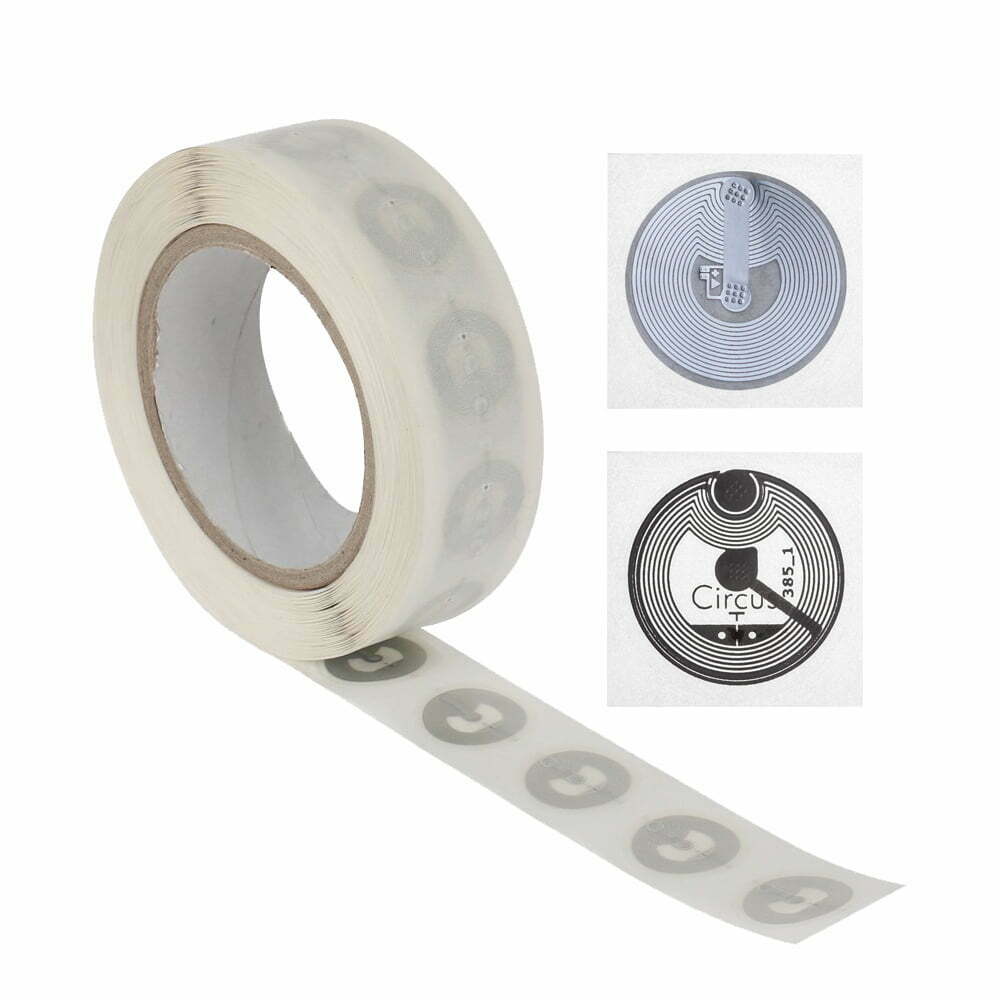
Jos vaatteet on merkitty RFID -tunnisteet (joko pestäviä tai ripustettavia tarroja) tuotantovaiheen aikana, silloin tämä vaate kantaa ainutlaatuista digitaalista identiteettiä koko elinkaarensa ajan tuotannosta kierrätykseen. Keskeiset sirut ja standardit sisältävät:
- NXP UCODE 9: Korkea herkkyys (-24dBm), sopii lukemiseen tiheästi pinottuissa ympäristöissä
- Impinger M730: Integroitu QT-tekniikka, tukee nopeaa mobiililukemista
- Alien Higgs-9: 512-bittinen käyttäjämuisti, pystyy varastoimaan materiaalikoostumusta, valmistuspäivämäärä, hoitohistoria, jne.
- ISO/IEC 18000-6C: Maailmanlaajuinen UHF RFID -protokollastandardi
- EPC Gen2v2: Tukee suojattuja komentoja ja käyttäjän muistin kirjoittamista
2.2 Kierrätysprosessi: Toisen tason automaattinen lajittelu
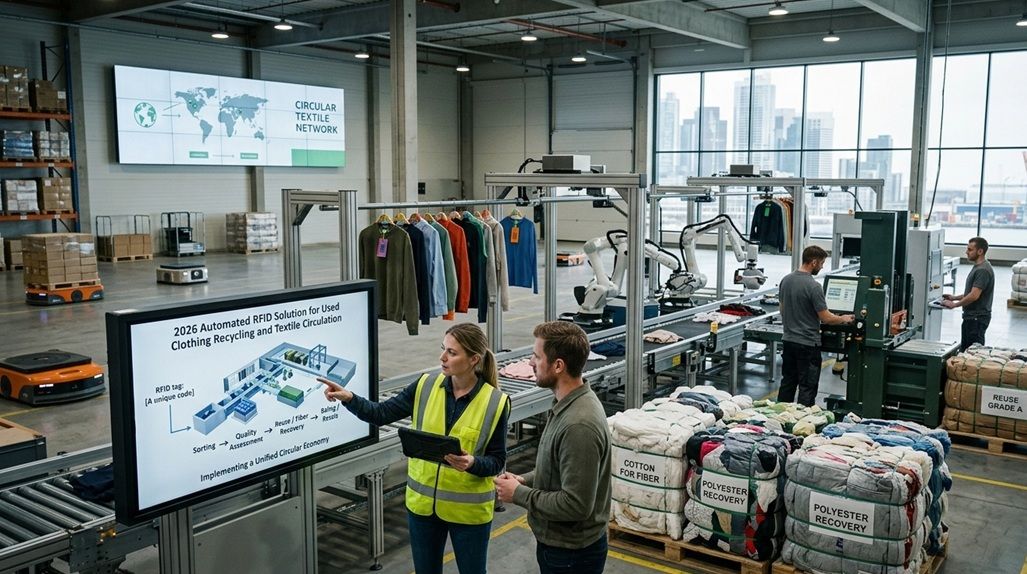
Kun tekstiilijäte saapuu kierrätyskeskukseen, Täysin automaattinen erätunnistus saavutetaan nopeiden RFID-tunnelilaitteiden avulla (kuten RFIDHY RecycleTunnel):
- Lukunopeus: Kuljetinhihnan nopeus jopa 3 metriä/sekunti, yksikanavainen käsittely 15,000+ kappaletta tunnissa
- Tunnistusaste: Optimoidulla antenniasettelulla (Laird S9028P × Times-7 A5020 yhdistelmä), lukunopeus on 99.8%
- Yllä olevat tiedot täsmäävät: Luettu EPC-koodi hakee välittömästi pilvitietokannasta tietoa, kuten materiaalia, merkki, ikä, ja alkuperäinen hinta.
2.3 Luokittelu ja lajittelu: Tietoihin perustuva tarkka luokitus
Perustuu RFID-luettuihin tietoihin, järjestelmä ohjaa vaatteet automaattisesti eri lajittelulinjoille:
| Lajittelukategoria | Tuomiokriteerit | Kohde |
| Jälleenmyytävä | Merkki + Kunto + Materiaali | Käytettyjen tuotteiden markkinat/vienti |
| Kuitujen kierrätys | Puhdasta puuvillaa / puhdasta villaa / kemiallista kuitua | Avaaminen ja pyörittäminen |
| Kemiallinen kierrätys | Sekoitettu/pinnoite | Kemiallinen liukeneminen |
| Alennettu käyttö | Erittäin likainen/vaurioitunut | Pyyhkimisliina/täytemateriaali |
| Poltto/kaatopaikka | Ei kierrätettävää | Energian talteenotto |
Tosimaailman tapaus: Hollantilaisen kierrättäjän RFID-automaattisen lajittelun vallankumous
3.1 Asian tausta
Hollantilainen tekstiilien kierrättäjä "CircleTex" (vuotuinen käsittelykapasiteetti 80,000 tonnia) Kierrätysmäärät kasvavat ja uusien EU-säädösten aiheuttama paine. Sisä- 2024, sen manuaalinen lajittelulinja käsiteltiin vain 120 tonnia päivässä tarkkuudella 82%, ja työntekijöiden rekrytoinnin vaikeus kasvoi edelleen.
3.2 Ratkaisu
Sisä- 2025, CircleTex teki yhteistyötä ammattilaisen kanssa RFID ratkaisu toimittaja käynnistää pilottiprojektin RFID-automaattista lajittelua varten:
- Käyttöliittymän tietojen valmistelu: kanssa päästiin sopimukseen 5 kumppanivaatebrändit velvoittavat käyttämään ISO 18000-6C -yhteensopivaa pestävää RFID -tunnisteet (perustuu NXP UCODE:hen 9 siru) uusille tuotteille, pilvessä jaettujen materiaalitietojen kanssa.
- Lajittelulinjan päivitys: 4 nopeita RFID-tunnelilaitteita otettiin käyttöön, RFID-lukijoiden ja RFID-antennien integrointi.
- Lajittelun suoritus: Datan lukemisen jälkeen, PLC (Siemens S7-1500) ohjatut pneumaattiset työntimet ohjaamaan vaatteet 12 erilaisia lajittelukanavia.
3.3 Tulostiedot (helmikuuta lähtien 2026)
| Indikaattorit | Ennen käyttöönottoa (2024) | Toteutuksen jälkeen (Q1 2026) | Parannusasteikko |
| Päivittäinen käsittelykapasiteetti | 120 tonnia | 380 tonnia | ↑ 217 % |
| Lajittelun tarkkuus | 82% | 97.5% | ↑15,5 % |
| Työvoimakustannukset | 4,2 €/tonni | 1,1 €/tonni | ↓74 % |
| Arvokas kierrätysaste | 18% | 31% | ↑72 % |
| Vuotuinen tulojen kasvu | – | 7,2 miljoonaa euroa | Uusi tulo |
CircleTexin teknologiajohtaja totesi, "RFID muuttaa tekstiilijätteet "jätteistä" omaisuudeksi, joka sisältää täydelliset tiedot. Emme voi vain lajitella nopeammin, vaan myös tarjota brändiasiakkaille kierrätysraportteja, jotka osoittavat heidän tuotteidensa kierrätysasteen.
Räätälöintiominaisuudet: Monimutkaisten kierrätysskenaarioiden käsitteleminen
Jätetekstiilien kierrätysskenaario on paljon monimutkaisempi kuin uusien tuotteiden varastointi: vaatteet voivat olla likaisia, kostea, tai vaurioitunut, ja tunnisteet voivat olla osittain peitossa. Juuri tässä ovat mukauttamismahdollisuudet. RFIDHY tarjoaa:
4.1 Erittäin kestävä lukualgoritmi
Mukautuva tehoalgoritmi kehitettiin käsittelemään vaihtelevia tunnisteiden tiloja kierrätysskenaarioissa, dynaamisesti säädettävä lukijan teho ja antennivalinta maksimaalisen lukunopeuden varmistamiseksi.
4.2 Usean tunnisteen törmäysten eston optimointi
Tiheän pinoamisen aikana (kuten niputettu kierrätys), Tunnisteiden väliset signaalitörmäykset ovat vakavia. RFID RecycleTunnel käyttää hybridi-aikajakomonikäyttöä (TDMA) + taajuusjakoinen monikäyttö (FDMA) järjestelmä, käsittelyä 800+ tunnisteet samanaikaisesti yhdelle kanavalle.
4.3 Fragile Tag Design
Tunnisteille, jotka on hävitettävä kierrätyksen jälkeen, RFIDHY EcoTag toimitetaan. Valmistettu biohajoavista materiaaleista, se sammuu automaattisesti kierrätyksen ja lajittelun jälkeen, kuluttajien yksityisyyden suojaaminen.
4.4 Integrointi NIR-järjestelmiin
Olemassa oleville vaatteille ilman RFID-tunnisteita, RFID-lajittelulinja voidaan yhdistää lähi-infrapunaspektrometriin (kuten TOMRA AUTOSORT). RFID-luku on ensisijainen menetelmä, täydennettynä NIR-kuolleen kulman ilmaisulla, saavuttaa täyden peiton. Ohella 2026, jätetekstiilien kierrätys on siirtynyt a “työvoimavaltainen” kohtaan a “teknologiaintensiivinen” malli. Rfid, vaatetukseen kuuluvana digitaalisena etenemissuunnitelmana, muokkaa vanhojen vaatteiden kierrätyksen kaikkia näkökohtia: lähdemateriaalin tallentamisesta automaattiseen lajitteluun kuljetuksen aikana, ja lopuksi loppukäyttäjän arvon arviointiin. Kumppanin valinta (kuten RFIDHY) joka täyttää EPC Gen2v2- ja ISO 18000-6C -standardit ja jolla on syvät räätälöintiominaisuudet, on kierrätysyrityksille ja -brändeille tärkeä askel rakentaa yhdessä suljetun kierron kierrätysjärjestelmä.. Kyllä. Nykyaikaiset kierrätys- ja lajittelulinjat käyttävät tyypillisesti hybridimallia: RFID pääkanavana, täydennettynä lähi-infrapunaspektroskopialla (NIR) tai kameran näöntunnistus. Merkittämättömille vaatteille, NIR tunnistaa materiaalin ennen lajittelua, ja biologisesti hajoavat RFID-tunnisteet voidaan kiinnittää lajittelun jälkeen helpottamaan seurantaa. Jos vaatteissa on käytetty teollisuusstandardien mukaisia pestäviä tarroja (ESIM., läpäisee AARH-tason 10 testaus) tuotannon aikana, niiden elinikä voi saavuttaa 10 vuotta tai 200 pesee, peittää täysin vaatteen normaalin käyttöiän. Tarrat ovat edelleen luettavissa kierrätyksen aikana. Jopa tavalliset ripustusmerkit voivat silti olla luettavissa ennen hävittämistä, mutta luettavuus heikkenee. Kaupalliset kierrätyslinjat vaativat tyypillisesti kuljetinhihnan nopeuden 2-3 metriä sekunnissa, käsittelyä vastaavasti 10,000-15,000 vaatteita tunnissa. RFID RecycleTunnel ylläpitää lukunopeutta yli 99.5% jopa nopeuksilla 3 metriä sekunnissa, täyttämään täysin laajamittaisen kierrätyksen tarpeet. Juuri tämä on RFID:n ydinarvo kiertotaloudessa. Tallentamalla tiedot, kuten materiaalin koostumus ja kiellettyjen aineiden testausraportit, RFID-tunnisteet tarjoavat kierrättäjille luotettavat koostumustiedot, mahdollistaa arvokkaan kierrätyksen (kuten kuidusta kuidusta). Brändit voivat käyttää tätä saadakseen vihreän sertifikaatin ja hiilidioksidipäästöhyvityksiä. Investoinnin suuruus riippuu jalostusvolyymista. Pienten kierrätysasemien käsittelyyn 5,000 tonnia vuodessa, työpöydän RFID-lajitteluasema (kuten RFIDHY SortDesk) voidaan valita, noin 20 000-30 000 euron sijoituksella. Yhdistetty käsipäätteisiin, puoliautomaattinen lajittelu voidaan saavuttaa, lisäämällä tehokkuutta 2-3 aika. Suuret kierrätyskeskukset vaativat 200 000-500 000 euron tunnelikonejärjestelmän.
Faq
Q1: Jos vanhoissa vaatteissa ei ole RFID-tunnisteita, voidaanko tätä järjestelmää vielä käyttää?
Q2: Voidaanko RFID-tunnisteita edelleen lukea kierrätysprosessin aikana? Voivatko ne vaurioitua?
Q3: Kuinka nopea kierrätys- ja lajittelulinjan tulee olla kaupallisten tarpeiden täyttämiseksi?
Q4: Voiko RFID auttaa todistamaan “kierrätettävyys” vaatteista?
Q5: Onko tämä järjestelmä suuri investointi? Voivatko pienet kierrätysasemat käyttää sitä?
Lisätietoja,Ole hyvä Ota yhteyttä.