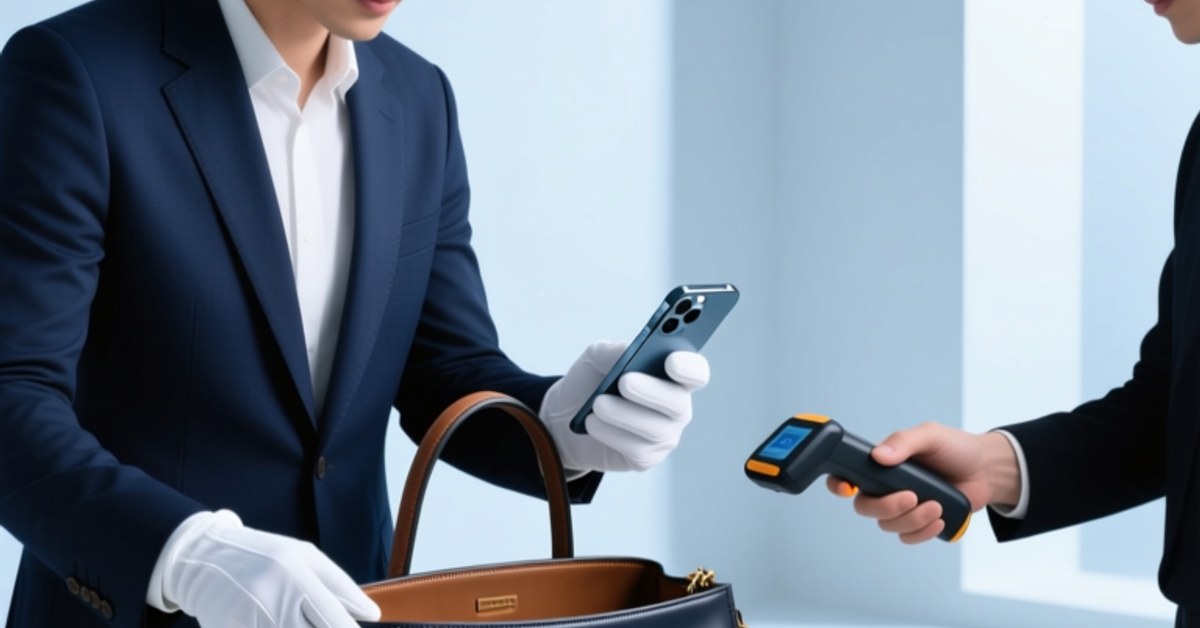
The pre-owned luxury handbag market has matured into a global resale economy where a single bag can move through brand boutiques, consignment stores, online marketplaces and private sellers. At every transaction, the same question appears: can the next owner prove this handbag is authentic? En el pasado, authentication depended on the trained eye of an expert who studied stitching, hardware, fonts and leather feel. That expertise is still invaluable, but it is not enough when counterfeiters use the same materials and production techniques as original manufacturers.
For luxury fashion houses, leather goods manufacturers and resale platforms, trust has therefore become a product feature. Consumers want more than a beautiful silhouette. They want a verifiable history. This is where handbag authentication NFC creates a direct link between the physical product and a digital certificate that can be checked by any NFC-enabled smartphone.
Grey Market, Counterfeits and the Resale Trust Gap
Two separate forces complicate the secondhand luxury market. Grey-market handbags are genuine products that have been diverted from authorised retail channels, employee sales, sample sales or other unofficial routes. These bags are authentic, but their provenance is incomplete. When they enter the resale ecosystem, it becomes harder for platforms to confirm whether the bag was originally sold by an authorised boutique or through a channel that should not have existed. This ambiguity creates pricing confusion and can affect warranty or repair services.
The second force is counterfeiting. The scale of this challenge is significant: counterfeiters produce convincing copies of popular leather goods, complete with replicated serial numbers, dust bags, authenticity cards and branded hardware. Some of these fake handbags are so accurate that they pass visual inspection. When a counterfeit is paired with a genuine serial number taken from a grey-market or stolen bag, serial-based verification becomes unreliable. That is why the industry needs a different level of product identity.
Handbag Authentication NFC: A Digital Birthmark for Luxury Goods
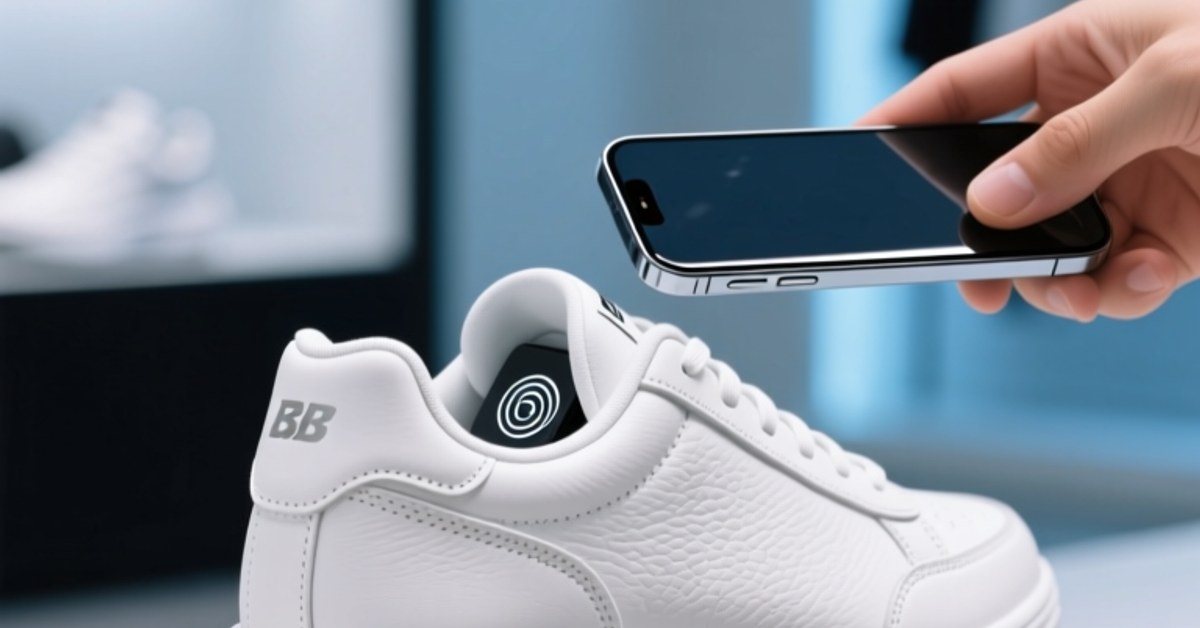
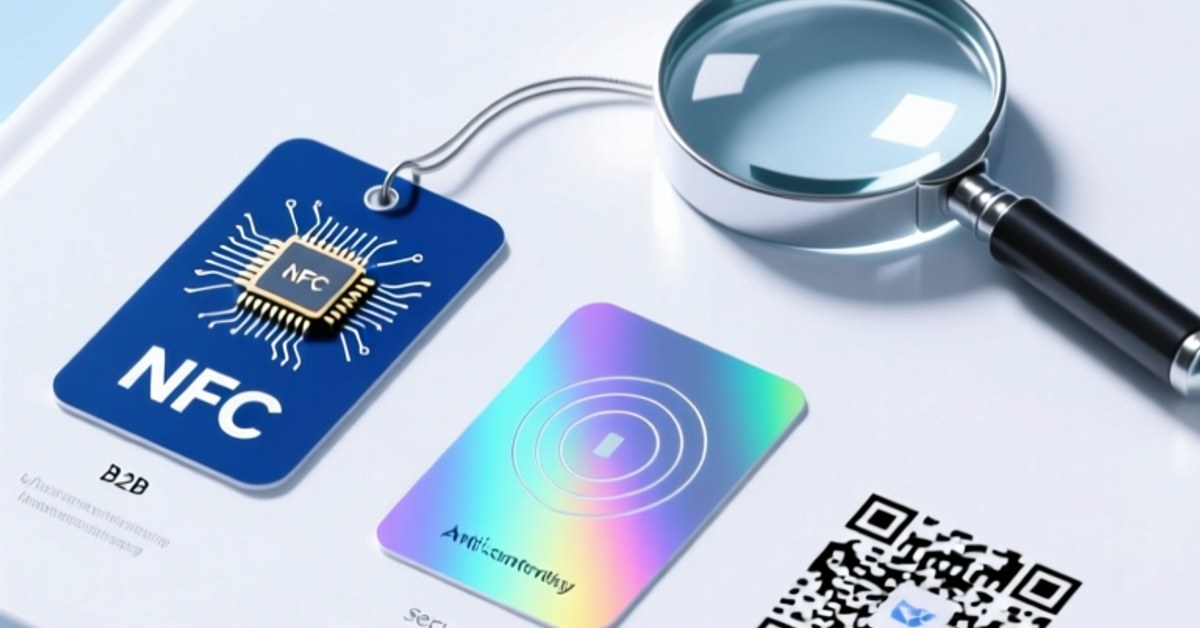
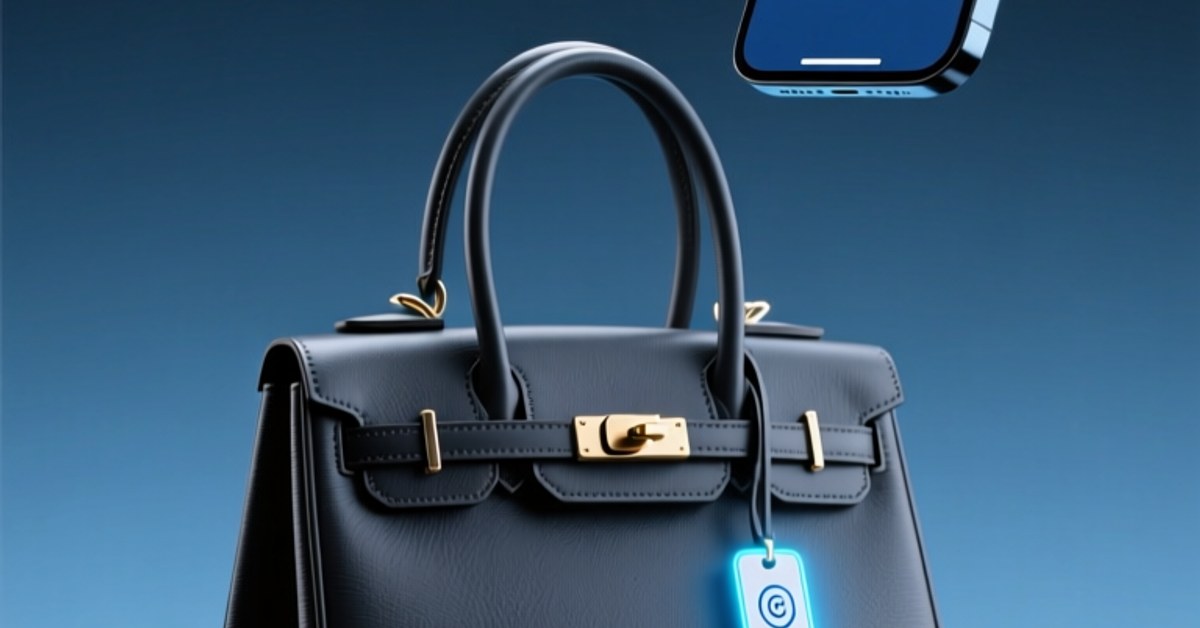
Handbag authentication NFC works by giving each product a digital birthmark at the moment of manufacture. An NFC inlay or Etiqueta NFC is embedded inside the handbag and linked to a secure cloud-hosted product record. The tag carries a unique identifier and can also point to a certificate stored on a brand-controlled domain. When someone taps the handbag with an NFC-enabled smartphone or a desktop Lector de rfid, the tag is read and matched against the registry.
This process creates a clear separation between a physical product and a claimed serial number. Traditional authenticity cards can be moved from a fake bag to a genuine-looking product, but an embedded Etiqueta NFC cannot be transferred without visible damage to the handbag. Luxury leather goods security therefore begins during production, before the final seams are closed.
Handbag authentication NFC should not be treated as a simple sticker attached after the sale. A robust program uses secure encoding, a central certificate registry and clear rules for ownership transfer. The NFC tag is the physical key; the registry is the source of truth.
Luxury Leather Goods Security Starts Inside the Product
The best place to protect a handbag is inside its own construction. When a luxury brand plans an NFC authentication program, it must consider tag selection, placement and durability. These decisions affect read reliability and the customer experience.
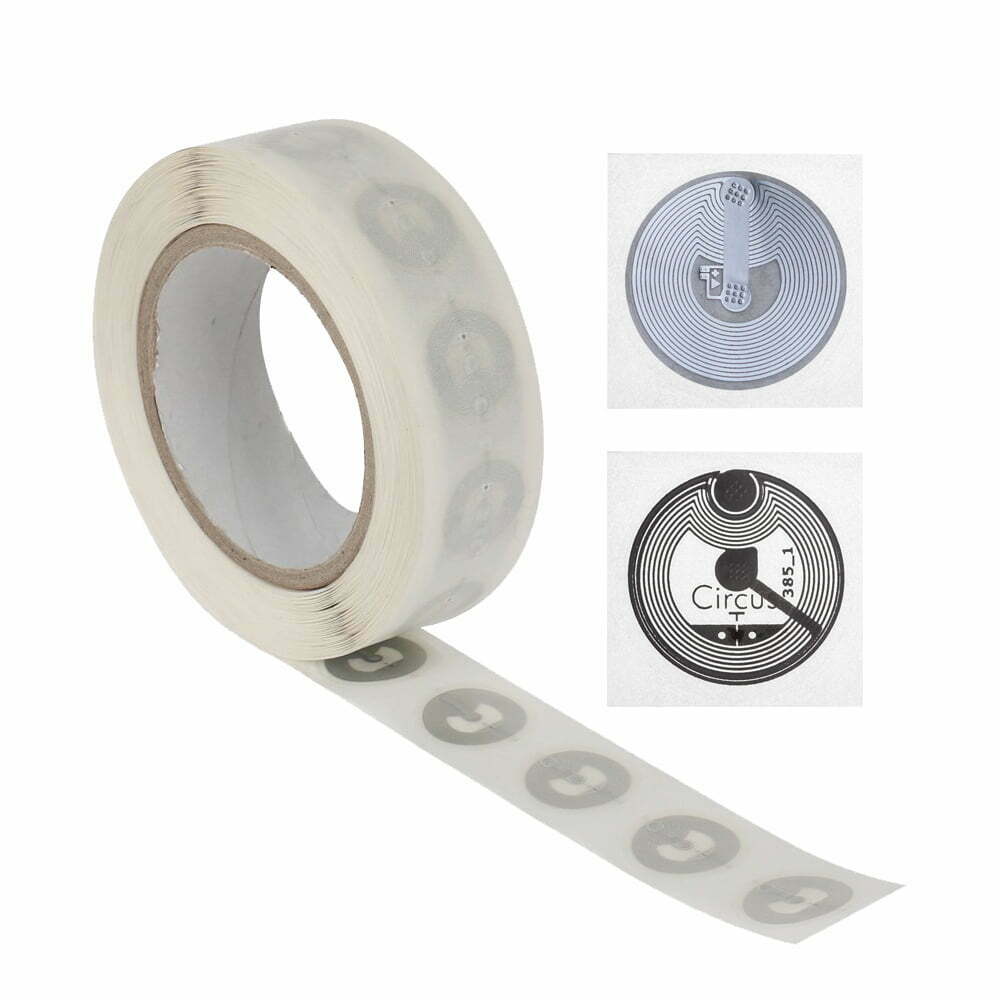
Most leather goods manufacturers use a thin NFC inlay supplied on rolls or sheets, because the inlay can be laminated between the leather and the lining. An NFC dry inlay is particularly useful for this application. It is flexible, low-profile and can be sewn into a seam allowance or placed behind a non-metallic panel without changing the bag’s shape or touch.
NFC Tag Placement in Leather Goods
NFC tag placement in leather goods is a design and engineering decision. NFC uses short-range radio communication, and the tag antenna must couple with the phone antenna. Placing a tag directly on top of a metal zipper, metal purse foot, chain strap attachment or magnetic snap can greatly reduce read performance.
Luxury designers and RFID engineers usually evaluate several flat, non-metallic areas of the bag. Common locations include behind the interior logo patch, inside the seam allowance of an interior lining, behind the inner zipper pocket panel, or under a leather gusset in the base of the bag. The tag must remain readable through a thin layer of leather or lining while staying hidden from normal view.
For each product model, the brand should test with finished prototypes and the same accessories that will be sold with the bag. Leather thickness, metallic finishes, glues and adjacent hardware can influence performance. The goal is a reliable scan when the authenticator taps the intended part of the bag, without making the tag placement too obvious.
Digital Certificate of Authenticity: More Than an Authenticity Card
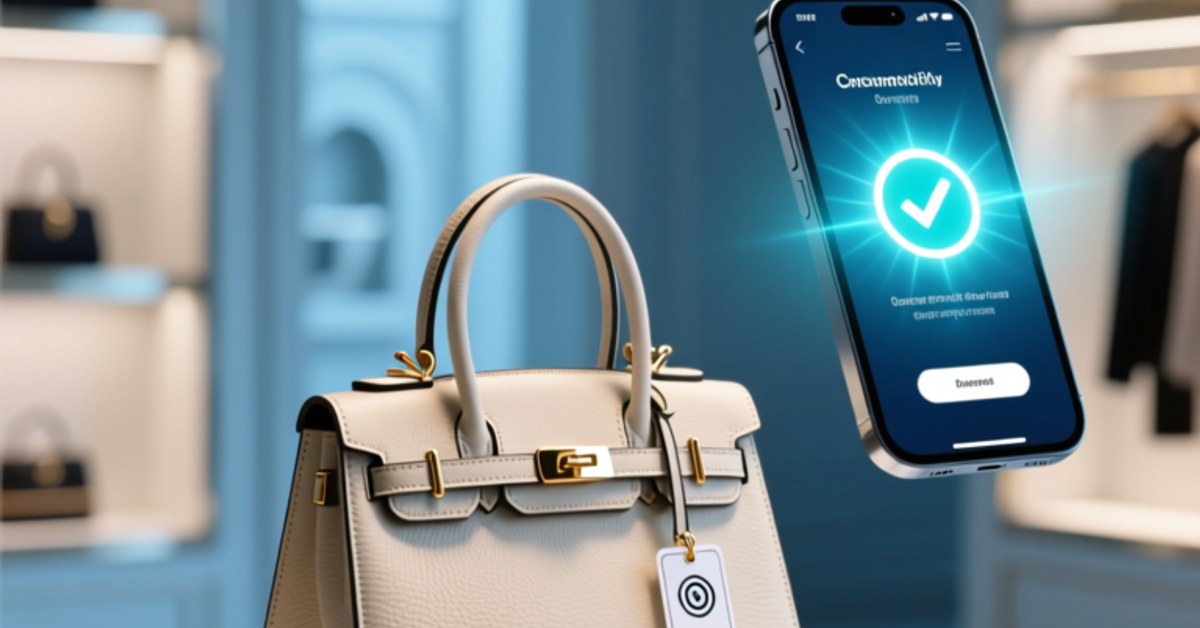
A luxury paper authenticity card can be lost, stolen or transferred to another bag. A digital certificate of authenticity linked to an NFC tag has a much stronger relationship with the physical product. Cuando se escanea la etiqueta, the certificate appears on the phone and shows that the product record matches the bag.
The digital certificate of authenticity should be designed as a lifecycle record, not a one-time PDF. It can include the style name, colour, material, fecha de producción, retail channel, service history and ownership events. Because this information is hosted by the brand, it can be updated when a handbag is sent for repair, authenticated for resale or transferred from one owner to another.
For luxury houses preparing for pasaporte de producto digital requisitos, the same record can become the foundation for broader compliance and circular-economy reporting. The NFC tap can reveal care instructions, repair options and eventually end-of-life guidance. This is already relevant for textile and leather categories, as shown in the Pasaporte de producto digital solución.
>
| Certificate element | Why it matters in resale |
|---|---|
| Unique NFC identifier | Links the physical chip to the exact product record and prevents serial-number swapping |
| Product attributes | Provides style, colour, material and production data that authenticators can verify |
| Provenance events | Records retail channel, purchase date and service history to create an auditable chain of custody |
| Authenticity status | Shows whether the certificate is active, revoked or under review |
| Ownership transfer history | Helps resale platforms confirm that the seller is the current registered owner |
A Designer Bag Verification Workflow for Resale Teams
For secondhand platforms, designer bag verification becomes faster and more consistent when NFC authentication is part of the operating process. A platform can use a simple workflow that starts with scanning the embedded tag and ends with issuing an authenticated listing badge.
- Scan the product. The authenticator uses an NFC-enabled smartphone or a desktop Lector de rfid to detect the tag inside the handbag. If no tag is found, the item is routed to deeper inspection.
- Validate the certificate. The NFC tag opens a secure product record. The system checks the unique identifier, certificate status and any digital signature or registry flag.
- Match physical details. The authenticator compares the product details in the certificate with the handbag’s style, colour, hardware and serial number. This closes the gap between digital ID and physical inspection.
- Complete an ownership transfer. The current registered owner approves the transfer through the brand’s secure portal. The platform records the date, seller and certificate transfer in the product history.
- Issue the resale token. Once verification is complete, the platform can display a trusted authentication badge and include the certificate link in the listing.
This resale verification workflow turns authentication into a repeatable service. Instead of relying only on subjective visual cues, authenticators can focus on exceptions and deeper expertise. Buyers gain a transparent way to verify that the bag they are purchasing has been checked against the brand’s data.
Owner Engagement After Sale Builds Secondhand Luxury Trust
Owner engagement after sale is where NFC authentication demonstrates long-term business value. The first scan after purchase should not simply say authentic. It should invite the buyer to register as the owner, access the digital certificate and receive care guidance tailored to the leather goods they own.
When a handbag is sold again, the new owner should be able to scan the same tag and see that the digital certificate is still active. The ownership history moves with the product, so a pre-owned bag can be presented with verified service events, repair records and authentication checks. This is what generates secondhand luxury trust: an unbroken chain of custody that starts with the tag embedded in the leather goods.
The same NFC touchpoint can be used for after-sales services such as leather conditioning reminders, hardware cleaning, strap replacement and repair appointments. Brands can also use the ownership record to run targeted loyalty programs for clients who buy and resell through approved channels. By keeping the certificate active after the first sale, the brand remains part of the product’s future lifecycle.
Planning an NFC Authentication Program at Scale
A successful NFC authentication launch requires more than purchasing tags. Luxury houses should work with an NFC or RFID manufacturer that can supply stable, high-quality inlays and support integration. The product family should include flexible NFC inlays, adhesive NFC tags where useful and reliable reading hardware for authenticators.
The programme should also include secure encoding at the production line, a clear product-record schema and an authentication interface designed for boutiques, consumers and resale partners. Privacy is equally important. The tag itself should not store unnecessary personal data; it should reference a cloud record that the brand controls and updates with consent.
Tecnología NFCWORK y la RFIDHY platform offer a wide range of NFC tags, NFC inlays and RFID readers that can be tailored to luxury product authentication. From the first prototype scan to high-volume production, the same ecosystem can help brands maintain visibility across the product lifecycle.
Preguntas frecuentes
Can an NFC tag in a luxury handbag be copied?
Generic NFC tags can be duplicated, which is why enterprise authentication programmes use unique identifiers, cloud validation, certificate status and secure manufacturing controls. The tag should be embedded in the handbag so that removing or swapping it would require disassembling the product. A secure registry also invalidates tags that are reported lost or stolen.
Where should an NFC tag be placed in a leather handbag?
The best place is a flat, non-metallic area inside the product, such as behind an interior label, in a lining seam allowance or under an inner pocket panel. It must remain readable through the leather or lining and should not be located too close to metal hardware, zippers, magnetic snaps or chain straps.
Do customers need a special app to scan an NFC handbag?
Lo mas moderno teléfonos inteligentes are NFC-enabled and can read an NFC tag directly. Brands can design the tag to open a web-based certificate page or work with a dedicated brand app. The resale platform may also use a desktop RFID reader or handheld reader for higher-throughput authentication.
What happens to the digital certificate of authenticity when a handbag is resold?
The digital certificate stays with the handbag. The current owner approves a transfer to the new owner, and the registry updates the ownership record. Future scans show the certificate history, service events and authenticated resale status.
How does NFC authentication help with grey-market handbags?
NFC tags cannot stop unauthorised diversion, but they give brands visibility into where a genuine product was first distributed. When a grey-market bag enters the resale channel, the platform can see that the product record exists and can follow the brand policy for genuine but non-authorised inventory.
Will an NFC tag affect the manufacturing process for leather goods?
With careful planning, the impact is minimal. Thin NFC inlays can be inserted during lining or final assembly, and encoding can be completed during quality control. Each product design should be tested to ensure the tag remains readable after assembly and throughout normal use.
Plan Your Luxury NFC Authentication Programme
Tecnología NFCWORK y RFIDHY support luxury fashion houses and leather goods manufacturers with NFC tags, incrustaciones, readers and technical integration guidance. Whether you need a pilot batch for a new handbag collection or a full resale verification workflow, our team can help you select the right product format and test it inside your leather goods.
Póngase en contacto con nuestro equipo de ingeniería to discuss your tag placement, digital certificate and secondhand authentication requirements. You can also review relevant applications on our autenticación de artículos de lujo página.