The Hidden Threat to Beauty Brands: Grey Market Diversion and Counterfeits
Luxury cosmetics and fragrance brands operate in an environment where packaging is as valuable as the formula inside. This makes them a prime target for two distinct but overlapping threats: counterfeiting and grey market diversion. Counterfeiters copy the packaging to sell fakes. Grey market operators buy genuine products from one market, strip serial numbers or promotional markers, and resell them in another region at a high markup. Both activities erode luxury perception, disrupt channel profitability, and create consumer safety risks that no brand can afford.
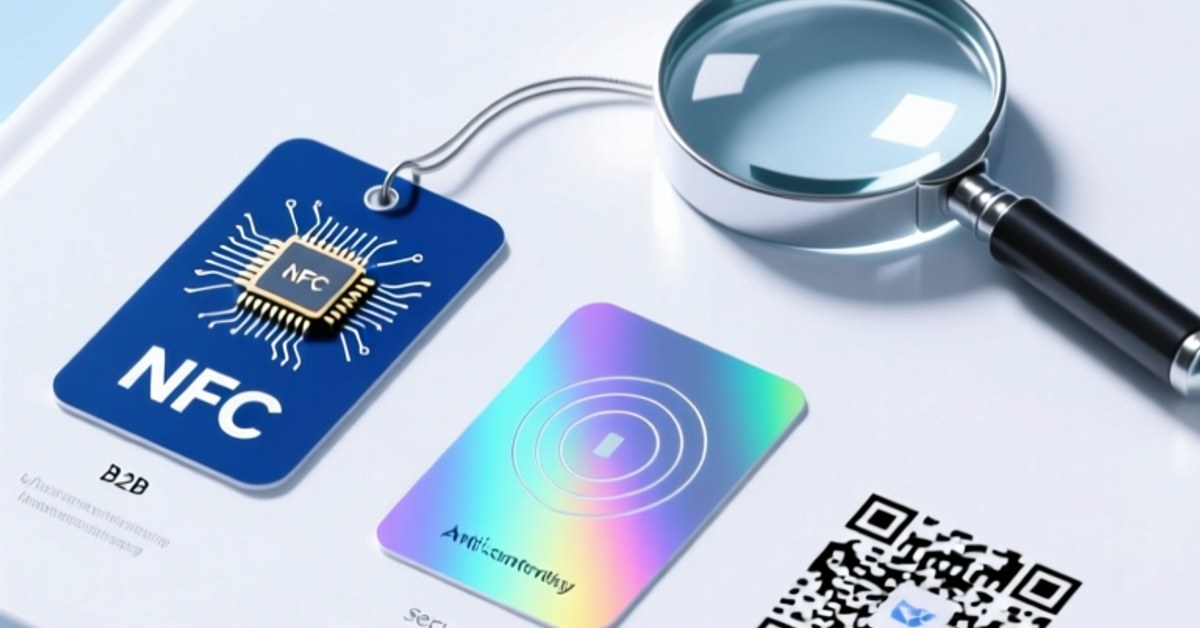
NFC anti-counterfeiting technology gives brand owners a practical, app-free way to secure every product unit with a unique digital identity. When applied to cosmetics and fragrance packaging, en NFC -tag eller NFC-mærke becomes the physical anchor for verification, sporbarhed, and channel control. This article explains how beauty brands can combine NFC seals with serialization and consumer engagement to protect products from the factory to the shelf.
The Grey Market Problem: Where Genuine Products Go Astray
Grey market diversion is hard to detect because the product itself is authentic. The diversion occurs upstream, often through improper handling of inventory destined for duty-free shops, employee stores, or promotional programs. Diverted products appear online or in discount retailers, confusing the market and undercutting authorized prices. For fragrance brands, diversion is especially harmful because discount channels undermine the premium positioning that justifies the price of a luxury perfume.
Parallel importation also creates supply chain blind spots. When a product is redirected outside its intended region, brand owners lose visibility into expiry dates, opbevaringsforhold, and batch integrity. Even if a diverted product is genuine, its presence in unauthorized channels can lead to improper handling, counterfeit mixing, and a degraded customer experience. The grey market thereby serves as a gateway for counterfeits: once consumers see discounted luxury online, they become vulnerable to fake products that impersonate your brand.
To close this gap, brand owners need a product authentication mechanism that works as well in the field as it does in the digital back office. An NFC -tag serialized with a unique crypto ID allows each unit to be verified individually at any point in the journey.
Fake Cosmetics and Fragrances: Risks That Go Beyond Lost Revenue
The health risks associated with counterfeit cosmetics cannot be overstated. Counterfeit perfumes may contain unregulated solvents, phthalates, or allergens not disclosed on the label. Fake skincare products may harbor bacterial contamination or use industrial-grade ingredients that cause skin irritation, chemical burns, or long-term dermatological problems. When such events occur, the consumer typically blames the brand, not the criminal who made the fake. There is a direct reputational liability every time a counterfeit jar or bottle enters the market.
Beyond health and safety, counterfeits dilute the brand’s intellectual property. Luxury packaging designs are unique and expensive to create. Each counterfeit product copies that design, reducing the distinctive value of the craftsmanship. For premium fragrance houses, the scent itself may be replicated closely enough to fool a casual user, making the authentication problem harder to solve without a digital verification layer.
This is why anti-counterfeiting strategies for beauty must combine visual security features with an interactive digital check. Adding an NFC seal to the tamper-evident packaging gives consumers a direct way to confirm product authenticity before first use, and it gives quality control teams a way to detect fakes in the field.
NFC Seal and Label Design for Cosmetics and Fragrance
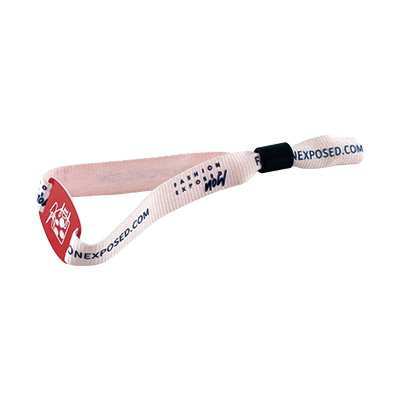
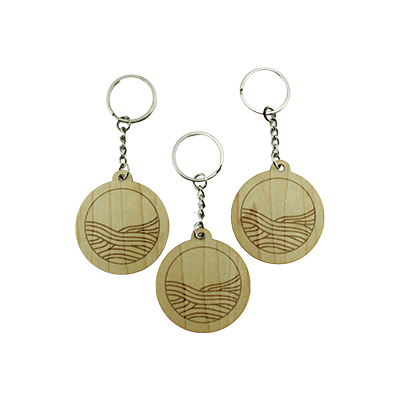
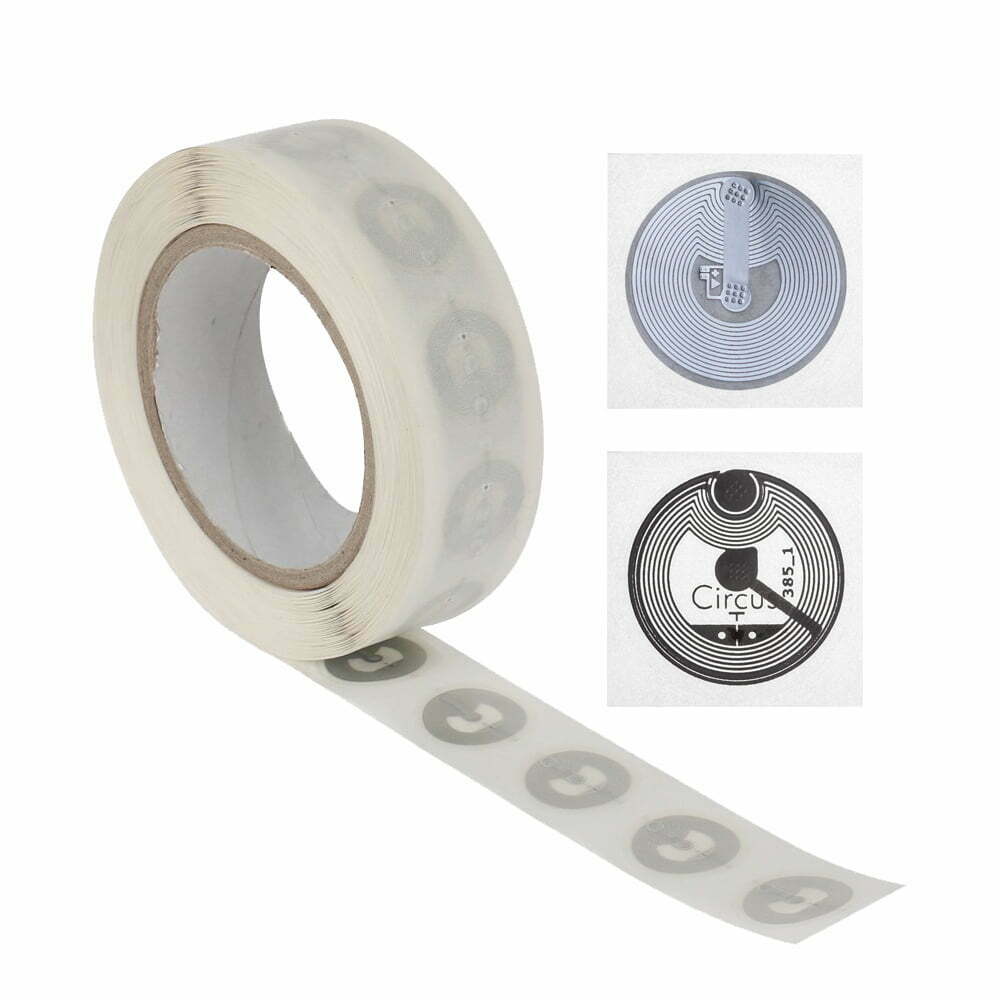
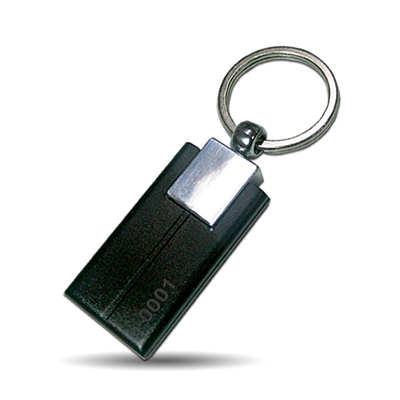
NFC technology is now mature enough to be embedded in cosmetic packaging without disrupting the aesthetics of a luxury box or bottle. Brand owners can select from a range of form factors, inklusive NFC -tags, NFC-etiketter, NFC -klistermærker, og NFC indlæg fra RFIDHY Technology’s product lines. These components are designed to be read by any NFC-enabled smartphone, meaning no proprietary scanner hardware is required at a retail counter or point of sale.
When designing an NFC security seal, the first decision is where to place the tag. For cartons, en NFC-mærke can be integrated into the packaging’s seal seam so that tampering or opening physically breaks the NFC antenna or alters its read signature. For bottles and jars, en NFC indlæg can be embedded into the label or the cap liner. This approach ensures the NFC tag is separated from the product when the container is first opened, making it impossible for someone to transfer the tag from a genuine bottle to a counterfeit refill.
Material compatibility is equally critical. Alcohol-based perfumes can degrade adhesives if the label is placed too close to the spray nozzle. Moisture-resistant face creams require water-resistant NFC inlays. RFIDHY offers a full portfolio of NFC label substrates and antennadesigned for reliable performance in challenging packaging environments. The choice between a tamper-evident NFC-mærkat and an embedded NFC inlay depends on the packaging material, production speed, and user experience goals.
Consumer Verification Journey: Tryk på, Confirm, Engagere
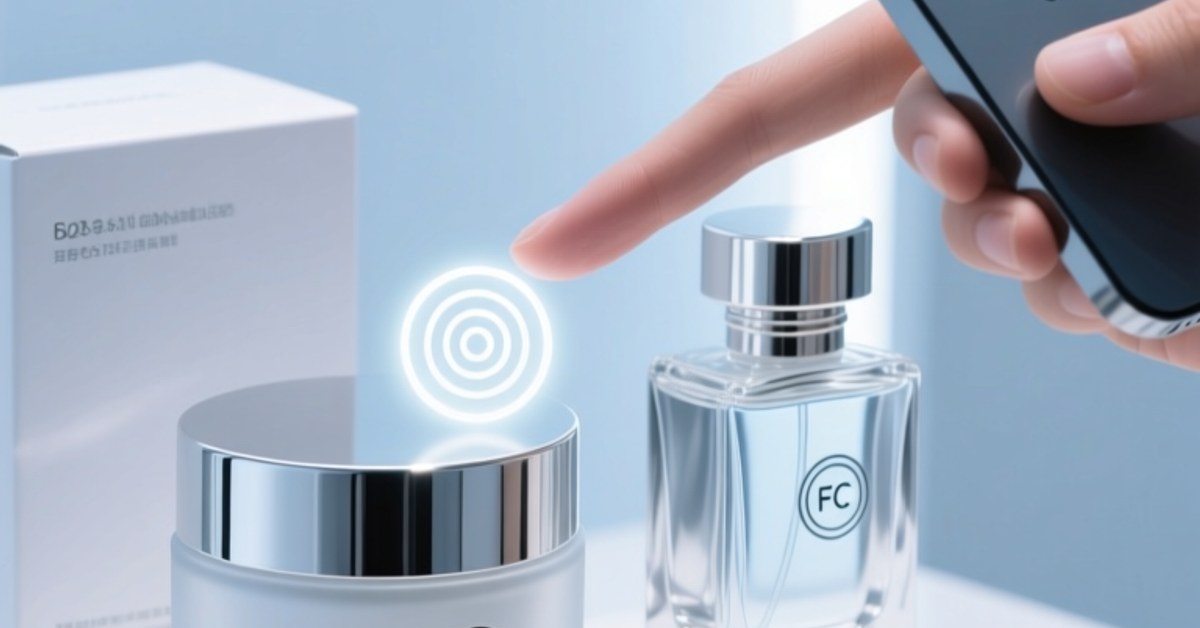
One of the strongest advantages of NFC authentication is that it does not require the consumer to install an app. With an NFC-aktiveret smartphone, the customer simply taps the tag on the product packaging and is taken to a secure brand verification page. That page displays whether the serial number is genuine, whether it has been checked before, and where the product was destined to be sold. This instant feedback builds trust before the seal is ever broken.
A well-designed NFC verification journey flows like this:
- The consumer taps their phone against the NFC product authentication label on the carton or bottle.
- The smartphone reads the unique serialized ID and sends it to the brand’s secure cloud endpoint.
- The response page displays “Genuine” or flags the product as suspicious, based on cryptographic checks and first-read analytics.
- The brand can personalize the next step: offer product usage tips, recommend complementary items, or invite the consumer to register their purchase for warranty or loyalty benefits.
Once authentication is successful, the consumer can be invited to join a membership community or access exclusive content. This turns a security check into a marketing opportunity. When the user creates an account through the NFC experience, the brand obtains verified engagement data that is naturally linked to a specific product serial. This consumer verification journey simultaneously reduces the risk of counterfeit returns and enables direct brand-consumer relationships that bypass the grey market.
Channel and Retailer Control with NFC Traceability
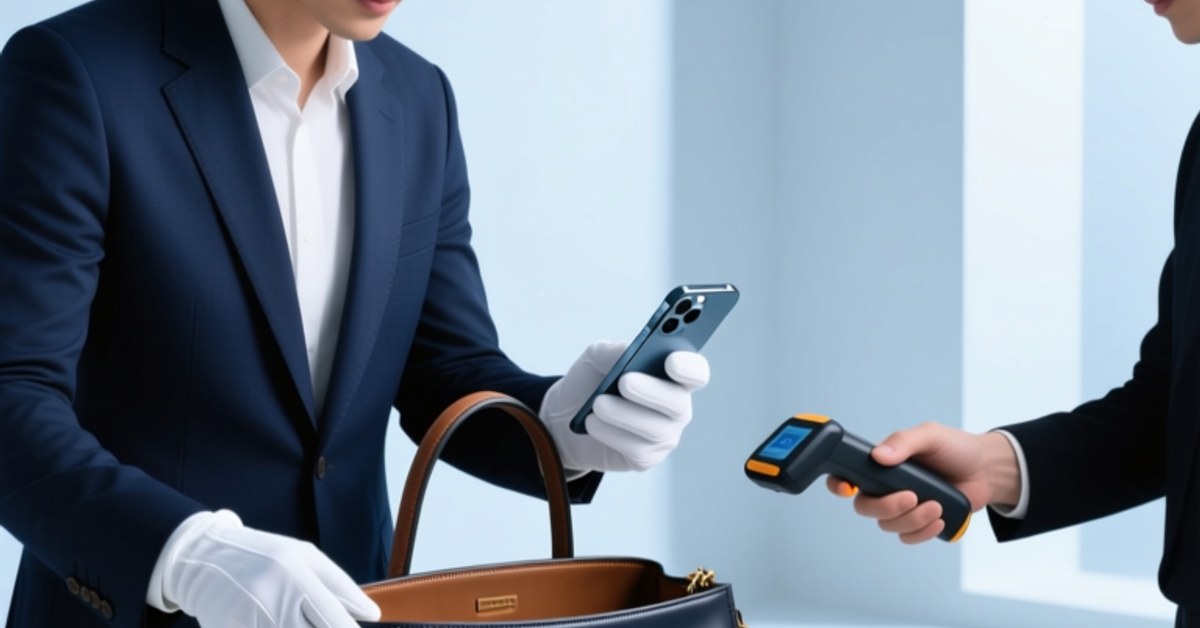
NFC tags do more than verify a customer’s purchase. They are also a powerful tool for channel management and brand protection teams. By reading the unique identifier at different points in the supply chain, you can record each unit’s movement from manufacturing to retail. For eksempel, -en håndholdt RFID-læser eller desktop RFID-læser can scan a pallet of tagged fragrance cartons as it leaves a warehouse. Senere, if boxes intended for a European partner appear in an Asian marketplace, the serial code immediately reveals the point of diversion.
This visibility gives beauty brands a defensible basis for legal action against grey market importers. With proof of the product’s intended channel, brands can terminate supply agreements with distributors that breach contractual restrictions. Endnu vigtigere, retailers that encounter diverted stock can verify the issue in real time. If a brick-and-mortar store receives a returned perfume bottle, en NFC scanner or smartphone can show whether the returned product was originally sold within that store’s chain. This prevents “shop lifting via return” and repetitive reimbursement fraud.
To create a consistent verification ecosystem, some brands also implement NFC tap locations in stores, where consumers can verify any product before buying. Retail staff can use an NFC-enabled smartphone or an RFID handheld scanner to confirm high-value cosmetics are authentic and properly sourced. This collaborative approach converts every retail contact point into a fraud checkpoint.
A Practical Implementation Framework
Implementing NFC anti-counterfeiting for cosmetics is not a one-size-fits-all project. The right framework depends on the packaging volume, the number of product codes, the threat level, and the existing packaging line process. RFIDHY recommends starting with a pilot on one product family, such as your best-selling premium fragrance or a high-ticket skincare line. The pilot can be organized in four steps:
- Select a secure NFC tag or label that matches the packaging material and open/close behavior.
- Integrate a data management application that assigns a unique serial ID to each NFC chip and stores the expected product information.
- Apply the tags at the packing line or during carton assembly, then activate each tag before leaving the manufacturing site.
- Educate retail partners and consumers about the tap-to-verify experience through in-store displays and digital content.
Once the pilot demonstrates operational efficiency, the brand can scale to broader product lines. The same NFC infrastructure can later be extended to support Digitale produktpas and other regulatory traceability requirements.
Why NFC Works Better Than Standard QR or Visual Tags
QR codes can be copied and applied to counterfeit products. Visual holograms can be replicated by sophisticated counterfeiters. NFC -tags, imidlertid, rely on a cryptographic circuit that is far more difficult to clone. Each chip contains a unique identifier and a secure storage area. With protection mechanisms that prevent writing or reading of certain memory blocks, a unique code can be locked during production. Attempts to copy or emulate the NFC signature require access to the secret keys inside the chip, which is practically infeasible without physically destroying the tag.
NFC also provides a better user experience. A consumer does not need to point a camera at a printed code; they simply touch the bottle or box. During store audits, a staff member can quickly tap multiple products without removing them from the display shelf. And because NFC can be read through minor packaging layers, the tag can be hidden beneath a shrink band or inside a carton seam, making it harder for counterfeiters to even locate the tag.
Konklusion
Grey market diversion and counterfeit cosmetics are twin enemies of the modern luxury beauty brand. Both undermine revenue, confuse customers, and damage product integrity. NFC anti-counterfeiting offers a practical solution that combines authentication, sporbarhed, and consumer engagement in a seamless workflow. By selecting reliable NFC -tags, etiketter, and stickers from trusted manufacturers like RFIDHY, beauty brands can close the counterfeiting gap and create an interactive touchpoint that adds value at every stage—from packaging line to loyalty program.
If you are ready to protect your fragrance and cosmetics portfolio, consider starting with a dedicated pilot line. Talk to our engineering and integration team to identify the right NFC material, data structure, and channel control plan for your products.
FAQ
Can NFC tags be applied to small cosmetic jars and perfume bottles?
Ja. NFC inlays and labels are available in a range of sizes, including small formats for cream jars, lipsticks, and perfume bottle neck seals. The core requirement is that the NFC antenna must not be damaged by the product contents or the packaging material.
Do consumers need to install an app to verify cosmetics with NFC?
Ingen. Mest moderne Smartphones har indbyggede NFC-læsere. The user simply taps the phone to the tag and the verification data opens in a browser or in the brand’s mobile web page. No retailer app or third-party app is required.
Does NFC authentication work for refillable perfume bottles?
Ja. For refillable luxury perfume bottles, brands can place the NFC tag in the outer carton, the base of the bottle, or the cap. When the consumer buys a refill, the new pack can be verified separately. This allows brands to secure the entire product ecosystem, not just the first bottle.
How does NFC help stop product diversion in duty-free shops?
By serializing each unit with a market-specific NFC identifier, a brand can track whether duty-free products are being sold in other channels. If a product meant for the Asian travel-retail market shows up in a European discount store, the stored serial data reveals the diversion path and helps the brand enforce its channel policy.
What type of NFC tag should I use for a tamper-evident seal?
For tamper evidence, use an NFC label or sticker whose antenna is broken when the package is opened. RFIDHY supplies NFC tags and labels specifically designed for secure sealing applications. You can also combine the NFC seal with a printed void effect on the label to create a dual security layer.
Is there a difference between NFC authentication and a digital product passport?
NFC authentication focuses on verifying that the product is genuine. EN Digitalt produktpas (DPP) includes a broader set of sustainability and product lifecycle data, such as composition, oprindelse, reparationsevne, and disposal instructions. The same NFC chip can support both functions, giving brands room to prepare for future EU DPP guidelines.
Start Protecting Your Beauty Brand Today
RFIDHY and NFCWORK help cosmetic companies design and scale NFC anti-counterfeiting programs without compromising premium packaging. We offer tamper-evident NFC -tags, RFID labels and inlays, og complete NFC product authentication solutions for global brands.
Our engineers can guide you through the selection of the right tag form factor, data encryption method, and cloud verification workflow. Kontakt os to request a sample kit or discuss a pilot program for your next fragrance launch.