ウェアラブル向けの高性能 NFC アンテナの設計
シリコンリストバンドから高級スマートリングに至るまで、NFC 対応ウェアラブルには小型化のバランスをとったアンテナが必要です, ボディカップリング, 規制遵守と. で 13.56 MHz, NFC アンテナの性能は物理学によって決まります: フォームファクターが小さいほど磁束捕捉領域が減少します, 読み取り範囲を直接制限する. それでいてインテリジェントなデザイン, 身体上で3~5cmの確実な操作が可能. その方法は次のとおりです.
1. 物理学への挑戦 & 報酬戦略
NFC アンテナを縮小すると、そのインダクタンスと放射抵抗が減少します, 結合効率の低下、特に導電性の人体組織の近く. 補うために, デザイナーが使用する 高透磁率フェライトシールド (例えば。, TDK IFLまたは3M AB5000), 多層PCBスタックアップ, そして 最適化されたコイル形状. これらの技術は、設置面積を増やすことなく磁束密度を回復します。.
2. フェライトローディング技術
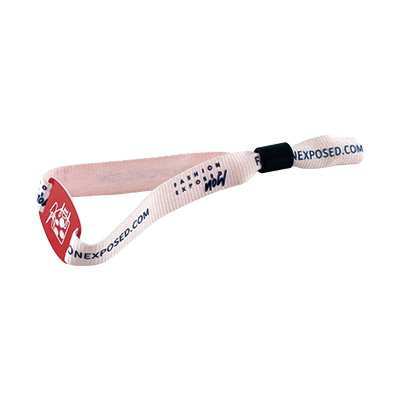
アンテナの後ろに焼結フェライト シートを配置すると、磁束がリーダーに集中し、手首の組織からの離調を防ぎます。. 検証済みの NFC シリコン リストバンド設計, この技術により、シールドなしの同等品と比較して、ボディ上の読み取り範囲が 30 ~ 50% 向上します。これは、イベント アクセスや安全な認証に不可欠です。.
3. アンテナ形状の最適化
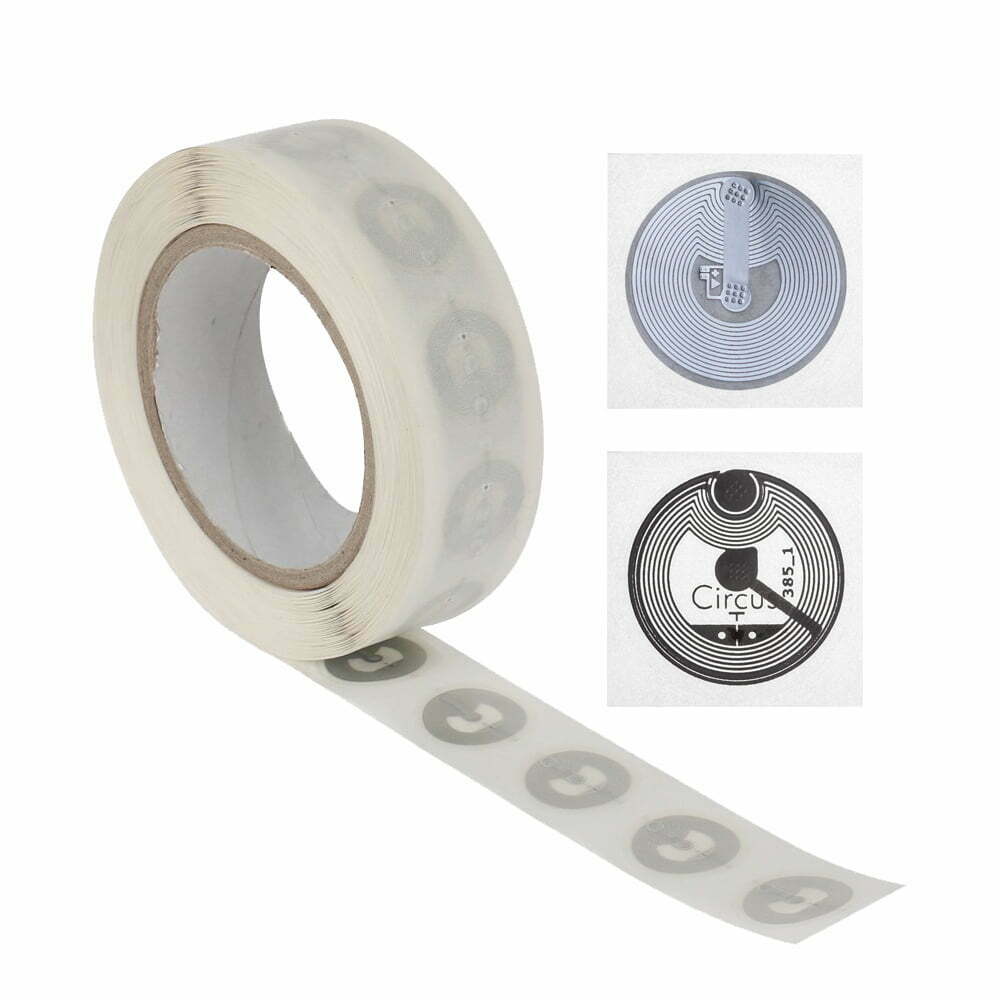
ウェアラブル向け, 長方形のコイルにより、リストバンド内のスペース利用率が向上します; 円形コイルはリングとキーフォブに適しています; 8 の字パターンによりフィールドの均一性が向上. 単層 FPC アンテナはコスト重視のアプリケーションでは一般的です; 多層バリアントにより、より厳密な Q 値制御が可能になります (ターゲット: 15–25). 配線の幅と間隔は、共振の安定性を維持するための鍵である抵抗と自己容量を管理するように調整されています。.
4. 重要な考慮事項
- フレキシブル基板 (FPC): などの曲面に最適です。 NFCシリコンリストバンド そして医療用パッチ.
- PETに銀インク: 使い捨てスマートパッチで使用 - 導電率は低いが拡張性は高い.
- 銅エッチングされた FR4 またはセラミック基板: プレミアム優先 NFCリング 導電性と耐久性が最も重要な場合.
5. マッチングネットワーク設計
適切に調整された L-C ネットワークにより、50Ω のインピーダンスが確保されます。 13.56 MHz. 一般的な落とし穴には、コンパクトなエンクロージャによる寄生容量やフェライトの温度依存の透磁率の変化などがあります。. -10°C ~ +50°C で安定した性能を得るには、NP0/C0G コンデンサと低温度係数インダクタの使用をお勧めします。.
6. テスト & 検証
検証には以下が含まれます:
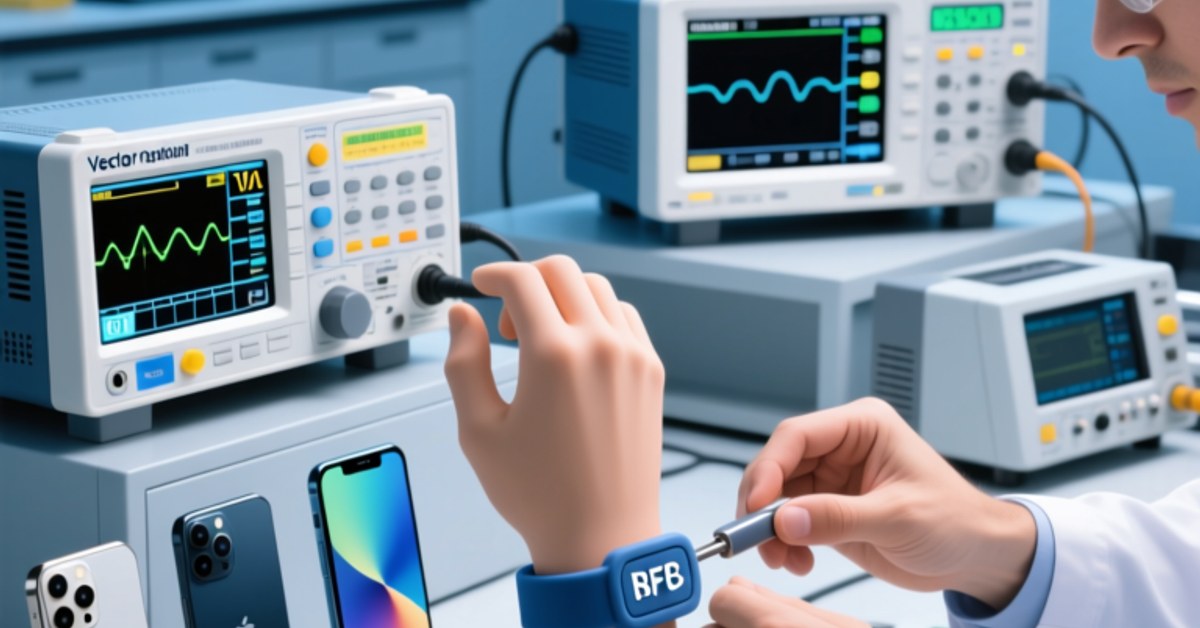
- S11リターンロスのVNA測定, 共振周波数, と帯域幅;
- ISO 14443-A/B および ISO 15693 カードエミュレータのテスト;
- リファレンスデバイスにわたる実際の読み取り範囲テスト: iPhone 14/15, サムスンギャラクシーS23, Googleピクセル 7.
7. ケーススタディ: NFCシリコンリストバンドアンテナ
最近の設計では、2 層 FPC アンテナを 2mm 厚のシリコン オーバーモールドに統合しました. 手首の組織に対してシールドされた 0.5mm TDK IFL フェライト シート. 読み取り対象範囲: 3–5cm. 測定結果: 4.2 cm(ピクセルあり) 7, ISO 14443-Aに完全準拠.
8. 新興テクノロジー: アクティブ ウェアラブル向けの NTAG I²C
NTAG I²C ファミリは、I²C ブリッジ経由で NFC コントローラーとマイクロコントローラー間の双方向通信を可能にし、ヘルスモニタリング パッチやインタラクティブなスマート ジュエリーに最適です. アンテナ設計は、RF 効率を損なうことなく、パッシブ ポーリングとアクティブ データ交換の両方をサポートする必要があります。.
一般的なウェアラブルに推奨される NFC アンテナ パラメータ
>
| フォームファクター | 外形寸法 | コイルターン数 | トレース幅 | フェライトタイプ | 予想される読み取り範囲 |
|---|---|---|---|---|---|
| NFCシリコンリストバンド | 45 × 12 mm | 4–6 | 0.25 mm | TDK IFL-0.5 mm | 3.5–4.5cm |
| NFCリング | Ø18mm | 3–5 | 0.3 mm | 3M AB5000-0.3mm | 2.5–3.5cm |
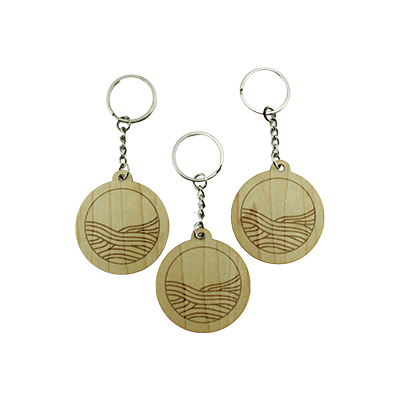
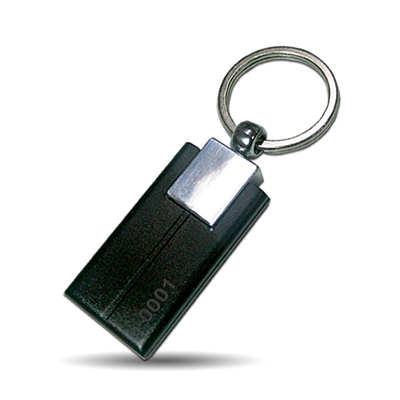
| NFC キーフォブ | 50 × 35 mm | 5–7 | 0.35 mm | TDK IFL-0.3 mm | 4–6cm |
| スマート医療パッチ | 30 × 20 mm | 4 | 0.2 mm (シルバーインク) | なし (PET基材) | 2–3cm |
RFIDHY と NFCWORK の専門知識で次のウェアラブルを強化
開発中かどうか NFCイベント用リストバンド, NFC キーフォブ, またはカスタム RFIDリストバンド エンタープライズアクセス用, 当社のエンジニアリング チームは、量産対応のアンテナ レイアウトを提供します, ISO準拠の検証レポート, およびフルスタック NFC ウェアラブル ソリューション.
よくある質問
- NFCの性能が人体に影響を与えるのはなぜですか?
人間の組織は NFC 磁場を吸収し、離調します. フェライト シールドは磁束の方向を変え、アンテナを伝導性干渉から隔離することでこれを軽減します。. - 標準を使用できますか NFCタグ ウェアラブルなデザインで?
既製の NFC インレイがウェアラブルの機械要件または RF 要件を満たしていることはほとんどありません。. カスタムアンテナの統合 - 基板の選択を含む, シールド, とマッチング - 信頼性にとって不可欠です. - 違いは何ですか NFCリストバンド そして RFIDリストバンド?
NFCリストバンド で動作します 13.56 MHz (ISO 14443/15693) 双方向の対話をサポートします (例えば。, タップして認証する); UHF RFIDリストバンド (860–960MHz) 通常は読み取り専用で、長距離の資産追跡に使用されます。「」を参照してください。 RFIDHYのUHF RFIDリストバンド. - アンテナ シミュレーション ファイルまたはガーバー出力は提供されますか??
はい - HFSS または CST シミュレーション レポートを提供します, レイアウトファイル (ガーバー/ODB++), 製造パートナーの要件に合わせたテスト文書.
カスタム NFC ウェアラブル アンテナ設計のサポートが必要?
当社のエンジニアリング チームは、シミュレーションやプロトタイピングから ISO 準拠テストや量産引き継ぎまで、エンドツーエンドの NFC アンテナ開発を提供します。. スケーリングしているかどうか NFCシリコンリストバンド, スマートリング回線の開始, または医療用ウェアラブルに NFC を組み込む, 最適な RF パフォーマンスを保証します, 製造可能性, および認定の準備状況.