Entwicklung leistungsstarker NFC-Antennen für Wearables
NFC-fähige Wearables – von Silikonarmbändern bis hin zu luxuriösen Smart-Ringen – erfordern Antennen, die eine Miniaturisierung ausgleichen, Körperkupplung, und Einhaltung gesetzlicher Vorschriften. Bei 13.56 MHz, Die Leistung der NFC-Antenne wird durch die Physik bestimmt: Kleinere Formfaktoren reduzieren die Magnetfluss-Einfangfläche, Die Lesereichweite wird direkt eingeschränkt. Und doch mit intelligentem Design, Eine zuverlässige Operation von 3–5 cm am Körper ist möglich. Hier erfahren Sie, wie.
1. Die Physik-Herausforderung & Vergütungsstrategien
Das Schrumpfen einer NFC-Antenne verringert deren Induktivität und Strahlungswiderstand, Verringerung der Kopplungseffizienz – insbesondere in der Nähe von leitfähigem menschlichem Gewebe. Zum Ausgleich, Designer verwenden hochpermeable Ferritabschirmung (Z.B., TDK IFL oder 3M AB5000), mehrschichtige Leiterplattenaufbauten, Und optimierte Spulengeometrie. Diese Techniken stellen die magnetische Flussdichte wieder her, ohne den Platzbedarf zu vergrößern.
2. Ferrit-Ladetechnik
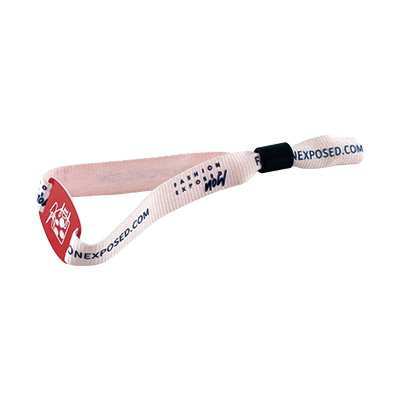
Durch die Platzierung gesinterter Ferritplatten hinter der Antenne wird der Magnetfluss zum Lesegerät hin konzentriert und eine Verstimmung durch das Handgelenkgewebe verhindert. In validierten NFC-Silikonarmbanddesigns, Diese Technik verbessert die Lesereichweite am Körper um 30–50 % im Vergleich zu ungeschirmten Äquivalenten – entscheidend für den Ereigniszugriff oder die sichere Authentifizierung.
3. Optimierung der Antennengeometrie
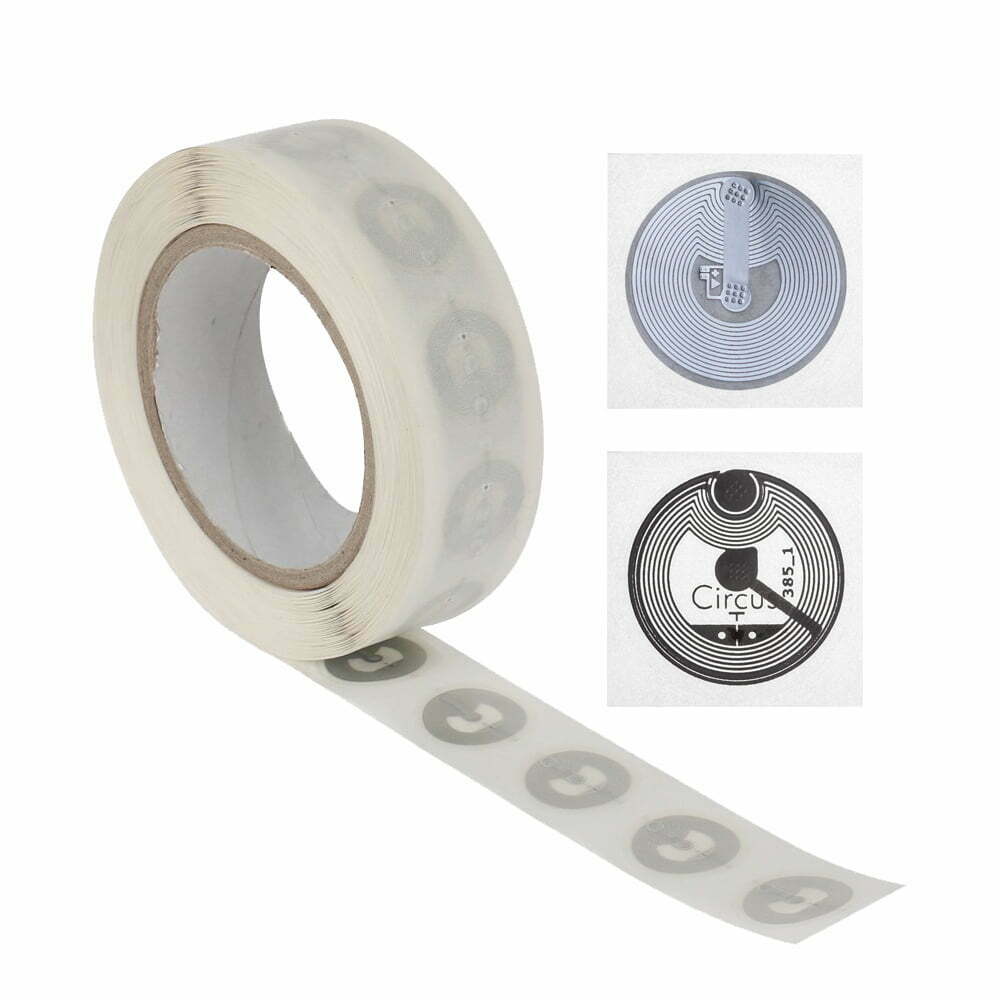
Für Wearables, Rechteckige Spulen bieten eine bessere Raumausnutzung in Armbändern; Runde Spulen eignen sich für Ringe und Schlüsselanhänger; Achtermuster verbessern die Feldgleichmäßigkeit. Für kostensensible Anwendungen sind einschichtige FPC-Antennen üblich; Mehrschichtvarianten ermöglichen eine strengere Kontrolle des Q-Faktors (Ziel: 15–25). Leiterbahnbreite und -abstand sind auf Widerstand und Eigenkapazität abgestimmt – der Schlüssel zur Aufrechterhaltung der Resonanzstabilität.
4. Materielle Überlegungen
- Flexible Leiterplatte (FPC): Ideal für gekrümmte Oberflächen wie NFC-Silikonarmbänder und medizinische Pflaster.
- Silbertinte auf PET: Wird in Einweg-Smart-Patches verwendet – geringere Leitfähigkeit, aber hohe Skalierbarkeit.
- Kupfergeätzte FR4- oder Keramiksubstrate: Bevorzugt für Premium NFC-Ringe wo Leitfähigkeit und Haltbarkeit von größter Bedeutung sind.
5. Passendes Netzwerkdesign
Ein gut abgestimmtes L-C-Netzwerk gewährleistet eine Impedanz von 50 Ω 13.56 MHz. Zu den häufigsten Gefahren gehören parasitäre Kapazitäten durch kompakte Gehäuse und temperaturabhängige Permeabilitätsverschiebungen in Ferriten. Wir empfehlen die Verwendung von NP0/C0G-Kondensatoren und Induktivitäten mit niedrigem Temperaturkoeffizienten für eine stabile Leistung bei -10 °C bis +50 °C.
6. Testen & Validierung
Die Validierung umfasst:
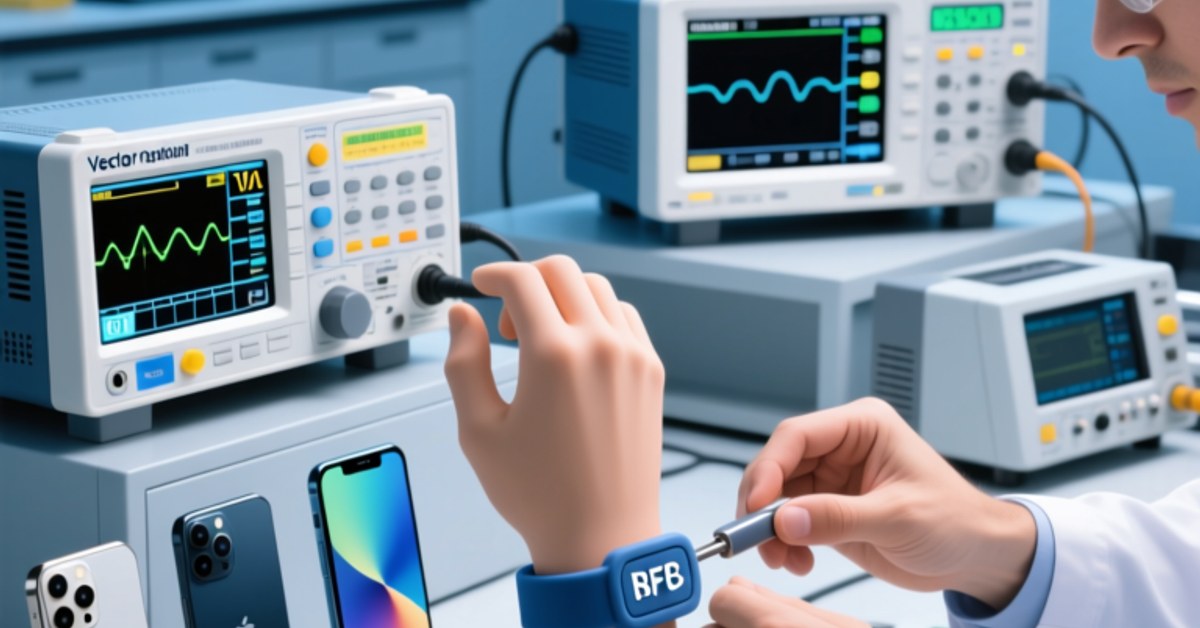
- VNA-Messung der S11-Rückflussdämpfung, Resonanzfrequenz, und Bandbreite;
- ISO 14443-A/B und ISO 15693 Testen des Kartenemulators;
- Praxisnahe Lesereichweitentests auf Referenzgeräten: iPhone 14/15, Samsung Galaxy S23, Google Pixel 7.
7. Fallstudie: NFC-Silikon-Armbandantenne
Ein neueres Design integrierte eine zweischichtige FPC-Antenne in eine 2 mm dicke Silikonummantelung. Eine 0,5 mm dicke TDK IFL-Ferritplatte, die gegen Handgelenksgewebe abgeschirmt ist. Ziellesereichweite: 3–5 cm. Gemessenes Ergebnis: 4.2 cm mit Pixel 7, Vollständig konform mit ISO 14443-A.
8. Aufstrebende Technologie: NTAG I²C für aktive Wearables
Die NTAG I²C-Familie ermöglicht die bidirektionale Kommunikation zwischen NFC-Controller und Mikrocontroller über die I²C-Brücke – ideal für Patches zur Gesundheitsüberwachung oder interaktiven Smart-Schmuck. Das Antennendesign muss sowohl passives Polling als auch aktiven Datenaustausch unterstützen, ohne die HF-Effizienz zu beeinträchtigen.
Empfohlene NFC-Antennenparameter für gängige Wearables
>
| Formfaktor | Außenmaße | Spulendrehungen | Spurbreite | Ferrittyp | Erwarteter Lesebereich |
|---|---|---|---|---|---|
| NFC-Silikonarmband | 45 × 12 mm | 4–6 | 0.25 mm | TDK IFL-0.5 mm | 3.5–4,5 cm |
| NFC-Ring | Ø18 mm | 3–5 | 0.3 mm | 3M AB5000-0,3 mm | 2.5–3,5 cm |
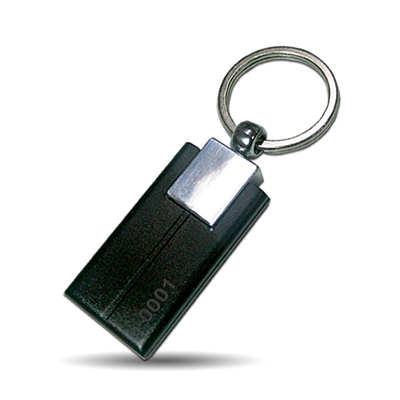
| NFC Keyfob | 50 × 35 mm | 5–7 | 0.35 mm | TDK IFL-0.3 mm | 4–6 cm |
| Intelligentes medizinisches Pflaster | 30 × 20 mm | 4 | 0.2 mm (silberne Tinte) | Keiner (PET-Substrat) | 2–3 cm |
Versorgen Sie Ihr nächstes Wearable mit RFIDHY- und NFCWORK-Expertise
Ob Sie sich weiterentwickeln NFC-Event-Armbänder, NFC -Schlüsselfobs, oder benutzerdefiniert RFID-Armbänder für den Unternehmenszugang, Unser Engineering-Team liefert serienreife Antennenlayouts, ISO-konforme Validierungsberichte, und tragbare Full-Stack-NFC-Lösungen.
FAQ
- Warum nimmt die NFC-Leistung im menschlichen Körper ab??
Menschliches Gewebe absorbiert und verstimmt NFC-Magnetfelder. Eine Ferritabschirmung mildert dies, indem sie den Fluss umleitet und die Antenne von leitenden Störungen isoliert. - Kann ich Standard verwenden? NFC-Tags in tragbaren Designs?
Standardmäßige NFC-Inlays erfüllen selten die mechanischen oder HF-Anforderungen für Wearables. Kundenspezifische Antennenintegration – einschließlich Substratauswahl, Abschirmung, und Matching – ist für die Zuverlässigkeit von entscheidender Bedeutung. - Was ist der Unterschied zwischen NFC -Armbänder Und RFID-Armbänder?
NFC -Armbänder operieren bei 13.56 MHz (ISO 14443/15693) und unterstützen die wechselseitige Interaktion (Z.B., Tippen Sie zur Authentifizierung); UHF RFID-Armbänder (860–960 MHz) sind in der Regel schreibgeschützt und werden für die langfristige Asset-Verfolgung verwendet – siehe Die UHF-RFID-Armbänder von RFIDHY. - Stellen Sie Antennensimulationsdateien oder Gerber-Ausgaben bereit??
Ja – wir liefern HFSS- oder CST-Simulationsberichte, Layoutdateien (Gerber/ODB++), und Testdokumentation abgestimmt auf die Anforderungen Ihres Fertigungspartners.
Benötigen Sie Unterstützung für das Design benutzerdefinierter tragbarer NFC-Antennen?
Unser Ingenieurteam bietet eine umfassende NFC-Antennenentwicklung – von der Simulation und dem Prototyping bis hin zu ISO-Konformitätstests und der Übergabe der Serienproduktion. Ob Sie skalieren NFC-Silikonarmbänder, Einführung einer intelligenten Ringleitung, oder die Einbettung von NFC in medizinische Wearables, Wir sorgen für optimale HF-Leistung, Herstellbarkeit, und Zertifizierungsbereitschaft.