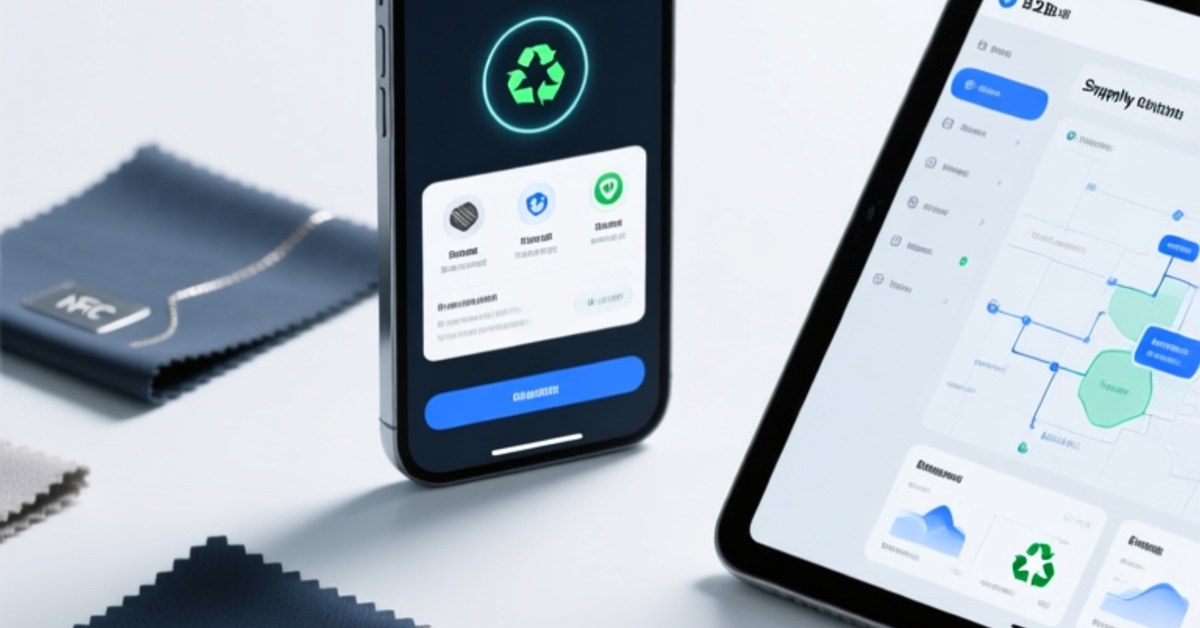
Pourquoi les passeports de produits numériques sont essentiels pour le textile & Marques de mode
L’Union européenne Éco-conception pour la réglementation des produits durables (ESPR) mandats Passeports de produits numériques (DPP) pour les textiles par 2027 - fabrication DPP la mise en œuvre n’est plus facultative, mais un impératif stratégique. En tant qu’une des industries les plus gourmandes en ressources au monde, la mode fait face à une pression croissante pour prouver son origine, composition, impact environnemental, et parcours de fin de vie. Une solution DPP robuste assure la conformité réglementaire, visibilité de la chaîne d'approvisionnement, et la confiance des consommateurs, le tout ancré par des solutions sécurisées, identités numériques scannables intégrées directement dans les vêtements.
Comment les étiquettes de vêtements NFC alimentent l'écosystème DPP textile
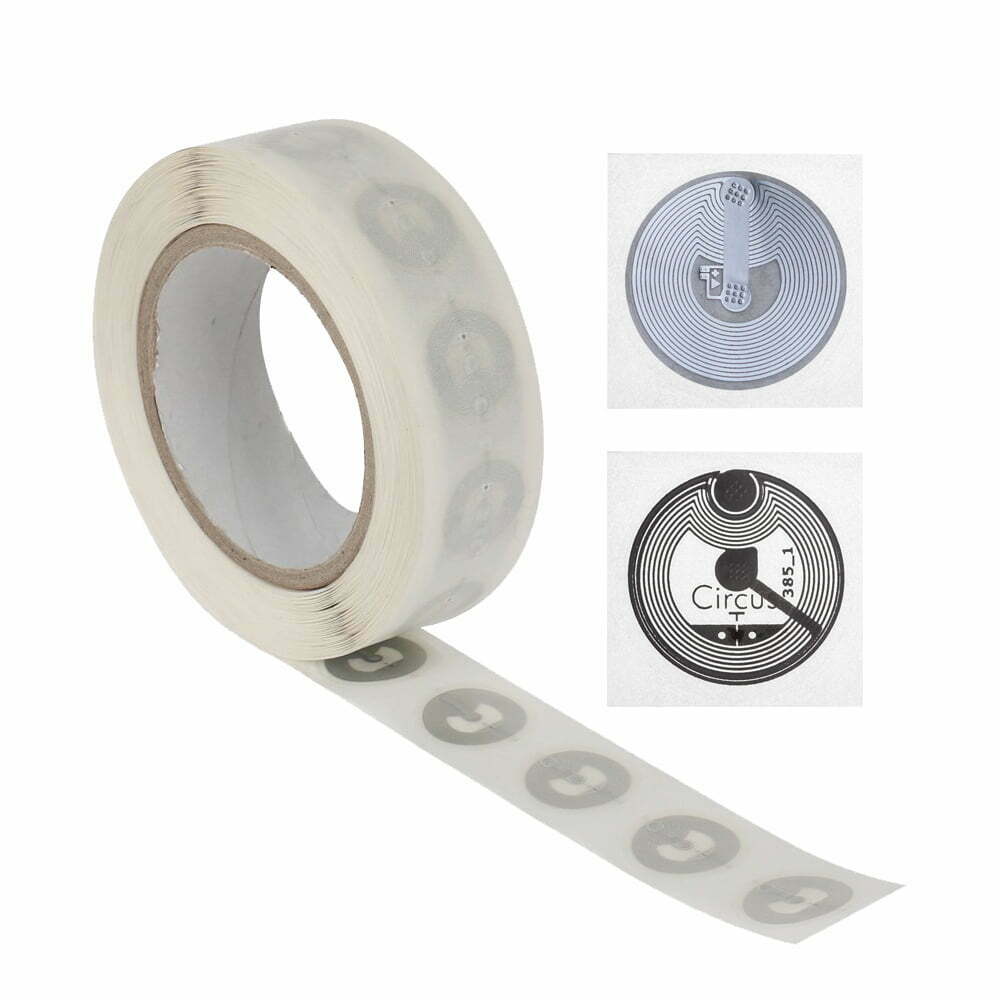
La technologie NFC fournit la couche physique idéale pour les DPP textiles: sans contact, lisible sur smartphone, inviolable, et intégrable à grande échelle. Contrairement aux codes QR ou aux étiquettes imprimées, Balises NFC — y compris flexible Incrustations NFC et résistant au lavage Autocollants NFC — peut être intégré de manière transparente aux étiquettes d'entretien des vêtements, doublures tissées, ou du matériel accessoire sans compromettre l'esthétique ou la durabilité.
Données stockées dans un passeport produit numérique textile
Un DPP conforme stocke et structure, données vérifiables accessibles via NFC Tap. Les champs clés incluent:
- Composition du matériau: Types de fibres, pourcentages, attestations (Par exemple, GOTS, PET recyclé)
- Origines de la chaîne d'approvisionnement: Sites de fabrication à plusieurs niveaux, identifiants d'usine, et dates d'audit
- Soins & Guide de réparation: Paramètres de lavage en machine, temps de repassage, tutoriels de réparation
- Recyclabilité & Voies d'élimination: Consignes de tri, compatibilité chimique, liens vers le programme de reprise
- Mesures de durabilité: Consommation d'eau, empreinte carbone, score de circularité (aligné sur la méthodologie PEF de l’UE)
Cas d'utilisation du DPP dans les segments de la mode
>
| Segment | Principaux pilotes DPP | RFIDHY Technologie habilitante |
|---|---|---|
| Mode rapide | Conformité réglementaire, précision des stocks, optimisation de la logistique inverse | Incrustations NFC pour l'intégration d'étiquettes à grand volume; compatible avec les lecteurs RFID UHF existants pour la numérisation bimode en entrepôt |
| Luxe & Prime | Authentification, exclusivité, narration immersive, vérification de revente | Coutume Autocollants NFC avec charge utile cryptée; associé à des lecteurs RFID HF pour les kiosques d'authentification des boutiques |
Intégration avec l'infrastructure existante
Les marques ont besoin d’une adoption transparente du DPP, et non d’un remplacement du système. RFIDHYc'est Solutions NFC interopérer de manière native avec les flux de travail d'étiquetage et les systèmes d'entreprise existants:
- Étiquette d'impression: Les incrustations NFC s'intègrent dans les imprimantes d'étiquettes thermiques ou flexographiques standard utilisées pour les étiquettes de soins
- Systèmes d'inventaire: Les données NFC se synchronisent avec les plateformes ERP et PLM via les API REST; Lecteurs RFID UHF (Par exemple, portable Lecteur RFID) lire à la fois NFC et Tags UHF lors des réceptions et des contrôles de stocks
- Applications grand public: Les expériences Tap-to-learn utilisent les normes NFC ouvertes : aucune application propriétaire n'est requise
L’analyse de rentabilité d’entreprise pour les DPP textiles
Au-delà de la conformité, Les DPP offrent un retour sur investissement mesurable:
- Rapports de durabilité: La capture automatisée des données réduit les efforts manuels de reporting ESG jusqu'à 65% (par données pilotes de marque internes)
- Engagement client: 78% des consommateurs déclarent une plus grande fidélité à la marque lorsqu'ils accèdent à des histoires de produits vérifiées via NFC (2024 Enquête auprès des consommateurs de vêtements McKinsey)
- Favoriser l’économie circulaire: Une identification précise des matériaux améliore le rendement du tri dans les installations de recyclage des textiles, ce qui est essentiel pour répondre aux obligations REP de l'UE
FAQ
- Qu'est-ce qu'un passeport produit numérique textile?
Un enregistrement numérique standardisé lié à un vêtement physique via NFC ou QR, contenant des données vérifiées sur les matériaux, origine, soins, et options de fin de vie – mandatées par l'UE ESPR pour les textiles. - Les étiquettes NFC pour vêtements peuvent-elles survivre au blanchiment industriel?
Oui. Les étiquettes de blanchisserie RFID et les incrustations NFC spécialisées de RFIDTAGHY sont conçues pour >100 cycles de lavage et résiste au pressage à la vapeur à haute température. - Ai-je besoin d'un nouveau matériel pour déployer des DPP NFC?
Non. Le plus moderne téléphones intelligents (iOS 13+/Android 6+) lire NFC nativement. Pour l'analyse back-end, les lecteurs RFID de bureau ou les unités portables prennent en charge les flux de travail hybrides NFC/UHF. - En quoi cela diffère-t-il des étiquettes d'inventaire RFID standard ??
Alors que la RFID UHF permet une numérisation en masse, NFC fournit un accès humain, sécurisé, interaction bidirectionnelle — essentielle pour les expériences DPP et l'authentification destinées aux consommateurs.
Prêt à lancer votre stratégie DPP textile?
RFIDHY propose des inlays NFC certifiés, services d'encodage de balises évolutifs, et un support d'intégration adapté aux chaînes d'approvisionnement de la mode - du prototype au déploiement mondial.