Введение: Решения по развертыванию напрямую влияют на жизненный цикл и соответствие RFID-проектов
Выбор правильного решения для развертывания меток является важным первым шагом в обеспечении непрерывного считывания данных RFID на протяжении всего жизненного цикла текстиля.. По отраслевым данным, неправильное развертывание может привести к падению скорости чтения более чем на 50% после первой стирки. В этой статье сравниваются основные методы шитья., теплопередача, и решения для подвесок, сосредоточив внимание на анализе процессов маркировки, Требования к мягкой упаковке, затраты, и сценарии применения, обеспечивая основу для принятия решений для вашего Цифровой паспорт продукта (Дпп) проект.
Решение первое: Пришивные бирки – лучший выбор долговечности
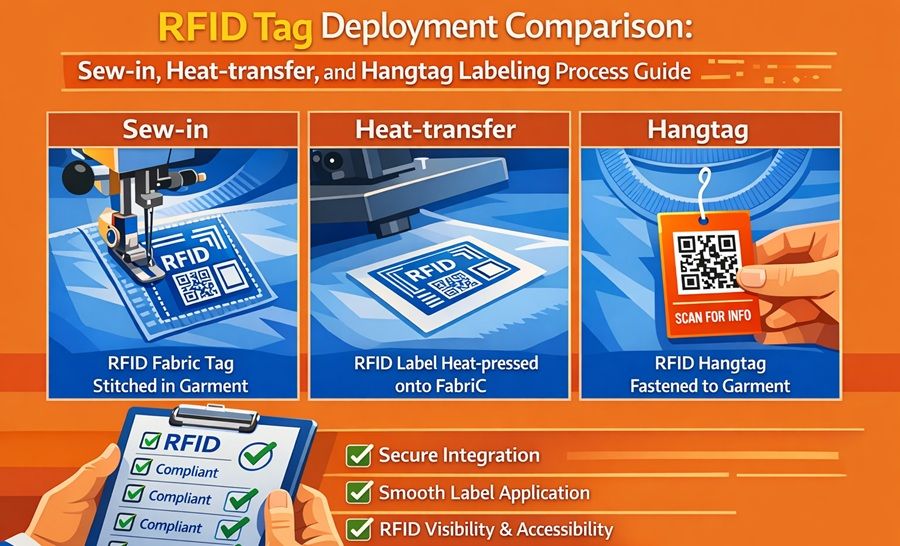
Пришивные бирки вшиты непосредственно в боковые швы., карманы, или этикетки по уходу за одеждой с помощью швейной машины., что делает их наиболее устойчивым к мытью решением. Им требуется чрезвычайно тонкая и гибкая мягкая упаковка., обычно чип и антенна герметизируются специальной ПЭТ или тканевой основой., толщиной менее 0,5 мм для обеспечения комфортного ношения.
Это решение отлично выдерживает стандартную промышленную стирку AARH. (60-85° C.) и сильное трение, обеспечение того, чтобы носитель данных имел тот же срок службы, что и продукт. Это золотой стандарт долгосрочного отслеживания и соответствия требованиям ЕС DPP.. Такие поставщики, как RFIDHY может предоставить пришивные бирки нестандартного размера и формы и оптимизировать их радиочастотные характеристики для адаптации к электромагнитным помехам, вызванным различными положениями шитья..
Решение второе: Теплопередающие метки – балансировка автоматизации и экономической эффективности
В термотрансферных бирках используется слой термоплавкого клея, и они надежно прикрепляются к внутренней стороне одежды за считанные секунды посредством процесса термопрессования. (например, машина для передачи тепла). Его основное преимущество заключается в чрезвычайно высоком уровне автоматизации процесса этикетирования., который может быть легко интегрирован в существующие линии сборки бирок, достижение скорости маркировки более 60 штук в минуту. Это предъявляет строгие требования к термостойкости. (мгновенная высокая температура примерно 150-180°C) и надежность склеивания мягкой упаковки.
Это решение экономически эффективно и имеет чистый внешний вид., но его долговечность немного уступает вшитому типу, особенно для тканей, требующих частой стирки или специальной отделки. (например, смягчающее силиконовое масло), где может быть риск отслоения. Термосвариваемые этикетки по индивидуальному заказу позволяют адаптировать формулу клея к различным тканям для оптимизации адгезии..
Решение третье: Этикетки Hangtag – гибкость и точка входа для взаимодействия с потребителями
Решение для бирки инкапсулирует RFID-вставку в бумажную или пластиковую бирку одежды.. Это наиболее гибкое решение с нулевым воздействием на саму одежду., не требующие изменений в существующих производственных процессах. В первую очередь он служит для управления розничными запасами., идентификация партии, и взаимодействие с потребителями (через чтение мобильного телефона NFC).
Однако, бирки обычно снимаются в точках продаж, поэтому они не могут служить носителем данных для продукта на протяжении всего срока службы и не подходят для сценариев DPP, требующих полного отслеживания жизненного цикла.. Требования к упаковке относительно низкие., уделяя больше внимания внешнему виду печати и прочности ярлыка.
Выводы и рекомендации по выбору
Нет “единственный лучший” решение; выбор зависит от основных целей. Для обеспечения непрерывной прослеживаемости и соответствия требованиям (Дпп), следует выбрать тип вшивки; для высокоскоростного производства и контроля затрат, термосвариваемый тип — идеальный выбор; и только для управления розничными запасами, можно использовать тип бирки. До реализации, важно провести пилотные испытания небольших партий для моделирования реальных сценариев стирки и использования..
Сотрудничество с поставщиком с возможностью кастомизации (такой как RFIDHY) разработать соответствующие этикетки в мягкой упаковке на основе вашей ткани, процесс, и соответствие требованиям является ключевой гарантией успеха проекта.
вопрос&А
-
Что обычно приводит к отслоению термосвариваемых этикеток после стирки? Как это решить?
Отслоение в основном происходит из-за несоответствия клея физическим и химическим свойствам ткани., или неправильные параметры процесса термопрессования (температура, давление, время). Решение требует двух подходов:
Первый, сотрудничать с поставщиком, чтобы подобрать специальный термоплавкий клей, соответствующий составу ткани (например, синтетические волокна, хлопок, смешивает) и отделочные средства;
Второй, строго откалибровать теплообменное оборудование на производственной линии и провести испытания на прочность адгезии на различных партиях ткани..
-
Влияют ли вшитые бирки на комфортность одежды??
Использование передовой технологии мягкой упаковки, ультратонкие этикетки для шитья (толщина <0.5мм) оказывают минимальное влияние на комфорт при пришивании в специально отведенных местах, таких как боковые швы или этикетки с указаниями по уходу., и обычно незаметны для потребителей. Ключ заключается в гибком дизайне этикетки и точном планировании места пришивания..
-
Можно ли совместить несколько схем развертывания на одном изделии??
Да, это общая стратегия. Например, для удовлетворения требований DPP, постоянный УВЧ RFID TAG может быть вшит в одежду для отслеживания цепочки поставок; в то же время, а NFC-тег может быть встроен в бирку и служить точкой входа для взаимодействия с потребителем., аутентификация, и доступ к цифровому паспорту. Для этого требуется, чтобы конструкция системы связывала идентификаторы двух тегов..
Для получения дополнительной информации,пожалуйста связаться с нами.