Cartridge take-back schemes are one of the most visible sustainability commitments a consumables brand can make. They are also one of the hardest to run at scale. Between the customer who drops a used toner cartridge into a collection box and the remanufactured unit that returns to the shelf, identity is usually lost. NFC-etikedoj close that gap by giving every cartridge a readable, writable and verifiable digital identity from first sale to final material recovery.
This guide is written for consumables brands, remanufacturers, sustainability managers and retailers running or planning a take-back scheme. It covers the practical mechanics: kiel NFC-etikedoj are attached, how incentive flows are designed, how collection points are scanned, how refill and reman verification works, and how the resulting data supports EU circular economy expectations and customer-facing reporting.
Why Cartridge End-of-Life Is Really a Data Problem
Most underperforming take-back programs do not fail because users are unwilling to return cartridges. They fail because the brand cannot see what happens after collection. The same operational gaps appear again and again:
- Collection boxes fill up, but nobody knows which models are inside until the box is opened at a consolidation hub, which delays sorting and inflates logistics costs.
- Incentive credits are claimed for cartridges that were never returned, or the same unit is credited more than once across two collection channels.
- Refill and remanufacturing lines cannot reliably distinguish a genuine core from a clone, or from a unit that has already exceeded its safe number of refill cycles.
- Sustainability teams are asked for collection and recovery figures that a spreadsheet-based process cannot substantiate.
NFC technology addresses all four problems with a low-cost, phone-readable identity layer attached to the cartridge itself. Because NFC works with the saĝtelefonoj customers already carry, no dedicated consumer app is strictly required, and because the memory on an NFC tag can be updated in the field, the same tag can carry information across multiple loops.
The Anatomy of a Closed-Loop Cartridge Program
Before choosing hardware, it helps to map the loop as a sequence of identity events. A typical closed-loop cartridge program has seven stages, and each one produces data that the next stage depends on.
1. First-use registration
A unique identifier is written to the NFC tag at production or at the point of first sale. This is the anchor record: modelo, aro, dato de produktado, intended market and the identity of the core itself.
2. In-service life
Optional service events, such as printer installation or warranty registration, can be logged by scanning the tag, building a lightweight service history without any manual data entry.
3. Collection
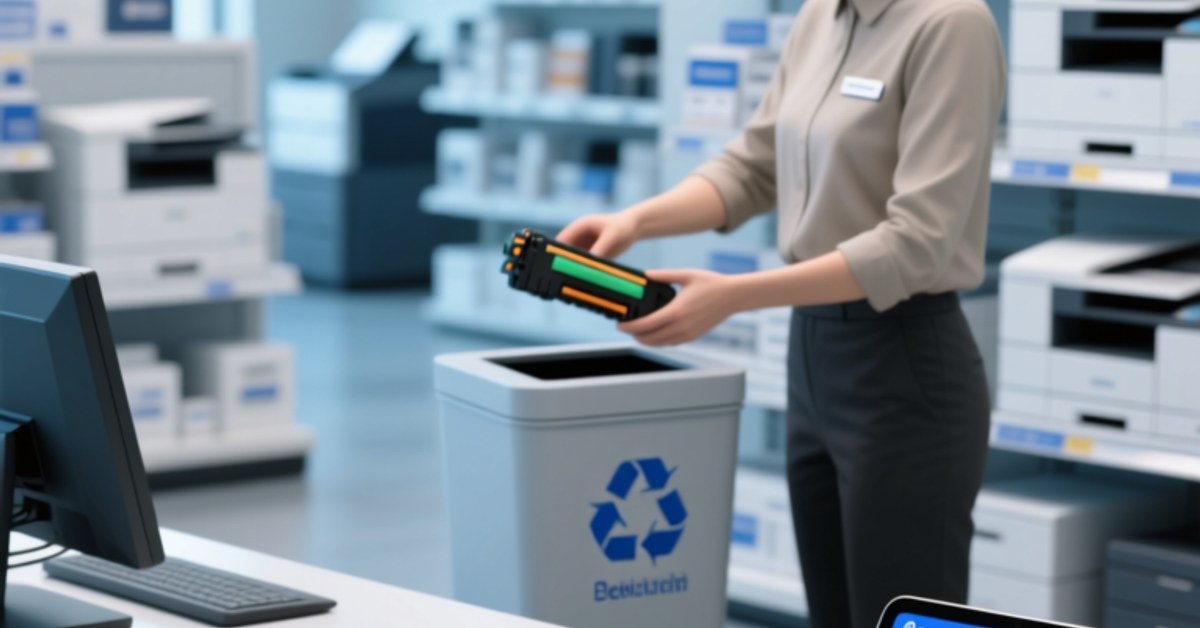
The user returns the cartridge to a retail counter, an office collection point, a kiosk or a mail-back pack. Each return is a scan event, and this is where incentive logic is triggered.
4. Consolidation and intake
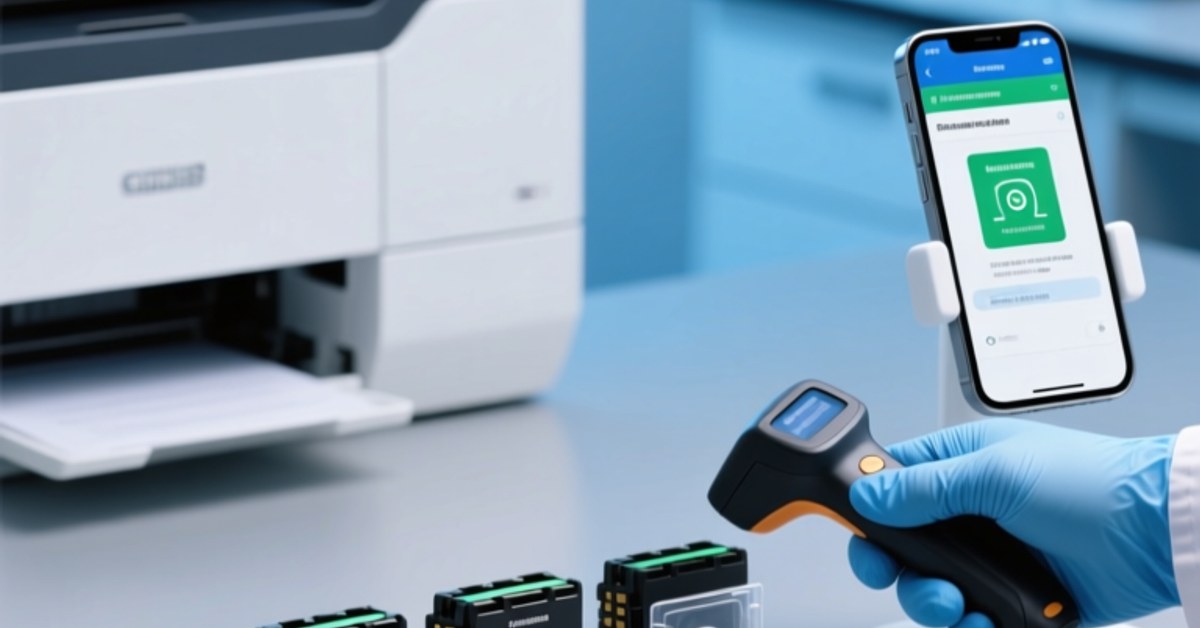
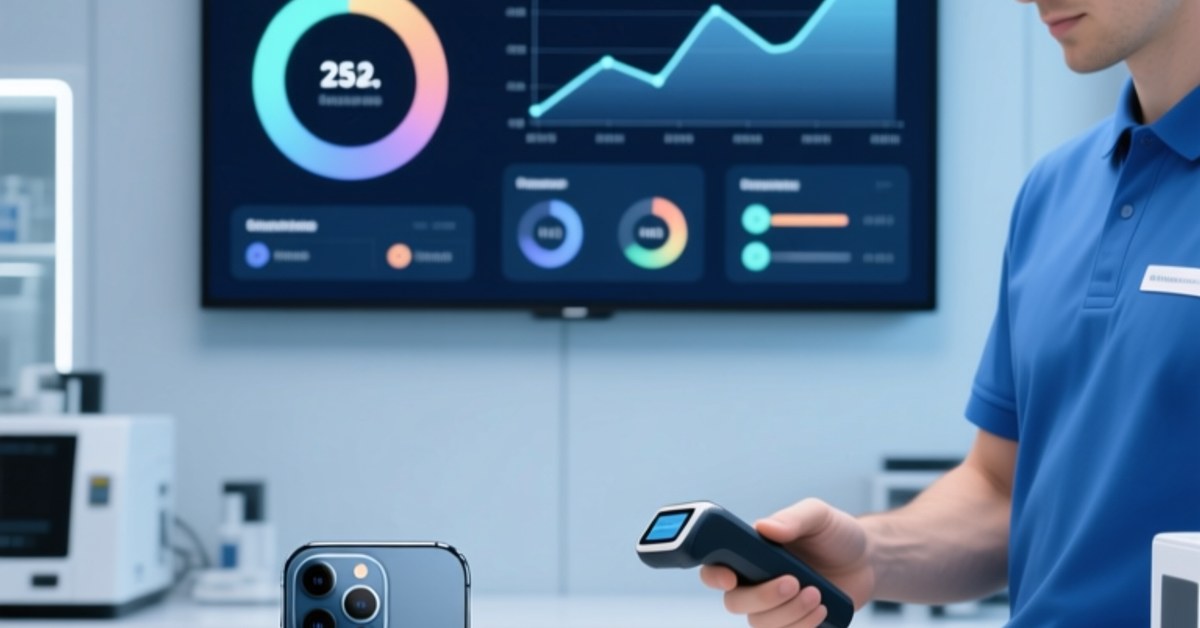
At the hub, bulk scanning replaces manual counting. Mantenilo RFID -Leganto or a desktop RFID -Leganto can read a full container quickly, and the system reconciles the physical count against the expected count for that collection point.
5. Verification and grading
The core is checked against its record: is it a genuine unit, has it already been refilled, how many cycles remain, is the housing suitable for remanufacturing or only for material recovery?
6. Refill or remanufacture
Each production step updates the tag record, so the next loop starts with accurate history rather than assumptions.
7. Reintroduction and final recovery
Refilled and remanufactured units re-enter the market with the same identifier but an updated lifecycle state. Units that cannot be reused are routed to material recovery, and that routing is recorded.
Where NFC Tags Fit on a Cartridge
Not every cartridge format can accept the same tag. En la praktiko, three placements cover most scenarios:
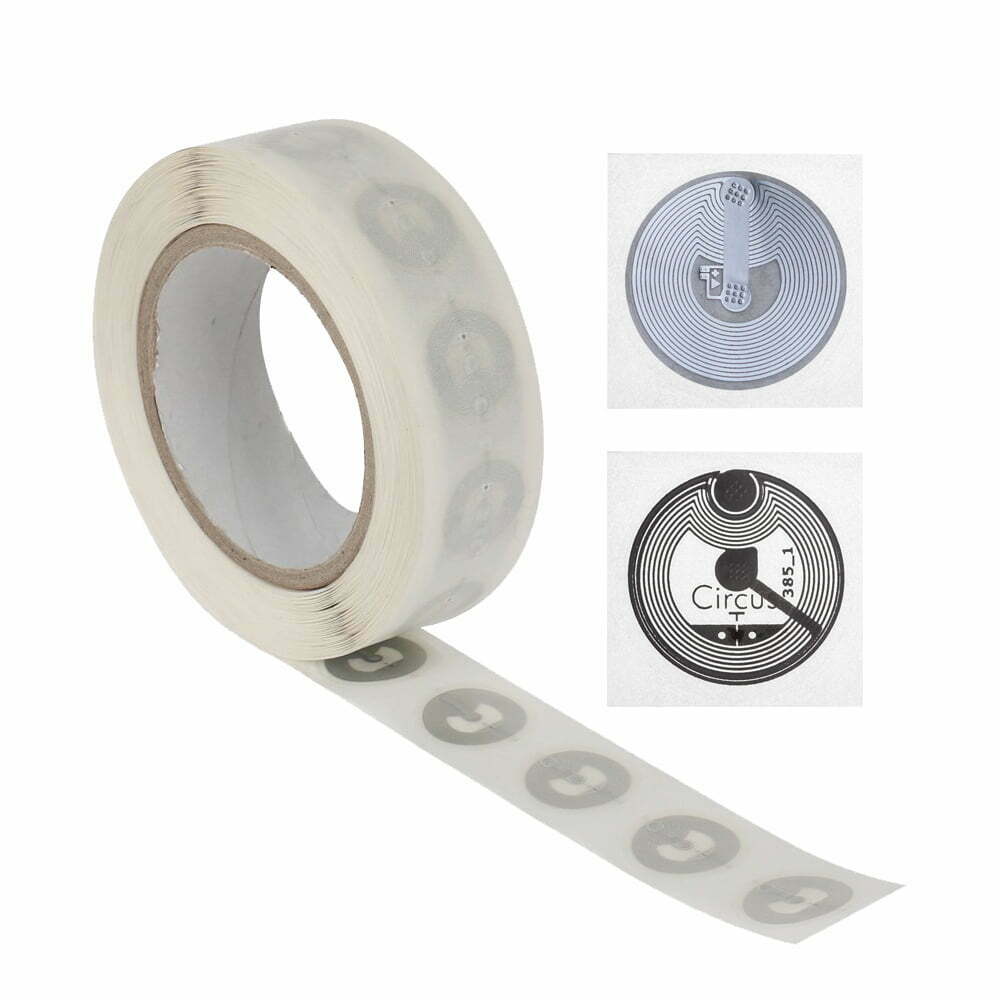
- On the cartridge housing — a small NFC tag or NFC-glumarko applied to a flat, non-metallic area of the shell. This survives the full loop and is the preferred location for refill tracking.
- On the drum or process unit — useful where the consumable component is separated during remanufacturing and needs its own identity.
- On the retail packaging — an NFC label or NFC inlay used for consumer engagement, warranty activation and proof of purchase, linking the packaging record to the cartridge record.
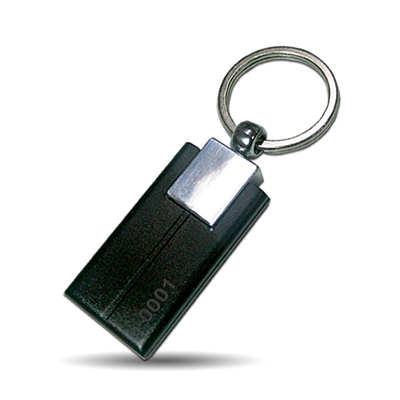
Where the mounting surface is metal-heavy or the cartridge sits inside a metal assembly, an anti-metal RFID -etikedo or a purpose-designed HF tag is generally the better choice. For bulk intake and container-level counting, UHF RFID-etikedoj or RFID wet inlays can be used alongside the NFC layer, with a UHF RFID reader capturing whole boxes while the NFC tag remains the customer-facing and phone-readable record.
Readers commonly deployed in cartridge programs include handheld RFID readers for intake and audit, desktop RFID readers for counter-top collection points, fixed RFID readers for conveyor or dock doors, and standard NFC-enabled saĝtelefonoj for consumer and field scanning. Module-level components such as a UHF RFID module or RFID antenna are used when a kiosk or collection bin needs to be built with an embedded reader.
Designing Take-Back Incentive Flows That Hold Up
Incentives drive participation, but poorly designed incentives drive fraud. The core principle is simple: one tag, one claim, one verified return. Because the NFC tag carries a unique identifier and can be written at the moment of collection, the incentive can be released only when a genuine scan event is recorded.
>
| Incentive model | How NFC supports it | Plej taŭga |
|---|---|---|
| Instant in-store credit | Counter staff scan the cartridge tag with a desktop reader or phone; the system validates the unit and issues a voucher code | Retail take-back counters |
| Mail-back credit | The return pack carries a paired NFC label; scanning the cartridge on arrival links the physical unit to the shipping record | Consumer and SMB mail-back |
| Core deposit refund | A deposit is registered against the tag identifier at first sale and refunded on verified return | High-value toner and drum units |
| Lojalecpunktoj | Each verified return posts points to an account, capped by unique tag identifier | Brand-owned loyalty programs |
| Volume-based B2B rebate | Bulk scans at intake generate an auditable collection count per site or contract | Enterprise and managed print fleets |
| Charitable donation | Each verified return triggers a donation, with the same anti-duplication logic | Community and campus programs |
Two design rules matter more than the incentive value itself. Unue, the claim must be locked to the physical tag, not to a receipt or a self-declared form. Due, the system should allow partial credit for non-refillable units so that users are never penalised for returning a cartridge that can only be recycled for materials.
Collection Point Scanning: From Retail Counter to Consolidation Hub
Collection points are where a take-back program either earns trust or loses it. Slow scanning frustrates retail staff, and inaccurate counting undermines every downstream metric. A practical scanning architecture has three layers:
- Point of return — a smartphone or desktop RFID reader validates the cartridge, timestamps the return, identifies the collection point and releases the incentive.
- Container or bin level — a fixed reader or handheld RFID reader reads all tags in a box in one pass, producing a manifest before the box is sealed.
- Hub intake — bulk scanning confirms the manifest, flags discrepancies and feeds the sorting line with pre-verified data, so grading decisions start before the cartridge is opened.
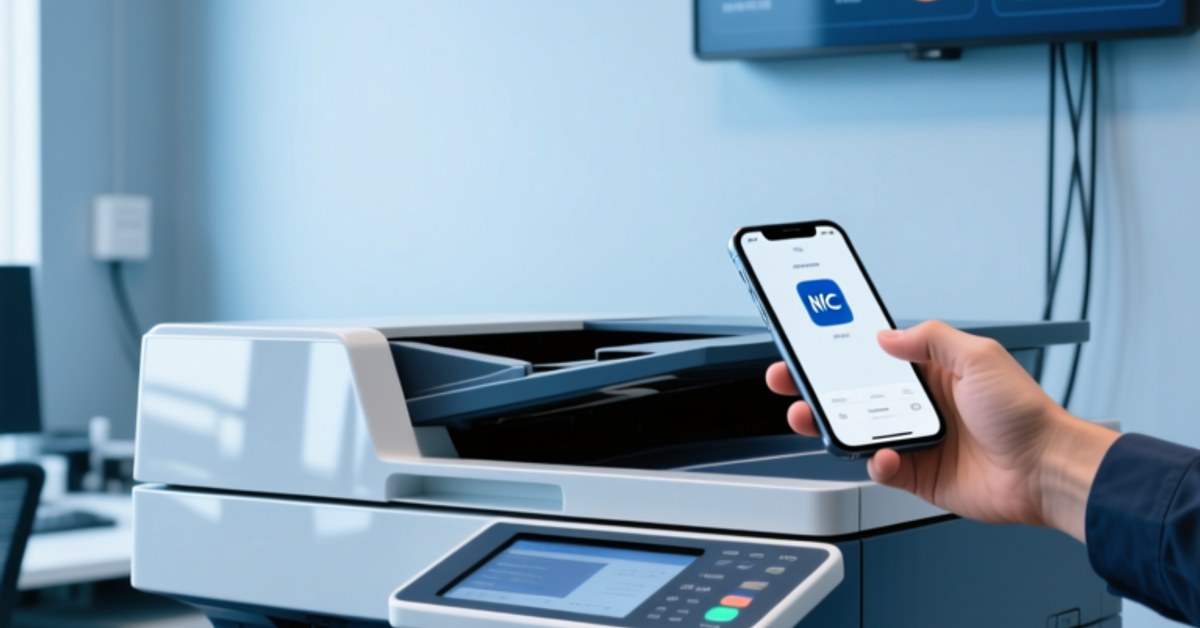
Requiring each cartridge to be scanned individually at a busy retail counter is usually a mistake. A better pattern is to let the customer scan with their own phone for the incentive claim, and to let staff perform a single bulk verification pass at the end of the day. This keeps the customer experience fast while preserving data quality.
Refill and Reman Verification: Trusting the Core
Remanufactured cartridge tracking depends on knowing what the core has already been through. Sen tiu historio, every core is an unknown risk: it may be a clone, it may have been refilled more times than the drum or blade assembly can tolerate, or it may have been exposed to conditions that make reuse uneconomical.
NFC verification solves this by making the core’s history readable at the point of decision. A scan at the intake station returns the refill count, the last known production event, the model and batch, and any flags raised during previous loops. Three verification outcomes are typical:
- Reusable core — history is within specification, so the unit is routed to the refill line.
- Remanufacture candidate — the housing is sound but components need replacement; the unit is routed to a reman line where the tag record is updated component by component.
- Material recovery only — the core has exceeded safe cycles or failed verification; the unit is routed to recycling and the tag record is closed.
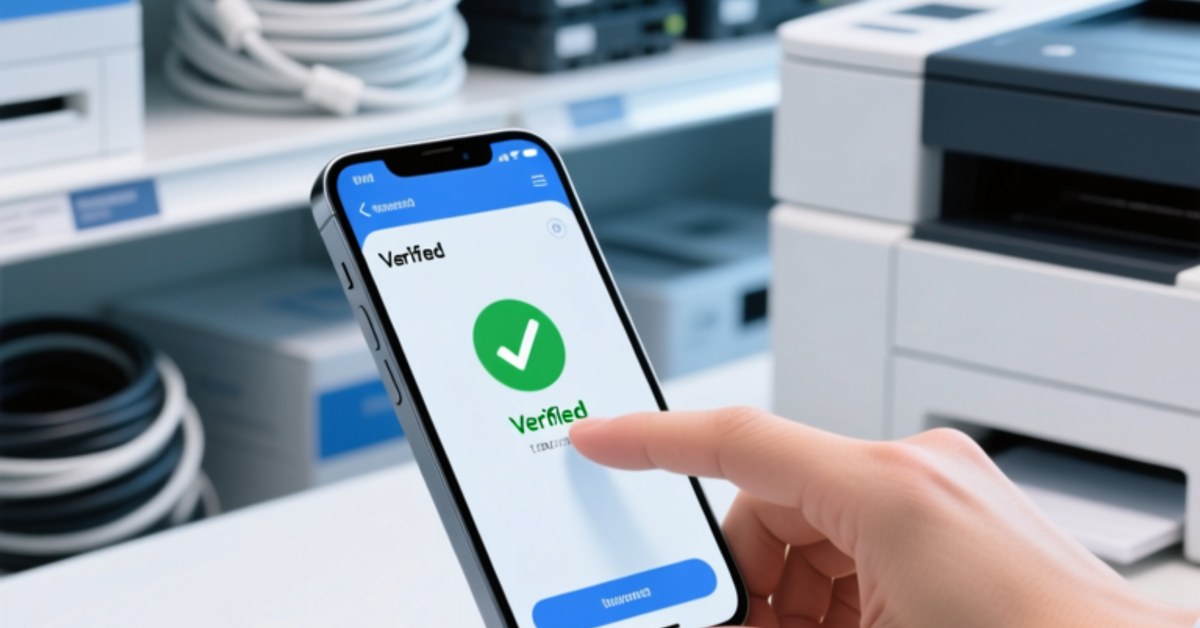
Refill verification also protects brand integrity. A refilled cartridge that leaves the plant with a verified tag record can be authenticated by the end customer using a phone, which reduces the risk of counterfeit or grey-market units being presented as genuine refills. This is the same identity principle behind NFC-produkta aŭtentigo, applied to a consumable rather than a luxury item.
EU Circular Economy Direction: What Cartridge Brands Should Expect
European policy is moving steadily from voluntary take-back toward documented circularity. For consumables brands, the implication is that collection volumes alone will not be enough; the ability to demonstrate what happened to each returned unit will matter more.
>
| Framework | General scope | What it means for cartridge take-back |
|---|---|---|
| EU-Agplano pri Cirkla Ekonomia | Cross-sector policy direction | Prioritises reuse, refill and high-quality recycling over disposal, favouring closed-loop models |
| Reguligo pri Ekodezajno por Daŭrigeblaj Produktoj (ESPR) | Product design and information requirements | Opens the path to Cifereca Produkta Pasporto style data for products and their components, including consumables |
| WEEE Directive | Waste electrical and electronic equipment | Collection and recovery obligations that a documented take-back scheme can help demonstrate |
| EU rules on packaging and packaging waste | Packaging placed on the market | Reinforces reuse and refill logic for packaging-adjacent consumables and return logistics |
| Green claims and consumer protection rules | Environmental marketing | Requires that recycling, recovery and circularity claims be substantiated with evidence |
The direction of travel is clear: identity, not intention, is what regulators and retail partners will ask for. A tag-based cartridge record is the most direct way to answer those questions without rebuilding logistics from scratch. For a deeper look at how passport-style records work in practice, see our overview of the Cifereca Produkta Pasporto.
Reporting and Compliance: Turning Tag Events Into Evidence
Every scan in a well-designed program is a data point. The value comes from aggregating those events into the handful of metrics that sustainability, operacioj, finance and compliance teams actually need.
>
| Metriko | Primary data source | Typical audience |
|---|---|---|
| Units collected by region and model | Collection point scan events | Sustainability and operations |
| Collection rate versus units sold | Tag identifiers matched to sales records | Compliance and brand teams |
| Refill cycles per core | Refill line scan history | Quality and engineering |
| Core rejection and grading rate | Intake verification scans | Remanufacturing operations |
| Material recovered by category | End-of-life processing scans | ESG and regulatory reporting |
| Incentive payout accuracy | Unique claim records per tag identifier | Finance and program owners |
Two practical points make reporting easier. Unue, keep the tag identifier as the single join key across collection, konfirmo, production and recovery systems; without it, reconciliation becomes manual. Due, store only what you will actually report on the tag itself and keep the fuller history in the backend, so the tag memory stays lean and the record stays fast to read.
An Implementation Roadmap
Programs that succeed tend to roll out in phases rather than as a single system launch.
Fazo 1: Define the loop and the identifiers
Agree which cartridge families enter the loop, which events must be recorded, and how the unique identifier will be generated and governed.
Fazo 2: Pilot on one cartridge family
Apply NFC tags or NFC -Glumarkoj to a single high-volume model, deploy scanning at two or three collection points, and validate that incentive claims are released correctly and that intake counting matches physical counts.
Fazo 3: Connect intake to production
Integrate verification scans with the refill and remanufacturing line so that grading decisions and cycle counts are captured automatically rather than keyed in.
Fazo 4: Scale collection and reporting
Add retail, office and mail-back channels, then formalise the reporting pack for sustainability and compliance stakeholders.
Fazo 5: Extend to full lifecycle data
Align the cartridge record with broader product passport requirements so that consumables data sits alongside the printer or device record rather than in a separate silo.
Choosing Tags, Readers and Integration Partners
Hardware selection should follow the loop design, not precede it. As a rule of thumb:
- Uzu NFC-etikedoj, NFC stickers or NFC inlays for the customer-facing and refill-tracking layer, because they are readable by ordinary smartphones.
- Uzu RFID tags and readers when you need bulk reading at intake, dock doors or sorting lines.
- Uzu RFID labels and inlays where the identity layer must be integrated into packaging or logistics documentation.
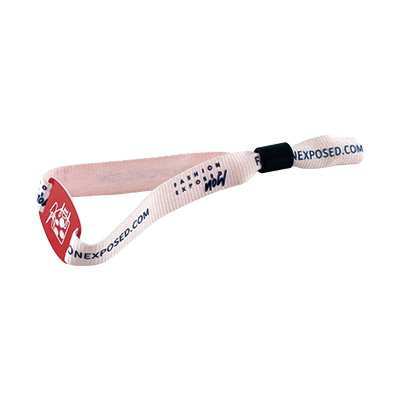
- Consider NFC and RFID wristbands only for field service, audit or event-based collection drives where staff need a wearable credential.
Whatever the form factor, consistency matters more than sophistication. A single tag standard across all cartridge families will always outperform a mix of formats that each solve one problem in isolation.
Konkludo
Closed-loop cartridge recycling works when identity survives the loop. NFC tags give consumables brands, remanufacturers and retailers a practical way to connect take-back incentives to real returns, to scan collection points accurately, to verify refill and reman cores before they enter production, and to produce reporting that stands up to scrutiny under Europe’s circular economy direction. La teknologio estas matura, the hardware is widely available, and the business case rests on data the program already generates — it simply needs to be captured.
For related reading, see how identity and compliance intersect across our Blogo, including the discussion of brand-led routes in printer consumables in this analysis of brand strategy and NFC.
Oftaj Demandoj
What is an NFC tag and why use it on a cartridge?
An NFC tag is a small, battery-free chip and antenna that stores a unique identifier and can be read by most modern smartphones. On a cartridge, it provides a machine-readable identity that survives collection, ordigo, refilling and remanufacturing, so the unit can be tracked and verified throughout its life instead of being treated as an anonymous core.
Do customers need a special app to scan a returned cartridge?
In most designs, no dedicated app is required because NFC works with standard smartphone readers and web links. A common pattern is a tap-to-open web page that registers the return and releases the incentive. Where deeper functionality is needed, such as account-based loyalty integration, a lightweight web app or brand app can be used, but it should never be a barrier to participation.
Can NFC tags survive the refill and remanufacturing process?
Jes, provided the tag is selected and positioned appropriately. Tags applied to stable, non-metallic areas of the cartridge housing generally remain readable across multiple loops. For cartridges with metal-heavy housings or where the tag sits close to metal components, an anti-metal RFID tag or a purpose-designed HF tag is the better choice.
How does NFC reduce fraud in take-back incentive programs?
Ĉiu NFC-etikedo portas unikan identigilon kiu povas esti validigita en la momento de reveno kaj markita kiel asertita en la backend. Tio malfaciligas postuli krediton por kartoĉo kiu neniam estis resendita, aŭ postuli la saman unuon dufoje trans malsamaj kanaloj. Poka konfirmo ĉe konsumado plue akordigas fizikajn kalkulojn kontraŭ atendataj kalkuloj.
Ĉu NFC estas sama kiel RFID por kartoĉa spurado?
Ili estas rilataj sed ne identaj. NFC funkcias ĉe altfrekvenco kaj estas dizajnita por mallongdistanco, telefonlegeblaj interagoj, kiu konvenas al konsumantaj revenoj kaj repleniga kontrolo. RFID, precipe UHF, estas dizajnita por pli longdistanca pogranda legado, kiu konvenas ujo-nivela kalkulado ĉe naboj kaj ordigaj linioj. Multaj programoj kombinas ambaŭ tavolojn.
Ĉu NFC-kartoĉa reciklado helpas kun EU-Cifereca Produkta Pasporto-postuloj?
It provides a practical foundation. A tag-based record can store a unique identifier and lifecycle events in a structured way, which aligns with the direction of the Ecodesign for Sustainable Products Regulation and broader circular economy policy. Many brands begin with cartridge-level identification and then extend the same data model to product passport style records.
Where should a take-back program start?
Start with one high-volume cartridge family and two or three collection points. Define the events you must capture, apply NFC tags consistently, connect scanning to your backend, and prove that incentive release and intake counting are accurate before scaling to additional channels.
Build Your Closed-Loop Cartridge Program with RFIDHY
Whether you are launching a first take-back scheme or upgrading an existing remanufacturing line with verified core tracking, RFIDHY and NFCWORK Technology can help you specify the right NFC tags, NFC -Glumarkoj, RFID-inkrustaĵoj, handheld and desktop readers, and integration approach for your cartridge formats and collection channels.
- Esploru nian NFC and RFID product range por etikedoj, etikedoj, inkrustaĵoj, readers and modules.
- Review application know-how across our solutions pages kaj la Digital Product Passport overview.
- Check common technical questions in our Oftaj Demandoj.
- Talk to our team about your take-back, refill and reporting requirements via Kontaktu Nin.
Tell us your cartridge families, collection channels and reporting commitments, and we will outline a phased implementation plan that starts with a focused pilot and scales into a full closed-loop identity program.