Introduction
In industries with extremely high safety requirements, such as industrial, construction, manufacturing, and petrochemical, proper management of PPE is fundamental to ensuring employee safety and compliant operations. To ensure that “every piece of PPE has a unique digital identifier and its location and status are traceable,” more and more companies are choosing to affix RFID tags to their PPE. However, not all RFID tags are suitable for complex or harsh environments. Let’s explore how to choose the right tags by considering the design, durability, and cost of custom RFID tags for PPE, and the customization advantages of RFIDHY, a provider of soft-embedded industry solutions.
Why Does PPE Need Custom RFID Tags?
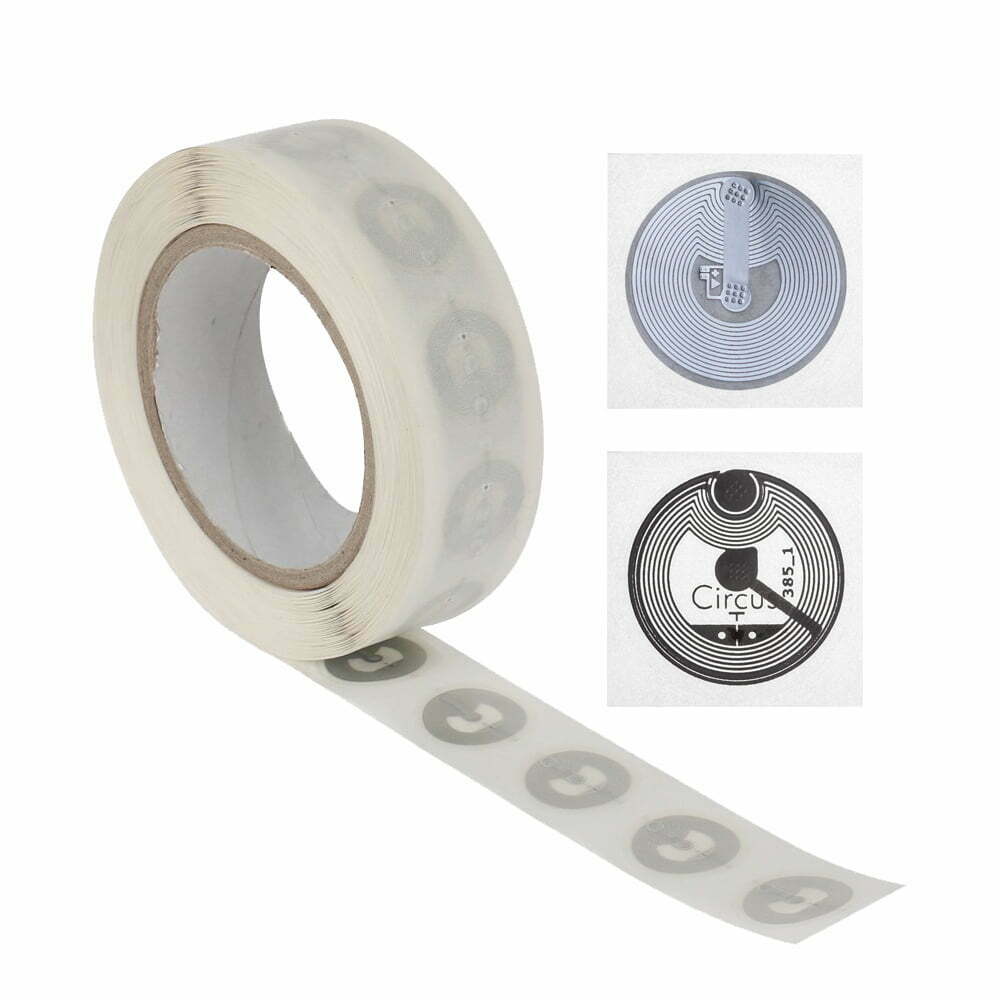
RFID tags consist of a chip, antenna, and substrate, enabling contactless, rapid identification and data storage.
Managing personal protective equipment (PPE) such as helmets, reflective vests, protective gloves, and protective clothing typically faces the following challenges with standard generic tags:
- PPE is frequently exposed to extreme environments, such as high temperatures, mechanical shocks, chemicals, moisture, and dust, making ordinary paper tags prone to failure.
- The surface material of PPE can be fabric, plastic, metal, or composite materials; simple tags may fail due to poor adhesion or unstable reading.
- PPE often requires frequent washing, wearing, and reuse, placing high demands on the durability, adhesion, and flexibility of the tags.
Therefore, customizing RFID tags for PPE, selecting materials, sizes, adhesion methods, and encapsulation structures suitable for the environment and application, is crucial to ensuring stable identification and long-term durability of PPE throughout its entire lifecycle. As industry guidelines state, “Custom RFID tags are ideal if standard RFID systems cannot meet operational challenges.”
Key Design Elements for Custom RFID Tags for PPE
When selecting or designing RFID tags for PPE, the following aspects should be considered:
Material and Environmental Adaptability
Different tag materials have significantly different adaptability to environmental conditions such as temperature, humidity, chemicals, and abrasion:
- PET\: Heat-resistant, tear-resistant, and chemically resistant, suitable for high-temperature, oily, and corrosive environments.
- PP / BOPP and other plastic substrates: Offer good flexibility and moisture resistance, suitable for repeated abrasion, washing, or humid environments.
- Metal Patches/Reinforced Tags: If the PPE contains metal components or requires greater impact, compression, and shock resistance, metal patches or reinforced tags should be selected.
In short, the appropriate material should be selected based on the actual operating environment of the PPE (high temperature, oil, chemicals, cleaning, friction, impact, etc.) to ensure reliable operation of the tag throughout the entire lifecycle of the PPE.
Adhesion Method and Structural Design
PPE surface materials may include plastics, helmet shells, fabric clothing, leather, rubber gloves, etc. Tags require:
- Good adhesion and suitable adhesive backing to ensure the tag does not detach due to bending, impact, or washing.
- For fabric or clothing PPE, consider using flexible tags, sewn-in tags, or embedded tags to improve durability and concealment.
- Tag size and antenna design must be appropriate: too large will affect wearing comfort, too small may affect reading distance.
Tag Type and Reading Method
- Passive Tags: No batteries required, lower cost, smaller size, suitable for high-volume PPE, but shorter reading distance.
- Active/Semi-passive Tags: Suitable for scenarios requiring longer reading distances or real-time tracking, but higher cost and maintenance costs.
- For PPE management (mainly involving issuance/inventory/audit scenarios), passive custom RFID tags are usually the most cost-effective option.
Furthermore, parameters such as reader type, reading distance, and reading frequency (e.g., UHF, HF) need to be determined based on the specific use case to ensure system stability and efficiency.
Cost, Durability, and Advantages – Why Many Companies Choose RFIDHY Customized Solutions
While using generic paper tags is inexpensive, they are prone to damage, detachment, and failure in harsh environments, leading to chaotic PPE management, unreliable data, potential hazards, and increased management costs. Industry research shows that unsuitable tags typically need to be replaced within 1-2 years in harsh environments such as chemical, mechanical, and cleaning environments.
In contrast, RFIDHY’s custom RFID tags for PPE (including high-temperature resistant, chemically resistant, moisture-resistant, and impact-resistant versions) – through the selection of appropriate materials (PET/PP/metal encapsulation), compatible adhesives, and structural designs – enable the tags to maintain stable identification and adhesion over extended periods in extreme environments. According to their data, durability and data accuracy are significantly improved.
From a cost-effectiveness perspective: While custom tags are more expensive per unit than standard tags, considering the tag’s lifespan, reduced PPE management chaos due to tag failure, maintenance costs, labor/time costs, and the data reliability required for compliance audits, using custom RFID tags typically yields a higher return on investment. As RFIDHY emphasizes, in harsh environments and long-term use scenarios, custom tags not only improve efficiency but also reduce security risks and management costs.
FAQ
Q1: What is a PPE RFID tag?
A1: A PPE RFID tag is an RFID electronic tag specifically designed for PPE. They can be attached to PPE, such as helmets, reflective vests, gloves, and protective clothing, for unique identification, tracking, inventory, and management of PPE assets.
Q2: Why use custom RFID tags for PPE instead of standard tags?
A2: PPE is often used in complex environments (high temperature, chemicals, impact, washing, humidity, etc.). Standard tags may have poor durability, are unsuitable for these environments, and are prone to detachment or failure. Custom RFID tags for PPE can be tailored to the environment and surface materials in terms of materials, adhesives, and structure, ensuring reliability, durability, and stability.
Q3: Which material/type of PPE RFID tag should be chosen?
A3: If the PPE will be exposed to high temperatures, oil, chemicals, or environments with friction and impact, durable plastic tags such as PET or PP/BoPP are recommended. If the PPE contains metal parts or requires extremely high impact, shock, and compression resistance, metal-encapsulated tags or rugged RFID tags should be considered. Passive tags are generally cost-effective and suitable for most PPE management scenarios.
Q4: Are custom PPE RFID tags too expensive to be widely adopted?
A4: While custom tags are more expensive than standard tags, they offer greater durability, stability, and identification reliability, reducing replacement frequency, lowering management and labor costs, and improving compliance and auditing efficiency. In the long run, they are generally more cost-effective for companies with frequent use, harsh environments, or high compliance requirements.
Conclusion
For PPE used in complex and harsh environments, adopting appropriate PPE RFID tags and designing custom RFID tags are key steps to ensure the reliability, traceability, and durability of PPE management. As an industry solutions provider, RFIDHY offers custom tags and supporting systems, providing companies with a complete, efficient, stable, and auditable PPE management solution. For companies prioritizing security, compliance, and management efficiency, such an investment is usually worthwhile.
For more information,please contact us.