Why is PPE Tracking More Challenging in Metal Environments?
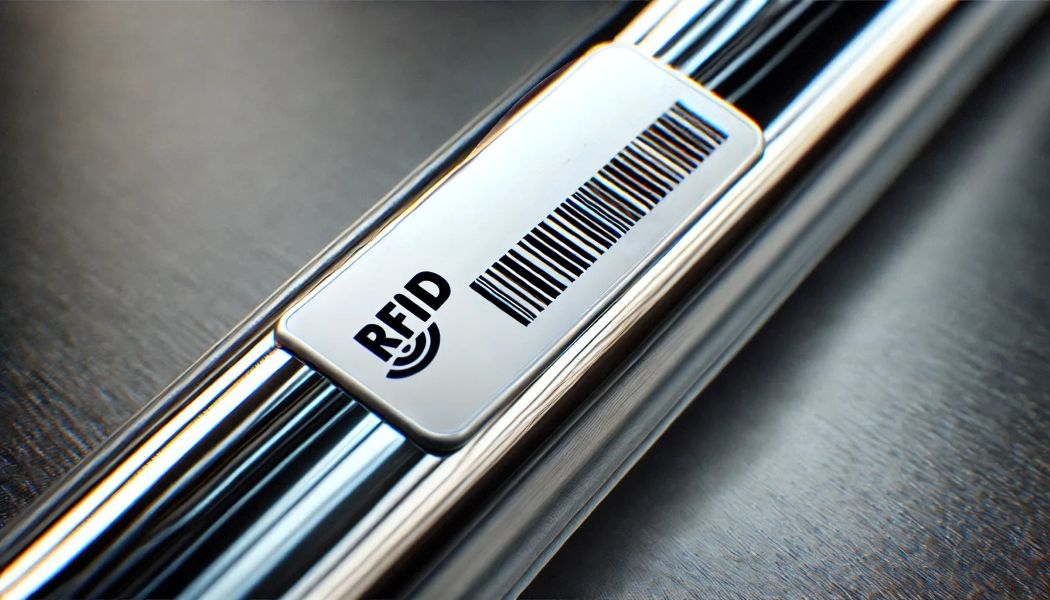
In manufacturing workshops, metallurgical plants, or construction sites, most PPE equipment (such as helmets, tools, and work clothes) contains metal parts. Ordinary RFID tags are prone to signal attenuation, misreading, or failure to be recognized on metal surfaces. Therefore, metal-mounted RFID tags specifically designed for metal environments are crucial.
By optimizing the RF path and tag deployment, interference can be effectively reduced, enabling RFID PPE tags to maintain a read accuracy of over 95% in complex industrial environments.
How RFID PPE Tags Work and Their Classification
A typical PPE tracking system consists of RFID PPE tags, a fixed reader/writer, an antenna, and a back-end management platform. When workers carrying safety helmets or tools with metal-mounted RFID PPE tags pass through the detection point, the system automatically records the status of personnel and equipment, achieving “person-object binding” and automatic compliance detection.
Currently, commonly used industrial-grade RFID PPE tags are divided into three categories:
- UHF anti-metal interference tags (metal-mounted RFID PPE tags): used for metal safety helmets, wrenches, and other tools;
- Sewn flexible tags: used for fabric personal protective equipment, such as protective clothing and vests;
- High-temperature resistant tags: used for high-temperature working environments such as welding and casting.
RFIDHY testing found that metal tags optimized for the UHF band improved read stability by 38% in metal tool tracking scenarios.
Many companies have experienced poor results after deploying RFID tags for PPE,mainly due to complex environments and unoptimized reader placement. RFIDHY has made improvements based on this,specifically in the following aspects:
- RF Simulation: Predicting the reflection intensity of metal-mounted PPE RFID tags at different heights and angles;
- Reader Power Adjustment: Dynamically balancing identification coverage and interference;
- Signal Path Analysis: Avoiding “blind spots” caused by metal reflections;
Practical testing shows that compared to traditional experience-based deployment solutions, the RFIDHY RFID PPE tag deployment solution can improve the read success rate by approximately 22%.
RFIDHY Solution Recommendations
RFIDHY offers a variety of industrial-grade RFID PPE tags and metal-mounted PPE RFID tags, widely used in manufacturing, petrochemical, mining, and energy industries. Its advantages include:
Customizable RF parameters to match different metal substrates;
EPC C1G2 standard compatibility;
Seamless integration with existing PPE management systems;
Layout analysis and field testing services.
Recommended Products:
- HY-RLT5025 Metal UHF Tag: Suitable for safety helmets and metal tools;
- Ultra small Anti-Metal Tag: Suitable for small metal tools such as screwdrivers and pliers;
- RFID Textile Tag: Suitable for personal protective equipment (PPE) clothing, enabling comprehensive RFID PPE tracking.
Application Cases and Results
In a pilot project at an automotive parts factory, RFIDHY deployed 1200 metal-mounted RFID tags and 5 readers for PPE. After layout optimization:
- PPE read success rate increased from 88% to 97%;
- Tool loss rate decreased by 40%;
- Annual inventory time decreased by 65%.
This demonstrates that the RFIDHY solution can significantly improve the visibility and compliance management efficiency of PPE in industrial environments.
FAQ
Q1: Are metal-mounted RFID tags suitable for PPE, especially metal helmets and tools?
A: Yes. Metal-mounted tags have a dedicated internal isolation layer to prevent metal reflections from interfering with radio frequency signals, ensuring stable operation of the RFID PPE tag.
Q2: Does RFIDHY offer customized tag services?
A: RFIDHY can customize the tag’s frequency band, package size, and protection rating based on the PPE material and usage environment to meet the needs of various application scenarios.
Q3: Are metal-mounted RFID tags for PPE waterproof and oil-proof?
A: Industrial-grade tags achieve an IP68 protection rating, suitable for production environments with oil contamination and high humidity.
Conclusion
RFID tracking in metal environments is one of the most challenging aspects of industrial PPE management. By selecting suitable metal-mounted RFID tags for PPE and strategically deploying PPE tags, the manufacturing industry can transition from manual inspection to automated compliance.
For companies wishing to further improve PPE tracking accuracy, contact RFIDHY for customized tag samples and RFID deployment solutions to build an accurate, secure, and efficient RFID intelligent management system.
For more information,please contact us.