導入: RFID プロジェクトの実際のコストはタグの単価をはるかに超えます。
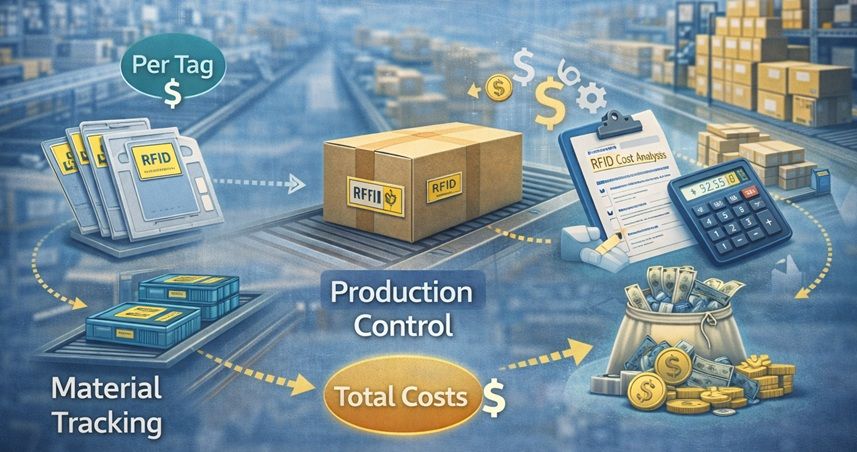
GS1によると 2025 RFID ROI ベンチマーク レポート, 一般的な単一品目のトレーサビリティ プロジェクトでは, の購入費用 RFIDタグ のみのアカウント 28-35% 総所有コストのうち (TCO). 残り 65-72% リーダーハードウェアからのもの, ソフトウェアライセンス, システム統合, トレーニング, そして長期メンテナンス. この記事, の TCO 分析データに基づく 100 ヨーロッパの小売業界におけるRFIDプロジェクト, 導入コストの完全な構成を明らかにする, 企業が情報に基づいた投資決定を行えるよう支援する.
RFID の 5 つの主要な構成要素 総所有コスト (TCO)
1.1 タグのコスト: 減少傾向は続くが、依然として慎重な計算が必要
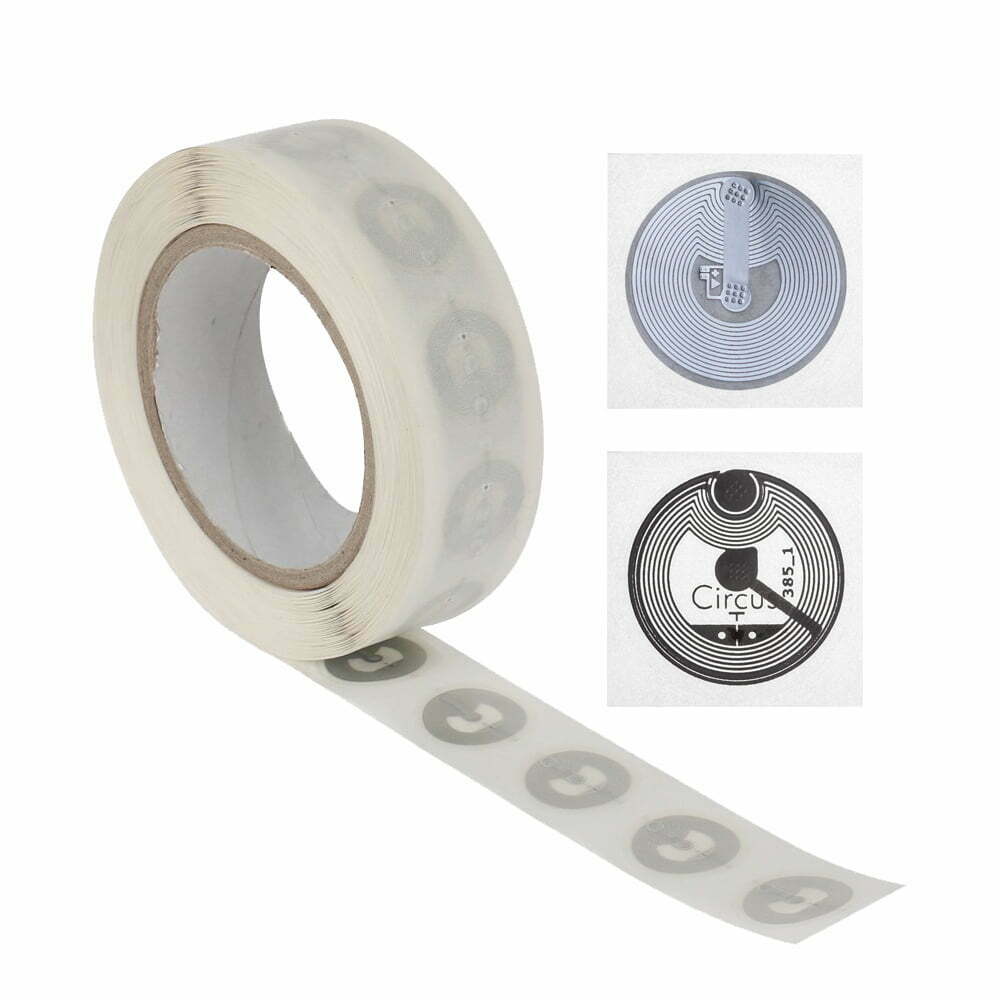
現在, の単価 UHF RFIDタグ タグあたり 0.1 ~ 0.22 ユーロに下がりました (NXP UCODEに基づく 8 または Impinj M730 チップ). 洗えるタグ, 複雑な梱包プロセスのため, タグあたりのコストは 0.25 ~ 0.45 ユーロ. 年間使用量に基づいて、 5 百万のタグ, タグの年間支出は約 250,000 ~ 400,000 ユーロです.
1.2 ハードウェア設備: リーダーとアンテナへの初期投資
- ハンディターミナル: のような RFIDHY HY-R6100, 単価約 590 ~ 650 ユーロ, 寿命 3-5 年
- 固定リーダー: RFIDHY HY-R346A 約 €485/ユニット, Nordic ID RR900 約 €3,200/ユニット
- トンネリングユニット: RFIDHY トンネル, 投資額 30,000 ~ 80,000 ユーロ/セット(構成に応じて)
- アンテナ: RFIDHY HY-RA9002 9dbi (65~75ユーロ), タイムズ-7 A5020 (320~450ユーロ)
1.3 ソフトウェアと統合: 過小評価されがちなもの “隠れたコスト”
- RFIDミドルウェアのライセンス: 読者ごとまたは年単位の価格, Impinj ItemSense の費用は年間約 2,000 ユーロから 5,000 ユーロです.
- ERP統合開発: システムの複雑さに応じて, SAP/Oracle の統合には通常 20,000 ユーロから 50,000 ユーロの費用がかかります.
- カスタム開発: 特別なビジネス ルールと報告要件により、10,000 ユーロから 30,000 ユーロが追加されます.
1.4 導入とサービス
- 現地調査と設置: リーダー/ライターあたり €300 ~ €800
- ラベル貼り付け作業: ラベル表示がサプライヤーの供給元で行われる場合, コストは無視できるほどです; 倉庫のラベル付けが行われている場合, アイテムあたり約 €0.02 ~ €0.05.
- 訓練と試運転: プロジェクトあたり 5,000 ユーロ~15,000 ユーロ.
1.5 長期的な運用保守コスト
- 年間保守料: 8-12% ハードウェア価値の
- ラベル損傷率: ウォッシャブルラベル体験の目安 2-5% 年間被害; 下げ札は無視できる程度です.
- システムのアップグレードとサポート: ソフトウェアの年間料金には通常、基本サポートが含まれます.
TCO 分析: あるブランドのケーススタディ 5 年間100万個が使用される
中堅アパレルブランドを想定 (例えば。, ドイツのストリートウェア) GmbH は、年間使用量を伴う RFID プロジェクトを実施しました。 5 百万のタグ (95% 下げ札 + 5% 洗える), 配備する 20 ハンディターミナル, 4 トンネルユニット, そして 2 固定リーダー, SAP ERPと統合. TCO分析は次のとおりです:
| 原価項目 | 初年度のコスト | 年間平均コスト (年 2-5) | パーセンテージ |
| タグの調達 | 275,000ユーロ | 275,000ユーロ | 31% |
| ハードウェア設備 | 198,000ユーロ | 18,000ユーロ (減価償却費) | 22% |
| ソフトウェアと統合 | 68,000ユーロ | 15,000ユーロ | 10% |
| 導入とサービス | 42,000ユーロ | 8,000ユーロ | 7% |
| メンテナンスと損傷の軽減 | 15,000ユーロ | 25,000ユーロ | 7% |
| 年間 TCO | 598,000ユーロ | 341,000ユーロ | 100% |
重要な洞察: 初年度の導入コストが比較的高い, ただし、TCO は次のように減少します。 43% その後の数年で. 年間収益は1億2,000万ユーロ, RFID の TCO はおよそ 0.28-0.5% 収益の, 在庫の最適化などのメリットもありますが、, 在庫棚卸効率の向上, 通常、損失の削減によりカバーされます。 2-3 コストの倍.
カスタマイズによって TCO が最適化される仕組み
RFIDHY, 深いカスタマイズ機能を備えた, お客様が次の分野で TCO を最適化できるように支援します:
* タグ選択の最適化: アプリケーションシナリオに基づいて最もコスト効率の高いチップを推奨 (例えば。, NXP Uコード 9 vs. インピニ M730), 過剰なパフォーマンスの回避.
* 正確なハードウェア構成: オンサイトシミュレーションにより過剰なアンテナや電力の無駄を回避.
* 統合コスト管理: 標準の RESTful API と事前構築された SAP/Oracle コネクタの提供, 統合開発コストを削減する 40%.
* 予知保全: ミドルウェアは機器の状態をリアルタイムで監視します, 予期せぬダウンタイム損失の削減.
結論
による 2026, RFIDプロジェクトの導入コストの透明性が高くなります。, タグの単価はほんの一部に過ぎません. 科学的な TCO 分析は、ハードウェアのライフサイクル全体をカバーする必要があります, ソフトウェア, 統合, および運用保守. 業界経験とカスタマイズ能力を持つパートナーの選択 (RFIDHYなど) 全体的な TCO を削減できるのは、 15-25% パフォーマンスに影響を与えずに.
よくある質問
Q1: タグのコストは引き続き削減できるか?
VDCリサーチによると, UHF RFIDタグの価格は、 2-3% から毎年 2026 に 2028, 主にチップ集積度の向上と規模の経済によるもの. しかし, ウォッシャブルタグはパッケージング工程が複雑なため、値下げの余地が限られている.
第2四半期: 会社の RFID TCO を見積もる方法?
4 段階のアプローチをお勧めします: 1) 年間使用量とタグの種類を決定する; 2) 読み取り/書き込みポイントの数と機器要件を分析する; 3) 既存の ERP/WMS システムの統合の複雑さを評価する; 4) 経験豊富なサプライヤーに相談する (RFIDHYなど) 事前見積もりと TCO モデルについては.
Q3: 中小企業は導入コストをどのようにコントロールできるか?
段階的な実装アプローチが推奨されます: 価値の高い個別アイテムから始める, トンネル端末の代わりにハンディターミナルを使用する, オンプレミス展開ではなく SaaS ミドルウェアを選択する. RFIDHY は軽量のスターター キットを提供します (含む 2 ハンディターミナル + 5000 タグ + ソフトウェアライセンス), 開始するには初期投資 15,000 ユーロが必要.
Q4: ハードウェアの標準的な減価償却期間は何年ですか?
ハンドヘルド端末と固定リーダーは通常、 3-5 年, 一方、トンネル掘削機などの自動化設備は年々減価償却が進んでいます。 5-7 年. Impinj のようなブランドの製品の寿命は、最長で 1.5 通常の使用における減価償却期間の倍.
詳細については,お願いします お問い合わせ.