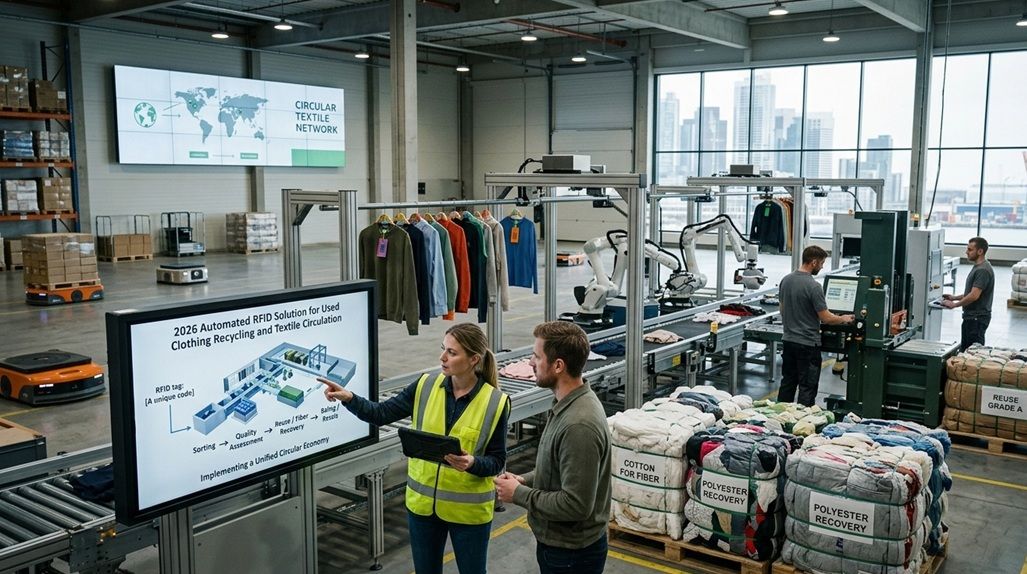
Enkonduko: Reciklado de rubo tekstila estas urĝa afero por la tutmonda cirkla ekonomio
Laŭ la Eŭropa Media Agentejo 2025 “Progresraporto pri la Cirkla Ekonomio de Tekstiloj,” la EU generas proksimume 5.8 milionoj da tunoj da rubaj teksaĵoj ĉiujare, el kiuj nur 22% estas reciklita kaj reuzata, kie la plimulto estas forbruligita aŭ rubodeponita. De 2025, la Kadra Direktivo pri Ruboj de EU postulas, ke membroŝtatoj starigu sendependajn tekstilajn ordigajn kaj kolektajn sistemojn. RFID, kiel cifereca vojmapo liganta la tutan vivciklon de vestaĵo, fariĝas ŝlosila teknologio por solvi ĉi tiun problemon.
Tri Gravaj Dolorpunktoj en Ruba Tekstila Reciklado
1.1 Malalta Efikeco de Mana Ordigo
Tradicia uzata vestaĵreciklado dependas de mana vida identigo de materialoj, koloroj, kaj markoj. Laŭ datumoj de la Germana Federacia Fondaĵo pri Medio, kvalifikitaj laboristoj povas ordigi maksimume 50-80 vestoj po horo, kun precizeco de nur 75-85%. Por reciklaj centroj pritraktantaj dekojn da miloj da tunoj ĉiujare, tio konsistigas signifan proplempunkton en laborkostoj kaj efikeco.
1.2 Malfacileco en Materiala Identigo
Rapida identigo de miksitaj ŝtofoj (kiel ekzemple kotono-poliestera miksaĵoj kaj lanaj miksaĵoj) estas grava industria defio. Dum preskaŭ-infraruĝa (NIR) spektroskopio povas identigi iujn materialojn, ĝia rekona indico malpliiĝas signife por malhelkoloraj vestaĵoj, plurtavolaj strukturoj, aŭ tegitaj ŝtofoj. Testoj faritaj de la Nederlanda Esplorcentro pri Cirklaj Tekstiloj montras, ke la precizeco de NIR por identigi la materialon de nigra vesto estas malpli ol 60%.
1.3 Datuma Perdo Gvidanta al Valora Perdo
Informoj kiel marko, aĝo, kaj prizorga historio enhavita en rubaj teksaĵoj estas tute perdita post eniro de la reciklada procezo. Ĉi tio malebligas precize prezon de altvaloraj brokantaĵoj, kaj fibro-recikladfabrikoj ne povas akiri kunmetaĵdatenojn por optimumigi siajn procezojn.
RFID Solvo: De “Malŝparo” al “Datuma Aktivo”
2.1 Teknika Principo: Ciferecaj Navigaj Markiloj Enigita en Vestaĵo
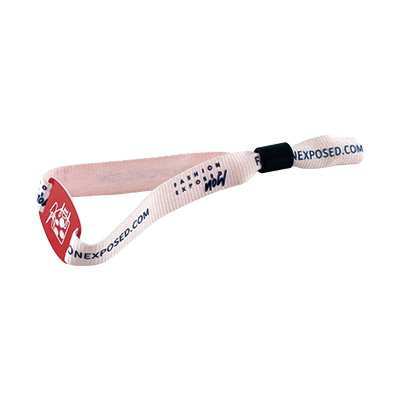
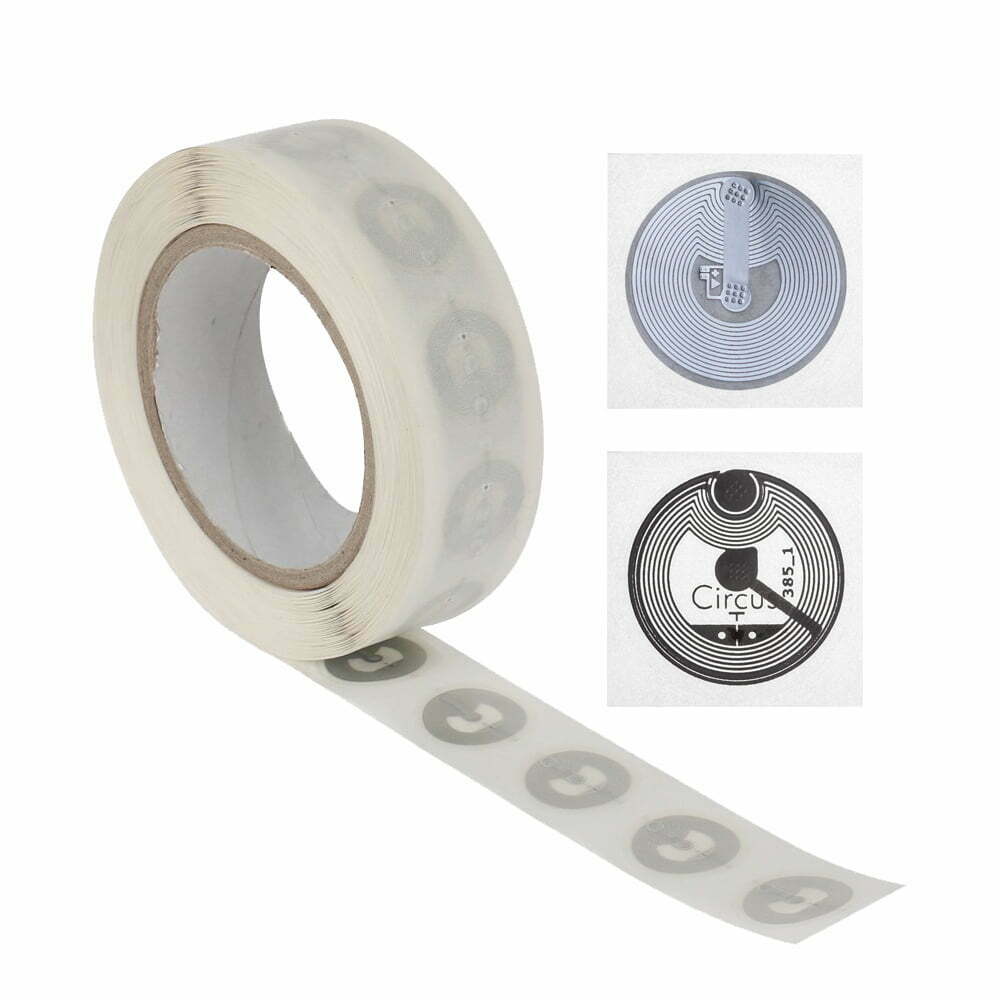
Se vesto estas etikedita kun RFID -etikedoj (ĉu laveblaj etikedoj aŭ pendaj etikedoj) dum la produktadstadio, tiam ĉi tiu vesto portas unikan ciferecan identecon tra sia tuta vivociklo de produktado ĝis reciklado. Ŝlosilaj blatoj kaj normoj inkluzivas:
- NXP UKODO 9: Alta sentemo (-24dBm), taŭga por legado en dense stakitaj medioj
- Impinger M730: Integrita QT-teknologio, subtenante altrapidan moveblan legadon
- Eksterterano Higgs-9: 512-bita uzanto-memoro, kapabla stoki materialan komponadon, dato de produktado, prizorga historio, ktp.
- ISO/IEC 18000-6C: Tutmonda UHF RFID-protokola normo
- EPC Gen2v2: Subtenas sekurajn komandojn kaj uzantan memorskribon
2.2 Reciklada Procezo: Dua Nivela Aŭtomatigita Ordigo
Kiam malŝparo teksaĵoj alvenas al la recikla centro, plene aŭtomatigita bat identigo estas atingita per altrapidaj RFID-tunmaŝinoj (kiel ekzemple RFIDHY RecycleTunnel):
- Rapido de Legado: Transportbendo rapido ĝis 3 metroj/sekundo, unukanala pretigo 15,000+ pecoj por horo
- Identiga indico: Kun optimumigita antena aranĝo (Laird S9028P × Times-7 A5020 kombinaĵo), la legada indico estas 99.8%
- La supraj datumoj kongruas: La legita EPC-kodo tuj demandas la nuban datumbazon por akiri informojn kiel materialon, marko, aĝo, kaj originala prezo.
2.3 Gradado kaj Ordigo: Datum-Driven Preciza Klasifiko
Surbaze de RFID-legitaj datumoj, la sistemo aŭtomate direktas vestaĵojn al malsamaj ordigaj linioj:
| Ordigo de Kategorio | Juĝaj Kriterioj | Celo |
| Revendebla | Marko + Kondiĉo + Materialo | Brokantmerkato/Eksporto |
| Reciklado de Fibro | Pura Kotono/Pura Lano/Kemia Fibro | Malfermo kaj Ŝpinado |
| Kemia Reciklado | Miksita / Tegaĵo | Kemia Dissolvo |
| Malaltigita Utiligo | Grave Malpura/Difektita | Viŝanta Ŝtofo/Pleniga Materialo |
| Forbruligo/Rubodeponejo | Ne-Reciklebla | Energia Reakiro |
Reala Monda Kazo: La RFID Aŭtomatigita Ordiga Revolucio de nederlanda Reciklilo
3.1 Kaza Fono
La nederlanda teksaĵreciklilo "CircleTex" (ĉiujara pretigkapablo de 80,000 tunoj) alfrontas kreskantajn reciklajn volumojn kaj premon de novaj EU-regularoj. En 2024, ĝia manlibro ordiglinio nur prilaborita 120 tunoj tage kun precizeco de 82%, kaj la malfacileco de varbado de laboristoj daŭre pliiĝis.
3.2 Solvo
En 2025, CircleTex partneris kun profesiulo RFID-solvo provizanto lanĉi pilotprojekton por RFID aŭtomatigita ordigo:
- Antaŭfina Datuma Preparado: Interkonsento estis atingita kun 5 partneraj vestaĵmarkoj postuli la uzon de ISO 18000-6C konformaj laveblaj RFID -etikedoj (surbaze de la NXP UCODE 9 blato) por novaj produktoj, kun materialaj datumoj dividitaj en la nubo.
- Ordigo de Linio Altgradigo: 4 aroj de altrapidaj RFID-tunmaŝinoj estis deplojitaj, integrante RFID-legilojn kaj RFID-antenojn.
- Ordigado de Ekzekuto: Post legi la datumojn, PLC (Siemens S7-1500) kontrolitaj pneŭmatikaj puŝiloj por gvidi la vestaĵojn en 12 malsamaj ordigaj kanaloj.
3.3 Rezultaj Datumoj (ekde februaro 2026)
| Indikiloj | Antaŭ Efektivigo (2024) | Post Efektivigo (Q1 2026) | Pliboniga Skalo |
| Ĉiutaga Pretiga Kapacito | 120 tunoj | 380 tunoj | ↑217% |
| Ordigo Precizeco | 82% | 97.5% | ↑15.5% |
| Laborkosto | 4,2 €/tuno | 1,1 €/tuno | ↓74% |
| Altvalora Reciklado-Indico | 18% | 31% | ↑72% |
| Jara Enspezo Pliiĝo | – | € 7,2 Milionoj | Nova Enspezo |
La CTO de CircleTex deklaris, "RFID transformas malŝparajn teksaĵojn de 'rubo' en aktivaĵojn portantajn kompletajn datumojn. Ni povas ne nur ordigi pli rapide, sed ankaŭ provizi markklientojn per recikladaj raportoj pruvantaj la reciklan indicon de iliaj produktoj."
Personigo Kapabloj: Pritraktante Kompleksajn Recikladajn Scenarojn
La scenaro pri reciklada teksaĵo de rubaĵoj estas multe pli kompleksa ol stokado de novaj produktoj: vestaĵoj povas esti malpuraj, humida, aŭ difektita, kaj etikedoj povas esti parte malklarigitaj. Ĝuste ĉi tie kuŝas personigkapabloj. RFIDHY provizas:
4.1 Tre Fortika Legado-Algoritmo
Adapta potencalgoritmo estis evoluigita por trakti la ŝanĝiĝantajn etikedŝtatojn en recikladaj scenaroj, dinamike ĝustigante legan potencon kaj antenan elekton por certigi maksimuman legan indicon.
4.2 Multetiked-Kolizio-Preventado-Optimumigo
Dum densa stakiĝo (kiel pakigita reciklado), signalkolizioj inter etikedoj estas severaj. La RFID RecycleTunnel utiligas hibridan temp-dividan multoblan aliron (TDMA) + frekvenc-divida multobla aliro (FDMA) skemo, prilaborado 800+ etikedoj samtempe sur ununura kanalo.
4.3 Delikata Etikedo Dezajno
Por etikedoj kiuj devas esti detruitaj post reciklado, RFIDHY EcoTag estas provizita. Farita el biodiserigeblaj materialoj, ĝi aŭtomate malaktivigas post reciklado kaj ordigo, protektante la privatecon de la konsumanto.
4.4 Integriĝo kun NIR-Sistemoj
Por ekzistantaj vestaĵoj sen RFID-etikedoj, la RFID-ordiglinio povas esti ligita per preskaŭ-infraruĝa spektrometro (kiel ekzemple TOMRA AUTOSORT). RFID-legado estas la ĉefa metodo, kompletigita per NIR-blindpunkto-detekto, atingante plenan kovradon. De 2026, rubo tekstila reciklado ŝanĝiĝis de a “laborintensa” al a “teknologio-intensaj” modelo. RFID, kiel cifereca vojmapo eneca en vestaĵo, reformas ĉiun aspekton de malnova vestaĵreciklado: de fontomateriala registrado ĝis aŭtomata ordigo en trafiko, kaj fine al takso de valoro de la finuzanto. Elektante partneron (kiel RFIDHY) kiu renkontas EPC Gen2v2 kaj ISO 18000-6C normojn kaj posedas profundajn personigajn kapablojn estas decida paŝo por reciklaj kompanioj kaj markoj por kune konstrui fermitciklan sistemon.. Jes. Modernaj reciklado kaj ordigaj linioj tipe uzas hibridan modelon: RFID kiel la ĉefa kanalo, kompletigita per preskaŭ-infraruĝa spektroskopio (NIR) aŭ fotila vida rekono. Por neetikeditaj vestoj, NIR identigas la materialon antaŭ ordigo, kaj biodiserigeblaj RFID-etikedoj povas esti alfiksitaj post ordigo por facila spurado. Se la vestaĵoj uzis laveblajn etikedojn, kiuj plenumas industriajn normojn (T.e., pasante AARH-nivelon 10 testado) dum produktado, ilia vivdaŭro povas atingi 10 jaroj aŭ 200 lavoj, plene kovrante la normalan vivdaŭron de la vesto. La etikedoj ankoraŭ legeblas dum reciklado. Eĉ ordinaraj etikedoj ankoraŭ povas esti legeblaj antaŭ forigo, sed la legebleco malpliiĝos. Komercaj recikladlinioj tipe postulas transportbendorapidecon de 2-3 metroj je sekundo, responda al prilaborado 10,000-15,000 vestoj po horo. La RFID RecycleTunnel konservas legan indicon de super 99.5% eĉ ĉe rapidoj de 3 metroj je sekundo, plene plenumante la bezonojn de grandskala reciklado. Ĉi tio estas ĝuste la kerna valoro de RFID en la cirkla ekonomio. Registrante informojn kiel materiala komponado kaj malpermesitaj substancaj testaj raportoj, RFID-etikedoj provizas reciklantojn per fidindaj kunmetaĵdatenoj, ebligante altvaloran recikladon (kiel fibro-al-fibro). Markoj povas uzi ĉi tion por akiri verdan atestadon kaj karbonreduktajn kreditojn. La investskalo dependas de la pretigvolumeno. Por malgrandaj reciklaj stacidomoj prilaborado 5,000 tunoj ĉiujare, labortabla RFID-ordigstacio (kiel ekzemple la RFIDHY SortDesk) povas esti elektita, kun investo de proksimume €20,000-30,000. Kombinite kun porteblaj terminaloj, duonaŭtomata ordigo povas esti atingita, kreskanta efikeco per 2-3 tempoj. Grandaj reciklaj centroj postulas tunelmaŝinon sistemon kostantan €200,000-500,000.
Oftaj Demandoj
Q1: Se malnovaj vestaĵoj ne havas RFID-etikedojn, ĉu tiu ĉi sistemo ankoraŭ povas esti uzata?
Q2: Ĉu RFID-etikedoj ankoraŭ povas esti legitaj dum la reciklada procezo? Ĉu ili povus esti difektitaj?
Q3: Kiom rapide devas esti reciklada kaj ordiga linio por renkonti komercajn bezonojn?
Q4: Ĉu RFID povas helpi pruvi la “recikleblo” de vesto?
Q5: Ĉu ĉi tiu sistemo estas granda investo? Ĉu malgrandaj reciklaj stacioj povas uzi ĝin?
Por pliaj informoj,Bonvolu kontaktu nin.