Einführung: Das Recycling von Alttextilien ist ein dringendes Problem für die globale Kreislaufwirtschaft
Nach Angaben der Europäischen Umweltagentur 2025 “Fortschrittsbericht zur Kreislaufwirtschaft von Textilien,” Die EU erzeugt ungefähr 5.8 Millionen Tonnen Alttextilien pro Jahr, davon nur 22% wird recycelt und wiederverwendet, Der Großteil wird verbrannt oder deponiert. Von 2025, Die EU-Abfallrahmenrichtlinie verlangt von den Mitgliedstaaten, unabhängige Sortier- und Sammelsysteme für Textilien einzurichten. Rfid, als digitale Roadmap, die den gesamten Lebenszyklus von Kleidung verbindet, entwickelt sich zu einer Schlüsseltechnologie zur Lösung dieses Problems.
Drei Hauptprobleme beim Recycling von Alttextilien
1.1 Geringe Effizienz der manuellen Sortierung
Das traditionelle Recycling von Altkleidung basiert auf der manuellen visuellen Identifizierung von Materialien, Farben, und Marken. Nach Angaben der Deutschen Bundesstiftung Umwelt, Fachkräfte können maximal sortieren 50-80 Kleidungsstücke pro Stunde, mit einer Genauigkeitsrate von nur 75-85%. Für Recyclingzentren, die jährlich Zehntausende Tonnen verarbeiten, Dies stellt einen erheblichen Engpass bei den Arbeitskosten und der Effizienz dar.
1.2 Schwierigkeiten bei der Materialidentifizierung
Schnelle Identifizierung von Mischgeweben (wie Baumwoll-Polyester-Mischungen und Wollmischungen) ist eine große Herausforderung für die Branche. Während Nahinfrarot (NIR) Spektroskopie kann einige Materialien identifizieren, Bei dunkler Kleidung sinkt die Erkennungsrate erheblich, mehrschichtige Strukturen, oder beschichtete Stoffe. Vom niederländischen Forschungszentrum für Kreislauftextilien durchgeführte Tests zeigen, dass die Genauigkeit von NIR bei der Identifizierung des Materials schwarzer Kleidung geringer ist als 60%.
1.3 Datenverlust führt zu Wertverlust
Informationen wie Marke, Alter, Die in Alttextilien enthaltene Pflege- und Pflegegeschichte geht nach dem Eintritt in den Recyclingprozess vollständig verloren. Dies macht es unmöglich, den Preis für hochwertige Secondhand-Kleidung genau festzulegen, und Faserrecyclingbetriebe können keine Daten zur Zusammensetzung erhalten, um ihre Prozesse zu optimieren.
RFID-Lösung: Aus “Abfall” Zu “Datenbestand”
2.1 Technisches Prinzip: In Kleidung eingebettete digitale Navigationsmarkierungen
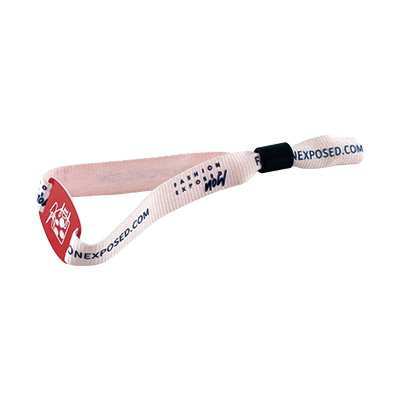
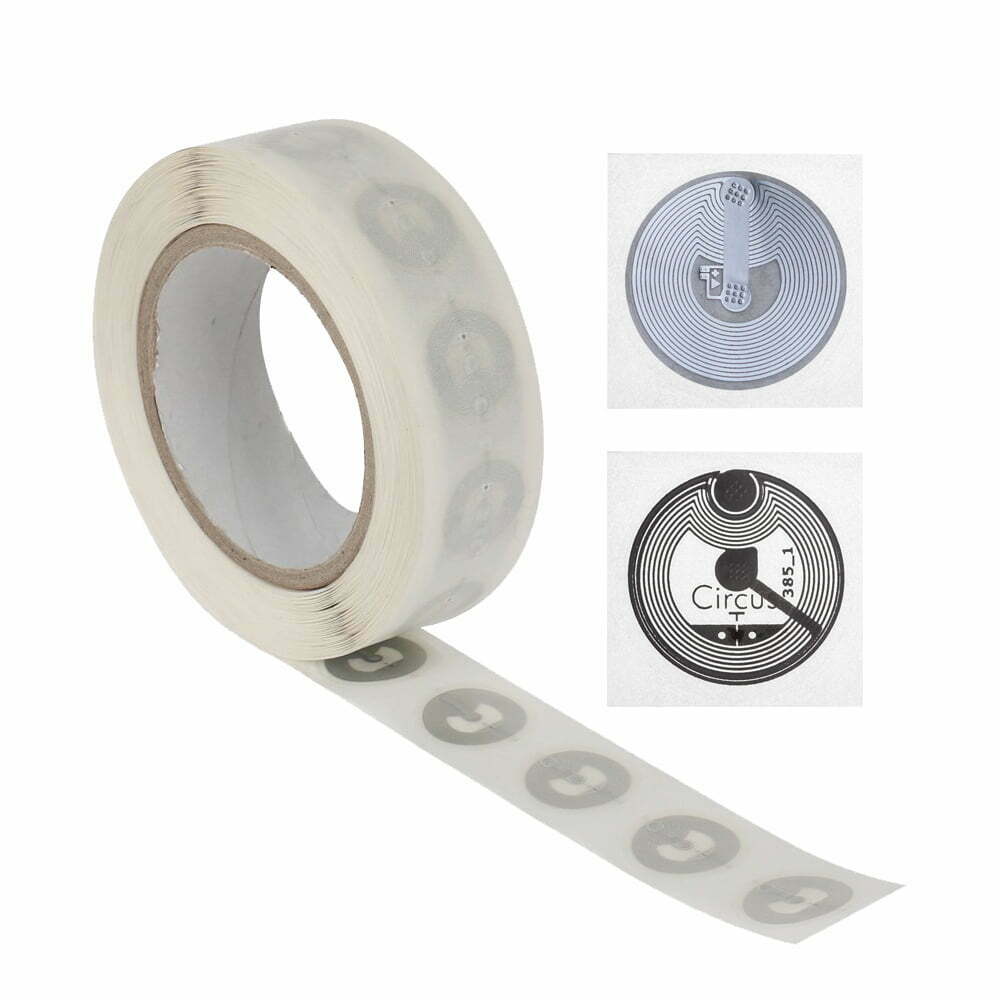
Wenn Kleidung mit markiert ist RFID -Tags (Ob waschbare Etiketten oder Hängeetiketten) während der Produktionsphase, Dann trägt dieses Kleidungsstück während seines gesamten Lebenszyklus von der Produktion bis zum Recycling eine einzigartige digitale Identität. Zu den wichtigsten Chips und Standards gehören:
- NXP-UCODE 9: Hohe Empfindlichkeit (-24dBm), Geeignet zum Lesen in dicht gestapelten Umgebungen
- Impinger M730: Integrierte QT-Technologie, Unterstützung von mobilem Hochgeschwindigkeitslesen
- Außerirdischer Higgs-9: 512-Bit-Benutzerspeicher, in der Lage, Materialzusammensetzungen zu speichern, Produktionsdatum, Pflegegeschichte, usw.
- ISO/IEC 18000-6C: Globaler UHF-RFID-Protokollstandard
- EPC Gen2v2: Unterstützt sichere Befehle und das Schreiben in den Benutzerspeicher
2.2 Recyclingprozess: Automatisierte Sortierung der zweiten Ebene
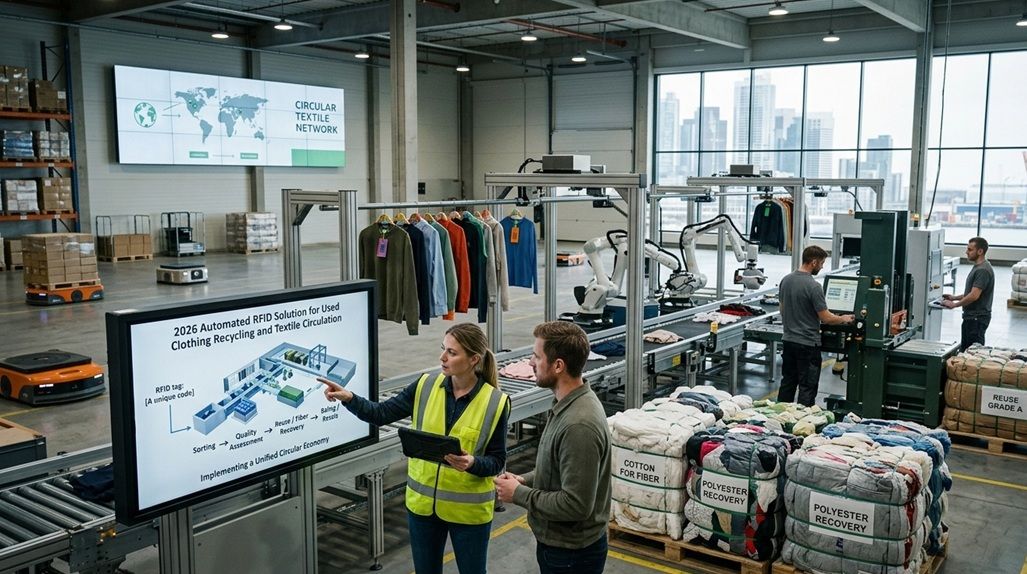
Wenn Alttextilien im Recyclinghof ankommen, Die vollautomatische Chargenidentifizierung wird durch Hochgeschwindigkeits-RFID-Tunnelmaschinen erreicht (wie zum Beispiel RFIDHY RecyclingTunnel):
- Lesegeschwindigkeit: Förderbandgeschwindigkeit bis zu 3 Meter/Sekunde, Einzelkanalverarbeitung 15,000+ Stück pro Stunde
- Identifikationsrate: Mit optimiertem Antennenlayout (Laird S9028P × Times-7 A5020 Kombination), Die Leserate beträgt 99.8%
- Die oben genannten Daten entsprechen: Der gelesene EPC-Code fragt sofort die Cloud-Datenbank ab, um Informationen wie Material zu erhalten, Marke, Alter, und Originalpreis.
2.3 Benotung und Sortierung: Datengesteuerte präzise Klassifizierung
Basierend auf RFID-Lesedaten, Das System leitet die Kleidung automatisch zu verschiedenen Sortierlinien:
| Sortierkategorie | Beurteilungskriterien | Ziel |
| Wiederverkaufbar | Marke + Zustand + Material | Gebrauchtmarkt/Export |
| Faserrecycling | Reine Baumwolle/reine Wolle/Chemiefaser | Öffnen und Spinnen |
| Chemisches Recycling | Gemischt/Beschichtung | Chemische Auflösung |
| Herabgestufte Nutzung | Stark verschmutzt/beschädigt | Wischtuch/Füllmaterial |
| Verbrennung/Deponie | Nicht recycelbar | Energierückgewinnung |
Fall aus der realen Welt: Die RFID-automatisierte Sortierrevolution eines niederländischen Recyclers
3.1 Fallhintergrund
Der niederländische Textilrecycler „CircleTex“ (jährliche Verarbeitungskapazität von 80,000 Tonnen) ist mit steigenden Recyclingmengen und dem Druck durch neue EU-Vorschriften konfrontiert. In 2024, Die manuelle Sortierlinie wird nur verarbeitet 120 Tonnen pro Tag mit einer Genauigkeit von 82%, und die Schwierigkeit, Arbeitskräfte zu rekrutieren, nahm weiter zu.
3.2 Lösung
In 2025, CircleTex hat sich mit einem Fachmann zusammengetan RFID-Lösung Anbieter startet ein Pilotprojekt zur automatisierten RFID-Sortierung:
- Front-End-Datenvorbereitung: Es wurde eine Einigung erzielt mit 5 Partner-Bekleidungsmarken fordern die Verwendung von ISO 18000-6C-konformer waschbarer Kleidung RFID -Tags (basierend auf dem NXP UCODE 9 Chip) für neue Produkte, mit Materialdaten, die in der Cloud geteilt werden.
- Upgrade der Sortierlinie: 4 Es wurden Sätze von Hochgeschwindigkeits-RFID-Tunnelmaschinen eingesetzt, Integration von RFID-Lesegeräten und RFID-Antennen.
- Sortierausführung: Nach dem Lesen der Daten, eine SPS (Siemens S7-1500) gesteuerte pneumatische Schieber zum Einführen der Kleidung 12 verschiedene Sortierkanäle.
3.3 Ergebnisdaten (Stand Februar 2026)
| Indikatoren | Vor der Implementierung (2024) | Nach der Implementierung (Q1 2026) | Verbesserungsskala |
| Tägliche Verarbeitungskapazität | 120 Tonnen | 380 Tonnen | ↑217% |
| Sortiergenauigkeit | 82% | 97.5% | ↑15,5 % |
| Arbeitskosten | 4,2 €/Tonne | 1,1 €/Tonne | ↓74 % |
| Hochwertige Recyclingquote | 18% | 31% | ↑72% |
| Jährliche Umsatzsteigerung | – | 7,2 Millionen Euro | Neue Einnahmen |
Der CTO von CircleTex erklärte, „RFID verwandelt Alttextilien von ‚Müll‘ in Vermögenswerte mit vollständigen Daten. Wir können nicht nur schneller sortieren, sondern auch Markenkunden Recyclingberichte zur Verfügung stellen, die die Recyclingquote ihrer Produkte belegen.“
Anpassungsmöglichkeiten: Bewältigung komplexer Recyclingszenarien
Das Recycling-Szenario für Alttextilien ist weitaus komplexer als die Lagerung neuer Produkte: Kleidung kann schmutzig sein, Feuchte, oder beschädigt, und Tags können teilweise verdeckt sein. Genau hier liegen die Individualisierungsmöglichkeiten. RFIDHY bietet:
4.1 Hochrobuster Lesealgorithmus
Ein adaptiver Leistungsalgorithmus wurde entwickelt, um die unterschiedlichen Tag-Zustände in Recyclingszenarien zu berücksichtigen, Dynamische Anpassung der Leseleistung und Antennenauswahl, um eine maximale Leserate sicherzustellen.
4.2 Optimierung der Multi-Tag-Kollisionsverhinderung
Beim dichten Stapeln (wie gebündeltes Recycling), Signalkollisionen zwischen Tags sind schwerwiegend. Der RFID-RecycleTunnel nutzt einen hybriden Zeitmultiplex-Mehrfachzugriff (TDMA) + Frequenzmultiplexzugriff (FDMA) Schema, Verarbeitung 800+ Tags gleichzeitig auf einem einzigen Kanal.
4.3 Fragiles Tag-Design
Für Etiketten, die nach dem Recycling vernichtet werden müssen, RFIDHY EcoTag wird bereitgestellt. Hergestellt aus biologisch abbaubaren Materialien, Nach dem Recycling und Sortieren wird es automatisch deaktiviert, Schutz der Privatsphäre der Verbraucher.
4.4 Integration mit NIR-Systemen
Für vorhandene Kleidung ohne RFID-Tags, Die RFID-Sortierlinie kann mit einem Nahinfrarotspektrometer verbunden werden (wie TOMRA AUTOSORT). Das RFID-Lesen ist die primäre Methode, ergänzt durch NIR-Totwinkelerkennung, eine vollständige Abdeckung zu erreichen. Von 2026, Das Recycling von Alttextilien hat sich von a “arbeitsintensiv” zu einem “technologieintensiv” Modell. Rfid, als digitale Roadmap, die der Kleidung innewohnt, gestaltet jeden Aspekt des Altkleiderrecyclings neu: von der Erfassung des Ausgangsmaterials bis zur automatisierten Sortierung während des Transports, und schließlich zur Bewertung des Endnutzerwerts. Einen Partner auswählen (wie RFIDHY) Das System erfüllt die Standards EPC Gen2v2 und ISO 18000-6C und verfügt über umfassende Anpassungsmöglichkeiten. Dies ist ein entscheidender Schritt für Recyclingunternehmen und Marken, um gemeinsam ein Recyclingsystem mit geschlossenem Kreislauf aufzubauen. Ja. Moderne Recycling- und Sortierlinien nutzen typischerweise ein Hybridmodell: RFID als Hauptkanal, ergänzt durch Nahinfrarotspektroskopie (NIR) oder Kamerasichterkennung. Für nicht gekennzeichnete Kleidungsstücke, NIR identifiziert das Material vor der Sortierung, und biologisch abbaubare RFID-Tags können nach dem Sortieren angebracht werden, um die Nachverfolgung zu erleichtern. Wenn die Kleidungsstücke waschbare Etiketten verwenden, die Industriestandards entsprechen (Z.B., Bestehen des AARH-Levels 10 Testen) während der Produktion, ihre Lebensdauer erreichen kann 10 Jahre bzw 200 wäscht, deckt die normale Lebensdauer des Kleidungsstücks vollständig ab. Die Tags können beim Recycling weiterhin gelesen werden. Sogar gewöhnliche Anhängeetiketten können vor der Entsorgung noch lesbar sein, aber die Lesbarkeit wird abnehmen. Kommerzielle Recyclinglinien erfordern typischerweise eine Förderbandgeschwindigkeit von 2-3 Meter pro Sekunde, entsprechend der Verarbeitung 10,000-15,000 Kleidungsstücke pro Stunde. Der RFID-RecycleTunnel sorgt für eine Leserate von über 99.5% selbst bei Geschwindigkeiten von 3 Meter pro Sekunde, die Anforderungen des großtechnischen Recyclings vollständig erfüllen. Genau das ist der Kernwert von RFID in der Kreislaufwirtschaft. Durch die Aufzeichnung von Informationen wie Materialzusammensetzung und Testberichten zu verbotenen Substanzen, RFID-Tags liefern Recyclern zuverlässige Daten zur Zusammensetzung, Ermöglicht hochwertiges Recycling (wie zum Beispiel Faser-zu-Faser). Marken können damit eine grüne Zertifizierung und CO2-Reduktionsgutschriften erhalten. Der Investitionsumfang richtet sich nach dem Verarbeitungsvolumen. Für die Verarbeitung kleiner Recyclingstationen 5,000 Tonnen jährlich, eine Desktop-RFID-Sortierstation (wie dem RFIDHY SortDesk) kann ausgewählt werden, mit einer Investition von ca. 20.000-30.000 €. Kombiniert mit Handheld-Terminals, halbautomatische Sortierung möglich, Effizienzsteigerung durch 2-3 mal. Große Recyclingzentren benötigen eine Tunnelmaschinenanlage, die 200.000–500.000 € kostet.
FAQ
Q1: Wenn alte Kleidung keine RFID-Tags hat, Kann dieses System weiterhin verwendet werden??
Q2: Können RFID-Tags während des Recyclingprozesses noch gelesen werden?? Könnten sie beschädigt sein??
Q3: Wie schnell muss eine Recycling- und Sortierlinie sein, um den kommerziellen Anforderungen gerecht zu werden??
Q4: Kann RFID helfen, das zu beweisen? “Recyclingfähigkeit” von Kleidung?
F5: Ist dieses System eine große Investition?? Können kleine Recyclingstationen es nutzen??
Weitere Informationen,Bitte Kontaktieren Sie uns.