Choosing an RFID anti-counterfeiting system for your brand’s intellectual property is a significant technology investment decision. Faced with numerous technologies and suppliers in the market, how can brands make an informed choice? This article outlines key decision points across five important dimensions.
1.Chip Technology Selection: UHF RFID vs. NFC
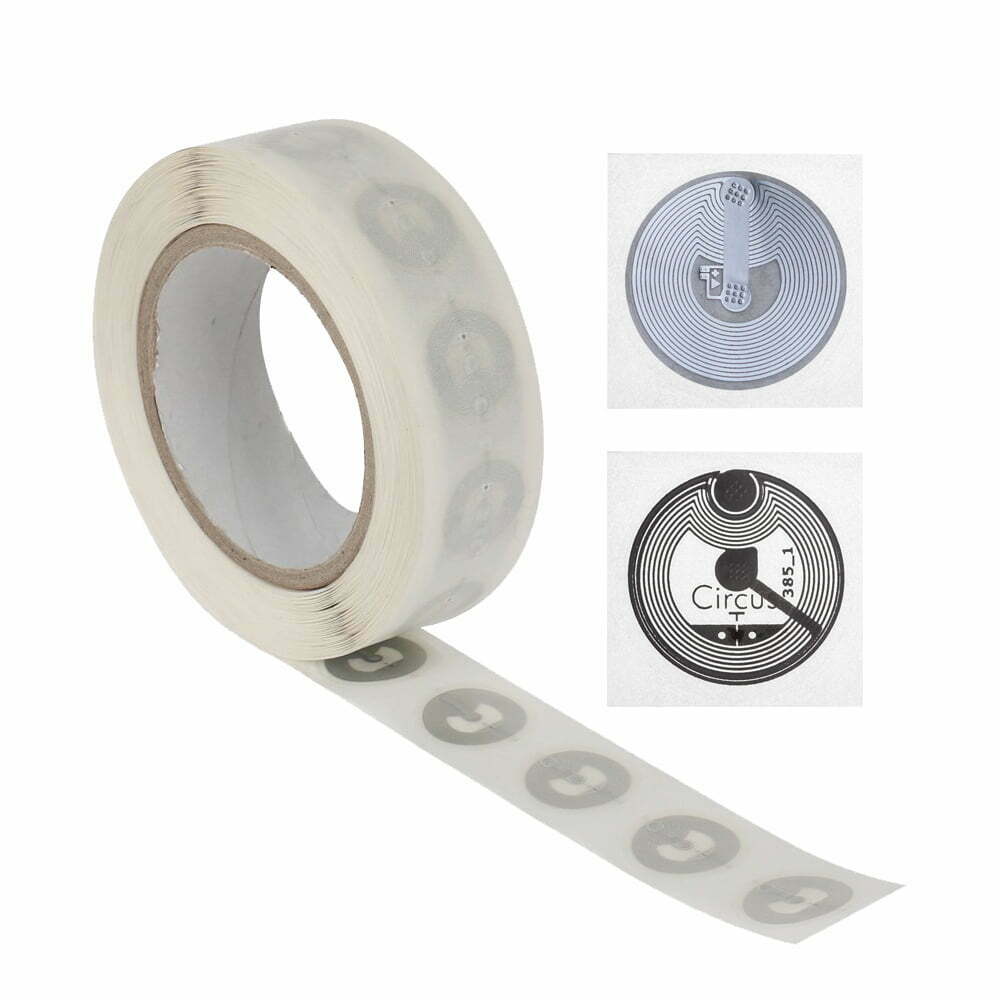
This is the primary decision. RFID (UHF) is suitable for logistics tracking, offering advantages such as long-range batch reading, making it suitable for warehouse management, but requiring dedicated readers. NFC chips, suitable for single-item verification, can interact directly with mobile phones, providing a superior user experience, making it the preferred choice for consumer interaction. High-end trendy toys often employ a dual-frequency “UHF+NFC” solution, balancing supply chain efficiency and end-user experience.A balance needs to be struck based on the brand’s main pain points (e.g., prioritizing logistics and anti-counterfeiting measures with in-store interaction).
2.Tag Performance and Embedding Process
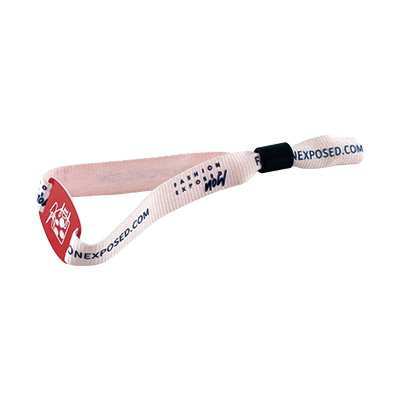
The chip needs to be packaged into a tag. Key metrics include size, durability (bending resistance, temperature resistance), and read sensitivity. For collectible toys containing metal parts, anti-metal RFID tags are crucial. More importantly, for customized RFID tag embedding solutions for collectible toys, the supplier’s ability to provide concealed embedding (e.g., embedded in resin, placed in a base) without affecting the appearance and collectible value is a key factor in evaluating their industry experience.
3.Software Platform and Data Security
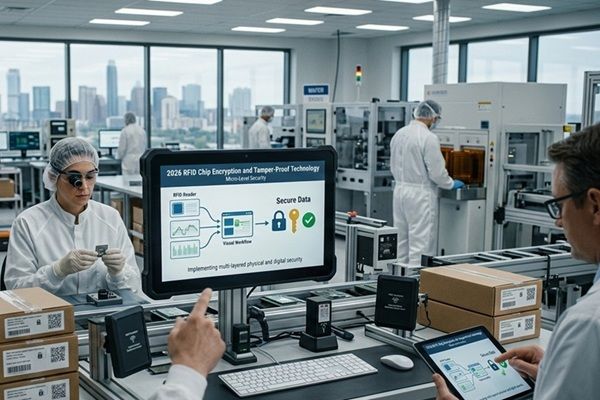
The software platform is the core of the system. It is essential to examine whether it possesses a stable RFID data management platform, a user-friendly interface, and the ability to integrate functions such as production line binding, distribution tracking, authenticity verification, and data analysis. Data security is paramount; the encryption algorithms used, the presence of anti-cloning mechanisms, and whether data storage meets security standards must be confirmed.
4.Supplier Integration and Service Capabilities
The supplier’s experience in RFID hardware and software system integration is crucial. It is essential to assess a provider’s ability to offer end-to-end services, from consulting, deployment, and training to post-launch maintenance. Service providers like RFIDHY, with extensive experience in hardware and software integration, are better positioned to understand the unique characteristics of trendy toy production and brand needs.
5.Overall Cost Analysis
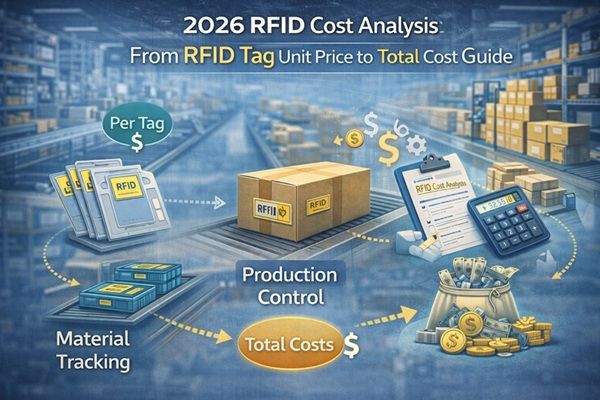
Cost is not just the unit price of the tag. The total cost should be calculated, including chip tags, reader/writer devices, software platform licensing/customization, system integration services, and ongoing maintenance. A return on investment (ROI) assessment should be conducted for the RFID anti-counterfeiting project: calculating the losses reduced by anti-counterfeiting measures, the repurchase rate and premium growth resulting from improved experience, and balancing short-term investment with long-term value.
FAQ
1.Should we build our own development team or find an external supplier?
For most trendy toy brands, it is recommended to find an external professional supplier. RFID systems involve RF hardware, embedded software, cloud architecture, and front-end development, resulting in a complex technology stack. Professional suppliers like RFIDHY can provide mature and stable solutions, shortening time-to-market, reducing trial-and-error costs, and allowing brands to focus on core creative and marketing efforts.
2.How do I test the reliability and read rate of a supplier’s solution?
Suppliers are required to provide samples for rigorous testing. Testing will assess the reading success rate (>99.5%) under different materials (resin, plastic, metal-containing) and packaging conditions. Simulation of consumer mobile phone touch operations at different angles and speeds will be conducted to demonstrate the smoothness of the verification process. On-site inspections will be carried out to evaluate the effectiveness of previous implementation cases.
For more information,please contact us.