Engineering højtydende NFC-antenner til wearables
NFC-aktiverede wearables – fra silikonearmbånd til luksuriøse smarte ringe – kræver antenner, der balancerer miniaturisering, kropskobling, og overholdelse af lovgivningen. På 13.56 MHz, NFC-antennes ydeevne er styret af fysik: mindre formfaktorer reducerer det magnetiske fluxfangsområde, direkte begrænsende læseområde. Dog med intelligent design, pålidelig 3-5 cm drift på kroppen er opnåelig. Sådan gør du.
1. Fysik-udfordringen & Kompensationsstrategier
Krympning af en NFC-antenne reducerer dens induktans og strålingsmodstand, sænker koblingseffektiviteten - især i nærheden af ledende menneskeligt væv. For at kompensere, designere bruger højpermeabilitet ferritafskærmning (F.eks., TDK IFL eller 3M AB5000), flerlags PCB stackups, og optimeret spolegeometri. Disse teknikker genopretter magnetisk fluxtæthed uden at øge fodaftrykket.
2. Ferritpåfyldningsteknik
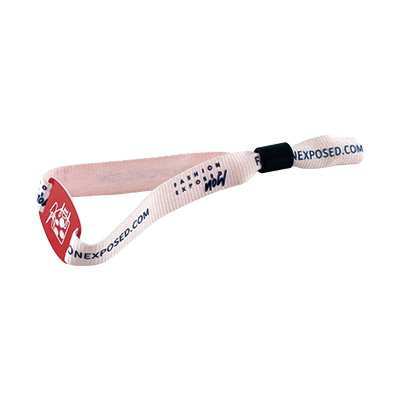
Placering af sintrede ferritplader bag antennen koncentrerer magnetisk flux mod læseren og beskytter mod afstemning fra håndledsvæv. I validerede NFC silikone armbånd designs, denne teknik forbedrer kroppens læserækkevidde med 30-50 % i forhold til uafskærmede ækvivalenter – afgørende for begivenhedsadgang eller sikker godkendelse.
3. Optimering af antennegeometri
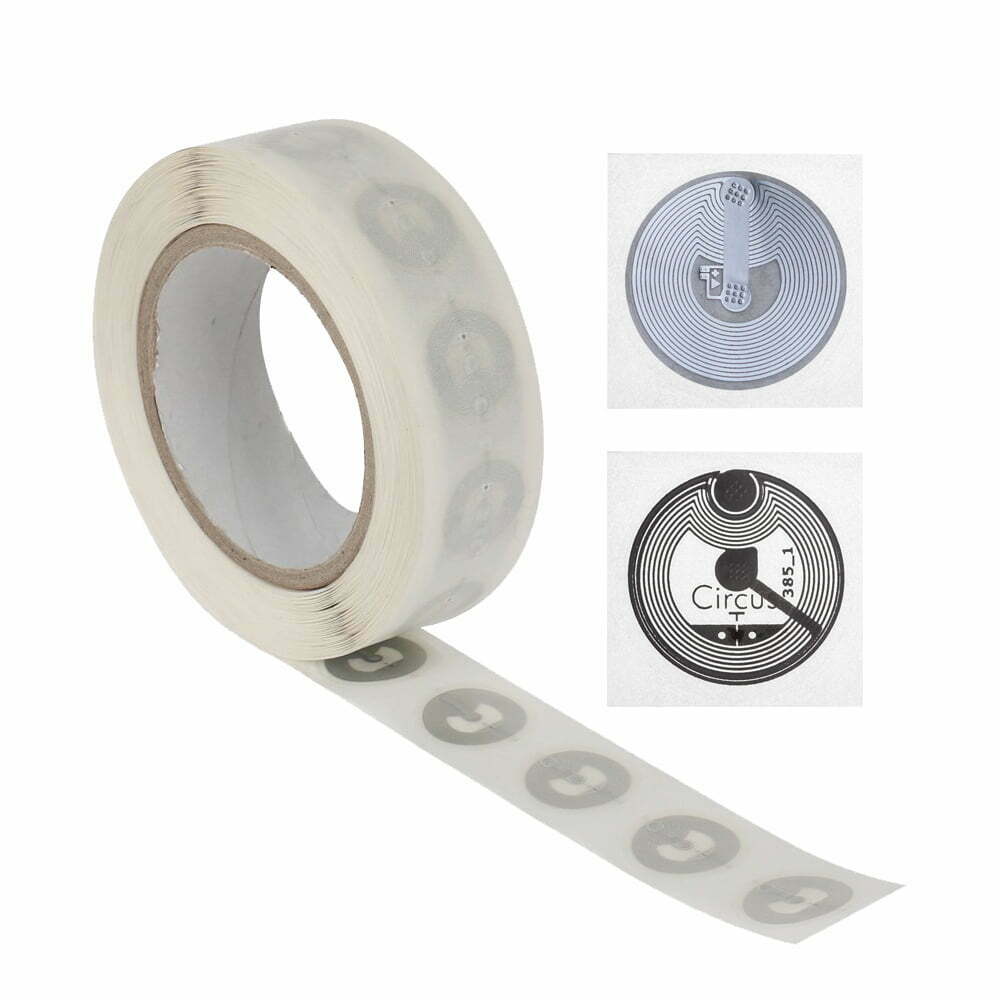
Til wearables, rektangulære spoler giver bedre pladsudnyttelse i armbånd; cirkulære spoler passer til ringe og fjernbetjeninger; figur-8 mønstre forbedrer feltens ensartethed. Enkeltlags FPC-antenner er almindelige til omkostningsfølsomme applikationer; flerlagsvarianter muliggør strammere Q-faktor kontrol (mål: 15–25). Sporbredde og -afstand er indstillet til at styre modstand og selvkapacitet - nøglen til at opretholde resonansstabilitet.
4. Materielle overvejelser
- Fleksibelt printkort (FPC): Ideel til buede overflader som f.eks NFC silikone armbånd og medicinske plastre.
- Sølv blæk på PET: Anvendes i smarte engangsplastre - lavere ledningsevne, men høj skalerbarhed.
- Kobberætsede FR4 eller keramiske underlag: Foretrækkes til premium NFC ringer hvor ledningsevne og holdbarhed er i højsædet.
5. Matchende netværksdesign
Et velafstemt L-C netværk sikrer 50Ω impedans ved 13.56 MHz. Almindelige faldgruber omfatter parasitisk kapacitans fra kompakte kabinetter og temperaturafhængige permeabilitetsskift i ferriter. Vi anbefaler at bruge NP0/C0G-kondensatorer og induktorer med lav temperaturkoefficient for stabil ydeevne over -10°C til +50°C.
6. Afprøvning & Validering
Validering inkluderer:
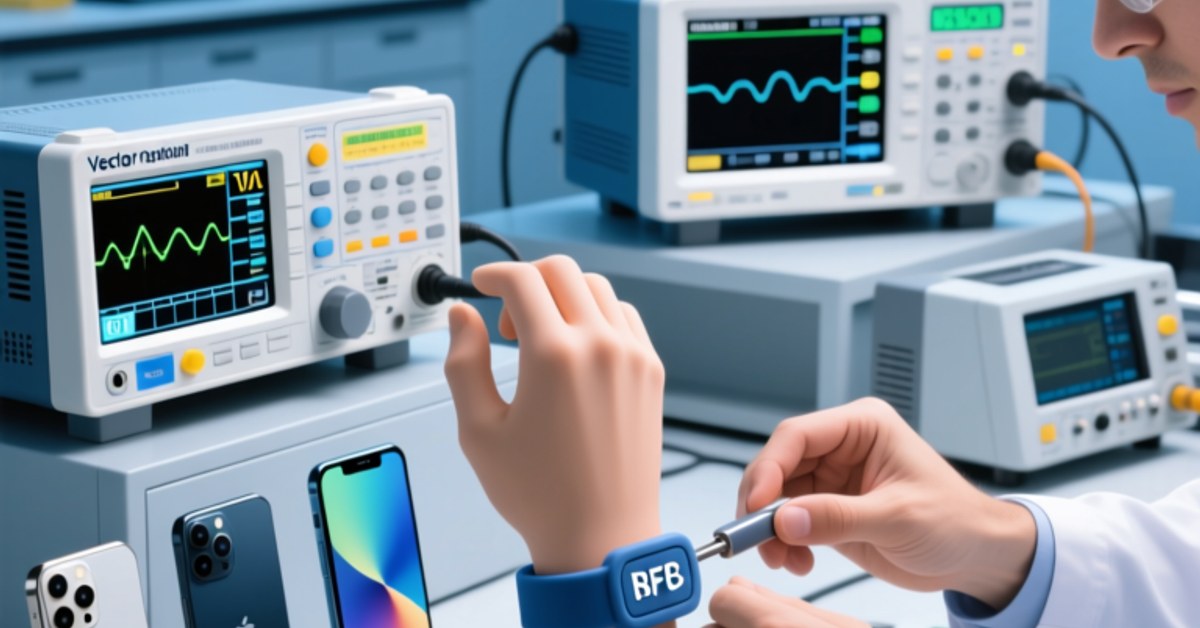
- VNA-måling af S11 returtab, resonansfrekvens, og båndbredde;
- ISO 14443-A/B og ISO 15693 test af kortemulator;
- Real-world læseområdetest på tværs af referenceenheder: iPhone 14/15, Samsung Galaxy S23, Google Pixel 7.
7. Casestudie: NFC silikone armbåndsantenne
Et nyligt design integrerede en 2-lags FPC-antenne i en 2 mm tyk silikone-overform. Et 0,5 mm TDK IFL ferritark afskærmet mod håndledsvæv. Mål læseområde: 3–5 cm. Målt resultat: 4.2 cm med Pixel 7, fuldt ud i overensstemmelse med ISO 14443-A.
8. Emerging Tech: NTAG I²C til Active Wearables
NTAG I²C-familien muliggør tovejskommunikation mellem NFC-controller og mikrocontroller via I²C-bro – ideel til sundhedsovervågnings-patches eller interaktive smarte smykker. Antennedesign skal understøtte både passiv polling og aktiv dataudveksling uden at gå på kompromis med RF-effektiviteten.
Anbefalede NFC-antenneparametre til almindelige wearables
>
| Formfaktor | Ydre dimensioner | Spolen drejer | Sporbredde | Ferrit type | Forventet læseområde |
|---|---|---|---|---|---|
| NFC silikone armbånd | 45 × 12 mm | 4–6 | 0.25 mm | TDK IFL-0.5 mm | 3.5–4,5 cm |
| NFC ring | Ø18 mm | 3–5 | 0.3 mm | 3M AB5000-0,3 mm | 2.5–3,5 cm |
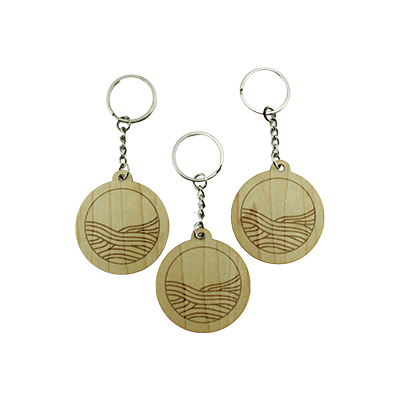
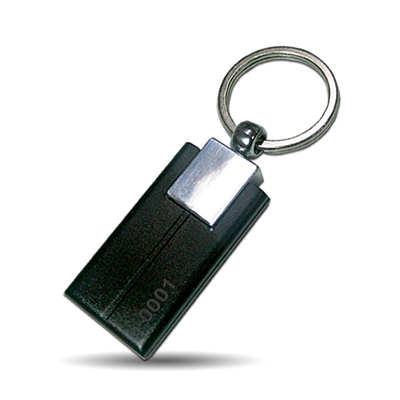
| NFC nøglefob | 50 × 35 mm | 5–7 | 0.35 mm | TDK IFL-0.3 mm | 4–6 cm |
| Smart medicinsk plaster | 30 × 20 mm | 4 | 0.2 mm (sølv blæk) | Ingen (PET substrat) | 2–3 cm |
Styrk din næste wearable med RFIDHY- og NFCWORK-ekspertise
Uanset om du udvikler dig NFC event armbånd, NFC nøglesender, eller brugerdefinerede RFID armbånd for virksomhedsadgang, vores ingeniørteam leverer produktionsklare antennelayouts, ISO-kompatible valideringsrapporter, og NFC-bærbare løsninger i fuld stack.
FAQ
- Hvorfor forringes NFC-ydeevnen på den menneskelige krop?
Menneskeligt væv absorberer og detunerer NFC-magnetiske felter. Ferritafskærmning afbøder dette ved at omdirigere flux og isolere antennen fra ledende interferens. - Kan jeg bruge standard NFC -tags i wearable designs?
Hyldevare NFC-indlæg opfylder sjældent mekaniske eller RF-krav til wearables. Brugerdefineret antenneintegration – inklusive valg af substrat, afskærmning, og matchning – er afgørende for pålidelighed. - Hvad er forskellen mellem NFC -armbånd og RFID armbånd?
NFC -armbånd operere kl 13.56 MHz (ISO 14443/15693) og understøtte to-vejs interaktion (F.eks., tryk for at godkende); UHF RFID armbånd (860–960 MHz) er typisk skrivebeskyttet og bruges til sporing af aktiver på lang rækkevidde – se RFIDHYs UHF RFID-armbånd. - Leverer du antennesimuleringsfiler eller Gerber-udgange?
Ja – vi leverer HFSS- eller CST-simuleringsrapporter, layout filer (Gerber/ODB++), og testdokumentation tilpasset din produktionspartners krav.
Har brug for tilpasset NFC-bærbar antennedesignsupport?
Vores ingeniørteam tilbyder end-to-end NFC-antenneudvikling - fra simulering og prototyping til ISO-overensstemmelsestest og volumenproduktionsoverdragelse. Uanset om du skalerer NFC silikone armbånd, lancering af en smart ringlinje, eller indlejring af NFC i medicinske wearables, vi sikrer optimal RF-ydelse, fremstillingsevne, og certificeringsparathed.