Introduction: Supplier Selection is the First Line of Defense for Project Success
An industry survey shows that over 35% of RFID projects are delayed or over budget due to a mismatch between supplier capabilities and project requirements. In global supply chains, especially when facing stringent regulations such as the EU Digital Product Passport (DPP), establishing a scientific supplier evaluation system is an essential skill for administrators. A clear set of procurement standards not only controls risks but also serves as the foundation for ensuring data compliance and long-term return on investment.
Dimension One: Regulatory and Standard Compliance Certification
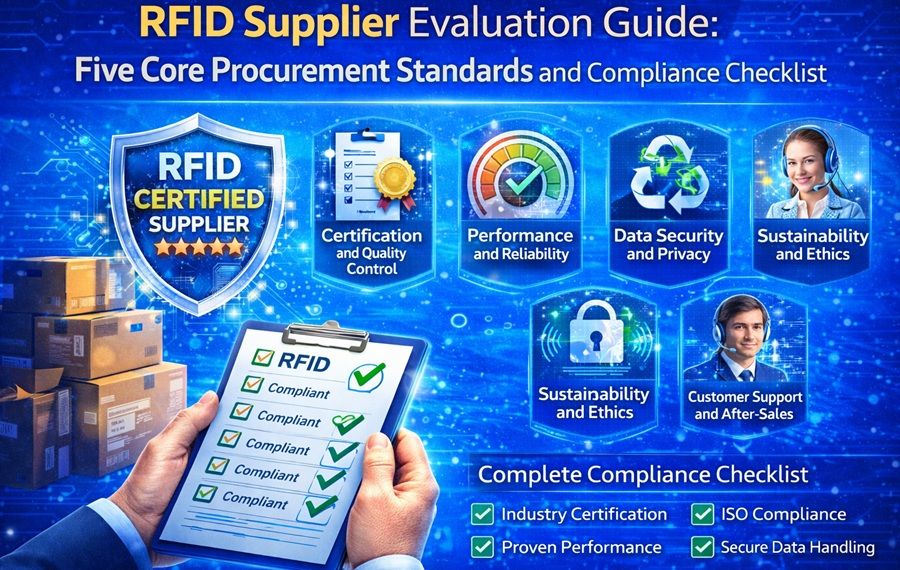
Compliance is the bottom line of procurement standards. Qualified suppliers must demonstrate that their products and services comply with target market regulations. Core certifications should include:
- Product Certifications: Such as CE (European Union), FCC (United States), RoHS/REACH (Restriction of Hazardous Substances) certifications.
- Standard Compliance: Their RFID hardware (such as tags and readers) must explicitly support global air interface protocols such as ISO/IEC 18000-6C (RAIN RFID) and EPC Gen2v2.
For textile applications, suppliers should be able to provide authoritative reports demonstrating that their washable tags have passed AARH or similar industrial washing tests. This is crucial for ensuring the readability of data carriers throughout the entire lifecycle of clothing.
Dimension Two: Technical Capabilities and Customization Development Strength
In addition to providing standard products, suppliers should possess targeted technical capabilities. Key areas to consider include:
1) R&D Capabilities: Do they have expert teams in antenna design, chip selection, and protocol standards? Can they provide customized solutions for challenges such as special fabrics (e.g., containing metal threads) or wet environments?
2) Case Studies: Do they have successful case studies in similar scenarios such as smart warehousing, garment hanging systems, or rapid store inventory management? For example, companies like RFIDHY can usually demonstrate their project experience in developing special washable tags for customers or solving high-density batch identification problems, which is more convincing than a simple product catalog.
Dimension Three: Product Quality and Consistency Assurance
Stable quality is the guarantee of accurate batch identification rates. The evaluation should focus on:
1) Production and testing processes: Does the supplier have a complete IQC/IPQC/OQC (Incoming/In-Process/Outgoing Quality Control) system? Do they perform random checks on the radio frequency performance (e.g., sensitivity) of each batch of tags?
2)Data support: Can they provide key performance benchmark data, such as charts of reading distance and reading rate in different media environments?
Dimension Four: Data Security and System Integration Support
An RFID project is not just about hardware procurement, but also about data system integration. The supplier should be able to:
1) Ensure data security, complying with data privacy regulations such as GDPR in tag encoding and data transmission.
2) Provide mature RFID middleware or open API interfaces to support seamless integration with your WMS (Warehouse Management System), ERP, or DPP platform, avoiding data silos.
Dimension Five: Supply Chain Reliability and Full Lifecycle Service
A reliable supply chain and professional service are crucial for the smooth operation of the project. The following should be evaluated:
1) Supply chain resilience: The stability of supply and inventory capacity of key chips (such as those from Impinj, Alien).
2) Service capabilities: Do they provide full lifecycle support, from site survey and installation and commissioning to after-sales technical response (SLAs)? This is crucial for the long-term operation and maintenance of industrial-grade hardware.
Conclusion
Effective supplier evaluation is a multi-dimensional and systematic process. Administrators should develop a quantitative scoring card based on the five procurement criteria mentioned above—compliance certification, technical customization, quality assurance, integration support, and service reliability—and prioritize partners like RFIDHY who can provide verifiable evidence and customized commitments in each dimension, thereby minimizing supply chain risks and laying a solid foundation for the company’s digital projects.
Q&A
-
How to quickly screen out unqualified suppliers in the early stages of evaluation?
You can conduct a “pre-qualification” process, requiring suppliers to provide three key documents:
1) CE/FCC certification certificates for their core products;
2) A statement of the chip model (e.g., Impinj M750) and applicable protocol standards (ISO 18000-6C) used in their tags;
3) A recent, verifiable customer case study in a similar industry. Those unable to provide these documents can usually be eliminated early on.
-
How to specifically verify “customization capabilities” during negotiations?
Don’t just listen to descriptions; instead, propose a specific, challenging scenario that closely matches your actual needs (for example: “Our jeans need to undergo a stonewashing process, and the labels must withstand strong alkaline friction”). Require the supplier to provide preliminary solution ideas, possible chips and packaging materials, and an estimated development and testing cycle. Only suppliers who can clearly respond to this process, such as RFIDHY, possess true engineering problem-solving capabilities.
-
How much weight should price have in the evaluation?
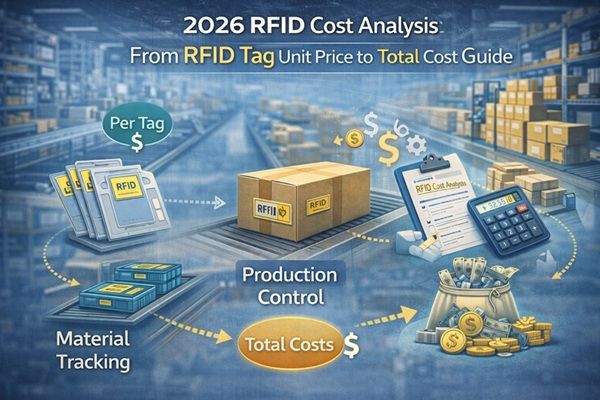
The price weight should not exceed 30%. The total cost of ownership (TCO) of an RFID project includes tag costs, reader investment, software integration, manual deployment, and long-term maintenance costs. A supplier with a slightly higher price but offering high read rates, low failure rates, and excellent service will often have a much lower long-term TCO than a low-priced but unreliable supplier.
For more information,please contact us.