Por qué el material de la tarjeta NFC es importante para las implementaciones empresariales
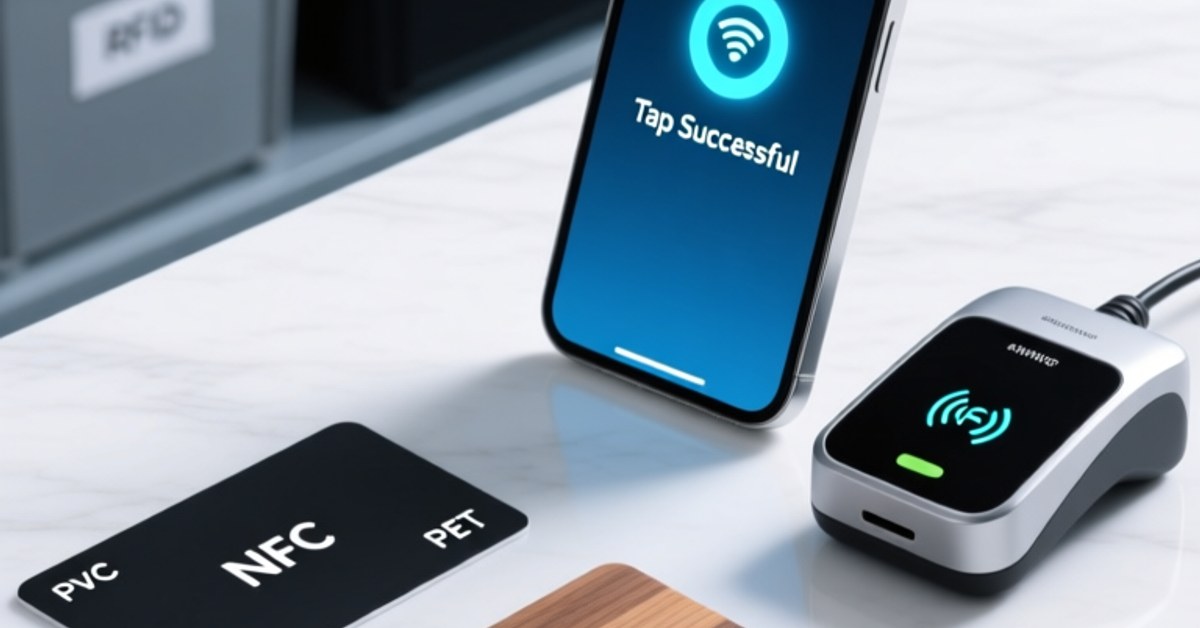
Seleccionar el material adecuado para su Tarjetas NFC es mucho más que una elección estética: afecta directamente el rango de lectura, resiliencia ambiental, cumplimiento normativo (P.EJ., RoHS, ALCANZAR), costo del ciclo de vida, y percepción de marca. Empresas que implementan Etiquetas NFC, Tarjetas de visita NFC, o acceder a credenciales a escala debe equilibrar el rendimiento técnico con las realidades operativas. En esta guía, comparamos objetivamente cuatro ampliamente adoptados tarjeta NFC sustratos: CLORURO DE POLIVINILO, MASCOTA, madera, y bambú, cada uno validado en implementaciones del mundo real en todo Gestión inteligente y Autenticación de artículos de lujo casos de uso.
Tarjetas NFC de PVC: El estándar de la industria
Cloruro de polivinilo (CLORURO DE POLIVINILO) sigue siendo el sustrato más utilizado para tarjetas NFC empresariales debido a su madurez, consistencia, e infraestructura manufacturera global.
Ventajas
- Alta durabilidad: Resistente a la flexión, abrasión, y humedad moderada: ideal para el manejo diario en control de acceso o sistemas de identificación de empleados.
- Rendimiento NFC óptimo: Liso, La superficie uniforme garantiza un acoplamiento estable de la antena y un rango de lectura constante. (normalmente de 3 a 5 cm con lectores HF estándar).
- Personalización completa: Admite impresión de alta resolución, realce, laminación, e integración de banda magnética.
- Rentable a escala: Bajo costo por unidad para pedidos superiores 1,000 unidades; Ampliamente compatible con estaciones de codificación y sistemas de personalización..
Desventajas
- Preocupaciones ambientales: No biodegradable y difícil de reciclar debido al contenido de cloro y aditivos plastificantes..
- Sensibilidad al calor: Puede deformarse o deslaminarse bajo exposición prolongada a temperaturas. >60°C: no apto para entornos industriales o aplicaciones montadas en vehículos.
Mejor para
Control de acceso corporativo, insignias de conferencia, programas de identificación universitaria, y tarjetas de fidelidad minoristas donde la longevidad, fiabilidad, y la amplia compatibilidad de lectores no son negociables.
Tarjetas NFC para mascotas: Ligero & Alternativa ecológica
Tereftalato de polietileno (MASCOTA) ofrece un más delgado, encendedor, alternativa más sostenible y sostenible al PVC, ganando terreno entre las empresas conscientes de los factores ESG.
Ventajas
- Reciclable & Cumple con RoHS: Totalmente reciclable (#1 MASCOTA) y libre de halógenos y metales pesados.
- Estabilidad térmica: Resiste temperaturas de hasta 80 °C sin deformarse; adecuado para seguimiento logístico o sistemas de identificación de almacenes.
- Excelente adherencia de impresión: Ideal para inyección de tinta con curado UV o impresión offset de elementos de marca complejos.
Desventajas
- Menor resistencia a la flexión: Más propenso a agrietarse bajo esfuerzos de flexión repetidos en comparación con el PVC.
- Rango de lectura ligeramente reducido: Un perfil más delgado puede requerir sintonización de antena para mantener un rendimiento constante en todos los lectores de HF.
Mejor para
Implementaciones impulsadas por la sostenibilidad, incluidas conferencias ecológicas, programas de fidelización de marca ecológica, y credenciales digitales emitidas por el gobierno alineadas con los objetivos de la economía circular.
Tarjetas NFC de madera: Expresión distintiva de marca
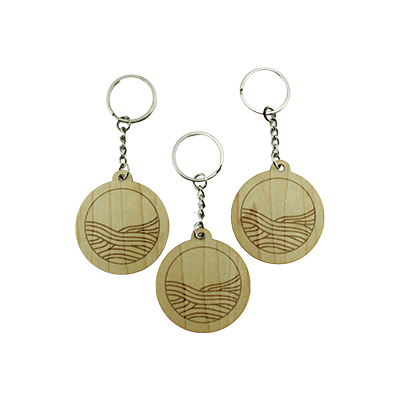
Las tarjetas NFC de madera auténtica combinan el atractivo artesanal con la tecnología funcional, aprovechando finas capas de chapa laminadas sobre incrustaciones NFC.. Estos provienen de maderas duras recolectadas de manera responsable y están diseñados para brindar integridad estructural..
Ventajas
- Diferenciación de marca inigualable: Los patrones de vetas naturales ofrecen un impacto táctil y visual de primera calidad, especialmente eficaz en la autenticación de lujo., hospitalidad, y eventos B2B de alto contacto.
- Núcleo biodegradable: El sustrato de madera se descompone naturalmente en condiciones de compostaje industrial..
- Baja huella de carbono: Requiere significativamente menos energía para producir que los polímeros sintéticos..
Desventajas
- Sensibilidad a la humedad: Requiere revestimiento protector (P.EJ., Acrílico curado con UV) para evitar deformaciones o hinchazones en ambientes húmedos.
- Mayor costo unitario: La laminación que requiere mucha mano de obra y la incrustación de incrustaciones de precisión aumentan la complejidad de la producción.
- Leer variabilidad del rango: La densidad y el espesor del grano afectan la resonancia de la antena; es mejor combinarlos con una optimización. Módulos RFID HF calibrado para sustratos orgánicos.
Mejor para
Autenticación de productos de marcas de lujo, Credenciales de eventos VIP, tarjetas de acceso para hoteles boutique, y kits de incorporación ejecutiva donde la autenticidad y la artesanía refuerzan el valor de la marca..
Tarjetas NFC de bambú: Fuerza sostenible con estética natural
El bambú, una hierba rápidamente renovable, ofrece una resistencia a la tracción y una estabilidad dimensional superiores en comparación con la madera tradicional., haciéndolo ideal para alta durabilidad Aplicaciones NFC.
Ventajas
- Renovable & de rápido crecimiento: Cosechado en 3 a 5 años.; secuestra más CO₂ por hectárea que los árboles maderables.
- Propiedades antimicrobianas naturales: Beneficioso para credenciales de acceso a servicios de salud o alimentos.
- Densidad constante: Permite tolerancias más estrictas para la integración de antenas y un rendimiento NFC más predecible que las maderas de veta irregular..
Desventajas
- Cadena de suministro global limitada: Menos proveedores certificados cumplen con la norma ISO 9001 y estándares FSC para la integración NFC de nivel empresarial.
- Se requiere codificación especializada: La dureza del bambú exige herramientas de grabado con punta de diamante para numeración o superposiciones holográficas.
Mejor para
Campus corporativos ecocertificados, centros de bienestar, marcas de moda sostenibles, e iniciativas de sostenibilidad del sector público que requieren procedencia del material auditable.
Resumen de comparación de materiales
>
| Propiedad | Tarjeta NFC de PVC | Tarjeta NFC para mascotas | Tarjeta NFC de madera | Tarjeta NFC de bambú |
|---|---|---|---|---|
| Durabilidad (uso diario) | ★★★★★ | ★★★☆☆ | ★★★☆☆ | ★★★★☆ |
| Leer la consistencia del rango | ★★★★★ | ★★★★☆ | ★★★☆☆ | ★★★★☆ |
| Impacto ambiental | ★☆☆☆☆ | ★★★★☆ | ★★★★☆ | ★★★★★ |
| Flexibilidad de personalización | ★★★★★ | ★★★★☆ | ★★★☆☆ | ★★★☆☆ |
| Costo unitario (1k+ unidades) | ★★★★★ | ★★★★☆ | ★★★☆☆ | ★★★☆☆ |
Mejores prácticas de integración
Para garantizar una implementación perfecta independientemente de la elección del sustrato:
- Valide siempre el rendimiento de NFC utilizando lectores de nivel empresarial como el Lector de escritorio RFIDHY HF o escáner NFC de mano.
- Especifique incrustaciones NFC compatibles con el material elegido, p., Incrustaciones húmedas NFC flexibles para madera/bambú, o incrustaciones secas NFC estándar para PVC/PET.
- Solicite lotes de muestra antes de la producción completa, especialmente para las variantes de madera y bambú, para probar el rendimiento de la codificación., resistencia a la flexión, e interoperabilidad del lector.
- Asegure su solución NFC El proveedor admite el formato NDEF., aprovisionamiento seguro de elementos, y opcional NFC-CA inscripción de certificado para autenticación criptográfica.
Preguntas frecuentes
- ¿Pueden las tarjetas NFC de madera soportar el uso en exteriores??
- No, la madera sin tratar es vulnerable a la humedad y la degradación por rayos UV.. Para aplicaciones al aire libre, especifique tarjetas de madera recubiertas de acrílico resistentes a los rayos UV y combínelas con tarjetas con clasificación IP65 Lectores fijos RFIDHY.
- ¿Las tarjetas NFC de bambú son compatibles con Apple Wallet y Google Wallet??
- Sí, cuando se codifica con URI NDEF estándar o carteles inteligentes, los cuatro materiales admiten la integración de billetera móvil. Verificar el tipo de foro NFC 4 cumplimiento de etiquetas durante la adquisición.
- ¿Las tarjetas PET requieren equipo de codificación especial??
- No, funcionan con codificadores de tarjetas inteligentes sin contacto estándar. Sin embargo, Verifique la compatibilidad de la cinta de transferencia térmica si utiliza impresión térmica directa..
- ¿Cuál es la vida útil típica de una tarjeta NFC de madera en entornos de mucho tráfico??
- Con revestimiento protector y manejo moderado., espere entre 12 y 18 meses. Para una vida útil más larga, considere compuestos de bambú o híbridos disponibles a través de RFIDTAGHY.
Listo para seleccionar el material óptimo de su tarjeta NFC?
Descarga nuestro gratis Lista de verificación de selección de materiales para tarjetas NFC empresariales, incluyendo matrices de compatibilidad, criterios de investigación de proveedores, y plantillas de cálculo de ROI.