Γιατί το υλικό της κάρτας NFC έχει σημασία για τις εταιρικές αναπτύξεις
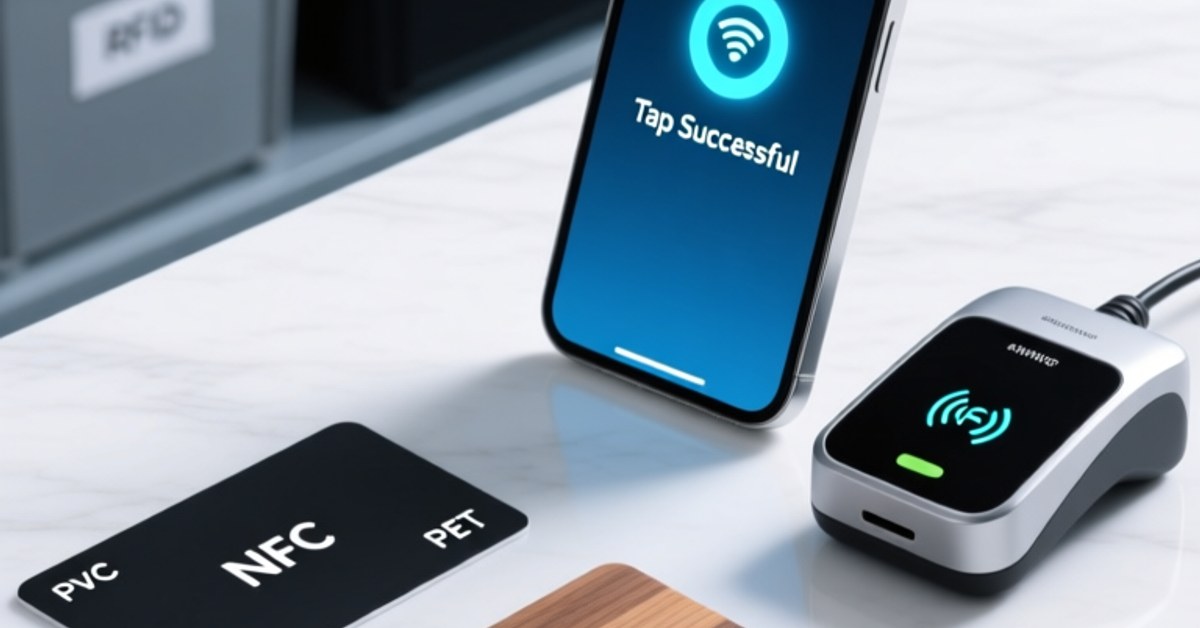
Επιλέγοντας το κατάλληλο υλικό για εσάς Κάρτες NFC είναι πολύ περισσότερο από μια αισθητική επιλογή - επηρεάζει άμεσα το εύρος ανάγνωσης, περιβαλλοντική ανθεκτικότητα, κανονιστική συμμόρφωση (Π.χ., Rohs, ΕΚΤΑΣΗ), κόστος κύκλου ζωής, και αντίληψη της επωνυμίας. Επιχειρήσεις που αναπτύσσουν Ετικέτες NFC, Επαγγελματικές κάρτες NFC, ή πρόσβαση στα διαπιστευτήρια σε κλίμακα πρέπει να εξισορροπεί την τεχνική απόδοση με τη λειτουργική πραγματικότητα. Σε αυτόν τον οδηγό, αντικειμενικά συγκρίνουμε τέσσερις ευρέως υιοθετημένες Κάρτα NFC υποστρώματα: PVC, ΚΑΤΟΙΚΙΔΙΟ ΖΩΟ, ξύλο, και μπαμπού—καθένα από αυτά επικυρώθηκε σε πραγματικές αναπτύξεις σε όλο τον κόσμο Έξυπνη διαχείριση και Έλεγχος ταυτότητας πολυτελών αντικειμένων χρησιμοποιήστε περιπτώσεις.
Κάρτες PVC NFC: Το Πρότυπο Βιομηχανίας
Πολυβινυλοχλωρίδιο (PVC) παραμένει το πιο ευρέως διαδεδομένο υπόστρωμα για εταιρικές κάρτες NFC λόγω της ωριμότητάς του, συνοχή, και παγκόσμια υποδομή παραγωγής.
Φόντα
- Υψηλή αντοχή: Ανθεκτικό στην κάμψη, τριβή, και μέτρια υγρασία—ιδανικό για καθημερινό χειρισμό σε συστήματα ελέγχου πρόσβασης ή αναγνώρισης εργαζομένων.
- Βέλτιστη απόδοση NFC: Λείος, Η ομοιόμορφη επιφάνεια εξασφαλίζει σταθερή σύζευξη κεραίας και σταθερό εύρος ανάγνωσης (συνήθως 3–5 cm με τυπικούς αναγνώστες HF).
- Πλήρης προσαρμογή: Υποστηρίζει εκτύπωση υψηλής ανάλυσης, ανάγλυφο, λεπτό έλασμα, και ενσωμάτωση μαγνητικής λωρίδας.
- Οικονομικά σε κλίμακα: Χαμηλό κόστος ανά μονάδα για παραγγελίες παραπάνω 1,000 μονάδες; υποστηρίζεται ευρέως από σταθμούς κωδικοποίησης και συστήματα εξατομίκευσης.
Μειονεκτήματα
- Περιβαλλοντικές ανησυχίες: Μη βιοαποικοδομήσιμο και δύσκολο στην ανακύκλωση λόγω της περιεκτικότητας σε χλώριο και των πρόσθετων πλαστικοποιητών.
- Ευαισθησία στη θερμότητα: Μπορεί να παραμορφωθεί ή να αποκολληθεί κάτω από παρατεταμένη έκθεση σε θερμοκρασίες >60°C—ακατάλληλο για βιομηχανικά περιβάλλοντα ή εφαρμογές που τοποθετούνται σε όχημα.
Καλύτερος για
Εταιρικός έλεγχος πρόσβασης, σήματα συνεδρίων, προγράμματα πανεπιστημιακής ταυτότητας, και κάρτες επιβράβευσης λιανικής όπου μακροζωία, αξιοπιστία, και η συμβατότητα ευρείας ανάγνωσης είναι αδιαπραγμάτευτη.
Κάρτες PET NFC: Πυγμάχος ελαφρού βάρους & Εναλλακτική Οικολογική Συνείδηση
Τερεφθαλικό πολυαιθυλένιο (ΚΑΤΟΙΚΙΔΙΟ ΖΩΟ) προσφέρει ένα διαλυτικό, αναπτήρας, και πιο βιώσιμη εναλλακτική λύση στο PVC—κερδίζοντας έλξη μεταξύ των επιχειρήσεων που συνειδητοποιούν το ESG.
Φόντα
- Ανακυκλώσιμο & Συμβατό με RoHS: Πλήρως ανακυκλώσιμο (#1 ΚΑΤΟΙΚΙΔΙΟ ΖΩΟ) και απαλλαγμένο από αλογόνα και βαρέα μέταλλα.
- Θερμική σταθερότητα: Αντέχει σε θερμοκρασίες έως και 80°C χωρίς παραμόρφωση—κατάλληλο για συστήματα παρακολούθησης logistics ή σημάτων αποθήκης.
- Εξαιρετική πρόσφυση εκτύπωσης: Ιδανικό για σκληρυνόμενη με υπεριώδη ακτινοβολία inkjet ή εκτύπωση όφσετ περίπλοκων στοιχείων επωνυμίας.
Μειονεκτήματα
- Χαμηλότερη αντοχή σε κάμψη: Πιο επιρρεπείς σε ρωγμές υπό επαναλαμβανόμενη τάση κάμψης σε σύγκριση με το PVC.
- Ελαφρώς μειωμένο εύρος ανάγνωσης: Το λεπτότερο προφίλ ενδέχεται να απαιτεί συντονισμό κεραίας για τη διατήρηση σταθερής απόδοσης σε όλους τους αναγνώστες HF.
Καλύτερος για
Ανάπτυξη με γνώμονα τη βιωσιμότητα—συμπεριλαμβανομένων των πράσινων συνεδρίων, προγράμματα πιστότητας με οικολογική επωνυμία, και κυβερνητικά ψηφιακά διαπιστευτήρια ευθυγραμμισμένα με τους στόχους της κυκλικής οικονομίας.
Ξύλινες κάρτες NFC: Διακριτική έκφραση της επωνυμίας
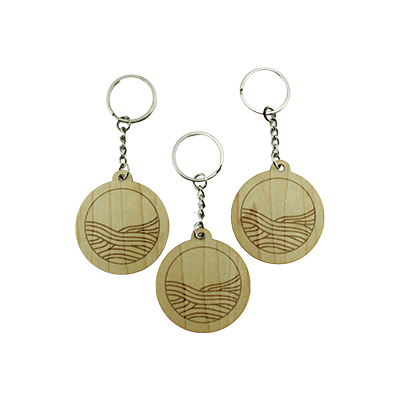
Οι κάρτες NFC από πραγματικό ξύλο συνδυάζουν τη χειροποίητη γοητεία με τη λειτουργική τεχνολογία - αξιοποιώντας λεπτές στρώσεις καπλαμά πλαστικοποιημένες πάνω από ένθετα NFC. Αυτά προέρχονται από υπεύθυνα συλλεγμένα σκληρά ξύλα και έχουν σχεδιαστεί για δομική ακεραιότητα.
Φόντα
- Απαράμιλλη διαφοροποίηση μάρκας: Τα φυσικά σχέδια κόκκων προσφέρουν κορυφαία απτική και οπτική επίδραση—ιδιαίτερα αποτελεσματικά στον έλεγχο ταυτότητας πολυτελείας, φιλοξενία, και B2B εκδηλώσεις υψηλής αφής.
- Βιοδιασπώμενος πυρήνας: Το ξύλινο υπόστρωμα αποσυντίθεται φυσικά υπό συνθήκες βιομηχανικής κομποστοποίησης.
- Χαμηλό αποτύπωμα άνθρακα: Απαιτεί σημαντικά λιγότερη ενέργεια για την παραγωγή από τα συνθετικά πολυμερή.
Μειονεκτήματα
- Ευαισθησία στην υγρασία: Απαιτεί προστατευτική επίστρωση (Π.χ., Ακρυλικό σκληρυμένο με υπεριώδη ακτινοβολία) για την αποφυγή παραμόρφωσης ή διόγκωσης σε υγρά περιβάλλοντα.
- Υψηλότερο κόστος μονάδας: Η πλαστικοποίηση έντασης εργασίας και η ενσωμάτωση ένθετων ακριβείας αυξάνουν την πολυπλοκότητα της παραγωγής.
- Ανάγνωση μεταβλητότητας εύρους: Η πυκνότητα και το πάχος των κόκκων επηρεάζουν τον συντονισμό της κεραίας—συνδυάζονται καλύτερα με τη βελτιστοποιημένη Μονάδες HF RFID βαθμονομημένο για οργανικά υποστρώματα.
Καλύτερος για
Έλεγχος ταυτότητας προϊόντος πολυτελούς επωνυμίας, Διαπιστευτήρια εκδήλωσης VIP, μπουτίκ ξενοδοχεία-κλειδιά, και εκτελεστικά κιτ ενσωμάτωσης όπου η αυθεντικότητα και η δεξιοτεχνία ενισχύουν την αξία της επωνυμίας.
Κάρτες Bamboo NFC: Βιώσιμη Δύναμη με Φυσική Αισθητική
Το μπαμπού - ένα ταχέως ανανεώσιμο γρασίδι - προσφέρει ανώτερη αντοχή εφελκυσμού και σταθερότητα διαστάσεων σε σύγκριση με το παραδοσιακό ξύλο, καθιστώντας το ιδανικό για υψηλή αντοχή Εφαρμογές NFC.
Φόντα
- Ανανεώσιμος & ταχέως αναπτυσσόμενο: Συγκομίζεται σε 3-5 χρόνια; δεσμεύει περισσότερο CO₂ ανά εκτάριο από τα δέντρα ξυλείας.
- Φυσικές αντιμικροβιακές ιδιότητες: Επωφελής για διαπιστευτήρια πρόσβασης σε υγειονομική περίθαλψη ή υπηρεσίες τροφίμων.
- Συνεπής πυκνότητα: Επιτρέπει αυστηρότερες ανοχές για την ενσωμάτωση κεραίας και πιο προβλέψιμη απόδοση NFC από τα ξύλα με ακανόνιστους κόκκους.
Μειονεκτήματα
- Περιορισμένη παγκόσμια αλυσίδα εφοδιασμού: Λιγότεροι πιστοποιημένοι προμηθευτές πληρούν το ISO 9001 και πρότυπα FSC για ενσωμάτωση NFC σε εταιρικό επίπεδο.
- Απαιτείται εξειδικευμένη κωδικοποίηση: Η σκληρότητα του μπαμπού απαιτεί εργαλεία χάραξης με διαμάντια για αρίθμηση ή ολογραφικές επικαλύψεις.
Καλύτερος για
Οικολογικά πιστοποιημένες εταιρικές πανεπιστημιουπόλεις, θέρετρα ευεξίας, βιώσιμες μάρκες μόδας, και πρωτοβουλίες βιωσιμότητας του δημόσιου τομέα που απαιτούν ελεγχόμενη προέλευση υλικού.
Σύνοψη σύγκρισης υλικού
>
| Ιδιοκτησία | Κάρτα PVC NFC | Κάρτα PET NFC | Ξύλινη κάρτα NFC | Κάρτα Bamboo NFC |
|---|---|---|---|---|
| Αντοχή (καθημερινή χρήση) | ★★★★★ | ★★★☆☆ | ★★★☆☆ | ★★★★☆ |
| Διαβάστε τη συνοχή εύρους | ★★★★★ | ★★★★☆ | ★★★☆☆ | ★★★★☆ |
| Περιβαλλοντικές Επιπτώσεις | ★☆☆☆☆ | ★★★★☆ | ★★★★☆ | ★★★★★ |
| Ευελιξία προσαρμογής | ★★★★★ | ★★★★☆ | ★★★☆☆ | ★★★☆☆ |
| Κόστος μονάδας (1k+ μονάδες) | ★★★★★ | ★★★★☆ | ★★★☆☆ | ★★★☆☆ |
Βέλτιστες πρακτικές ενσωμάτωσης
Για να διασφαλιστεί η απρόσκοπτη ανάπτυξη ανεξάρτητα από την επιλογή υποστρώματος:
- Να επικυρώνετε πάντα την απόδοση του NFC χρησιμοποιώντας προγράμματα ανάγνωσης εταιρικής ποιότητας, όπως το Επιτραπέζιος αναγνώστης RFIDHY HF ή φορητός σαρωτής NFC.
- Καθορίστε ένθετα NFC συμβατά με το υλικό που έχετε επιλέξει—π.χ., εύκαμπτα υγρά ένθετα NFC για ξύλο/μπαμπού, ή τυπικά ξηρά ένθετα NFC για PVC/PET.
- Ζητήστε παρτίδες δειγμάτων πριν από την πλήρη παραγωγή —ειδικά για παραλλαγές από ξύλο και μπαμπού— για να δοκιμάσετε την απόδοση κωδικοποίησης, αντίσταση κάμψης, και τη διαλειτουργικότητα του αναγνώστη.
- Βεβαιωθείτε ότι σας Διάλυμα NFC Ο πάροχος υποστηρίζει τη μορφοποίηση NDEF, παροχή ασφαλών στοιχείων, και προαιρετικά NFC-CA εγγραφή πιστοποιητικού για κρυπτογραφικό έλεγχο ταυτότητας.
Συχνές Ερωτήσεις
- Μπορούν οι ξύλινες κάρτες NFC να αντέξουν την εξωτερική χρήση?
- Όχι—το ακατέργαστο ξύλο είναι ευάλωτο στην υγρασία και την υποβάθμιση της υπεριώδους ακτινοβολίας. Για εφαρμογές σε εξωτερικούς χώρους, καθορίστε τις ανθεκτικές στην υπεριώδη ακτινοβολία ξύλινες κάρτες με ακρυλική επίστρωση και συνδυάστε τις με διαβάθμιση IP65 Σταθεροί αναγνώστες RFIDHY.
- Είναι οι κάρτες NFC από μπαμπού συμβατές με το Apple Wallet και το Google Wallet?
- Ναι—όταν κωδικοποιείται με τυπικά NDEF URI ή έξυπνες αφίσες, Και τα τέσσερα υλικά υποστηρίζουν την ενσωμάτωση κινητού πορτοφολιού. Επαληθεύστε τον τύπο φόρουμ NFC 4 συμμόρφωση ετικετών κατά την προμήθεια.
- Οι κάρτες PET απαιτούν ειδικό εξοπλισμό κωδικοποίησης?
- Όχι—λειτουργούν με τυπικούς κωδικοποιητές έξυπνων καρτών χωρίς επαφή. Ωστόσο, επαληθεύστε τη συμβατότητα της ταινίας θερμικής μεταφοράς εάν χρησιμοποιείτε άμεση θερμική εκτύπωση.
- Ποια είναι η τυπική διάρκεια ζωής μιας ξύλινης κάρτας NFC σε περιβάλλοντα υψηλής επισκεψιμότητας?
- Με προστατευτική επίστρωση και μέτριο χειρισμό, αναμένονται 12-18 μήνες. Για μεγαλύτερη διάρκεια ζωής, σκεφτείτε μπαμπού ή υβριδικά σύνθετα υλικά διαθέσιμα μέσω RFIDTAGHY.
Έτοιμη να επιλέξετε το βέλτιστο υλικό κάρτας NFC σας?
Κατεβάστε το δωρεάν Λίστα ελέγχου επιλογής υλικού κάρτας Enterprise NFC, συμπεριλαμβανομένων των πινάκων συμβατότητας, κριτήρια ελέγχου προμηθευτών, και πρότυπα υπολογισμού απόδοσης επένδυσης (ROI)..