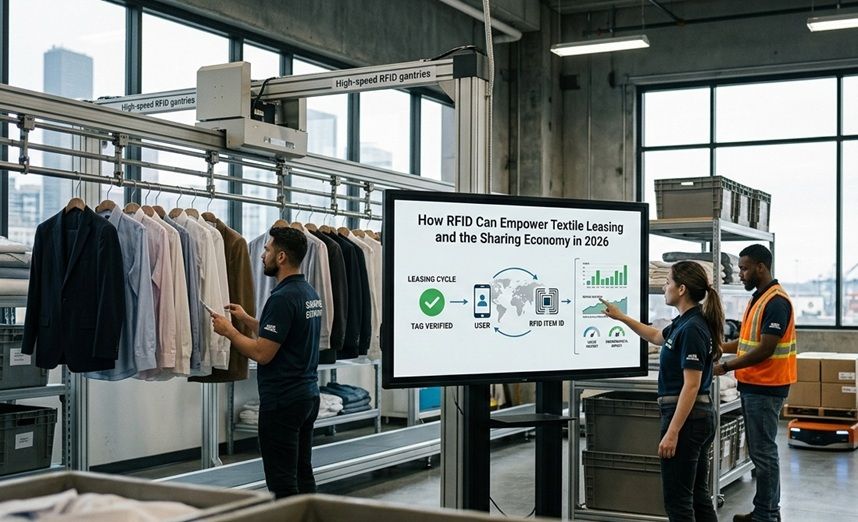
Introducción: Desafíos de la gestión de activos textiles en la era de la economía colaborativa
Según McKinsey 2025 “Informe de moda circular,” Se prevé que el mercado mundial de economía colaborativa y de arrendamiento de textiles alcance $34 mil millones en 2026, con una CAGR de 22%. Sin embargo, rotación de alta frecuencia, pérdida de activos, y la gestión de la higiene se han convertido en obstáculos fundamentales que restringen el desarrollo de la industria. Tecnología RFID, asignando una identidad digital única a cada artículo textil, está remodelando todos los aspectos de la gestión de arrendamientos y el seguimiento de activos.
Puntos débiles en la gestión de activos de arrendamiento textil
1.1 Alta tasa de pérdida de activos
Los datos de la Asociación Europea de la Industria del Leasing muestran que la tasa de pérdida anual de textiles arrendados gestionados por códigos de barras tradicionales es tan alta como 8-12%. Para una empresa de alquiler de ropa laboral con 100,000 piezas en inventario, la pérdida anual alcanzaría los 800.000-1,2 millones de euros.
1.2 Baja eficiencia de inventario
Inventariar manualmente 100,000 los artículos requieren 40-60 días-hombre, con una tasa de precisión de sólo 85%. Con rotación de alta frecuencia, Las discrepancias entre los registros y el inventario real se vuelven comunes., impactando directamente la experiencia del cliente y las tasas de renovación.
1.3 Falta de higiene y gestión del ciclo de vida
Los textiles alquilados requieren una limpieza y desinfección periódicas, pero faltan registros de cada limpieza, haciendo imposible rastrear el número de limpiezas y el estado de higiene, plantear riesgos para la salud y riesgos de cumplimiento.
Solución RFID: De “Elementos” a “Activos de datos”
2.1 Principio técnico: Tarjeta de identificación digital lavable
Lavable Etiquetas RFID (como los basados en NXP UCODE 9 o chips Impinj M730) vincular una identificación única a cada artículo textil utilizando el protocolo estándar ISO 18000-6C. Los modelos clave incluyen:
- Etiqueta de lavado RFIDHY: Se adapta a la clase AARH. 10 prueba de lavado industrial, resiste 200 ciclos de lavado industrial a 85°C.
- Impulsor M730: Integra tecnología QT, admite lectura móvil de alta velocidad.
- CÓDIGO U NXP 9: Sensibilidad -24dBm, adecuado para entornos densamente apilados.
- Higgs-9 alienígena: 512-Memoria de usuario de bit, almacena recuentos de lavado e historial de alquiler.
2.2 Proceso automatizado de gestión de alquileres
- Codificación entrante: Los textiles recién adquiridos se introducen por lotes en el sistema mediante máquinas tuneladoras RFID. (como RFIDHY Túnel), con una velocidad de identificación de lotes de hasta 800 piezas/minuto.
- Alquiler saliente: Cuando los clientes recogen artículos al por mayor, el sistema lee automáticamente los datos utilizando un terminal portátil (Rfidhy hy-r6100) o antena de control de acceso (RFIDHY HY-RA9002 9dbi). El sistema genera órdenes de alquiler en tiempo real, mejorar la eficiencia de la gestión del alquiler mediante 200%.
- Aceptación de devolución: Al regresar, la prenda vuelve a pasar por la tuneladora. El sistema verifica automáticamente la cantidad y el ID., identificando anomalías (como bienes no propios o daños). El tiempo requerido se ha reducido de 15 minutos por pedido manualmente para 10 segundos por pedido.
- Seguimiento de limpieza: Cada vez que la prenda entra al proceso de limpieza, Los lectores RFID registran el tiempo de limpieza y el número de ciclos de limpieza.. Las alarmas automáticas se activan cuando se exceden los umbrales preestablecidos., garantizar el cumplimiento de la higiene.
Estudio de caso del mundo real: Transformación RFID de una empresa holandesa de alquiler de ropa de trabajo
3.1 Antecedentes del caso
La empresa holandesa de alquiler de ropa de trabajo “trabajo limpio” posee 120,000 conjuntos de ropa de trabajo, servicio 200 empresas. En 2024, su tasa de pérdida de activos alcanzó 9.5%, y se requieren controles mensuales completos del inventario 35 días-hombre, impactando severamente la satisfacción del cliente y las ganancias.
3.2 Solución
En 2025, CleanWork se asoció con un profesional solución RFID proveedor para implementar un sistema de gestión de activos RFID:
- Selección de etiquetas: Etiquetas RFID lavables basadas en NXP UCODE 9 chip
- Equipo de implementación: 3 Máquinas de túneles RFID, 10 Terminales portátiles RFID, 8 antenas de control de acceso
3.3 Datos de resultados (a partir de febrero 2026)
| Indicadores | Antes de la implementación (2024) | Después de la implementación (Q1 2026) | Mejora |
| Tasa de pérdida de activos | 9.5% | 2.1% | ↓78% |
| Tiempo de verificación de inventario completo | 35 persona-días/mes | 4 horas/mes | ↓95% |
| Procesamiento de pedidos de alquiler | 8 minutos/pedido | 0.5 minutos/pedido | ↓94% |
| Trazabilidad de la frecuencia de limpieza | Sin registros | 100% rastreable | – |
| Pérdida Anual de Activos | 1,08 millones de euros | 240.000 millones de euros | Ahorro de 840.000€ |
Capacidades de personalización: Abordar escenarios de arrendamiento complejos
Diferentes escenarios de arrendamiento (ropa de trabajo, ropa de hotel, textiles medicos) tener diferentes necesidades. RFIDHY proporciona capacidades de personalización profundas:
4.1 Tecnología adaptativa multibanda
En negocios de leasing transfronterizos, Las etiquetas deben ser compatibles con diferentes bandas de frecuencia nacionales.. RFIDHY WashTag admite el cambio dinámico entre FCC, ETSI, y estándares SRRC.
4.2 Etiquetas antirrobo frágiles
Para artículos arrendados de alto valor, Se proporciona RFIDHY TamperTag. Una vez eliminado ilegalmente, se vuelve permanentemente inválido, prevenir eficazmente la pérdida de activos.
4.3 Integración con equipos de limpieza
El middleware admite interfaz PLC con lavadoras industriales. (como JENSEN y Kannegiesser). Los datos de limpieza se escriben automáticamente en la memoria del usuario de la etiqueta., formando un archivo de ciclo de vida completo.
Conclusión
Por 2026, La gestión del arrendamiento textil ha pasado de una gestión extensiva a una gestión intensiva.. Tecnología RFID, asignando una identidad digital rastreable y a prueba de manipulaciones a cada artículo textil, reduce las tasas de pérdida de activos en más 70% y mejora la eficiencia del inventario al 95%, convirtiéndose en la piedra angular tecnológica para la expansión a gran escala del modelo de economía colaborativa. Elegir un socio (como RFIDHY) que cumpla con los estándares EPC Gen2v2 e ISO 18000-6C y posea profundas capacidades de personalización es un paso crucial para que las empresas de arrendamiento desarrollen su competitividad central..
Preguntas frecuentes
Q1: ¿Cuántas veces se puede utilizar una etiqueta RFID lavable??
Etiquetas lavables de alta calidad (como RFIDHY WashTag) pasar el nivel AARH 10 prueba y puede soportar más 200 lavados industriales a 85°C, equivalente a una vida útil de alquiler normal de 3-5 años.
Q2: Cómo evitar la eliminación maliciosa de etiquetas en el modelo de alquiler?
Frágil Etiquetas RFID (como RFIDHY TamperTag) se puede utilizar. Una vez retirado del textil, la antena se rompe, la etiqueta deja de ser permanentemente inválida, y el sistema alerta inmediatamente. También se pueden estipular cláusulas de indemnización por daños en el contrato de alquiler..
Q3: ¿Puede el sistema manejar “devolución masiva” escenarios?
Sí. Uso de máquinas tuneladoras RFID, Los clientes pueden devolver los artículos alquilados en cajas enteras.. El sistema completa todas las lecturas., verificaciones, y genera un comprobante de devolución dentro 10 artículos de segunda clase, eliminando la necesidad de escanear artículo por artículo y mejorando enormemente la experiencia del cliente.
Q4: ¿Cómo ayuda la RFID a demostrar que los textiles han sido “lavado”?
Durante cada proceso de lavado, el Lector de rfid registra automáticamente el tiempo de lavado, número de equipo, y procedimiento de lavado, y escribe esta información en la memoria de usuario de la etiqueta. Los clientes pueden escanear la etiqueta para ver el registro de lavado completo., Garantizar la transparencia en materia de higiene..
Q5: ¿Cómo pueden empezar las pequeñas y medianas empresas de alquiler??
El kit de inicio RFIDHY (incluido 2 terminales portátiles + 5000 etiquetas lavables + licencia de software) se puede utilizar. Una inversión inicial de entre 20.000 y 30.000 euros puede cubrir los activos principales y permitir una expansión gradual..
Para más información,por favor Contáctenos.