Introduction: Challenges of Textile Asset Management in the Sharing Economy Era
According to McKinsey’s 2025 “Circular Fashion Report,” the global textile leasing and sharing economy market is projected to reach $34 billion in 2026, with a CAGR of 22%. However, high-frequency turnover, asset loss, and hygiene management have become core bottlenecks restricting the industry’s development. RFID technology, by assigning a unique digital identity to each textile item, is reshaping every aspect of leasing management and asset tracking.
Pain Points in Textile Leasing Asset Management
1.1 High Asset Loss Rate
Data from the European Leasing Industry Association shows that the annual loss rate of leased textiles managed by traditional barcodes is as high as 8-12%. For a workwear rental company with 100,000 pieces in inventory, the annual loss would reach €800,000-€1.2 million.
1.2 Low Inventory Efficiency
Manually inventorying 100,000 items requires 40-60 man-days, with an accuracy rate of only 85%. With high-frequency turnover, discrepancies between records and actual inventory become commonplace, directly impacting customer experience and renewal rates.
1.3 Lack of Hygiene and Lifecycle Management
Leased textiles require regular cleaning and disinfection, but records for each cleaning are lacking, making it impossible to trace the number of cleanings and hygiene status, posing health risks and compliance risks.
RFID Solution: From “Items” to “Data Assets”
2.1 Technical Principle: Washable Digital ID Card
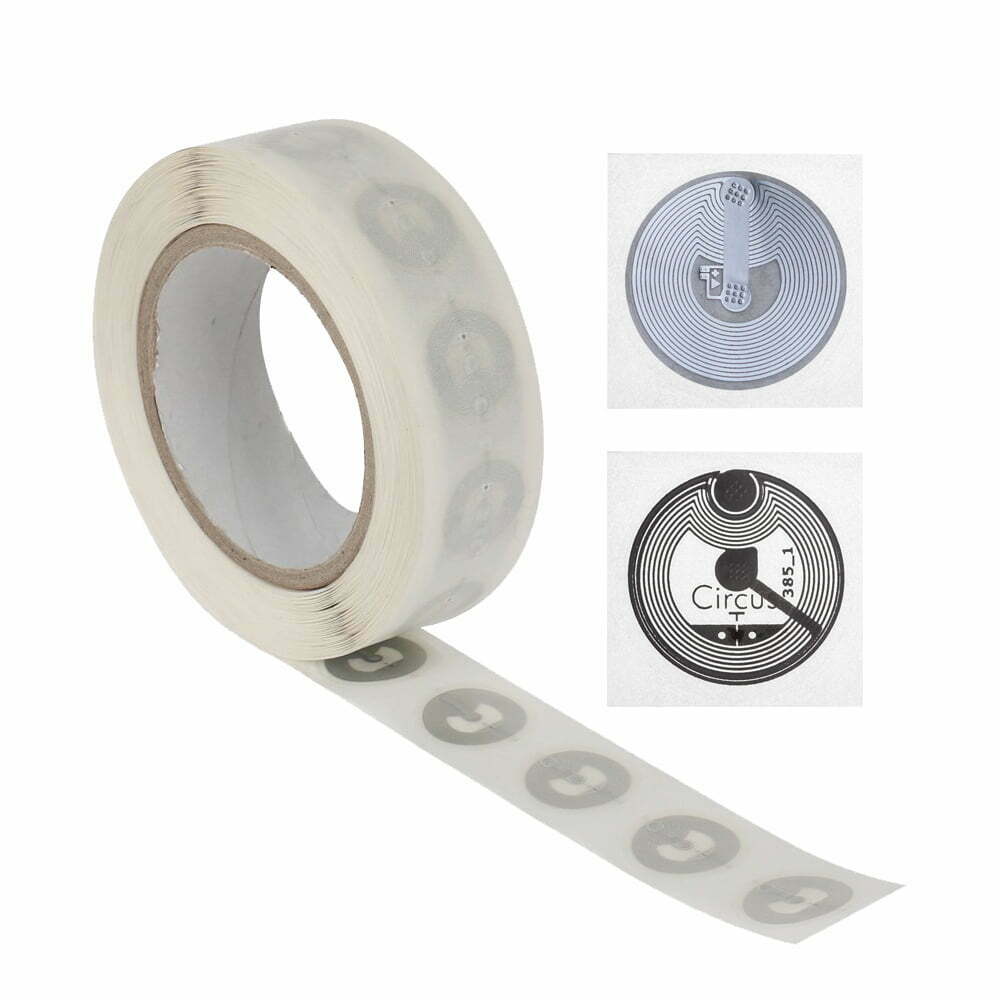
Washable RFID tags (such as those based on NXP UCODE 9 or Impinj M730 chips) bind a unique ID to each textile item using the ISO 18000-6C standard protocol. Key models include:
- RFIDHY WashTag: Passes AARH Class 10 industrial washing test, withstands 200 cycles of 85°C industrial washing.
- Impinj M730: Integrates QT technology, supports high-speed mobile reading.
- NXP UCODE 9: Sensitivity -24dBm, suitable for densely stacked environments.
- Alien Higgs-9: 512-bit user memory, stores wash counts and rental history.
2.2 Automated Rental Management Process
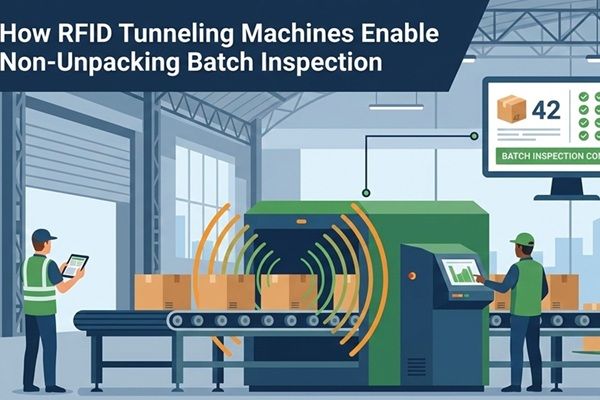
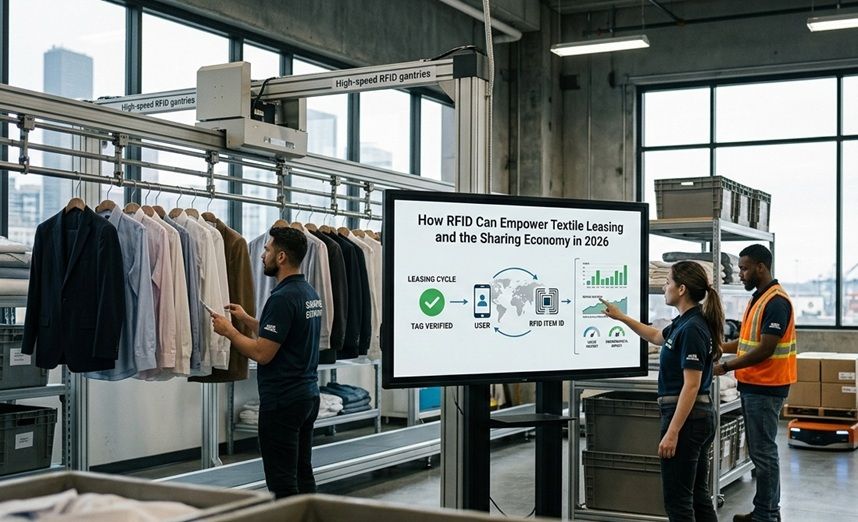
- Inbound Coding: Newly purchased textiles are batch-entered into the system via RFID tunneling machines (such as RFIDHY Tunnel), with a batch identification speed of up to 800 pieces/minute.
- Outbound Rental: When customers pick up items in bulk, the system automatically reads the data using a handheld terminal (RFIDHY HY-R6100) or access control antenna (RFIDHY HY-RA9002 9dbi). The system generates rental orders in real time, improving rental management efficiency by 200%.
- Return Acceptance: Upon return, the garment passes through the tunnel machine again. The system automatically verifies the quantity and ID, identifying anomalies (such as non-owned assets or damage). The time required has been reduced from 15 minutes per order manually to 10 seconds per order.
- Cleaning Tracking: Each time the garment enters the cleaning process, RFID readers record the cleaning time and number of cleaning cycles. Automatic alarms are triggered when preset thresholds are exceeded, ensuring hygiene compliance.
Real-World Case Study: RFID Transformation of a Dutch Workwear Rental Company
3.1 Case Background
The Dutch workwear rental company “CleanWork” owns 120,000 sets of workwear, serving 200 companies. In 2024, its asset loss rate reached 9.5%, and monthly full inventory checks required 35 man-days, severely impacting customer satisfaction and profits.
3.2 Solution
In 2025, CleanWork partnered with a professional RFID solution provider to implement an RFID asset management system:
- Tag Selection: RFID washable tags based on the NXP UCODE 9 chip
- Deployment Equipment: 3 RFID tunnel machines, 10 RFID handheld terminals, 8 access control antennas
3.3 Results Data (as of February 2026)
| Indicators | Before Implementation (2024) | After Implementation (Q1 2026) | Improvement |
| Asset Loss Rate | 9.5% | 2.1% | ↓78% |
| Full Inventory Check Time | 35 person-days/month | 4 hours/month | ↓95% |
| Rental Order Processing | 8 minutes/order | 0.5 minutes/order | ↓94% |
| Cleaning Frequency Traceability | No records | 100% traceable | – |
| Annual Asset Loss | €1.08 million | €240,000 million | Savings of €840,000 |
Customization Capabilities: Addressing Complex Leasing Scenarios
Different leasing scenarios (workwear, hotel linens, medical textiles) have varying needs. RFIDHY provides deep customization capabilities:
4.1 Multi-Band Adaptive Technology
In cross-border leasing businesses, tags need to be compatible with different national frequency bands. RFIDHY WashTag supports dynamic switching between FCC, ETSI, and SRRC standards.
4.2 Fragile Anti-Theft Tags
For high-value leased items, RFIDHY TamperTag is provided. Once illegally removed, it becomes permanently invalid, effectively preventing asset loss.
4.3 Integration with Cleaning Equipment
The middleware supports PLC interface with industrial washing machines (such as JENSEN and Kannegiesser). Cleaning data is automatically written into the tag’s user memory, forming a complete lifecycle file.
Conclusion
By 2026, textile leasing management has shifted from extensive to intensive management. RFID technology, by assigning a traceable and tamper-proof digital identity to each textile item, reduces asset loss rates by over 70% and improves inventory efficiency by 95%, becoming the technological cornerstone for the large-scale expansion of the sharing economy model. Choosing a partner (such as RFIDHY) that meets EPC Gen2v2 and ISO 18000-6C standards and possesses deep customization capabilities is a crucial step for leasing companies to build core competitiveness.
FAQ
Q1: How many times can a washable RFID tag be used?
High-quality washable tags (such as RFIDHY WashTag) pass the AARH Level 10 test and can withstand over 200 industrial washes at 85°C, equivalent to a normal rental lifespan of 3-5 years.
Q2: How to prevent malicious removal of tags under the rental model?
Fragile RFID tags (such as RFIDHY TamperTag) can be used. Once removed from the textile, the antenna breaks, the tag becomes permanently invalid, and the system immediately alerts. Damage compensation clauses can also be stipulated in the rental contract.
Q3: Can the system handle “bulk return” scenarios?
Yes. Using RFID tunneling machines, customers can return rented items in whole boxes. The system completes all readings, verifications, and generates a return slip within 10 seconds, eliminating the need for item-by-item scanning and greatly improving the customer experience.
Q4: How does RFID help prove that textiles have been “washed”?
During each washing process, the RFID reader automatically records the washing time, equipment number, and washing procedure, and writes this information to the tag’s user memory. Customers can scan the tag to view the complete washing record, ensuring hygiene transparency.
Q5: How can small and medium-sized rental companies get started?
The RFIDHY Starter Kit (including 2 handheld terminals + 5000 washable tags + software license) can be used. An initial investment of €20,000-30,000 can cover core assets and allow for gradual expansion.
For more information,please contact us.