The global automotive aftermarket runs on trust. Yet that trust is strained every time a substandard, non-genuine part enters a repair bay. Fake brake pads, airbags, steering components, filters and sensors are no longer limited to backstreet stalls or isolated markets. Sophisticated counterfeiters copy logos, packaging and even QR codes, which makes visual inspection unreliable.
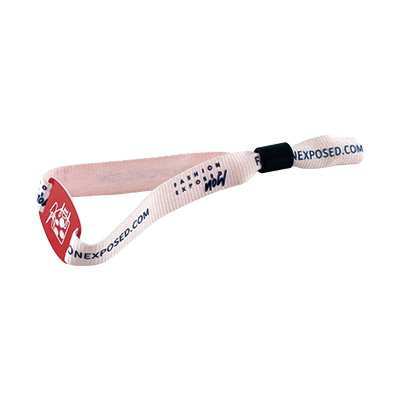
Near-field communication (NFC) offers a more practical approach to automotive parts brand protection. By adding a unique, readable digital identity to a part or its packaging, manufacturers and workshops can authenticate genuine components within seconds. This guide explains how NFC parts authentication is becoming an essential part of aftermarket safety, and where to place NFC tags on car parts and boxes to protect drivers, brands and business results.
The Real Risk of Fake Car Parts
The economic evidence is hard to ignore. The OECD and EUIPO estimate that counterfeit and pirated goods account for around 3.3% of world trade. Customs seizure reports repeatedly show automotive components among the largest categories for suspected intellectual property infringement. More importantly, counterfeit auto parts are not just a financial concern; they are a road safety hazard.
- Non-genuine brake pads and brake hoses have failed in product tests under heavy road loads, increasing stopping distance and risking loss of control.
- Counterfeit airbags may not deploy correctly in a collision, and some contain low-quality propellants that can cause injury rather than prevent it.
- Fake steering and suspension components can suffer premature fatigue, leading to unsafe handling during emergency maneuvers.
- Imitation engine filters and electrical parts increase the risk of engine damage, poor fuel economy, short circuits and vehicle fires.
For OEMs and aftermarket brands, this safety risk is tied directly to brand reputation. One failed counterfeit part that is mistaken for a genuine product can lead to recalls, negative publicity, liability disputes and a loss of consumer confidence. For distributors and workshops, counterfeit parts mean additional labor hours, failed repairs, complicated warranty claims and potential insurance denial.
How NFC Authentication Works for Automotive Parts
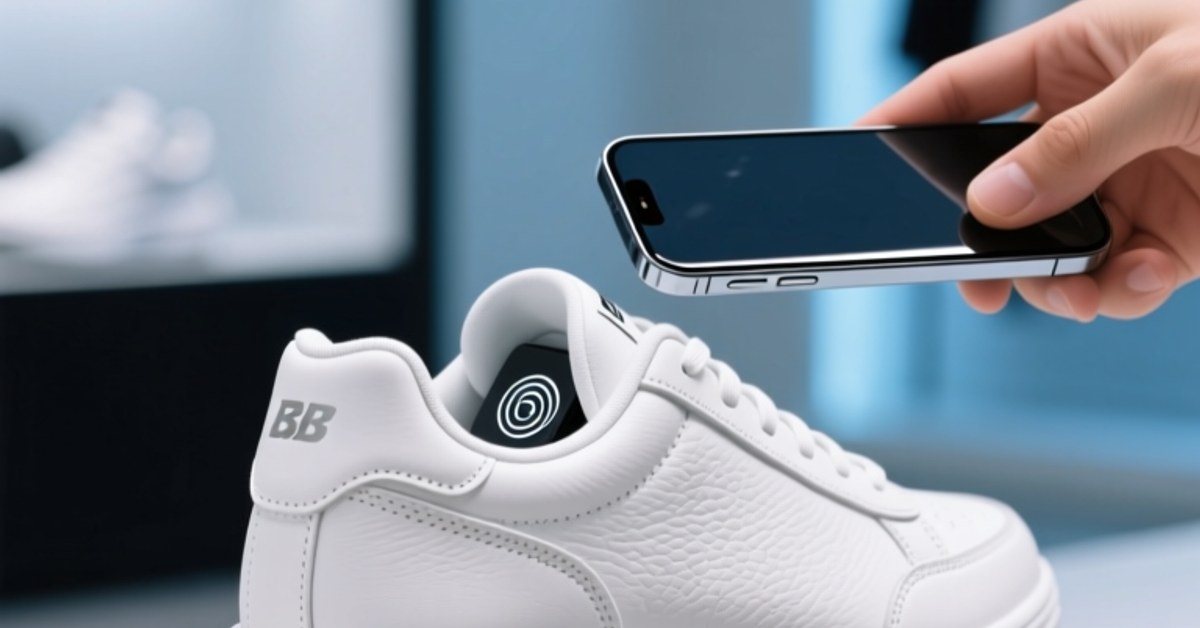
NFC authentication uses a small chip and antenna embedded in a tag, label or inlay. Each NFC tag can carry a unique serial number and, where needed, cryptographic signing capabilities. When a technician, driver or business partner taps the tag with an NFC-enabled smartphone, the device reads a secure URL or product code and opens a brand-controlled verification page.
The radio communication is deliberately short range, usually only a few centimeters. This makes NFC a strong authentication tool for automotive parts because it requires an intentional, direct tap. Unlike a visual hologram or a printed QR code, an NFC tag cannot be copied with a photograph. A counterfeiter must obtain the original tag hardware, understand the digital security scheme and still find a way to place that tag on a fake product.
For automotive OEMs evaluating a counterfeit auto parts NFC program, the practical question is not whether NFC can detect fakes but how to integrate the tags into packaging, inventory systems and workshop procedures.
Focusing Parts Authentication on the Highest-Risk Categories
Not every component needs the same level of digital protection. Brands should focus first on parts where failure creates the greatest risk to drivers and where counterfeiters enjoy the highest margins.
>
| High-Risk Auto Part | What a Counterfeit Part Can Do | Why NFC Authentication Helps |
|---|---|---|
| Brake pads and brake hoses | Reduced stopping power, brake fade and hose burst under pressure | Verifies manufacturer, batch, part number and origin before installation |
| Airbags and seatbelt components | Failure to deploy or explosion risk in a crash | Unit-level serialization creates a permanent digital safety record |
| Steering and suspension components | Sudden joint failure, steering loss and unstable handling | Tamper-visible NFC labels support a clear chain of custody |
| Engine filters, belts and ignition parts | Poor filtration, engine contamination and premature wear | Fast parts verification at the service counter or workshop intake |
| Electrical sensors, modules and ignition coils | Malfunction, short circuits and fire risk | Linking the NFC part ID to the vehicle identity improves recall and repair tracking |
Placing NFC Tags on Parts Packaging and on the Part Itself
A robust anti-counterfeit system combines packaging identification with unit-level authentication. Packaging tags help distribution centers and workshops check inventory before opening a sealed carton. Part-level tags allow authentication at the moment of installation and throughout the life of the component.
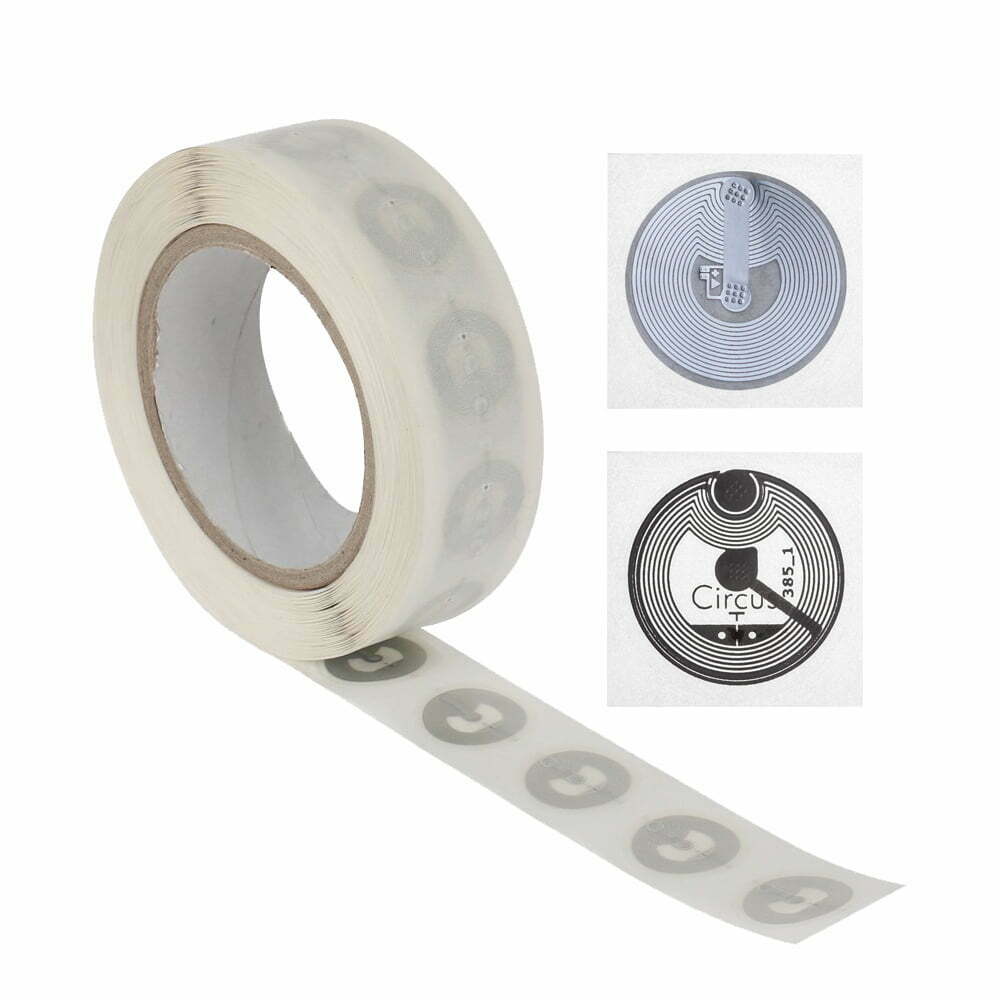
- Packaging level: an NFC label or NFC sticker applied to a sealed box, polybag or shrink-wrap can be scanned immediately after delivery. If the tamper-evident label has been removed or shows signs of being opened and reattached, the shipment should be quarantined.
- Part level: an NFC inlay label can be placed on plastic housings, wiring connectors, filters and other non-conductive surfaces where it will not interfere with the part function. The tag stores a unique serial number and can be linked to the production batch, date and warranty status.
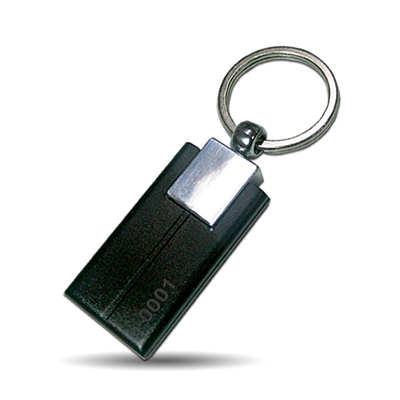
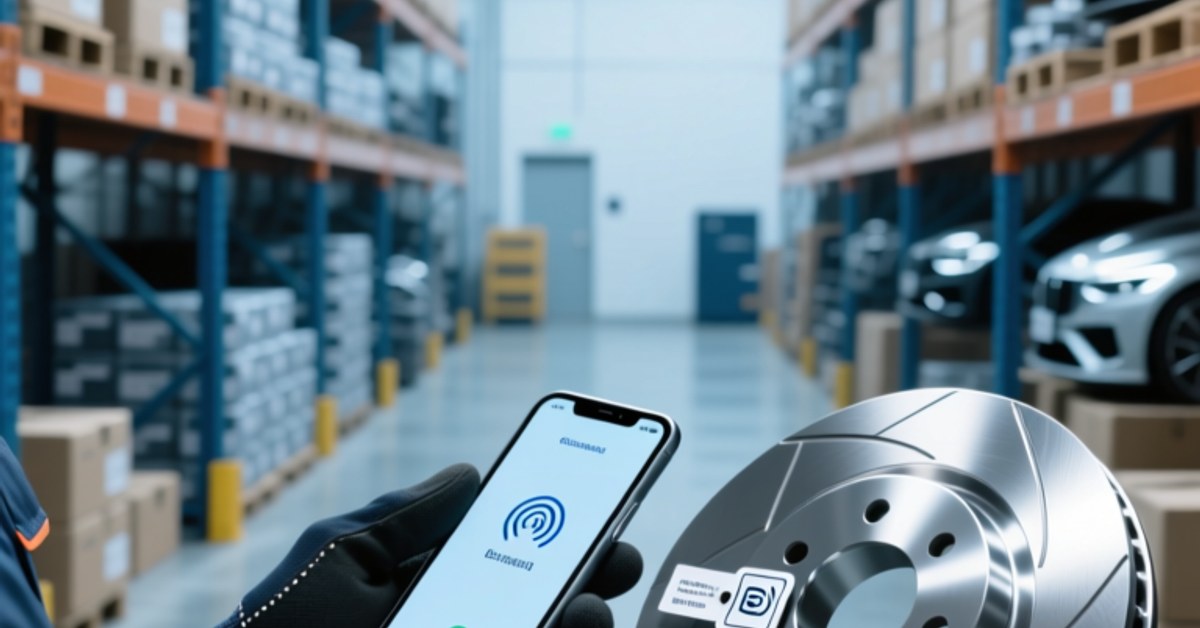
- Metal parts: because metal interferes with standard NFC antennas, use anti-metal RFID tags or NFC tags with a ferrite layer on braking components, engine blocks and steel suspension parts. These tags remain readable when mounted directly on metal.
- Composite assemblies: for high-value components with complex supply chains, an NFC inlay can be molded into the packaging insert rather than placed only on the outer box. That prevents part swapping after the box arrives at the workshop.
At the manufacturing or label-application stage, brands should write a unique product code to the NFC tag and upload that code to a verification database. When the technician scans the part, the returned information can include a product description, batch code, production date, installation instructions and warranty activation URL.
A Practical Workshop Verification Workflow
Workshops, garages and fleet maintenance teams need a workflow that is fast and simple. The goal is to make authentication part of the receiving and installation process rather than an extra administrative burden.
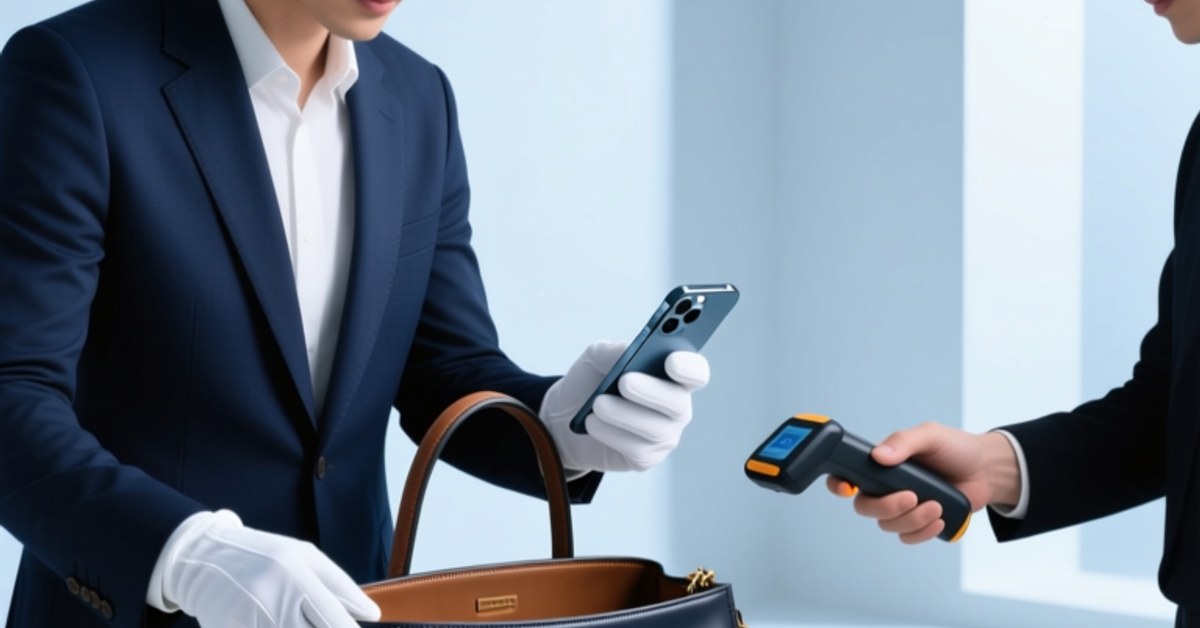
- Receive and scan the outer packaging. When a delivery arrives, the warehouse team scans the NFC label on the carton using an NFC-enabled smartphone or, for high-volume pallets, a handheld UHF RFID reader. If the label does not resolve to the expected product record or serial range, the package is set aside for inspection.
- Scan the part before opening or installation. The workshop technician taps the NFC tag on the part box and verifies that the part number matches the repair order. The verification page should confirm a valid, unused serial number and show the authorized manufacturer or distributor name.
- Reject or quarantine suspicious parts. If the NFC tag does not respond, resolves to a different product, or returns a message that the serial number was already registered, the part should not be installed. This simple step protects the workshop from installing fake parts that could lead to comeback repairs or safety-related accidents.
- Scan again at installation. After the part is installed, the technician records the NFC tag ID together with the vehicle VIN and service date. This second scan builds a verified maintenance record and can automatically activate the parts warranty.
- Single scan for warranty and claims. If the car returns for repair or warranty review, a quick tap of the NFC tag confirms that the part is genuine, properly installed and still within its valid service period.
This workflow turns NFC parts verification into a daily routine. For every suspicious part intercepted before installation, a workshop avoids a potential safety failure, an unhappy customer and a costly warranty dispute.
Warranty Protection and Aftermarket Accountability
Warranty management is one of the most immediate benefits of NFC authentication. Without a verifiable digital record, warranty claims often depend on paper invoices, blurry photos and trust. Fake parts also enter the returns channel because they look similar to genuine products and may be returned under warranty before anyone realizes they are counterfeit.
By linking an NFC tag to a central product record, manufacturers can confirm that a returned part belongs to an authorized production batch and that the serial number has not been reused. Distributors and workshops can instantly see whether a part is still under warranty, whether it was installed by an approved technician and whether a claim has already been submitted for the same part.
For fleet operators, NFC-based parts traceability creates a service history for every vehicle. This helps maintenance teams identify unauthorized parts, manage preventive maintenance and provide documented compliance for insurance and safety audits. Over time, the digital record created by NFC can evolve into a digital product passport for critical components, linking materials, factory information and end-of-life guidance to the part serial number. That kind of transparency is particularly relevant as more industries move toward regulated product passports and supply chain due diligence.
Building a Scalable NFC Parts Authentication Program
Automotive brands do not need to replace every existing label with an NFC tag on the same day. A practical rollout can begin with the highest-risk categories, a limited number of product lines and a verification portal that is easy for distributors and workshops to access.
- Start with brake and safety parts. Those components carry the greatest driver risk and the clearest return on protection.
- Tag packaging first if part-level integration is not possible. Packaging-level NFC labels are simpler to introduce and already provide considerable protection during transport and storage.
- Plan for metal surfaces. Any part with a metallic body, metal bracket or metallic coating should use an anti-metal RFID tag rather than a standard NFC sticker.
- Use one verification path. A unified portal or simple NDEF URL helps avoid confusion among technicians. The NFC tag should always lead to a trusted brand-controlled page, not an unofficial database.
- Combine NFC with serialized QR codes if needed. Printed QR codes are useful as a back-up channel, but NFC remains the stronger defense because it is based on physical chip hardware and cannot simply be scanned from a screen.
Across manufacturing, distribution and service, the cost of counterfeit parts is more than the purchase price of the fake. Failed repairs, customer injuries, recalls and damaged brand equity are far more expensive. Manufacturers and aftermarket suppliers can explore suitable tag options through RFIDHY product lines ranging from NFC labels and NFC inlays to anti-metal RFID tags and UHF RFID readers. The selected technology should match the part surface, the line speed of final packaging and how the installer will scan the component.
Protect Drivers and Aftermarket Safety with NFC
Automotive counterfeiters continue to improve their packaging and distribution methods. Every week, workshops face parts that can harm drivers and damage businesses. NFC parts verification creates a simple, repeatable way to separate genuine parts from fakes before they reach the road.
Whether you are an OEM planning a serialized box program, a distributor who needs clearer traceability, or a workshop owner who wants to stop unknowingly installing counterfeit auto parts, NFC authentication can be implemented quickly. The same technology that protects luxury goods in retail is now becoming a standard safety layer in the automotive aftermarket. Start by identifying your highest-risk components, placing the right NFC tags on packaging and parts, and training technicians to scan every safety-critical item on arrival.
FAQ
Can NFC tags prevent counterfeit auto parts?
NFC tags prevent simple copy attacks because each tag contains a physical chip with a unique identifier that cannot be copied with a camera. When used with a verification database and tamper-evident labels, NFC authentication creates a strong barrier against most counterfeit operations.
Will NFC work on metal engine parts?
Standard NFC tags can lose performance when placed directly on metal. For automotive components such as brake assemblies, engine housings and suspension arms, an anti-metal RFID tag or an NFC tag with a ferrite layer is recommended. It keeps the tag readable on conductive surfaces.
Do workshop technicians need a special reader?
For NFC tags and NFC labels, technicians can use an NFC-enabled smartphone or tablet. For high-throughput warehouse environments, a handheld UHF RFID reader is useful when cartons and pallets also carry UHF RFID tags.
Can a counterfeit company clone an NFC tag?
Basic NFC tags can be read by anyone, but they cannot be easily cloned without the same chip. When brands use serialized production data, cryptographic signatures and cloud-based validation, a counterfeiter would need much more than a printed code to create a fake part that passes authentication.
How does NFC improve warranty and return claims?
The NFC tag links the part to a unique record in the manufacturer’s system. At installation, the technician can record the VIN and activation date. At return, the tag confirms whether the part is genuine, under warranty, and already registered to a particular vehicle.
Ready to Make Your Auto Parts Verifiable by Tap?
RFIDHY and NFCWORK support OEMs, aftermarket brands and distributors with serialized NFC tags, NFC labels, NFC inlays and anti-metal RFID tags for high-risk parts. Our teams can help you define the right placement, encoding flow and verification page for your product lines.
Contact our sales team to start with a pilot program, or view the NFC product range to see available tag formats and read more about digital product passports.