Why NFC Wristbands Are Reshaping Transit Fare Collection
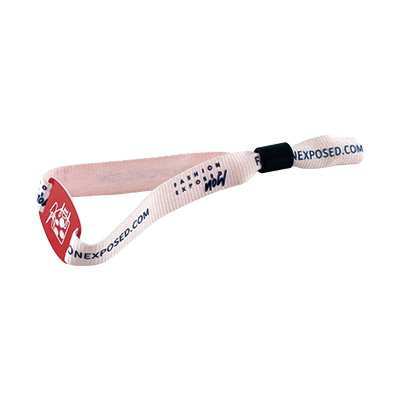
The global smart card market for transit is projected to grow from $12.1B in 2025 to $22.8B by 2032 (CAGR 9.4%). Within this expansion, NFC wristbands are emerging as a high-engagement, low-loss alternative to traditional cards. Metro systems across Shenzhen, Tokyo, Dubai, London, and Singapore have piloted or deployed NFC wristbands — not as novelties, but as purpose-built fare media. Unlike plastic cards, NFC wristbands offer hands-free operation, near-zero drop/loss rates (3% vs. 15% for cards), and built-in brand visibility through customizable silicone bands.
Technical Architecture: From Tap to Transaction
At the core of a secure, scalable deployment lies the NFC wristband as a MIFARE DESFire EV3 token — ISO/IEC 14443 Type A compliant, with 1,024+ bytes of user memory for stored-value wallet and trip history. Tap-in/tap-out logic is processed at the gate reader, while back-end clearing house integration enables real-time reconciliation with industry-standard AFC platforms including Cubic, INIT, and Scheidt & Bachmann. Over-the-air top-up is enabled via a branded mobile app, leveraging the same NFC silicone wristband infrastructure used in enterprise access and event solutions.
Shenzhen Metro Pilot: Performance That Validates Potential
In Q2 2024, Shenzhen Metro launched a controlled trial issuing 50,000 NFC wristbands. Results showed 97% user satisfaction and a 40% reduction in average gate transaction time versus QR code scanning — critical for throughput during peak hours. The wristbands were encoded with DESFire EV3 application keys and integrated directly into the existing AFC middleware without hardware gate modifications.
Hardware Requirements for Transit-Grade Reliability
- Compliance: ISO/IEC 14443 Type A, MIFARE DESFire EV3 certified
- Read range: 2–5 cm (optimized for wrist proximity)
- Memory: ≥1,024 bytes user memory for wallet + trip log
- Durability: ≥100,000 write cycles; IP67+ waterproof rating
- Power: Passive NFC — no battery, zero maintenance
- Material: Medical-grade silicone, anti-static overmolding
Deployment Considerations: Beyond the Wristband
Successful rollout requires antenna tuning for consistent read performance on the wrist — especially under motion or clothing interference. Overmolding material must balance flexibility, skin safety, and RF transparency. Encoding workflows support both batch pre-personalization and OTA provisioning. Integration with legacy AFC systems is achieved via standard APDU command sets and EMV-compatible wallet protocols — ensuring compatibility with NFC wristbands and readers from the wristbandhy.com portfolio.
ROI Analysis: Cost Efficiency Across the Lifecycle
At scale (10K–100K units), NFC wristbands cost $1.50–$4.00/unit — competitive with premium smart cards. Crucially, their 3% annual loss rate slashes replacement costs versus cards (15% loss × $0.50/card = $0.075/unit/year saved). Over five years, transit agencies realize up to 22% lower TCO — factoring in reduced helpdesk calls, fewer gate rejections, and extended hardware lifecycle. —Learn more about rfid retail solution.
>
| Cost Component | Smart Card (5-yr) | NFC Wristband (5-yr) |
|---|---|---|
| Unit cost (100K volume) | $1.80 | $2.40 |
| Annual loss replacement | $0.075 | $0.015 |
| Helpdesk & admin overhead | $0.12 | $0.04 |
| 5-Year TCO per unit | $2.595 | $2.025 |
Dubai’s Nol Card Program: A Blueprint for Multi-Modal Adoption
Dubai’s Roads and Transport Authority (RTA) extended its Nol Card ecosystem to include NFC wristbands in 2023 — now serving over 500,000 users across metro, tram, bus, water taxi, and select retail partners. The program leverages the same backend as legacy cards, proving interoperability and operational readiness. It demonstrates how NFC wearable case study insights translate into city-scale impact — all built on commercially available, field-tested NFC silicone wristband hardware. —Learn more about nfc event wristband.
Implementation Roadmap for Transit Authorities
- Feasibility Study (4–6 weeks): Assess AFC compatibility, gate reader firmware, and backend API readiness.
- Pilot Phase (3 months, 5K units): Deploy with volunteer commuters; measure tap success rate, dwell time, and user feedback.
- Expansion (Q3–Q4): Scale to 50K units; refine OTA top-up UX and reporting dashboards.
- Full Rollout (Year 2): 500K+ units; integrate with national ID or mobile wallet ecosystems.
Frequently Asked Questions
- Are NFC wristbands compatible with existing transit gate readers? Yes — if readers support ISO/IEC 14443 Type A and MIFARE DESFire EV3, integration requires only middleware configuration, not hardware upgrades.
- How is user data protected on the wristband? All NFC wristbands use cryptographic key management per DESFire EV3 standards; no PII is stored on-device — only encrypted wallet balances and anonymized trip counters.
- Can the wristband be used for applications beyond fare payment? Absolutely. The same Smart Wearable Identification platform supports access control, loyalty, and event credentialing — enabling unified identity across urban services.
- What’s the minimum order quantity for custom-branded wristbands? Custom encoding and branding starts at 5,000 units via wristbandhy.com, with lead time of 3–4 weeks.
Ready to Pilot NFC Wristbands for Your Transit System?
Request a free technical consultation, system compatibility assessment, and sample NFC wristband kit — tailored for Automatic Fare Collection integration.