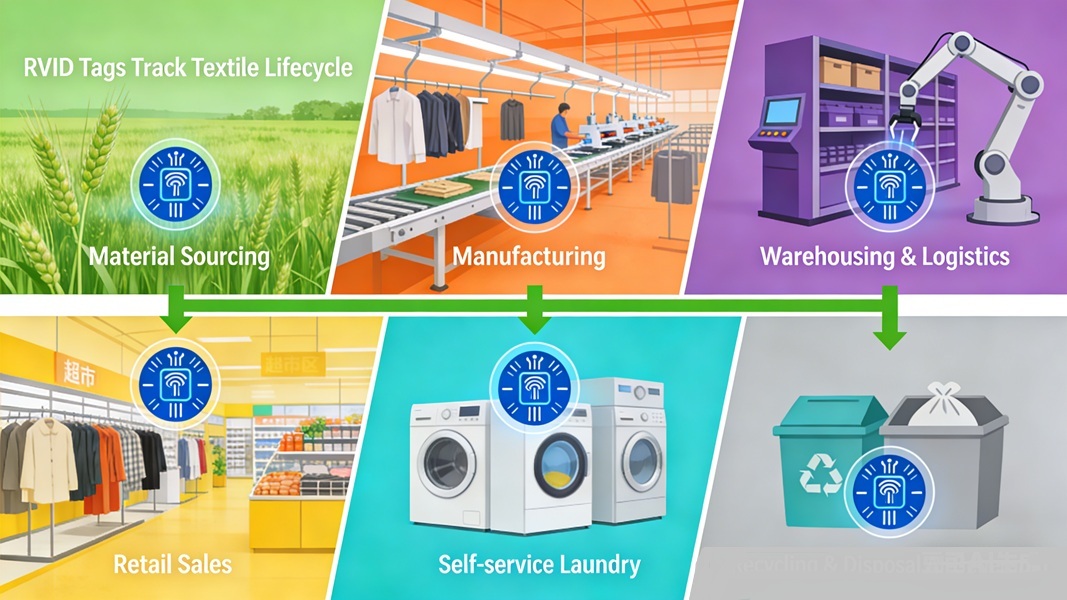
With the tightening of global sustainability policies in 2026, the textile industry is entering an era of “identity verification.” Digital Product Passports (DPPs) are no longer optional, but a passport to the international market. As the connection point between the physical world and digital information, RFID technology is becoming a core infrastructure supporting this system.
1.Global Compliance: Building a Digital Foundation from the Production End
Under the EU’s Sustainable Ecodesign Regulation (ESPR), every garment placed on the market must carry a traceable digital record. By embedding RFID clothing tags during the production stage, brands can achieve “one garment, one code.”
According to Gartner data, by 2026, 80% of the world’s top 50 apparel brands will use RFID tracking systems to manage supply chain transparency. RFIDHY’s RFID tags ensure that data stored in the cloud regarding origin, fiber composition, and environmental impact assessment accurately matches the actual product, effectively preventing the risks of “green laundering.”
2.Lifecycle Tracking: Utilizing RFID Tracking Tags Throughout the Product’s Lifetime
Traditional paper tags wear down after multiple washes, disrupting the information chain. Addressing this pain point, RFIDHY’s industrial-grade RFID laundry tags utilize high-performance heat-resistant polymer encapsulation, withstanding over 200 high-pressure washes and 200°C ironing.
This means that after a consumer purchases clothing, the RFID tag remains active. Consumers can check in real-time how to recycle or resell the clothing using their mobile phone or an in-store RFID tag reader. These durable RFID tracking tags are key to building a closed loop in the circular economy.
3.Retail and Recycling: Multiplying Efficiency and Value
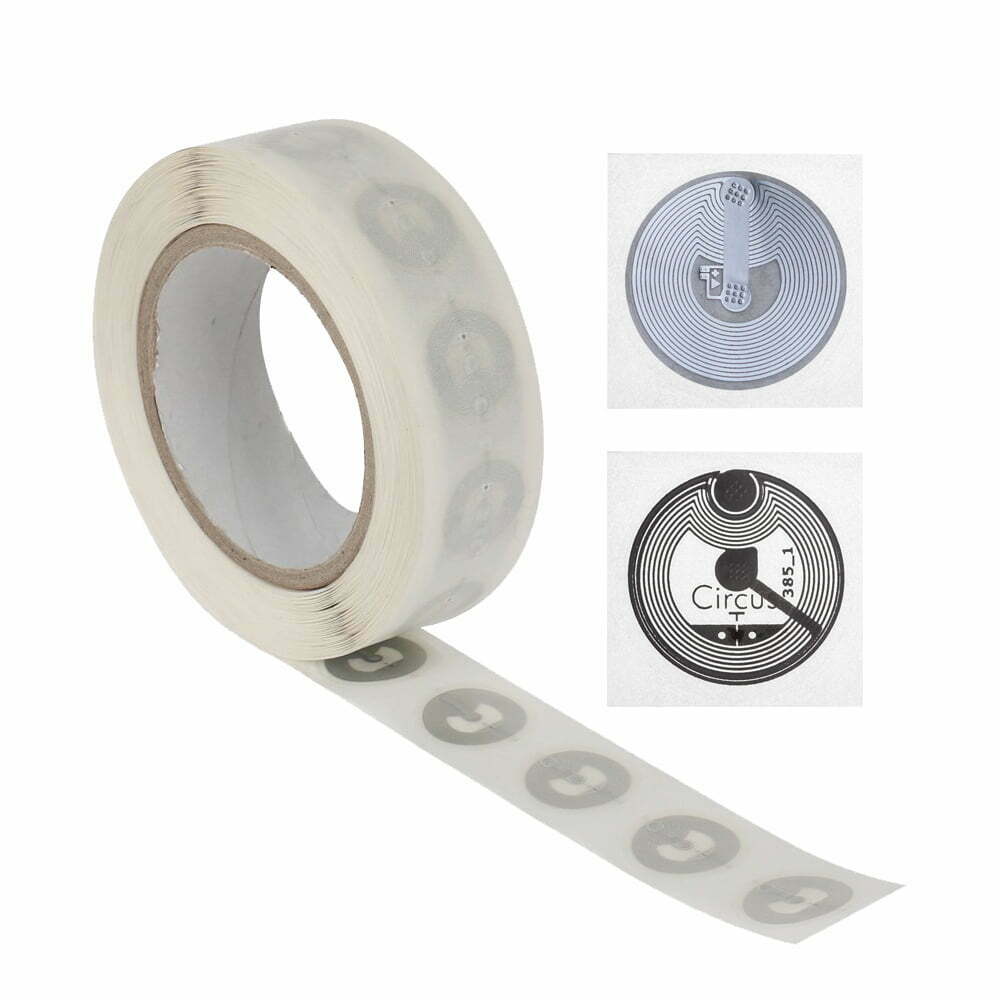
In retail, using RFID stickers for inventory can increase inventory counting speed by 10-20 times. In the product disposal stage, automated sorting systems rely on RFID tracking systems to quickly identify materials (such as cotton, polyester, and wool).
Comparison Table of RFIDHY Textile-Specific Tag Technical Specifications
| Features | UHF Flexible Fabric Tag | High-Temperature Washing Tag | Paper/PET Retail Tag |
| Application Scenarios | Branded Apparel Embedding, Workwear Rental | Industrial Laundry, Hotel Linen Management | Retail Inventory Control, DPP Initial Activation |
| Core Keywords | RFID clothing tags | RFID laundry tags | RFID stickers for inventory |
| RF Protocol | EPC Class1 Gen2 (ISO18000-6C) | EPC Class1 Gen2 (ISO18000-6C) | EPC Class1 Gen2 (ISO18000-6C) |
| Typical Reading Distance | Up to 6-7m (depending on RFID tag reader) | Up to 4-5m | Up to 8-10m |
| Wash Cycles | ≥ 200 | ≥ 200 | Not Waterproof (Single Use Only) |
| Extreme Environmental Resistance | Ironing at 180°C (60 seconds) | 200°C High temperature (15 seconds) / 60 Bars pressure | ambient temperature |
| Installation methods | sewing, heat sealing | sewing, bagging | hanging, adhesive |
Technology selection recommendations: How to optimize your RFID tracking tags solution?
For high-end fashion brands: RFIDHY flexible fabric tags are recommended. This model can be sewn into the side care label of garments as RFID clothing tags. Due to its soft fabric substrate, consumers will hardly notice its presence, ensuring the tag passport remains “online” throughout the entire resale and recycling process.
For rental and public textiles: Rigid PPS-encapsulated RFID laundry tags must be used. They resist the high-pressure spin-drying and chemical detergents of industrial washing machines, which is crucial to ensuring the RFID tracking system does not lose data in extreme environments.
For fast fashion and short-term promotions: Combine RFID stickers for inventory. Rapid warehousing via RFID tags at logistics centers, combined with paper hangtags, achieves low-cost DPP compliance.
Regional Compliance Notice
When deploying an RFID tracking system, please be aware of frequency differences across regions. RFIDHY tags support the entire frequency band (860MHz – 960MHz), meaning that regardless of whether your products are sold in Europe (ETSI band) or the United States (FCC band), the same tag guarantees excellent read consistency, which is crucial for cross-border textile supply chains.
Conclusion
RFID is no longer just a tool for anti-theft or inventory management; it has evolved into the “digital backbone” of the entire textile lifecycle. As a leading company with many years of experience in the industry, RFIDHY is committed to providing global brands with complete DPP solutions, from RFID clothing tags to backend data integration.
For more information,please contact us.