pengenalan: Mengelakkan Salah Tanggapan Lebih Penting daripada Meneruskan Kemajuan Teknologi
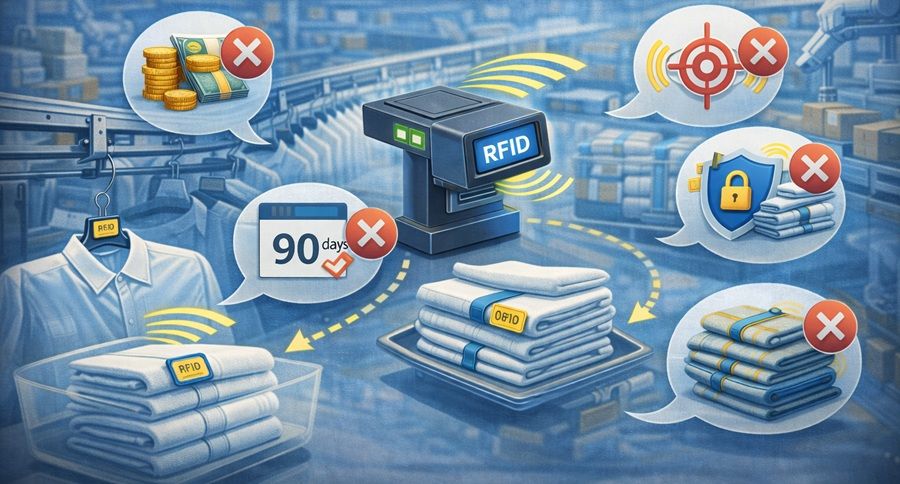
Menurut GS1 2025 “Laporan Analisis Kegagalan Projek RFID,” habis 60% projek RFID mengalami kelewatan atau lebihan kos. Punca utama bukanlah ketidakupayaan teknologi, tetapi sebaliknya jatuh ke dalam salah tanggapan biasa pada peringkat awal penggunaan RFID. Artikel ini, berdasarkan data retrospektif daripada 50 projek RFID tekstil di Eropah, meringkaskan 5 salah tanggapan dan strategi mengelak yang kerap berlaku untuk membantu anda mengelakkan perangkap.
Salah tanggapan 1: Pemilihan tag “Harga Melebihi Senario”
Manifestasi yang salah: Untuk mengurangkan kos, menggunakan tag harga rendah yang sama (seperti tag gantung biasa) pada semua kategori produk, mengakibatkan kegagalan besar-besaran pada pakaian kerja yang boleh dibasuh dan pakaian sewa.
Pendekatan yang betul: Pilih tag mengikut senario aplikasi. Untuk tekstil yang memerlukan banyak basuhan, tag kalis basuh yang telah melepasi Tahap AARH 10 ujian (seperti RFID HY WashTag, berdasarkan NXP UCODE 9 cip) mesti dipilih. Untuk barangan fesyen pantas, Tag gantung RFID (seperti yang berasaskan Impinj M730) adalah mencukupi.
Sokongan Data: Ujian yang dijalankan oleh Auburn University RFID Lab menunjukkan bahawa kadar bacaan tag biasa menurun kepada 62% selepas 20 mencuci industri, manakala tag kalis basuh mengekalkan lebih 98% selepas 200 membasuh.
Salah tanggapan 2: “Satu saiz sesuai untuk semua” Konfigurasi Pembaca
Manifestasi yang salah: Menggunakan tetapan kuasa dan antena yang sama di seluruh gudang, mengabaikan perbezaan persekitaran fizikal di kawasan yang berbeza, mengakibatkan kadar bacaan rendah di sesetengah kawasan dan gangguan isyarat di kawasan lain.
Amalan Betul: Jalankan tinjauan di tapak sebelum penggunaan dan optimumkan pemilihan antena dan tetapan kuasa untuk kawasan yang berbeza (kawasan rak logam, kawasan kelembapan tinggi, tali pinggang penghantar). Contohnya, tag anti-logam atau pelarasan polarisasi antena hendaklah dibuat untuk kawasan rak logam.
Salah tanggapan 3: Mengabaikan Cabaran daripada “Membaca dan Menulis dalam Persekitaran Lembap”
Manifestasi yang salah: Gagal mempertimbangkan potensi tekstil menjadi lembap semasa pengangkutan dan penyimpanan, membawa kepada kegagalan bacaan kelompok dalam persekitaran hujan atau kelembapan tinggi.
Pendekatan yang betul: Pilih cip yang boleh beroperasi secara stabil dalam persekitaran lembap (seperti Impinj M780, mengintegrasikan teknologi QT), dan termasuk “ujian semburan” atau “bacaan persekitaran kelembapan tinggi” pengesahan dalam kes ujian.
Sokongan Data: Ujian yang dijalankan oleh Institut Logistik Persekutuan Jerman menunjukkan bahawa apabila kain kapas mempunyai kandungan lembapan sebanyak 30%, jarak bacaan tag biasa berkurangan sebanyak 70%, manakala teg dengan reka bentuk antena yang dioptimumkan hanya berkurangan sebanyak 18%.
Salah tanggapan 4: Meninggalkan Integrasi Sistem “Ke Saat Terakhir”
Manifestasi yang salah: Membeli perkakasan terlebih dahulu dan hanya mempertimbangkan penyepaduan dengan sistem ERP (seperti SAP atau Oracle) sebelum siaran langsung, mengakibatkan kitaran pembangunan antara muka yang panjang dan kesukaran dalam penyepaduan data.
Pendekatan yang betul: Mentakrifkan skema penyepaduan antara perisian tengah RFID dan sistem sedia ada semasa fasa perancangan projek, memilih perisian tengah yang menyokong API RESTful standard dan penyambung pra-bina (seperti RFIDHY Jambatan), dan mengutamakan pembangunan integrasi.
Salah tanggapan 5: Mengabaikan “Penerimaan Projek” fasa
Manifestasi yang salah: Perkakasan hanya diuji semasa ketibaan dan kemudian digunakan tanpa menjalani FAT (Ujian Penerimaan Kilang) dan SAT (Ujian Penerimaan Tapak). Ini membawa kepada masalah yang timbul semasa operasi dan menanggung kos pembetulan yang tinggi.
Pendekatan yang betul: Laksanakan ujian penerimaan berperingkat dengan ketat. Fasa FAT mengesahkan prestasi perkakasan (sensitiviti pembaca ≤ -82dBm, antena VSWR ≤ 1.5:1). Fasa SAT mengesahkan pematuhan prestasi dunia sebenar (kadar baca ≥ 99.5%, masa kiraan inventori ≤ 2 jam). Kes ujian terperinci boleh didapati dalam spesifikasi ujian GS1 EPCglobal.
Kesimpulan
Oleh 2026, teknologi penggunaan RFID tekstil akan menjadi sangat matang, tetapi kejayaan projek masih bergantung pada mengelakkan perangkap biasa. Daripada pemilihan tag, konfigurasi pembaca, ujian kebolehsuaian alam sekitar kepada penyepaduan dan penerimaan sistem, ketegasan setiap langkah secara langsung memberi kesan kepada pulangan akhir pelaburan. Memilih rakan kongsi dengan pengalaman industri dan keupayaan penyesuaian (seperti RFIDHY) boleh membantu anda secara sistematik mengelakkan perangkap ini dan memastikan kejayaan projek dari awal.
Soalan Lazim
Q1: Cara cepat menentukan sama ada label itu benar “tahan basuh”?
Minta laporan ujian pihak ketiga daripada pembekal, memfokuskan sama ada ia melepasi Tahap AARH 10 (habis 100 mencuci industri) atau ISO 6330 (mencuci rumah) ujian. Anda juga boleh meminta sampel kumpulan kecil untuk mengesahkan dalam proses pencucian anda sendiri.
S2: Dalam persekitaran gudang yang kompleks, bagaimana untuk menentukan lokasi antena yang optimum?
Adalah disyorkan untuk menjalankan simulasi medan elektromagnet 3D (menggunakan CST Studio Suite atau ANSYS HFSS) atau ujian pemetaan terma RF di tapak (menggunakan Voyantic Tagformance Pro). Pembekal profesional seperti RFIDHY menyediakan perkhidmatan tinjauan di tapak, menggunakan data yang diukur untuk membimbing penggunaan.
Q3: Berapa lama masa yang biasanya diambil oleh pembangunan integrasi?
Ia bergantung kepada kerumitan sistem. Menggunakan middleware standard dan penyambung pra-bina, Penyepaduan ERP boleh diselesaikan dalam masa 2-4 minggu. Untuk penyesuaian yang mendalam (seperti peraturan perniagaan khas), ia mungkin mengambil masa 6-8 minggu. Adalah disyorkan untuk menyatakan dengan jelas kitaran pembangunan penyepaduan dan kriteria penerimaan dalam kontrak.
Q4: Adakah ujian penerimaan FAT dan SAT wajib? Q4: Bolehkah projek kecil dipermudahkan?
Walaupun untuk projek kecil, proses penerimaan yang dipermudahkan adalah disyorkan. Kes ujian teras (seperti kadar baca dan masa inventori) boleh dibangunkan berdasarkan piawaian industri, dan laporan penerimaan boleh dihasilkan. Ini bukan sahaja untuk jaminan kualiti tetapi juga untuk mewujudkan penanda aras prestasi untuk pengembangan masa hadapan.
S5: Bagaimana jika saya sudah jatuh ke dalam perangkap tertentu?
Pertama, mendiagnosis masalah dan mencari punca (isu teg/tetapan pembaca/penyepaduan perisian). Kemudian, membangunkan pelan pembetulan berperingkat, mengutamakan penyelesaian isu teras yang mempengaruhi operasi perniagaan. Bekerjasama dengan pembekal berpengalaman (seperti RFIDHY) selalunya boleh membantu menyelamatkan keadaan pada kos yang lebih rendah melalui pengoptimuman konfigurasi atau penggantian perkakasan separa.
Untuk maklumat lanjut,Tolong Hubungi kami.