Introdução: O verdadeiro custo de um projeto RFID vai muito além do preço unitário da etiqueta
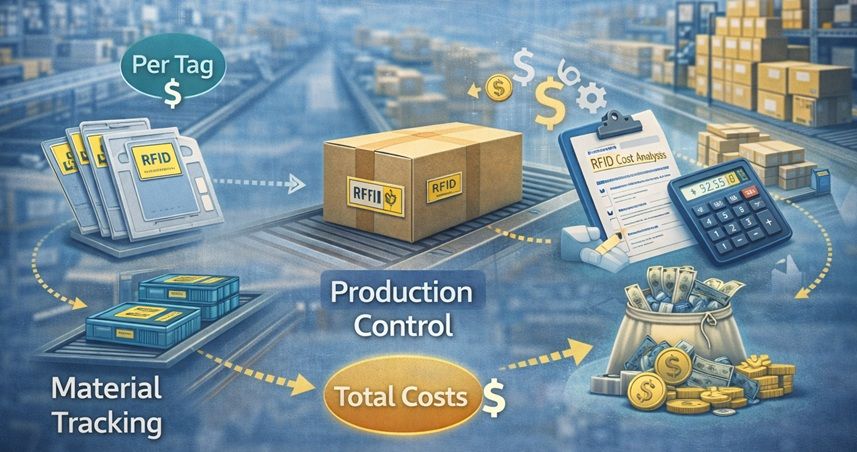
De acordo com o GS1 2025 Relatório de referência de ROI de RFID, em projetos típicos de rastreabilidade de item único, o custo de compra de Tags RFID contabiliza apenas 28-35% do custo total de propriedade (TCO). O restante 65-72% vem do hardware do leitor, licenciamento de software, integração de sistemas, treinamento, e manutenção a longo prazo. Este artigo, com base em dados de análise de TCO de 100 Projetos RFID na indústria retalhista europeia, revela a composição completa dos custos de implementação, ajudando as empresas a tomar decisões de investimento informadas.
Cinco componentes principais do custo total de propriedade de RFID (TCO)
1.1 Custo da etiqueta: Em declínio contínuo, mas ainda exigindo cálculos cuidadosos
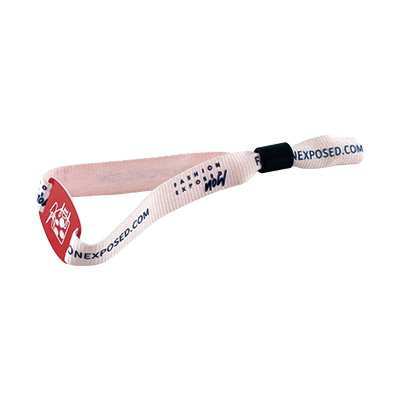
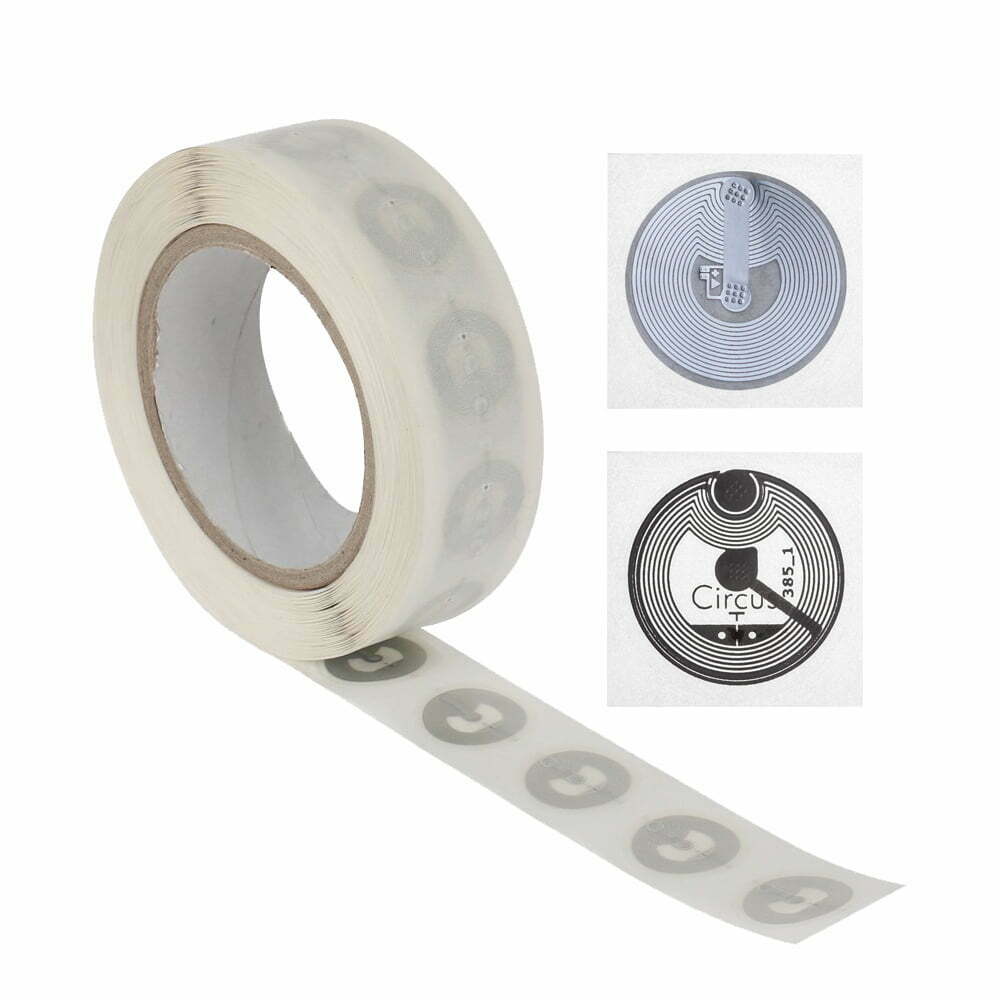
Atualmente, o preço unitário de Etiquetas RFID UHF caiu para 0,1-0,22 euros por etiqueta (baseado em NXP UCODE 8 ou chips Impinj M730). Etiquetas laváveis, devido ao seu complexo processo de embalagem, custa entre € 0,25-0,45 por etiqueta. Com base no uso anual de 5 milhões de tags, a despesa anual com etiquetas é de aproximadamente 250.000-400.000€.
1.2 Equipamento de hardware: Investimento Inicial em Leitores e Antenas
- Terminais Portáteis: Como RFIDHY HY-R6100, preço unitário aproximadamente 590-650€, vida útil 3-5 anos
- Leitores Fixos: RFIDHY HY-R346A aproximadamente 485€/unidade, Nordic ID RR900 aproximadamente 3.200€/unidade
- Unidades de túnel: RFIDHY Túnel, investimento 30.000-80.000€/conjunto dependendo da configuração
- Antenas: RFIDHY HY-RA9002 9dbi (65-75€), Vezes-7 A5020 (320-450€)
1.3 Software e Integração: O frequentemente subestimado “Custo oculto”
- Licenciamento de middleware RFID: Preço por leitor ou anualmente, Impinj ItemSense custa aproximadamente entre 2.000 e 5.000 euros por ano.
- Desenvolvimento de Integração ERP: Dependendo da complexidade do sistema, A integração SAP/Oracle normalmente custa entre 20.000 e 50.000 euros.
- Desenvolvimento Personalizado: Regras comerciais especiais e requisitos de relatórios acrescentam entre 10.000 e 30.000 euros.
1.4 Implementação e Serviço
- Pesquisa e instalação no local: 300€-800€ por leitor/escritor
- Mão de obra de aplicação de etiqueta: Se a rotulagem for feita na origem do fornecedor, o custo é insignificante; se a etiquetagem do armazém for feita, aproximadamente 0,02€-0,05€ por item.
- Operação de treinamento e teste: 5.000€-15.000€ por projeto.
1.5 Custos de operação e manutenção de longo prazo
- Taxa Anual de Manutenção: 8-12% do valor do hardware
- Taxa de danos à etiqueta: As etiquetas laváveis apresentam aproximadamente 2-5% dano anual; hangtags são insignificantes.
- Atualizações e suporte do sistema: As taxas anuais de software normalmente incluem suporte básico.
Análise de TCO: Um estudo de caso de uma marca com 5 Milhões de peças usadas anualmente
Supondo uma marca de vestuário de médio porte (Por exemplo, StreetWear Alemão) GmbH implementou um projeto RFID com uma utilização anual de 5 milhões de tags (95% etiquetas + 5% lavável), implantando 20 terminais portáteis, 4 unidades de túnel, e 2 leitores fixos, Integrado com SAP ERP. A análise do TCO é a seguinte:
| Item de custo | Custo do primeiro ano | Custo Médio Anual (Anos 2-5) | Percentagem |
| Aquisição de tags | 275.000€ | 275.000€ | 31% |
| Equipamento de hardware | 198.000€ | 18.000€ (Depreciação) | 22% |
| Software e Integração | 68.000€ | 15.000€ | 10% |
| Implementação e Serviço | 42.000€ | 8.000€ | 7% |
| Manutenção e Redução de Danos | 15.000€ | 25.000€ | 7% |
| TCO anual | 598.000€ | 341.000€ | 100% |
Visão principal: O custo de implementação do primeiro ano é relativamente alto, mas o TCO diminui em 43% nos anos seguintes. Com receitas anuais de 120 milhões de euros, O TCO RFID é responsável por aproximadamente 0.28-0.5% de receita, enquanto os benefícios como otimização de estoque, maior eficiência de contagem de estoque, e perdas reduzidas normalmente cobrem 2-3 vezes o custo.
Como a personalização otimiza o TCO
RFIDHY, com seus profundos recursos de personalização, ajuda os clientes a otimizar o TCO nas seguintes áreas:
* Otimização de seleção de tags: Recomendando os chips mais econômicos com base em cenários de aplicação (Por exemplo, UCODE NXP 9 vs.), evitando exagero de desempenho.
* Configuração precisa de hardware: Evitando antenas excessivas ou desperdício de energia através de simulação no local.
* Controle de custos de integração: Fornecimento de APIs RESTful padrão e conectores SAP/Oracle pré-construídos, reduzindo os custos de desenvolvimento de integração 40%.
* Manutenção Preditiva: Middleware monitora a integridade do equipamento em tempo real, reduzindo perdas inesperadas de tempo de inatividade.
Conclusão
Por 2026, o custo de implementação de projetos RFID será altamente transparente, com o preço unitário da etiqueta sendo apenas uma pequena fração. Uma análise científica do TCO deve abranger todo o ciclo de vida do hardware, programas, integração, e operação e manutenção. Escolhendo um parceiro com experiência no setor e recursos de personalização (como RFIDHY) pode reduzir o TCO geral em 15-25% sem afetar o desempenho.
Perguntas frequentes
1º trimestre: Os custos das tags podem continuar diminuindo?
De acordo com a pesquisa VDC, Os preços das etiquetas RFID UHF deverão diminuir em 2-3% anualmente a partir de 2026 para 2028, principalmente devido ao aumento da integração de chips e economias de escala. No entanto, etiquetas laváveis têm espaço limitado para redução de preço devido a processos complexos de embalagem.
2º trimestre: Como estimar o TCO RFID da sua empresa?
Recomendamos uma abordagem em quatro etapas: 1) Determine o volume de uso anual e o tipo de tag; 2) Analise o número de pontos de leitura/gravação e requisitos de equipamento; 3) Avalie a complexidade de integração dos sistemas ERP/WMS existentes; 4) Consulte fornecedores experientes (como RFIDHY) para cotações preliminares e modelos de TCO.
3º trimestre: Como podem as PME controlar os custos de implementação?
Recomenda-se uma abordagem de implementação faseada: comece com itens individuais de alto valor, use terminais portáteis em vez de terminais de túnel, e escolha middleware SaaS em vez de implantação local. RFIDHY oferece um kit inicial leve (incluindo 2 terminais portáteis + 5000 tags + licença de software), exigindo um investimento inicial de 15.000€ para começar.
4º trimestre: Quantos anos é o período de depreciação típico para hardware?
Terminais portáteis e leitores fixos são normalmente depreciados em 3-5 anos, enquanto equipamentos automatizados, como máquinas de perfuração de túneis, são depreciados 5-7 anos. Produtos de marcas como Impinj podem ter uma vida útil de até 1.5 vezes o seu período de depreciação sob uso normal.
Para mais informações,por favor Contate-nos.