Invoering: De werkelijke kosten van een RFID-project gaan veel verder dan de eenheidsprijs van de tag
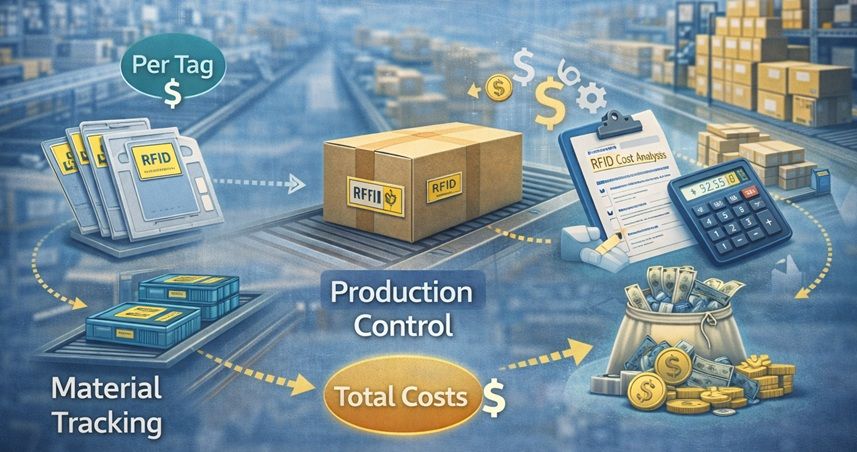
Volgens GS1's 2025 RFID ROI-benchmarkrapport, in typische traceerbaarheidsprojecten voor één item, de aanschafkosten van RFID-tags alleen rekeningen voor 28-35% van de totale eigendomskosten (Totale eigendomskosten). De overige 65-72% komt van lezerhardware, softwarelicenties, systeemintegratie, opleiding, en langdurig onderhoud. Dit artikel, gebaseerd op TCO-analysegegevens van 100 RFID-projecten in de Europese retailsector, maakt de volledige samenstelling van de implementatiekosten inzichtelijk, bedrijven helpen weloverwogen investeringsbeslissingen te nemen.
Vijf sleutelcomponenten van de Total Cost of Ownership van RFID (Totale eigendomskosten)
1.1 Tagkosten: Voortdurend afnemend, maar nog steeds een zorgvuldige berekening vereisend
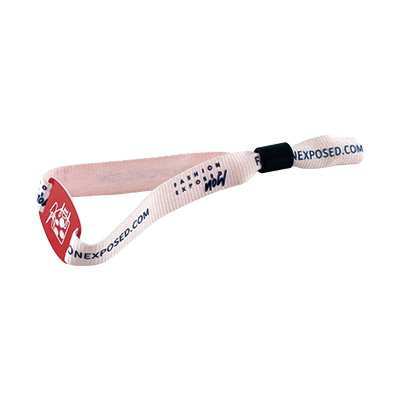
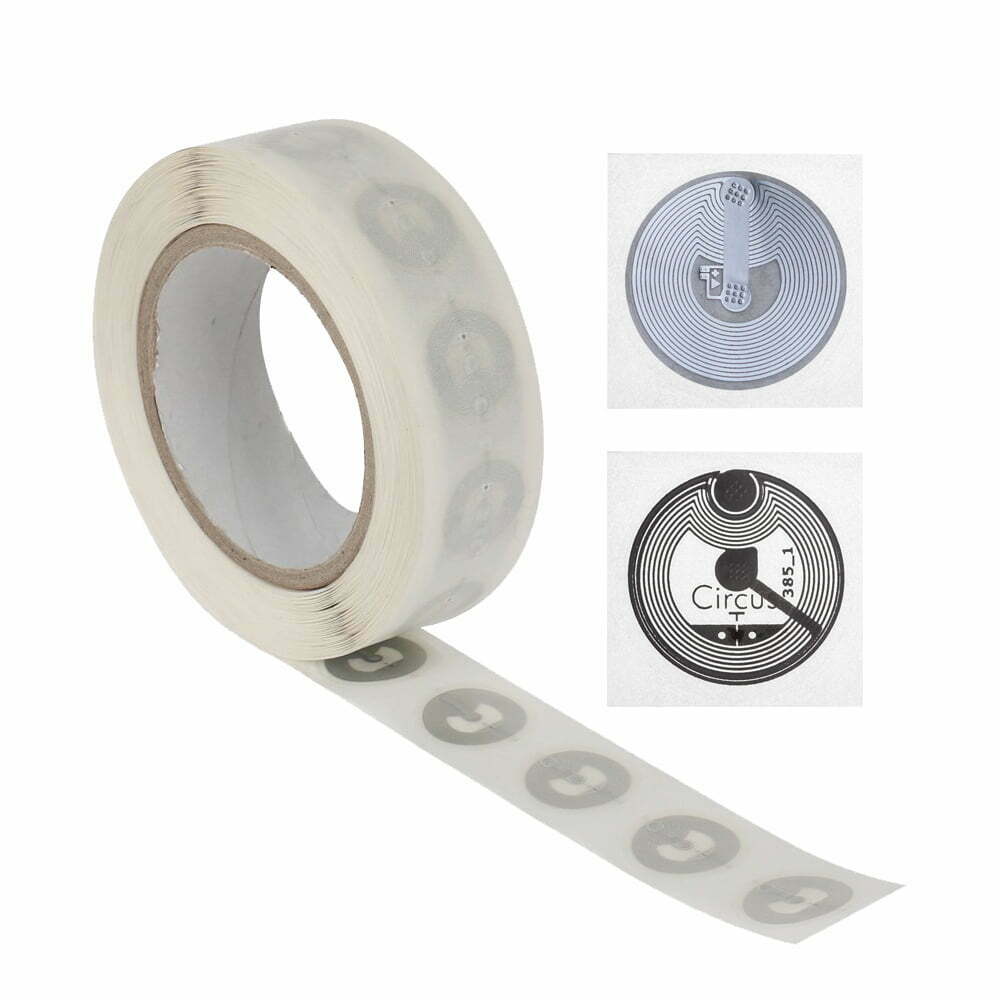
Momenteel, de eenheidsprijs van UHF RFID -tags is gedaald naar € 0,1-0,22 per tag (gebaseerd op NXP UCODE 8 of Impinj M730-chips). Wasbare labels, vanwege hun complexe verpakkingsproces, kosten tussen € 0,25-0,45 per tag. Gebaseerd op een jaarlijks verbruik van 5 miljoen tags, de jaarlijkse taguitgaven bedragen ongeveer € 250.000-400.000.
1.2 Hardware-uitrusting: Initiële investering in lezers en antennes
- Handheld-terminals: Zoals RFIDHY HY-R6100, eenheidsprijs ongeveer € 590-650, levensduur 3-5 jaren
- Vaste lezers: RFIDHY HY-R346A ongeveer € 485/stuk, Nordic ID RR900 ongeveer € 3.200/stuk
- Tunneleenheden: RFIDHY Tunnel, investering €30.000-80.000/set afhankelijk van configuratie
- Antennes: RFIDHY HY-RA9002 9dbi (€65-75), Keer-7 A5020 (€320-450)
1.3 Software en integratie: Het vaak onderschatte “Verborgen kosten”
- RFID-middleware-licenties: Geprijsd per lezer of jaarlijks, Impinj ItemSense kost ongeveer € 2.000-€ 5.000 per jaar.
- Ontwikkeling van ERP-integratie: Afhankelijk van de systeemcomplexiteit, SAP/Oracle-integratie kost doorgaans €20.000-€50.000.
- Aangepaste ontwikkeling: Speciale bedrijfsregels en rapportagevereisten voegen €10.000-€30.000 toe.
1.4 Implementatie en service
- Inspectie en installatie op locatie: €300-€800 per lezer/schrijver
- Labeltoepassing Arbeid: Als het etiketteren bij de bron van de leverancier plaatsvindt, de kosten zijn verwaarloosbaar; als het labelen van het magazijn is voltooid, ongeveer € 0,02-€ 0,05 per stuk.
- Training en proefoperatie: € 5.000-€ 15.000 per project.
1.5 Bedrijfs- en onderhoudskosten op lange termijn
- Jaarlijkse onderhoudskosten: 8-12% van hardwarewaarde
- Schadepercentage voor labels: Wasbare labels ervaren ongeveer 2-5% jaarlijkse schade; hangtags zijn te verwaarlozen.
- Systeemupgrades en ondersteuning: Jaarlijkse softwarekosten omvatten doorgaans basisondersteuning.
TCO-analyse: Een casestudy van een merk met 5 Miljoen stuks jaarlijks gebruikt
Uitgaande van een middelgroot kledingmerk (Bijv., Duitse StreetWear) GmbH implementeerde een RFID-project met een jaarlijks verbruik van 5 miljoen tags (95% hangtags + 5% wasbaar), inzetten 20 draagbare terminals, 4 tunnel-eenheden, En 2 vaste lezers, geïntegreerd met SAP ERP. De TCO-analyse is als volgt:
| Kostenpost | Kosten eerste jaar | Gemiddelde jaarlijkse kosten (Jaren 2-5) | Percentage |
| Tagverwerving | € 275.000 | € 275.000 | 31% |
| Hardware-uitrusting | € 198.000 | € 18.000 (Afschrijving) | 22% |
| Software en integratie | € 68.000 | € 15.000 | 10% |
| Implementatie en service | € 42.000 | € 8.000 | 7% |
| Onderhoud en schadebeperking | € 15.000 | € 25.000 | 7% |
| Jaarlijkse TCO | € 598.000 | € 341.000 | 100% |
Belangrijk inzicht: De implementatiekosten voor het eerste jaar zijn relatief hoog, maar de TCO daalt met 43% in de daaropvolgende jaren. Met een jaaromzet van € 120 miljoen, RFID TCO bedraagt ongeveer 0.28-0.5% van de inkomsten, terwijl de voordelen zoals voorraadoptimalisatie, verbeterde efficiëntie van het tellen van de voorraad, en verminderde verliezen zijn doorgaans gedekt 2-3 keer de kosten.
Hoe maatwerk de TCO optimaliseert
RFIDHY, met zijn diepgaande aanpassingsmogelijkheden, helpt klanten de TCO op de volgende gebieden te optimaliseren:
* Optimalisatie van tagselectie: Het aanbevelen van de meest kosteneffectieve chips op basis van toepassingsscenario's (Bijv., NXP UCODE 9 versus Impinj M730), prestatie-overkill vermijden.
* Nauwkeurige hardwareconfiguratie: Het vermijden van overmatige antennes of energieverspilling door middel van simulatie op locatie.
* Integratiekostenbeheersing: Biedt standaard RESTful API's en vooraf gebouwde SAP/Oracle-connectoren, het verminderen van de ontwikkelingskosten voor integratie door 40%.
* Voorspellend onderhoud: Middleware bewaakt de status van apparatuur in realtime, het verminderen van onverwachte downtimeverliezen.
Conclusie
Door 2026, de implementatiekosten van RFID-projecten zullen zeer transparant zijn, waarbij de eenheidsprijs van het label slechts een klein deel is. Een wetenschappelijke TCO-analyse moet de gehele levenscyclus van hardware bestrijken, software, integratie, en bediening en onderhoud. Een partner kiezen met branche-ervaring en aanpassingsmogelijkheden (zoals RFIDHY) kan de totale TCO met 15-25% zonder de prestaties te beïnvloeden.
Veelgestelde vragen
Q1: Kunnen de kosten van tags blijven dalen??
Volgens VDC Onderzoek, De prijzen van UHF RFID-tags zullen naar verwachting met 2-3% jaarlijks vanaf 2026 naar 2028, voornamelijk als gevolg van de toegenomen chipintegratie en schaalvoordelen. Echter, wasbare tags hebben beperkte ruimte voor prijsverlaging vanwege complexe verpakkingsprocessen.
Vraag 2: Hoe u de RFID TCO van uw bedrijf kunt inschatten?
Wij raden een aanpak in vier stappen aan: 1) Bepaal het jaarlijkse gebruiksvolume en het tagtype; 2) Analyseer het aantal lees-/schrijfpunten en apparatuurvereisten; 3) Beoordeel de integratiecomplexiteit van bestaande ERP/WMS-systemen; 4) Raadpleeg ervaren leveranciers (zoals RFIDHY) voor voorlopige offertes en TCO-modellen.
Q3: Hoe kunnen MKB-bedrijven de implementatiekosten beheersen?
Een gefaseerde implementatieaanpak wordt aanbevolen: begin met waardevolle individuele items, gebruik handterminals in plaats van tunnelterminals, en kies voor SaaS-middleware in plaats van implementatie op locatie. RFIDHY biedt een lichtgewicht Starter Kit (inbegrepen 2 draagbare terminals + 5000 labels + softwarelicentie), Om van start te kunnen gaan, is een initiële investering van € 15.000 vereist.
Q4: Hoeveel jaar is de typische afschrijvingsperiode voor hardware?
Op handterminals en vaste lezers wordt normaal gesproken afgeschreven 3-5 jaren, terwijl geautomatiseerde apparatuur zoals tunnelboormachines wordt afgeschreven 5-7 jaren. Producten van merken als Impinj kunnen een levensduur hebben van maximaal 1.5 maal hun afschrijvingsperiode bij normaal gebruik.
Voor meer informatie,Alsjeblieft neem contact met ons op.