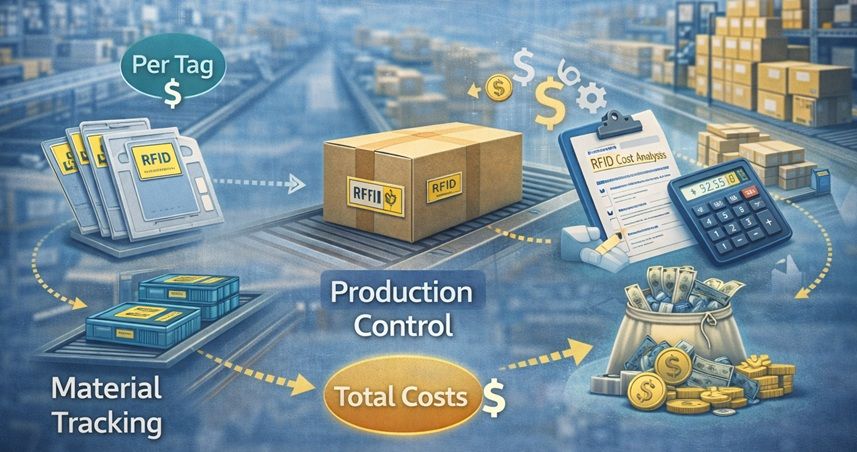
pengenalan: Kos sebenar projek RFID jauh melebihi harga unit tag
Menurut GS1 2025 Laporan Penanda Aras ROI RFID, dalam projek kebolehkesanan item tunggal biasa, kos pembelian sebanyak Tag RFID akaun untuk sahaja 28-35% daripada jumlah kos pemilikan (TCO). Selebihnya 65-72% datang daripada perkakasan pembaca, pelesenan perisian, penyepaduan sistem, latihan, dan penyelenggaraan jangka panjang. Artikel ini, berdasarkan data analisis TCO daripada 100 Projek RFID dalam industri runcit Eropah, mendedahkan komposisi lengkap kos pelaksanaan, membantu syarikat membuat keputusan pelaburan termaklum.
Lima Komponen Utama RFID Jumlah Kos Pemilikan (TCO)
1.1 Kos Tag: Berterusan Merosot Tetapi Masih Memerlukan Pengiraan Berhati-hati
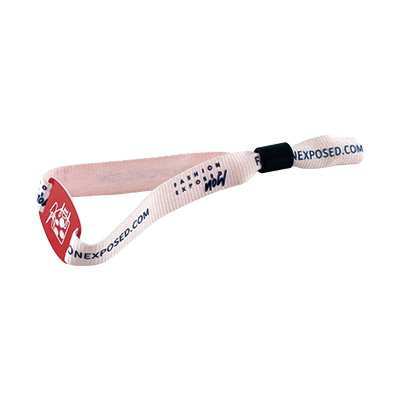
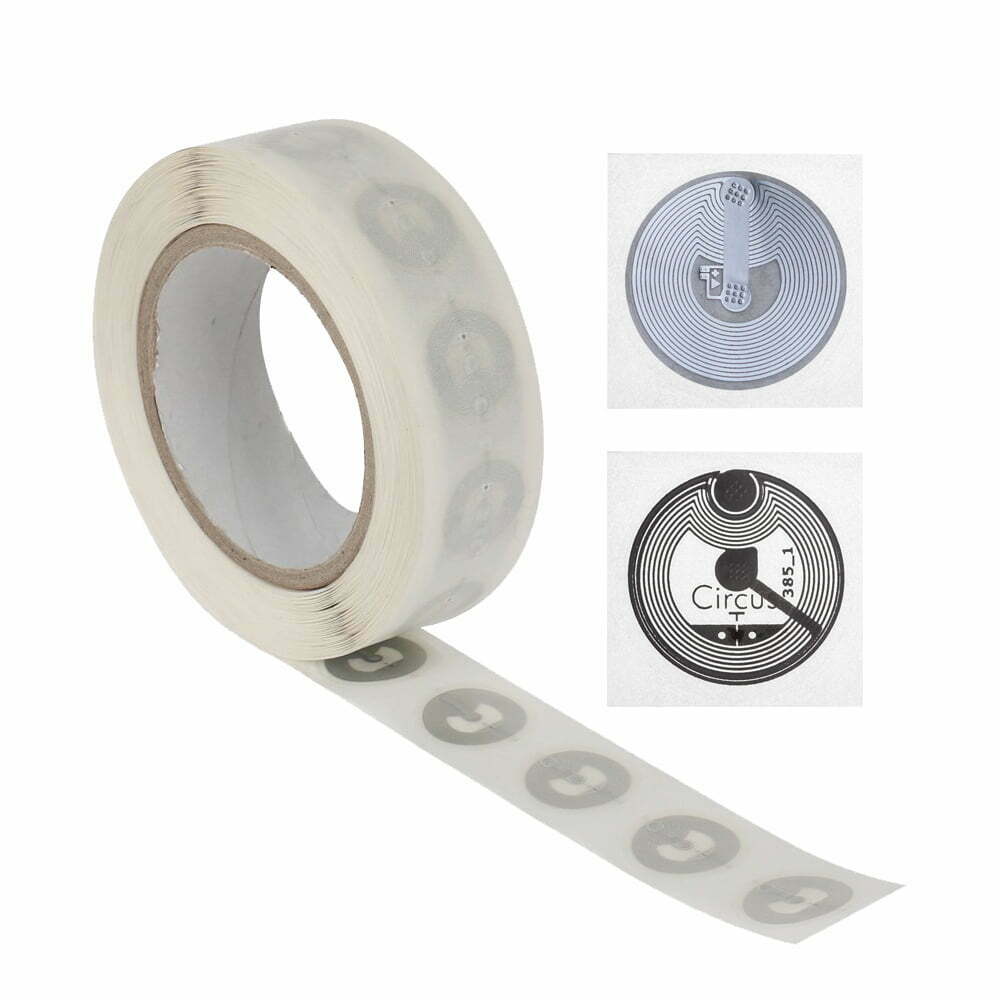
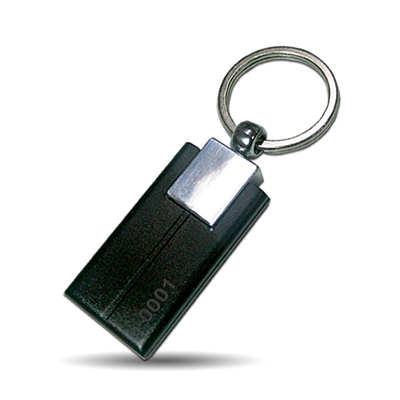
Pada masa ini, harga seunit bagi Uhf rfid tags telah turun kepada €0.1-0.22 setiap tag (berdasarkan NXP UCODE 8 atau cip Impinj M730). Tag boleh dibasuh, kerana proses pembungkusan yang kompleks, kos antara €0.25-0.45 setiap tag. Berdasarkan penggunaan tahunan 5 juta tag, perbelanjaan tag tahunan adalah lebih kurang €250,000-400,000.
1.2 Peralatan Perkakasan: Pelaburan Permulaan dalam Pembaca dan Antena
- Terminal Pegang Tangan: Seperti RFIDHY HY-R6100, harga seunit lebih kurang €590-650, jangka hayat 3-5 tahun
- Pembaca Tetap: RFIDHY HY-R346A kira-kira €485/unit, Nordic ID RR900 lebih kurang €3,200/unit
- Unit Terowong: RFIDHY Terowong, pelaburan €30,000-80,000/set bergantung pada konfigurasi
- Antena: RFIDHY HY-RA9002 9dbi (€65-75), Times-7 A5020 (€320-450)
1.3 Perisian dan Integrasi: Yang Sering Diremehkan “Kos Tersembunyi”
- Pelesenan Perisian Tengah RFID: Harga setiap pembaca atau setiap tahun, Impinj ItemSense berharga kira-kira €2,000-€5,000 setahun.
- Pembangunan Integrasi ERP: Bergantung pada kerumitan sistem, Penyepaduan SAP/Oracle biasanya berharga €20,000-€50,000.
- Pembangunan Tersuai: Peraturan perniagaan khas dan keperluan pelaporan menambah €10,000-€30,000.
1.4 Pelaksanaan dan Perkhidmatan
- Tinjauan dan Pemasangan di tapak: €300-€800 setiap pembaca/penulis
- Buruh Permohonan Label: Jika pelabelan dilakukan di sumber pembekal, kosnya boleh diabaikan; jika pelabelan gudang dilakukan, kira-kira €0.02-€0.05 setiap item.
- Latihan dan Operasi Percubaan: €5,000-€15,000 setiap projek.
1.5 Kos Operasi dan Penyelenggaraan Jangka Panjang
- Yuran Penyelenggaraan Tahunan: 8-12% daripada nilai perkakasan
- Kadar Kerosakan Label: Label boleh dibasuh mengalami lebih kurang 2-5% kerosakan tahunan; hangtag boleh diabaikan.
- Peningkatan Sistem dan Sokongan: Yuran perisian tahunan biasanya termasuk sokongan asas.
Analisis TCO: Kajian Kes Jenama dengan 5 Juta Keping Digunakan Setiap Tahun
Dengan mengandaikan jenama pakaian bersaiz sederhana (Mis., StreetWear Jerman) GmbH melaksanakan projek RFID dengan penggunaan tahunan sebanyak 5 juta tag (95% hangtag + 5% boleh dibasuh), mengerahkan 20 terminal pegang tangan, 4 unit terowong, dan 2 pembaca tetap, disepadukan dengan SAP ERP. Analisis TCO adalah seperti berikut:
| Item Kos | Kos Tahun Pertama | Purata Kos Tahunan (Tahun 2-5) | Peratusan |
| Perolehan Tag | €275,000 | €275,000 | 31% |
| Peralatan Perkakasan | €198,000 | €18,000 (Susut nilai) | 22% |
| Perisian dan Integrasi | €68,000 | €15,000 | 10% |
| Pelaksanaan dan Perkhidmatan | €42,000 | €8,000 | 7% |
| Penyelenggaraan dan Pengurangan Kerosakan | €15,000 | €25,000 | 7% |
| TCO tahunan | €598,000 | €341,000 | 100% |
Wawasan Utama: Kos pelaksanaan tahun pertama agak tinggi, tetapi TCO berkurangan sebanyak 43% pada tahun-tahun berikutnya. Dengan pendapatan tahunan sebanyak €120 juta, RFID TCO menyumbang lebih kurang 0.28-0.5% daripada hasil, manakala faedah seperti pengoptimuman inventori, kecekapan pengiraan inventori yang lebih baik, dan kerugian yang dikurangkan biasanya meliputi 2-3 kali ganda kos.
Cara Penyesuaian Mengoptimumkan TCO
RFIDHY, dengan keupayaan penyesuaian yang mendalam, membantu pelanggan mengoptimumkan TCO dalam bidang berikut:
* Pengoptimuman Pemilihan Teg: Mengesyorkan cip yang paling kos efektif berdasarkan senario aplikasi (Mis., NXP UCODE 9 lwn Impinj M730), mengelakkan prestasi berlebihan.
* Konfigurasi Perkakasan Tepat: Mengelakkan antena yang berlebihan atau kuasa terbuang melalui simulasi di tapak.
* Kawalan Kos Integrasi: Menyediakan API RESTful standard dan penyambung SAP/Oracle pra-bina, mengurangkan kos pembangunan integrasi dengan 40%.
* Penyelenggaraan Ramalan: Middleware memantau kesihatan peralatan dalam masa nyata, mengurangkan kerugian masa henti yang tidak dijangka.
Kesimpulan
Oleh 2026, kos pelaksanaan projek RFID akan menjadi sangat telus, dengan harga unit tag hanya sebahagian kecil. Analisis TCO saintifik harus meliputi keseluruhan kitaran hayat perkakasan, perisian, integrasi, dan operasi dan penyelenggaraan. Memilih rakan kongsi dengan pengalaman industri dan keupayaan penyesuaian (seperti RFIDHY) boleh mengurangkan TCO keseluruhan dengan 15-25% tanpa menjejaskan prestasi.
Soalan Lazim
Q1: Bolehkah kos tag terus berkurangan?
Menurut Penyelidikan VDC, Harga tag RFID UHF diunjurkan menurun sebanyak 2-3% setiap tahun dari 2026 ke 2028, terutamanya disebabkan oleh peningkatan integrasi cip dan skala ekonomi. Walau bagaimanapun, tag boleh dibasuh mempunyai ruang terhad untuk pengurangan harga kerana proses pembungkusan yang kompleks.
S2: Bagaimana untuk menganggarkan TCO RFID syarikat anda?
Kami mengesyorkan pendekatan empat langkah: 1) Tentukan volum penggunaan tahunan dan jenis teg; 2) Menganalisis bilangan mata baca/tulis dan keperluan peralatan; 3) Menilai kerumitan penyepaduan sistem ERP/WMS sedia ada; 4) Rujuk pembekal yang berpengalaman (seperti RFIDHY) untuk petikan awal dan model TCO.
Q3: Bagaimana PKS boleh mengawal kos pelaksanaan?
Pendekatan pelaksanaan berperingkat disyorkan: bermula dengan item individu yang bernilai tinggi, gunakan terminal pegang tangan dan bukannya terminal terowong, dan pilih perisian tengah SaaS dan bukannya penempatan di premis. RFIDHY menawarkan Kit Permulaan yang ringan (termasuk 2 terminal pegang tangan + 5000 tag + lesen perisian), memerlukan pelaburan awal sebanyak €15,000 untuk bermula.
Q4: Berapa tahun ialah tempoh susut nilai biasa untuk perkakasan?
Terminal pegang tangan dan pembaca tetap biasanya disusut nilai 3-5 tahun, manakala peralatan automatik seperti mesin pengorek terowong disusutnilaikan 5-7 tahun. Produk daripada jenama seperti Impinj boleh mempunyai jangka hayat sehingga 1.5 kali tempoh susut nilai di bawah penggunaan biasa.
Untuk maklumat lanjut,Tolong Hubungi kami.