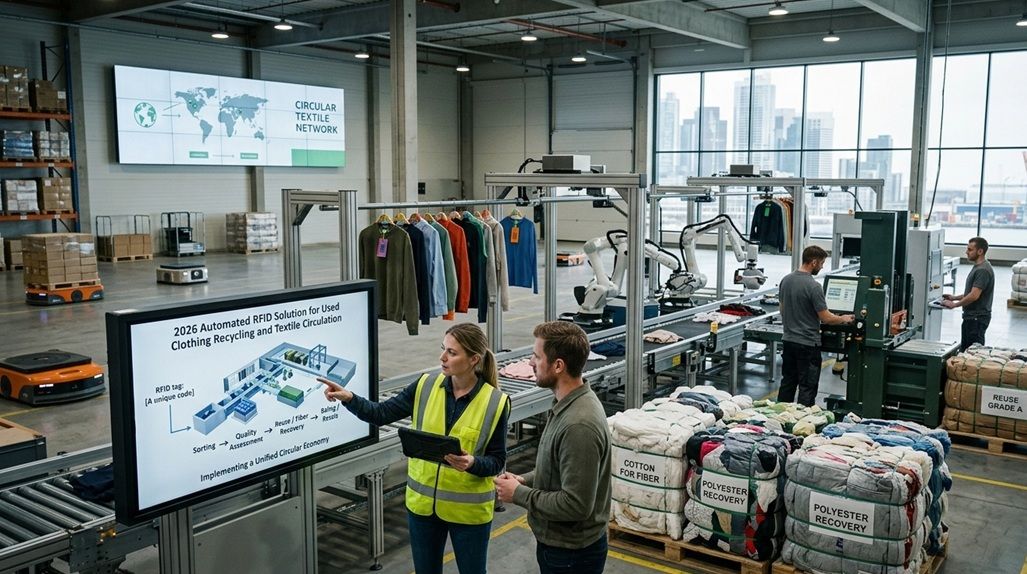
소개: 폐섬유 재활용은 글로벌 순환경제의 시급한 문제입니다.
유럽 환경청의 발표에 따르면 2025 “섬유의 순환경제 경과 보고서,” EU는 대략적으로 생성합니다 5.8 연간 백만 톤의 폐섬유, 그 중 오직 22% 재활용되어 재사용됩니다, 대부분이 소각되거나 매립되고 있습니다.. 에 의해 2025, EU의 폐기물 기본 지침에 따라 회원국은 독립적인 직물 분류 및 수집 시스템을 구축해야 합니다.. RFID, 의류의 전체 라이프사이클을 연결하는 디지털 로드맵으로, 이 문제를 해결하기 위한 핵심 기술로 자리잡고 있습니다..
폐섬유 재활용의 세 가지 주요 문제점
1.1 수동 분류의 낮은 효율성
전통적인 중고 의류 재활용은 재료의 수동 시각적 식별에 의존합니다., 그림 물감, 그리고 브랜드. 독일 연방환경재단의 데이터에 따르면, 숙련된 작업자는 최대 50-80 시간당 의류, 정확도 비율로만 75-85%. 연간 수만톤을 처리하는 재활용센터용, 이는 인건비와 효율성에 심각한 병목 현상을 초래합니다..
1.2 물질 식별의 어려움
혼합 직물의 신속한 식별 (면-폴리에스테르 혼방, 울 혼방 등) 업계의 주요 과제입니다. 근적외선에 있으면서 (근적외선) 분광학은 일부 물질을 식별할 수 있습니다, 어두운 색상의 의류에서는 인식률이 크게 떨어집니다., 다층 구조, 또는 코팅된 직물. 네덜란드 원형 직물 연구 센터에서 실시한 테스트에 따르면 검정색 의류 소재를 식별하는 NIR의 정확도는 다음보다 낮습니다. 60%.
1.3 가치 손실로 이어지는 데이터 손실
브랜드 등의 정보, 나이, 폐섬유에 포함된 관리 이력은 재활용 공정에 투입되면 완전히 소멸됩니다.. 이로 인해 고가의 중고 의류 가격을 정확하게 책정하는 것이 불가능합니다., 섬유 재활용 공장에서는 공정을 최적화하기 위한 구성 데이터를 얻을 수 없습니다..
RFID 솔루션: 에서 “쓰레기” 에게 “데이터 자산”
2.1 기술원리: 의류에 내장된 디지털 내비게이션 마커
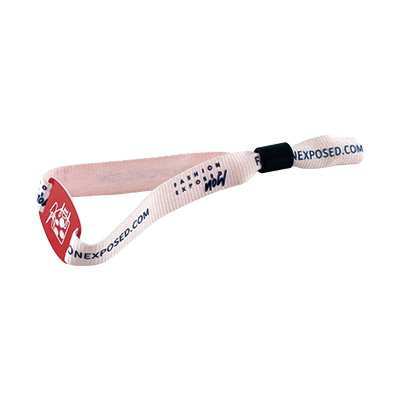
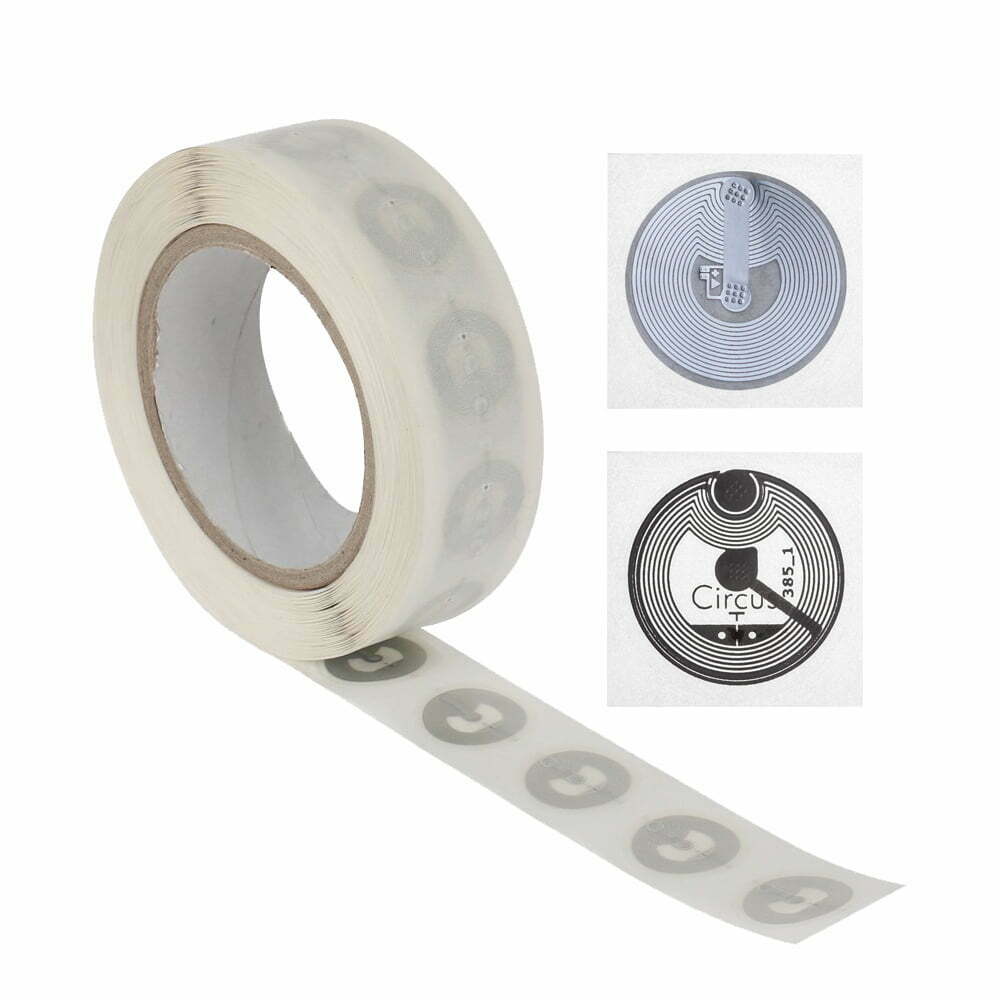
의류에 태그가 붙은 경우 RFID 태그 (세탁 가능한 태그 또는 걸림새 태그 여부) 생산 단계에서, 이 의류는 생산부터 재활용까지 전체 수명주기 동안 고유한 디지털 아이덴티티를 전달합니다.. 주요 칩 및 표준에는 다음이 포함됩니다.:
- NXP U코드 9: 고감도 (-24dBm), 밀집된 환경에서 읽기에 적합
- 임핀저 M730: 통합된 QT 기술, 고속 모바일 읽기 지원
- 외계인 힉스-9: 512-비트 사용자 메모리, 재료 구성을 저장할 수 있음, 생산일, 치료 이력, 등.
- ISO/IEC 18000-6C: 글로벌 UHF RFID 프로토콜 표준
- EPC Gen2v2: 보안 명령 및 사용자 메모리 쓰기 지원
2.2 재활용 과정: 2단계 자동 정렬
폐섬유가 재활용센터에 도착하면, 완전 자동화된 배치 식별은 고속 RFID 터널 기계를 통해 달성됩니다. (~와 같은 RFIDHY 재활용터널):
- 읽기 속도: 컨베이어 벨트 속도 최대 3 미터/초, 단일 채널 처리 15,000+ 시간당 조각
- 식별률: 최적화된 안테나 레이아웃 (Laird S9028P × Times-7 A5020 조합), 읽기 속도는 99.8%
- 위의 데이터 일치: 읽은 EPC 코드는 즉시 클라우드 데이터베이스에 쿼리하여 재료 등의 정보를 얻습니다., 상표, 나이, 그리고 원래 가격.
2.3 채점 및 정렬: 데이터 기반 정밀 분류
RFID 판독 데이터 기반, 시스템은 자동으로 의류를 다른 분류 라인으로 보냅니다.:
| 카테고리 정렬 | 판단기준 | 목적지 |
| 재판매 가능 | 상표 + 상태 + 재료 | 중고시장/수출 |
| 섬유 재활용 | 순수 면/순수 울/화학 섬유 | 열기 및 회전 |
| 화학물질 재활용 | 혼합/코팅 | 화학적 용해 |
| 다운그레이드된 활용도 | 심하게 오염/손상됨 | 닦는 천/충전재 |
| 소각/매립 | 재활용 불가 | 에너지 회수 |
실제 사례: 네덜란드 재활용업체의 RFID 자동 분류 혁명
3.1 사례 배경
네덜란드 섬유 재활용업체 'CircleTex' (연간 처리 능력 80,000 톤) 재활용량 증가와 새로운 EU 규정으로 인한 압박에 직면. ~ 안에 2024, 수동 분류 라인만 처리됨 120 의 정확도로 하루 톤 82%, 인력 채용의 어려움은 계속해서 증가하고 있습니다..
3.2 해결책
~ 안에 2025, CircleTex는 전문가와 제휴를 맺었습니다. RFID 솔루션 RFID 자동 분류를 위한 파일럿 프로젝트를 시작하는 공급업체:
- 프런트엔드 데이터 준비: 와 합의가 이루어졌습니다. 5 파트너 의류 브랜드는 ISO 18000-6C 준수 세탁 가능 제품의 사용을 의무화합니다. RFID 태그 (NXP UCODE 기반 9 칩) 새로운 제품을 위해, 클라우드에 공유된 소재 데이터로.
- 정렬 라인 업그레이드: 4 고속 RFID 터널 기계 세트가 배포되었습니다., RFID 리더와 RFID 안테나 통합.
- 정렬 실행: 데이터를 읽은 후, PLC (지멘스 S7-1500) 의류를 안으로 안내하는 제어된 공압 푸셔 12 다양한 정렬 채널.
3.3 결과 데이터 (2월 현재 2026)
| 지표 | 구현 전 (2024) | 구현 후 (1분기 2026) | 개선 규모 |
| 일일 처리 능력 | 120 톤 | 380 톤 | ↑217% |
| 정렬 정확도 | 82% | 97.5% | ↑15.5% |
| 인건비 | €4.2/톤 | €1.1/톤 | ↓74% |
| 고가치 재활용률 | 18% | 31% | ↑72% |
| 연간 수익 증가 | – | 720만 유로 | 새로운 수익 |
CircleTex의 CTO는 다음과 같이 말했습니다., “RFID는 폐기물 직물을 '쓰레기'에서 완전한 데이터를 담고 있는 자산으로 변환합니다.. 우리는 더 빠르게 분류할 수 있을 뿐만 아니라 브랜드 고객에게 해당 제품의 재활용률을 보여주는 재활용 보고서를 제공할 수도 있습니다.”
맞춤화 기능: 복잡한 재활용 시나리오 해결
폐섬유 재활용 시나리오는 신제품 창고 보관보다 훨씬 더 복잡합니다.: 옷이 더러워질 수도 있어요, 습기, 또는 손상된, 태그가 부분적으로 가려질 수 있습니다.. 바로 여기에 맞춤화 기능이 있습니다.. RFIDHY 제공한다:
4.1 매우 견고한 읽기 알고리즘
재활용 시나리오에서 다양한 태그 상태를 해결하기 위해 적응형 전력 알고리즘이 개발되었습니다., 최대 판독 속도를 보장하기 위해 판독기 전력 및 안테나 선택을 동적으로 조정합니다..
4.2 다중 태그 충돌 방지 최적화
촘촘하게 쌓이는 동안 (묶음 재활용과 같은), 태그 간 신호 충돌이 심각함. RFID RecycleTunnel은 하이브리드 시분할 다중 액세스를 사용합니다. (TDMA) + 주파수 분할 다중 접속 (FDMA) 계획, 처리 800+ 단일 채널에서 동시에 태그 지정.
4.3 깨지기 쉬운 태그 디자인
재활용 후 폐기해야 하는 태그의 경우, RFIDHY 에코태그 제공. 생분해성 소재로 제작됨, 재활용 및 분류 후 자동으로 비활성화됩니다., 소비자 개인 정보 보호.
4.4 NIR 시스템과 통합
RFID 태그가 없는 기존 의류의 경우, RFID 분류 라인은 근적외선 분광계와 연결될 수 있습니다. (TOMRA AUTOSORT 등). RFID 판독이 주요 방법입니다., NIR 사각지대 감지로 보완, 완전한 적용 범위 달성. 에 의해 2026, 폐섬유 재활용 방식이 전환되었습니다. “노동 집약적” 에 “기술 집약적” 모델. RFID, 의류에 내재된 디지털 로드맵으로, 오래된 의류 재활용의 모든 측면을 재편하고 있습니다.: 원본 자료 녹음부터 운송 중 자동 분류까지, 마지막으로 최종 사용자 가치 평가. 파트너 선택 (RFIDHY와 같은) EPC Gen2v2 및 ISO 18000-6C 표준을 충족하고 심층적인 사용자 정의 기능을 보유하는 것은 재활용 회사와 브랜드가 폐쇄 루프 재활용 시스템을 공동으로 구축하는 데 중요한 단계입니다.. 예. 현대식 재활용 및 분류 라인은 일반적으로 하이브리드 모델을 사용합니다.: RFID를 주요 채널로, 근적외선 분광법으로 보완 (근적외선) 또는 카메라 비전 인식. 태그가 없는 의류의 경우, NIR은 분류하기 전에 재료를 식별합니다., 생분해성 RFID 태그를 분류 후 부착하여 추적이 용이함. 산업 등급 표준을 충족하는 세탁 가능한 태그를 사용한 의류의 경우 (예를 들어, AARH 레벨 통과 10 테스트) 생산 중, 그들의 수명은 도달할 수 있습니다 10 년 또는 200 세탁하다, 의복의 정상적인 수명을 완전히 덮음. 재활용 중에도 태그를 읽을 수 있습니다.. 일반 행택도 폐기 전에는 읽을 수 있습니다., 하지만 가독성은 떨어집니다. 상업용 재활용 라인에는 일반적으로 다음의 컨베이어 벨트 속도가 필요합니다. 2-3 초당 미터, 처리에 해당 10,000-15,000 시간당 의류. RFID RecycleTunnel은 이상의 읽기 속도를 유지합니다. 99.5% 의 속도에서도 3 초당 미터, 대규모 재활용 요구를 완벽하게 충족. 이것이 바로 순환경제에서 RFID의 핵심가치입니다.. 물질성분, 금지약물 시험성적서 등의 정보를 기록하여, RFID 태그는 재활용업체에게 신뢰할 수 있는 구성 데이터를 제공합니다., 고부가가치 재활용 가능 (섬유 대 섬유와 같은). 브랜드는 이를 활용하여 녹색 인증 및 탄소 저감 크레딧을 획득할 수 있습니다.. 투자 규모는 처리량에 따라 다릅니다.. 소규모 재활용 스테이션 처리용 5,000 연간 톤, 데스크탑 RFID 분류 스테이션 (RFIDHY SortDesk와 같은) 선택할 수 있습니다, 약 €20,000-30,000의 투자로. 휴대용 단말기와 결합, 반자동 분류가 가능합니다., 효율성 증대 2-3 타임스. 대형 재활용 센터에는 €200,000-500,000의 비용이 드는 터널 기계 시스템이 필요합니다..
FAQ
1분기: 헌 옷에 RFID 태그가 없다면, 이 시스템을 계속 사용할 수 있나요??
2분기: 재활용 과정 중에도 RFID 태그를 읽을 수 있습니까?? 손상될 수 있나요??
3분기: 상업적인 요구를 충족하려면 재활용 및 분류 라인의 속도가 얼마나 빨라야 합니까??
4분기: RFID가 다음을 증명하는 데 도움이 될 수 있습니까? “재활용 가능성” 의류의?
Q5: 이 시스템은 대규모 투자인가?? 소규모 재활용 스테이션에서 사용할 수 있나요??
자세한 정보,제발 저희에게 연락하십시오.